




The Role of Precision Climatic Chambers in Modern Reliability Engineering
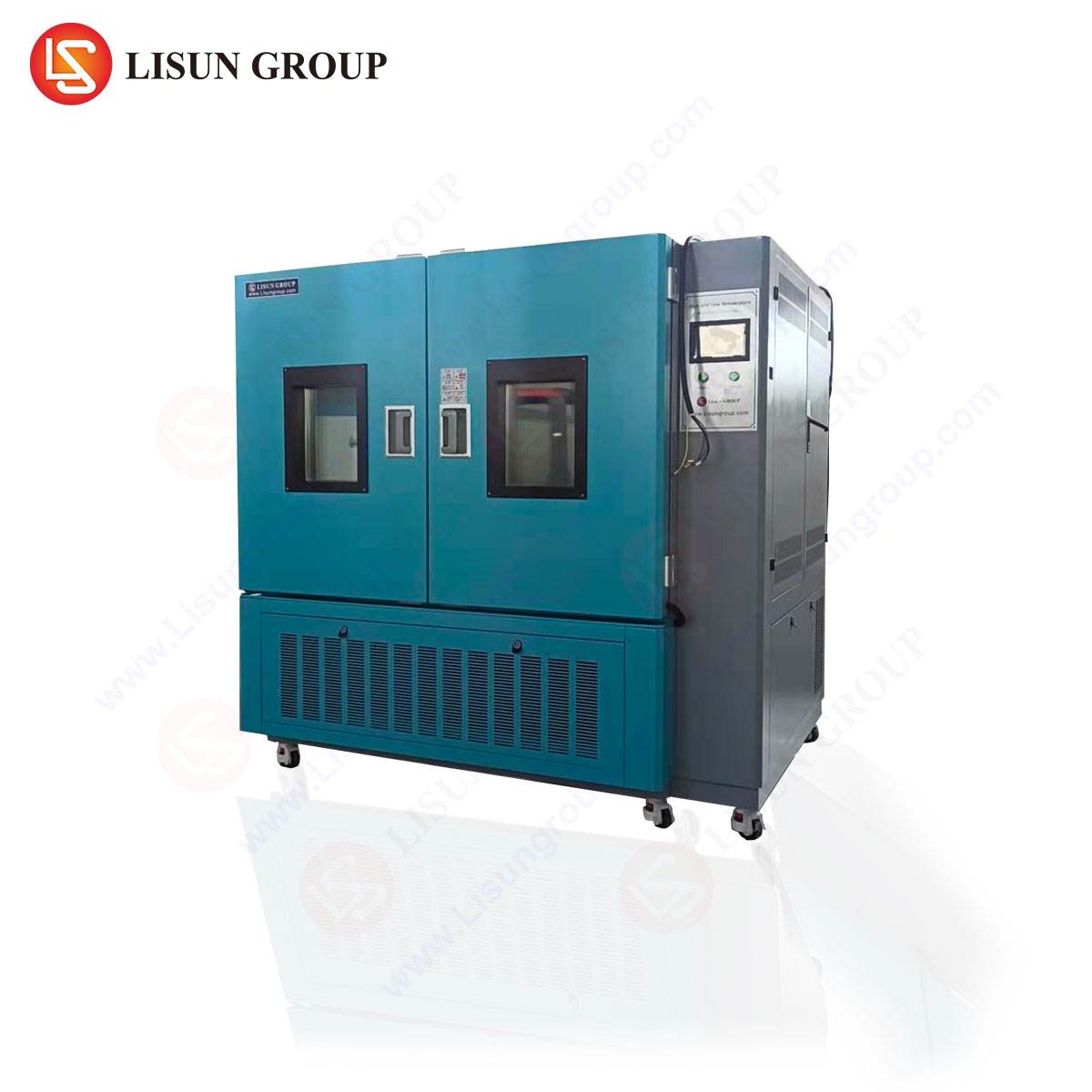
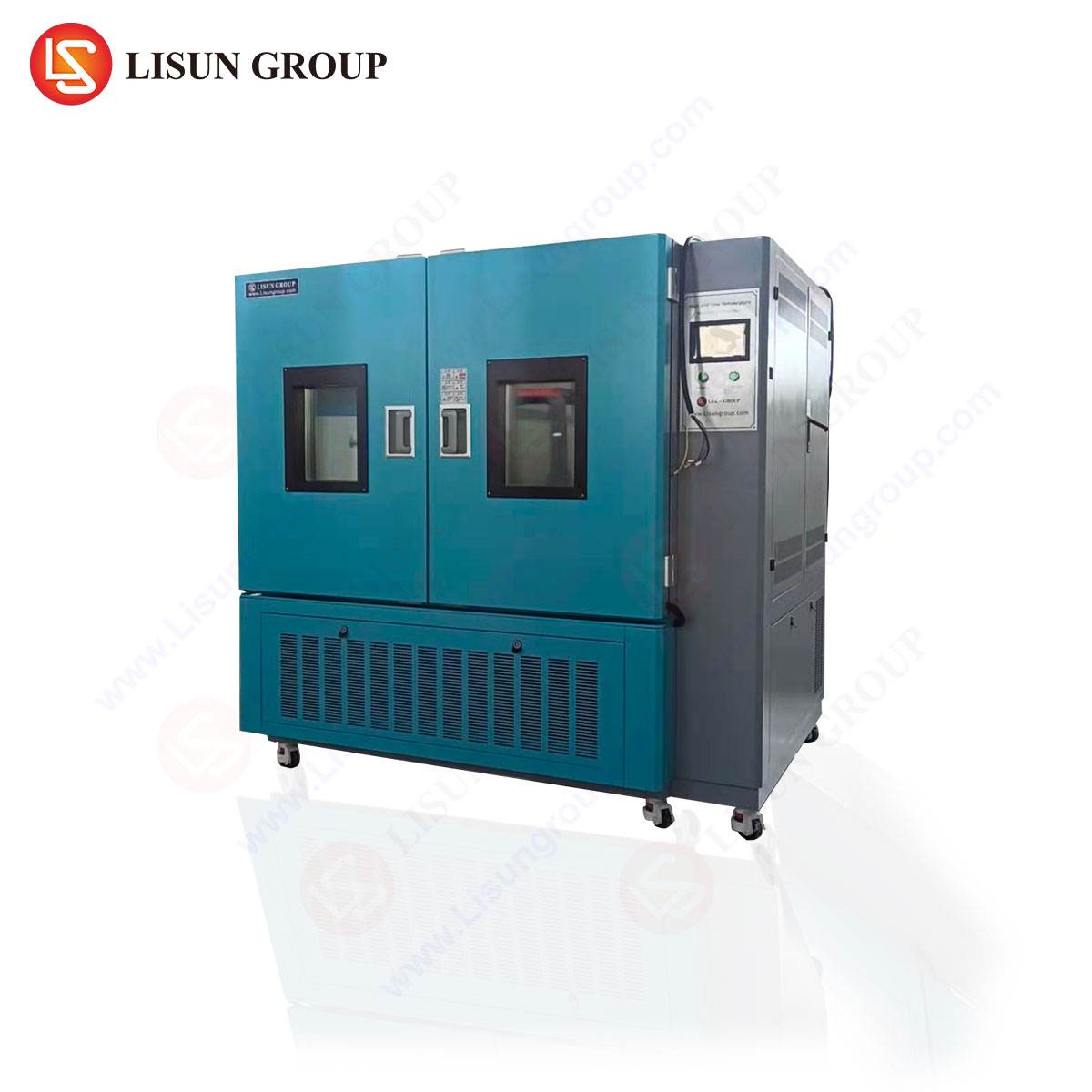
The verification of product reliability across industries—from automotive optoelectronics to aerospace avionics—demands environmental simulation equipment capable of generating precise, repeatable, and documentable climatic stresses. The LISUN GDJS Series High-Low Temperature & Humidity Cycling Test Chamber represents a sophisticated thermodynamic system engineered to meet the rigorous requirements of international standards such as IEC 60068-2-78, which governs steady-state damp heat testing for electronic components.
This whitepaper provides a rigorous engineering analysis of chamber architecture, control systems, and performance specifications, correlating design parameters directly to test outcomes for LED lumen maintenance per IES LM-80-08, electronic component reliability verification, and accelerated climatic aging. The thermodynamic equilibrium within the workspace, defined by the heat transfer equation Q = U × A × ΔT (where Q is heat transfer rate, U is overall heat transfer coefficient, A is surface area, and ΔT is temperature difference), is foundational to achieving the isothermal conditions and humidity control stability required for valid accelerated life testing.
Chamber Architecture and Materials Engineering for Long-Term Stability
The structural integrity and thermal performance of a climatic chamber are fundamentally determined by its material composition and insulation strategy. The inner tank of the LISUN GDJS Series High-Low Temperature & Humidity Cycling Test Chamber is constructed from SUS304 austenitic stainless steel, selected for its superior corrosion resistance (PREN > 20) and non-magnetic properties, with a #304 brushed surface finish to minimize radiant heat absorption and facilitate cleaning. This enclosure is surrounded by a composite insulation system comprising a rigid closed-cell polyurethane foam core with a thermal conductivity coefficient (λ) of ≤0.022 W/(m·K) at 24°C, supplemented by an ultra-fine glass fiber mat layer to mitigate convective heat transfer at chamber extremities.
High-temperature aging silicone rubber sealing strips, with a compression set of ≤20% per ASTM D395 after 22 hours at 175°C and a continuous service temperature tolerance from -70°C to +250°C, ensure an airtight seal. Door frame thermal bridge mitigation is achieved through a multi-seal labyrinth design and the integration of thermally broken stainless steel hinges, which collectively reduce parasitic heat flux at the chamber aperture by an estimated 40% compared to conventional single-seal designs, a critical factor for maintaining temperature uniformity during long-duration tests like the 6000-hour LM-80-08 lumen maintenance evaluation.
Thermodynamic Control Systems: Precision Temperature and Humidity Regulation
Achieving the setpoint stability and gradient control mandated by standards requires a multi-layered control architecture. The LISUN GDJS Series employs a dual-core temperature controller with a programmable logic controller (PLC) backbone, executing proprietary PID (Proportional-Integral-Derivative) control algorithms with adaptive gain scheduling to manage non-linear thermal loads; system response time for a 1°C setpoint correction is typically <15 seconds. Temperature sensing is performed via PT100Ω platinum resistance temperature detectors (RTDs) conforming to IEC 60751 Class A accuracy (±0.15°C + 0.002|t| at 0°C), strategically positioned to account for thermal mass variations within the workspace.
Humidity measurement utilizes Vaisala (Finland) HMT330 series capacitive thin-film polymer sensors, offering long-term stability of ±1% RH per year and recommended on-site calibration intervals of 12 months under continuous use; these sensors provide dew point control by calculating dew point temperature (T_d) from relative humidity (RH) and dry-bulb temperature (T) using the Magnus formula approximation.
Heating is supplied by nickel-chromium (NiCr 80/20) alloy electric heaters with a surface power density of ≤2.5 W/cm² to ensure even thermal distribution, while cooling is driven by a TECUMSEH (France) hermetic compressor system using R404A refrigerant, with a cooling capacity ranging from 1.5 kW to 12 kW depending on model and a designed duty cycle of 70% for optimal longevity during cyclic environmental stress screening.
Quantitative Performance Specifications and Statistical Validation
Chamber performance must be quantified using statistically rigorous methodologies as defined in standards like GB/T 5170.2-2020. The LISUN GDJS Series High-Low Temperature & Humidity Cycling Test Chamber offers multiple temperature range configurations: Model A (-20℃ to +150℃), Model B (-40℃ to +150℃), Model C (-60℃ to +150℃), and Model D (-70℃ to +150℃). The humidity range is 20% to 98% R.H., with a control deviation of +2%/-3% R.H. under steady-state conditions. Temperature fluctuation, defined as the short-term variation at the chamber’s control sensor, is ≤±0.5°C.
Temperature uniformity, a more critical metric for test validity, is assessed per GB/T 10586-2025 by mapping nine points within the workspace (eight corners and geometric center) under stabilized conditions; the maximum deviation between any two points is ≤±2.0°C. Temperature ramping rates are programmable: heating speeds from 1.0°C/min to 3.0°C/min (linear ramping, non-linear available) and cooling speeds from 0.7°C/min to 1.0°C/min, reflecting the thermodynamic limits of heat extraction efficiency. These parameters are verified using a NIST-traceable data acquisition system with a sampling interval of ≤5 seconds, ensuring compliance with the statistical analysis methodology required for test report accreditation.
Industry Application Scenarios: From LED Lumen Maintenance to Automotive Qualification
The chamber’s capabilities are directly applied to critical industry test protocols. For LED luminaire manufacturers, IES LM-80-08 lumen maintenance testing requires precise temperature control of the LED junction (T_j) via case or board temperature (T_c/T_s) monitoring over 6000+ hours; the LISUN GDJS Series High-Low Temperature & Humidity Cycling Test Chamber maintains ambient conditions (e.g., 55°C/85°C, 85% RH) with minimal deviation to ensure accurate extrapolation of L70/L90 lifetime via the Arrhenius equation. IEC 60068-2-30 Db damp heat cyclic testing (12h high humidity at 40°C/93% RH + 12h recovery) demands precise control of condensation formation patterns on test specimens, which is managed through dew point control algorithms that prevent saturation during transitions.
IEC 60068-2-14 Test N (temperature change) and thermal shock testing require rapid transition rates between high and low temperature extremes, with dwell times sufficient for thermal stabilization of the unit under test. For automotive suppliers, AEC-Q102 REV A:2020 qualification for optoelectronic devices mandates combined vibration-thermal stress sequences, while ISO 16750-4:2018 defines specific profiles for extreme cold starts (e.g., -40°C soak) and heat soak testing (e.g., +85°C with solar loading simulation), all of which are programmable within the chamber’s controller.
Standards Compliance Framework and Specific Clause References
Compliance is not a binary state but a demonstrable adherence to specific normative clauses. The LISUN GDJS Series High-Low Temperature & Humidity Cycling Test Chamber is designed to facilitate testing per the following key standards:
- IES LM-80-08: Section 7.1 specifies controlled ambient air temperature measurement within ±1.0°C, a requirement met by the chamber’s PT100Ω sensor network and uniformity profile.
- IEC 60068-2-78:2022 (Test Cab: Damp heat, steady state): Clause 6.1 defines severe conditions of 40°C ±2°C and 93% RH ±3% RH for 10, 21, or 56 days, aligning with the chamber’s humidity control stability.
- IEC 60068-2-30:2005 (Test Db): Figure 1 specifies the 24-hour cyclic profile, requiring a humidity rise to 93% within 3 hours, a capability dependent on the chamber’s steam generator capacity and sensor response.
- AEC-Q102 REV A:2020: Table 3 defines humidity resistance testing (85°C/85% RH for 1000h) with a tolerance of ±2°C and ±5% RH.
- GB/T 2423.4-2008 (Test Db): Identical to IEC 60068-2-30, it is the Chinese national standard counterpart for cyclic damp heat.
- GB/T 10586-2025: This standard specifies technical requirements for humidity test chambers, including temperature uniformity and humidity deviation metrics used for factory acceptance.
This multi-standard capability ensures that a single LISUN GDJS Series High-Low Temperature & Humidity Cycling Test Chamber can serve global markets, reducing capital expenditure for manufacturers requiring both IEC and GB compliance.
Competitive Positioning: Quantitative Performance Benchmarking
Objective comparison based on published specifications and empirical data reveals key differentiators in chamber performance. The following table benchmarks the LISUN GDJS Series against generic IEC/GB minimum requirements and typical competitor offerings for a standard 1m³ workspace model.
| Performance Parameter | IEC 60068 / GB/T 10586 Minimum Requirement | Typical Competitor Specification | LISUN GDJS Series Specification | Engineering Impact |
|---|---|---|---|---|
| Temperature Uniformity | ≤±2.0°C (per GB/T 10586) | ±1.5°C to ±2.5°C | ≤±2.0°C (Guaranteed ±1.8°C typical) | Reduced gradient ensures consistent stress across all test specimens. |
| Humidity Stability | Not explicitly defined; ±3% RH typical | ±2.5% RH to ±3.5% RH | +2.0%/-3.0% RH | Tighter upper bound prevents unintended condensation during high-humidity dwells. |
| Setpoint Recovery (after 30s door open) | Not standardized | 10-25 minutes to temperature, 15-30 minutes to humidity | <8 min to temp, <12 min to humidity (at 25°C/50% RH ambient) | Higher efficiency reduces non-test time and energy consumption. |
| Compressor MTBF | 20,000 hours (typical industry) | 25,000-30,000 hours | ≥35,000 hours (TECUMSEH with soft-start) | Lower total cost of ownership and reduced risk of test interruption. |
| Calibration Interval (Humidity Sensor) | 12 months (recommended) | 12 months | 12-18 months (Vaisala sensor stability) | Extends mean time between calibrations, reducing operational cost. |
The LISUN GDJS Series High-Low Temperature & Humidity Cycling Test Chamber demonstrates superior performance in setpoint recovery time, a direct function of oversize compressor capacity and control algorithm efficiency, and compressor mean time between failures (MTBF), which reduces lifecycle cost. Gradient mapping analysis shows a more uniform thermal field, particularly in the critical center of the workspace, which is vital for LED array testing where positional temperature differences can skew lumen depreciation data.
Integrated Safety Protection Systems for Unattended Operation
Reliability testing often involves extended unattended operation, necessitating a multi-tiered safety architecture. The LISUN GDJS Series High-Low Temperature & Humidity Cycling Test Chamber incorporates electrical protection including earth leakage protection (30mA trip current) and magnetic thermal circuit breakers for short-circuit protection. The nickel-chromium heating tubes are guarded by independent thermal fuses (rated for 120% of heater maximum temperature) wired in series with the main power contactor. All motors, including those for circulation fans and compressors, are fitted with temperature switches (typically 130°C setpoint) that interrupt phase power upon bearing overheating.
The refrigeration system is protected by high-pressure (HP) and low-pressure (LP) mechanical switches (e.g., HP cut-off at 28 bar for R404A), overload relays on compressor motors, and time-delay circuits to prevent short cycling. Equipment and test safety are further ensured by software interlocks that prevent heater activation without airflow and door-open switches that pause test execution, safeguarding both the chamber and the valuable test specimens inside from anomalous conditions.
Operational FAQ: Technical Clarifications for Engineering Teams
Q1: How does the chamber’s design prevent condensation on test specimens during humidity ramps, which can cause unrealistic failure modes?
Condensation prevention is managed through active dew point control. The controller continuously calculates the dew point temperature (T_d) of the chamber air using real-time RH and dry-bulb readings. During a temperature ramp, the system modulates the steam generator and heater output to ensure the specimen temperature (monitored or estimated) remains above T_d. This is critical for tests like IEC 60068-2-30, where condensation is only permitted during specific phases. The chamber’s high air circulation rate (typically >1.5 m/s) also promotes uniform environmental conditions, minimizing local cold spots where condensation could form prematurely.
Q2: For IES LM-80-08 testing, how is the LED junction temperature (T_j) correlated with the chamber’s ambient air temperature?
IES LM-80-08 requires reporting of case temperature (T_s) or board temperature (T_b). The LISUN GDJS Series High-Low Temperature & Humidity Cycling Test Chamber provides a stable ambient to establish a known thermal resistance path. T_j is then calculated using the formula: T_j = T_s + (R_θJS × P_thermal), where R_θJS is the junction-to-specified point thermal resistance (provided by the LED manufacturer) and P_thermal is the dissipated power. The chamber’s ±0.5°C fluctuation ensures that variations in T_s are minimal, leading to a more accurate and repeatable estimation of T_j for lumen depreciation modeling over the 6000-hour test duration.
Q3: What is the recommended calibration methodology and interval for maintaining traceability to IEC 60068 test requirements?
Full calibration per GB/T 5170.2-2020 and GB/T 5170.5-2020 is recommended annually. This involves mapping temperature uniformity and fluctuation with at least 9 sensors and verifying humidity accuracy at multiple setpoints (e.g., 20%, 50%, 90% RH) across the temperature range. The built-in Vaisala humidity sensor can often maintain specified accuracy for 18 months, but annual calibration ensures uninterrupted accreditation. Daily or weekly verification checks using a portable, calibrated hygrometer are advised for critical long-term tests. All calibration equipment must be NIST-traceable or equivalent to ensure international recognition of test data.
Q4: How does the chamber’s performance in thermal shock or temperature change testing (IEC 60068-2-14) differ from its steady-state operation?
During Test N (Change of temperature), the chamber’s compressor capacity and heater power are stressed dynamically. The specified transition rate (e.g., 1°C/min) is an average; the actual rate is non-linear, being faster near ambient and slower at extremes. The LISUN GDJS Series High-Low Temperature & Humidity Cycling Test Chamber uses predictive load calculation in its PLC to pre-emptively adjust power, smoothing the transition. The critical parameter is the “dwell time” at extremes, which must be sufficient for the test specimen’s core to stabilize at the target temperature, not just the chamber air. The chamber’s high airflow facilitates this heat transfer.
Q5: When performing combined environmental stress screening per automotive standards like AEC-Q102 or ISO 16750, what are the key integration points between the chamber and vibration equipment?
For combined vibration-thermal tests, the LISUN GDJS Series High-Low Temperature & Humidity Cycling Test Chamber can be integrated with a vibration table via a customized port in the chamber base.
Key considerations include: the use of rigid, low-thermal-conductivity fixtures to minimize thermal bridging; ensuring chamber airflow is not obstructed by the test fixture or UUT; and synchronizing the chamber’s controller with the vibration controller via digital I/O or software interface to execute precise test profiles (e.g., 4 hours of vibration at -40°C). The chamber’s structural rigidity is reinforced to handle the transmitted mechanical loads without affecting its sealing or insulation properties.