




The Critical Role of Long Pin and Cable Applications in Modern Product Safety Compliance
The proliferation of complex electrical and electronic equipment across every facet of modern life has necessitated the development of increasingly stringent safety standards. A fundamental tenet of these standards is the prevention of hazardous live part accessibility under both normal use and foreseeable fault conditions. While basic enclosures provide a first line of defense, they are insufficient to guarantee safety against probing by objects that can simulate human interaction or environmental intrusion. This is where the specialized domain of Long Pin and Cable Applications in standardized testing becomes paramount. These applications, which involve the use of precisely calibrated test probes, fingers, and pins, are not merely procedural checkboxes but are essential engineering evaluations that directly correlate to real-world risk mitigation.
Defining the Hazard: Accessibility of Live Parts and Creepage/Clearance Violations
The primary hazard addressed by long pin and cable testing is the potential for electric shock. Standards developed by bodies such as the International Electrotechnical Commission (IEC), Underwriters Laboratories (UL), and the European Committee for Electrotechnical Standardization (CENELEC) universally mandate that live parts must not be accessible. Accessibility is not defined solely by a human finger; it encompasses a family of test probes designed to simulate various threats. A long, thin test pin, for example, can penetrate openings in casings, grilles, or seams that a standard test finger cannot, potentially contacting internal live conductors or bridging critical insulation distances. Similarly, flexible cables or wires, if not properly secured or insulated, can be pushed into hazardous positions during installation, maintenance, or through accidental force. The test procedures using long pins and simulated cables verify that such incursions will not result in a direct connection to hazardous voltage or an unacceptable reduction in creepage (distance along a surface) and clearance (distance through air) between conductive parts.
The LISUN Test Finger, Test Probe, and Test Pin System: A Standardized Toolkit for Hazard Simulation
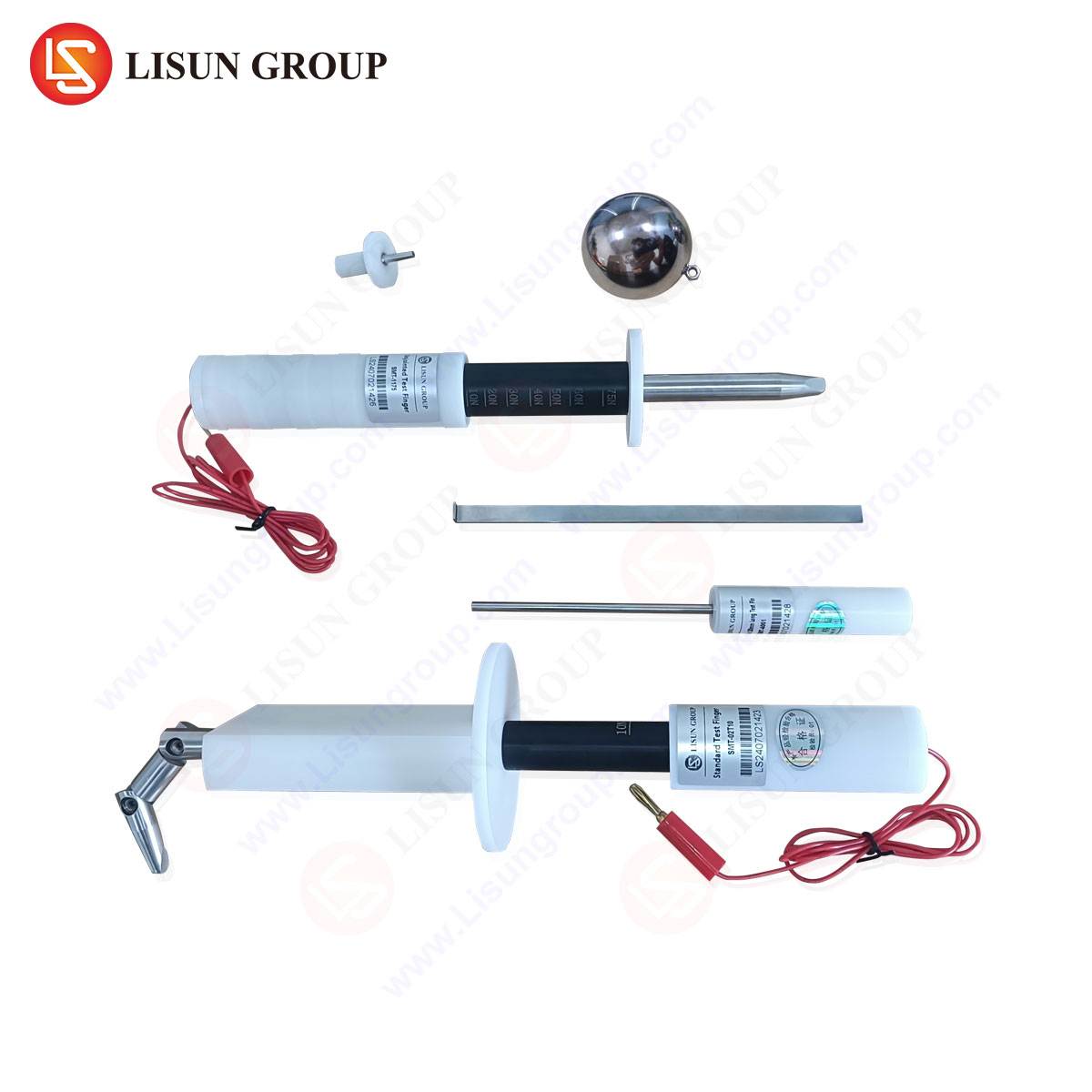
To conduct these assessments with repeatability and global recognition, manufacturers and testing laboratories rely on standardized test equipment. The LISUN series of test fingers, probes, and pins represents a meticulously engineered solution for this critical compliance verification. These tools are not generic metal rods; they are dimensionally exact replicas specified in standards such as IEC 61032, IEC 60529 (IP Code), and UL 60950-1 (now largely superseded by IEC 62368-1). Their design and application are governed by rigorous scientific principles.
Specifications and Physical Design: The LISUN test finger, often referred to as the “articulated test finger” or “jointed test probe,” is typically constructed from metal, with articulated joints that mimic the articulation of a human finger. Its dimensions—a diameter of 12mm, length of 80mm, and a radiused tip—are precisely defined. It is applied with a standardized force (typically 30N or 50N depending on the standard) to every external opening of an equipment enclosure. The long test pin, in contrast, is a rigid, straight probe with a defined diameter (e.g., 1.0mm or 2.0mm as per IEC 61032 Figure 12) and length, designed to probe deeper and narrower openings. The test pin is applied with a lower force (1N) to simulate a more deliberate, probing action. For cable push tests, specialized rigs or probes apply force to cables and wiring to ensure they cannot be displaced into contact with live parts or cause strain on terminations.
Testing Principles and Application: The testing principle is one of simulated intrusion. The equipment under test (EUT) is de-energized for physical safety, but its internal layout is assessed. The appropriate LISUN probe is applied to every opening, seam, and gap. A voltage indicator circuit, often a 40-50V low-voltage supply with a visible or audible indicator, is connected between the probe and the internal live parts or a metal foil wrapped over internal insulation. If the probe contacts a live part or bridges insulation to make contact, the circuit completes, and a “fail” is recorded. For cable push tests, a specified force is applied to cables in their most unfavorable direction to check for displacement. The core scientific principle is the verification of maintained protective separation under defined mechanical stress conditions.
Industry-Specific Applications and Risk Mitigation Scenarios
The application of long pin and cable testing is ubiquitous across industries where electrical safety is non-negotiable. The following examples illustrate its critical nature:
-
Household Appliances & Consumer Electronics: In a food processor or a gaming console, ventilation slots are necessary but present a risk. A child may insert a hairpin or a paperclip. The LISUN long test pin (1mm diameter) is used to verify that such an object cannot contact the mains-connected motor driver board or switching power supply. Similarly, the internal wiring of a washing machine must be routed such that during forceful loading of the drum, cables cannot be pushed onto sharp edges or live terminals.
-
Automotive Electronics & Industrial Control Systems: The harsh environments in these sectors demand robust protection. A control module in an electric vehicle or a programmable logic controller (PLC) in a factory may have connector ports. The test finger ensures that even if a connector is partially unplugged, live pins within the socket are not accessible. Cable glands and strain reliefs are subjected to push and pull tests to guarantee that external cabling, when stressed, does not compromise internal safety.
-
Lighting Fixtures & Electrical Components: Recessed lighting fixtures and outdoor sockets must prevent the entry of objects that could bridge live and neutral contacts. The long pin test is crucial here. For switches and sockets, the test verifies that even if a thin conductive object is inserted alongside a plug pin, it cannot contact live parts within the assembly.
-
Medical Devices & Telecommunications Equipment: Patient-connected medical devices and central office telecom gear have dual concerns: user safety and equipment integrity. A test probe ensures service panels cannot be accidentally opened to expose hazardous voltages during routine operation. Internal data and power cabling are tested to ensure that during module replacement, cables cannot be inadvertently forced into fan blades or high-voltage areas.
-
Aerospace and Aviation Components: In this ultra-high-reliability domain, testing goes beyond standard probes. Custom long pin tests may be developed to simulate specific foreign object debris (FOD) scenarios, ensuring that even in conditions of vibration and pressure change, no accessible path to critical avionics power lines exists.
-
Toy and Children’s Products Industry: This is perhaps the most sensitive application. Standards like EN 62115 mandate strict probe access tests. The LISUN small probe (Figure 11 of IEC 61032) and similar tools are used to ensure that battery compartments, even if opened with a child’s determined effort, do not expose contacts that could cause burns or shock from, for example, a lithium-ion battery pack.
Competitive Advantages of Standardized Test Equipment
Utilizing a certified and traceable tool like the LISUN test system offers distinct advantages beyond mere compliance. First, it ensures test repeatability and reproducibility. Results from a laboratory in Germany using a LISUN probe will be directly comparable to those from a factory in China, facilitating global market access. Second, it provides legal and regulatory defensibility. In the event of a product safety investigation, demonstrating compliance using internationally recognized test equipment is a critical piece of evidence. Third, it enables design feedback. The physical act of probing a prototype often reveals unforeseen design flaws—a seemingly innocuous gap between a bezel and a chassis, or a cable route that passes too close to a heatsink. Identifying these issues during the design verification phase prevents costly post-production redesigns and recalls.
Integration with Broader Safety Testing Regimes
Long pin and cable testing is not performed in isolation. It is a core component of a holistic safety engineering process. It directly informs and is informed by:
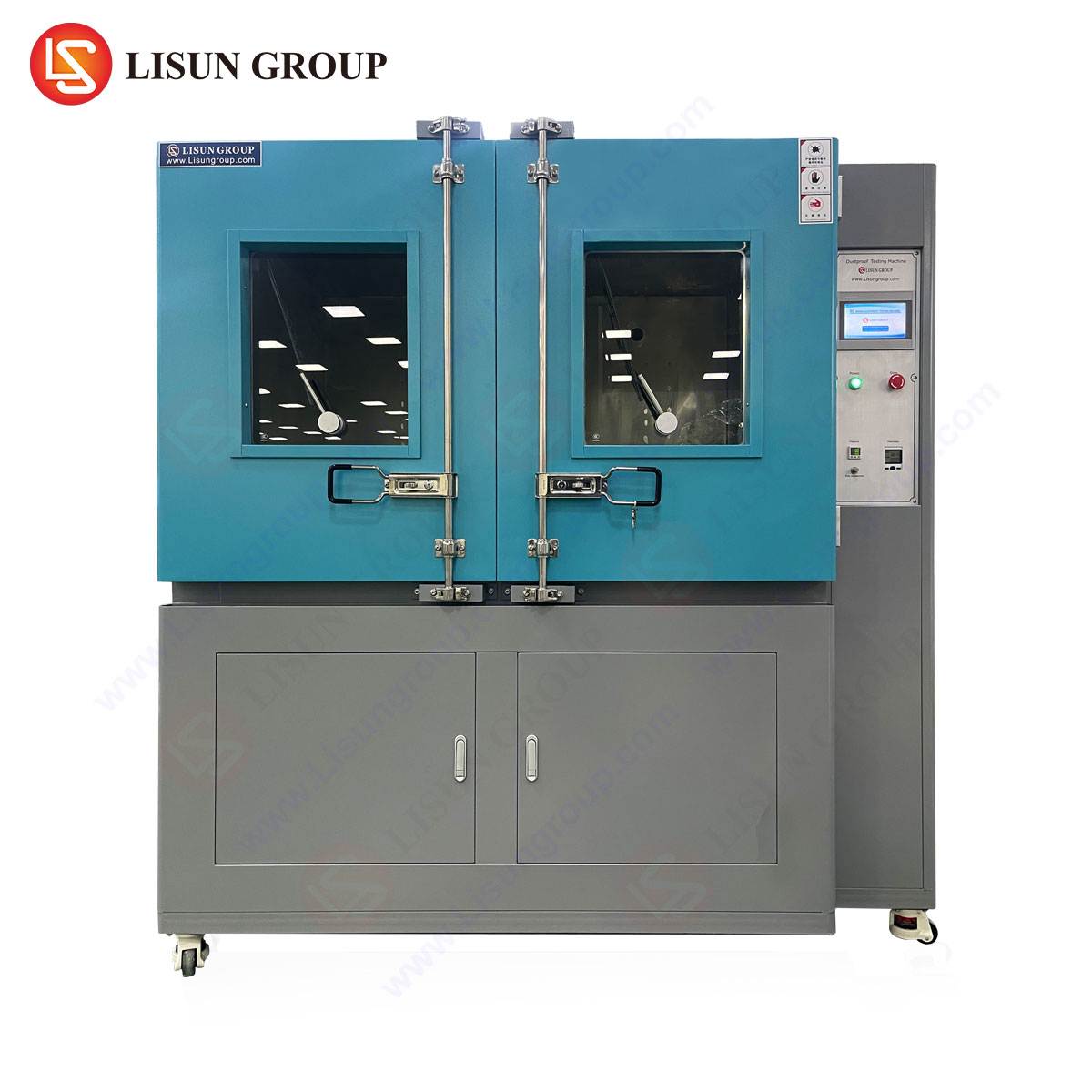
- Ingress Protection (IP) Testing: The test finger and test pin are integral tools for verifying IP ratings (e.g., IP2X for finger protection, IP1X for back-of-hand).
- Dielectric Strength (Hi-Pot) Testing: If a probe test fails, it indicates a potential breakdown path that would subsequently be stressed during high-voltage testing.
- Fault Condition Testing: Tests simulate single-fault conditions, such as a loosened cable or a detached cover, and then apply the probe to see if accessibility is created.
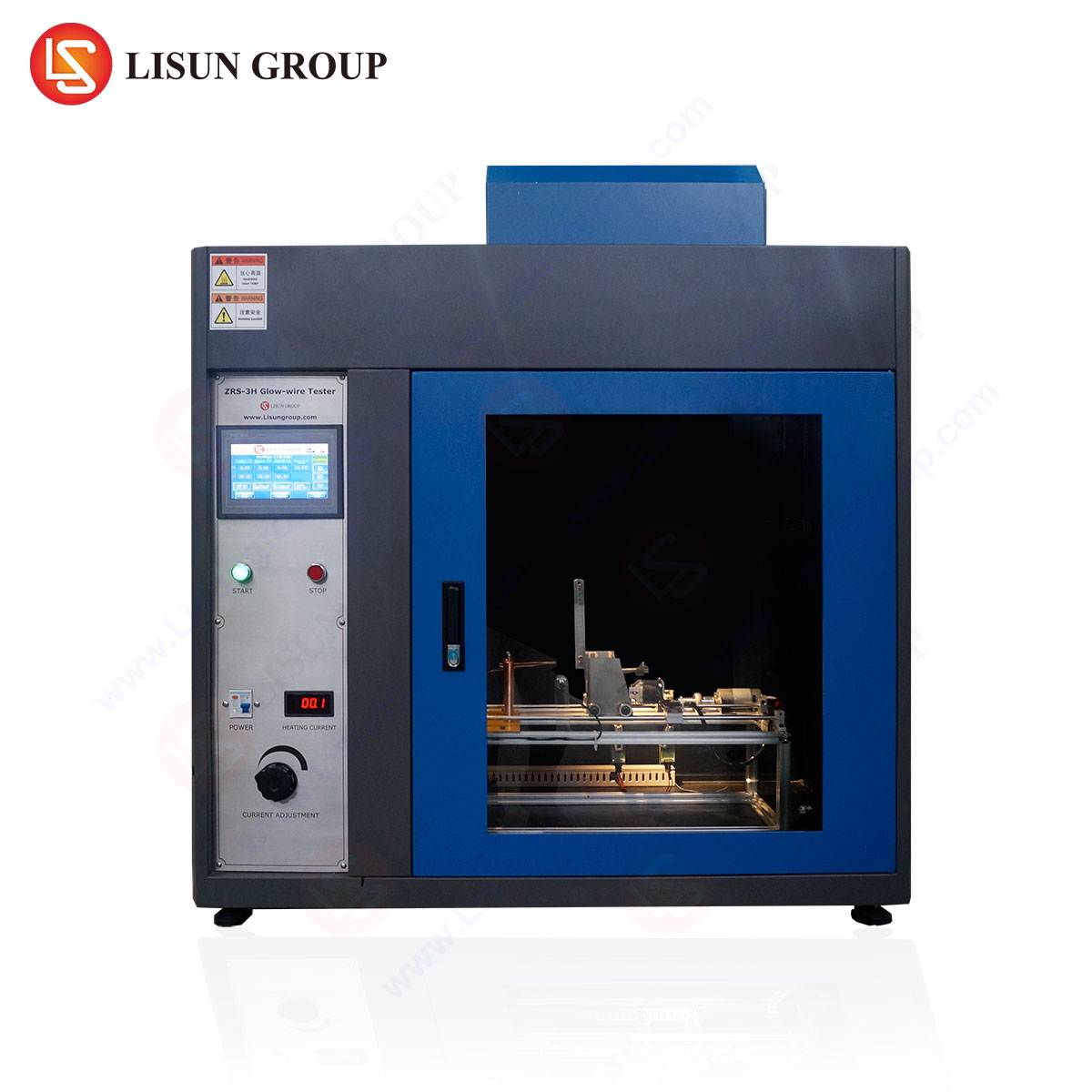
- Material and Flammability Testing: The probes also assess the rigidity and durability of materials; a thin plastic wall that can be easily pierced by the test pin may also fail flammability requirements.
Table 1: Common Test Probes and Their Primary Applications
| Probe Type (Common Reference) | Typical Dimensions | Applied Force | Simulates | Primary Industry Application Examples |
| :— | :— | :— | :— | :— |
| Articulated Test Finger (IEC 61032 Fig. 2) | Ø12mm, 80mm long | 30N ± 3N | Adult finger, back of hand | All equipment enclosures, household appliances, office equipment. |
| Long Straight Test Pin (IEC 61032 Fig. 12) | Ø1.0mm x 100mm | 1N ± 0.1N | Wire, hairpin, tool | Toys, small appliances, connectors, lighting fixtures. |
| Test Pin B (IEC 61032 Fig. 13) | Ø2.0mm x 100mm | 3N ± 0.3N | Larger tool, rod | Industrial controls, automotive electronics, power components. |
| Cable Push Test Apparatus | Varies by cable diameter | Specified in product standard (e.g., 30N, 100N) | Accidental cable displacement | Medical devices, wiring systems, telecommunications racks. |
Conclusion: An Indispensable Pillar of Product Safety
The application of long pin and cable testing represents a fundamental and non-negotiable pillar of modern product safety engineering. It translates abstract safety principles into tangible, repeatable physical tests. By employing precisely engineered tools like the LISUN test finger, probe, and pin system, manufacturers across the electrical, electronic, and consumer goods spectrum can empirically validate that their products are resilient against real-world intrusion scenarios. This process not only satisfies regulatory mandates but, more importantly, engenders genuine safety integrity, protecting end-users from electric shock hazards and ensuring the reliable operation of critical systems in an increasingly electrified world. The continued evolution of product design will invariably be paralleled by the refined application of these essential testing methodologies.
Frequently Asked Questions (FAQ)
Q1: What is the key difference between the test finger and the long test pin in application?
The articulated test finger simulates the accessibility of live parts by a user’s finger or hand during normal handling and operation. It tests for broader, more common access. The long, rigid test pin simulates a more deliberate or accidental intrusion by a thin, stiff object like a tool, wire, or child’s probe. It tests for more severe but foreseeable misuse, often associated with a higher risk of direct contact with concentrated energy.
Q2: Our product has passed a 2500V dielectric strength test. Is long pin testing still necessary?
Absolutely. Dielectric strength (hi-pot) testing evaluates the integrity of insulation under a high-voltage stress. However, it does not verify that a conductive object cannot physically bypass that insulation altogether. A long pin test checks for physical accessibility paths. A product could have excellent insulation but a design flaw that allows a pin to directly touch a live conductor, completely circumventing the insulation. Both tests are complementary and required.
Q3: How often should test probes like the LISUN equipment be calibrated or verified?
As with any critical dimensional metrology tool, test probes should be included in a formal calibration program. It is recommended that they be calibrated annually or per the laboratory’s quality management system (e.g., ISO/IEC 17025). Calibration verifies that the probe’s dimensions, articulation force (for test fingers), and applied force (for test pins) remain within the strict tolerances specified by the relevant standards (e.g., IEC 61032).
Q4: For a cable push test, how is the appropriate test force determined?
The required force is not arbitrary; it is specified within the applicable end-product safety standard. For example, IEC 62368-1 (Audio/Video, Information & Communication Technology equipment) specifies different forces for different cable types and weights. IEC 60601-1 (Medical Electrical Equipment) has its own set of requirements. The manufacturer must identify the correct horizontal and vertical safety standard for their product to determine the exact test parameters.
Q5: Can we perform these tests in-house during the design phase, or must they be done by an external lab?
In-house testing during the design and prototyping phase is highly recommended and is a best practice for Design for Safety (DFS). Using certified tools like the LISUN system allows engineering teams to identify and rectify accessibility issues early, saving significant time and cost. Formal certification for market approval, however, typically requires testing by an accredited third-party laboratory, which will use its own certified equipment to provide an objective assessment for the certification body.