




A Comparative Analysis of Flammability Classifications: UL 94 V-0, V-1, V-2, and HB in Material Specification
Introduction to Flammability Standards and Material Safety
In the engineering and specification of materials for electrical, electronic, and mechanical components, the propensity of a material to ignite, propagate flame, and emit burning droplets constitutes a critical safety parameter. The Underwriters Laboratories Standard 94, “Tests for Flammability of Plastic Materials for Parts in Devices and Appliances,” serves as the globally recognized benchmark for evaluating these characteristics. Within this standard, the Vertical Burning (V) and Horizontal Burning (HB) classifications provide a foundational taxonomy for material selection based on performance under controlled ignition. Misapplication or misunderstanding of these classifications—V-0, V-1, V-2, and HB—can lead to inadequate safety margins, regulatory non-compliance, and potential field failures. This technical analysis delineates the precise testing methodologies, performance criteria, and appropriate industrial applications for each classification, while introducing the instrumental role of advanced testing apparatus such as the LISUN ZY-3 Needle Flame Test apparatus in validating material performance against these and related standards.
Deciphering the UL 94 Vertical Burning (V) Test Protocol
The UL 94 Vertical Burning test is a stringent evaluation designed for materials requiring a higher degree of flame resistance. The test specimen, with nominal dimensions of 125mm x 13mm x minimum thickness, is mounted vertically in a controlled chamber. A standardized Bunsen burner flame, calibrated to 20mm in height with a specified thermal output, is applied twice to the free lower end of the specimen: first for 10 seconds, then, after self-extinguishment, for a second 10-second application following a brief cool-down period. The classification is determined by post-ignition behavior, specifically the average afterflame time (the duration the specimen continues to flame after removal of the ignition source), the total afterflame time across both applications, afterglow time, and crucially, whether the specimen drips flaming particles capable of ignoning a dry surgical cotton indicator placed 300mm below.
The distinction between V-0, V-1, and V-2 hinges on progressively less restrictive timing and dripping criteria. A V-0 classification mandates the most rigorous performance: afterflame times for each individual application must not exceed 10 seconds, and the total combined afterflame time for the five specimens tested must not exceed 50 seconds. Furthermore, specimens must not drip flaming particles that ignite the cotton, and afterglow must not persist beyond 30 seconds after the second flame application. V-1 relaxes the afterflame time slightly (individual afterflame ≤ 30 seconds, total ≤ 250 seconds) while maintaining the prohibition on cotton-igniting drips. V-2 shares identical timing criteria with V-1 but permits flaming drips that ignite the cotton below, representing a significant differentiation in application risk, particularly in vertically oriented assemblies where droplets could fall onto other components.
The Horizontal Burning (HB) Classification and Its Application Scope
In contrast to the vertical tests, the UL 94 Horizontal Burning test represents a lower severity classification. The specimen is mounted horizontally, and a 25mm flame is applied to one end at a 45-degree angle for 30 seconds or until the flame front reaches a 25mm reference mark. The primary measured parameter is the burn rate, calculated in millimeters per minute. To achieve an HB rating, the burn rate must not exceed 40 mm/min for specimens of thickness 3.0 to 13 mm, or 75 mm/min for specimens thinner than 3.0 mm, when tested in the material’s minimum thickness. This classification indicates that the material will burn but at a slow, predictable rate when oriented horizontally and is generally considered unsuitable for components where flame propagation is a paramount concern. HB materials are typically employed in non-critical structural parts, internal housings where fire risk is minimal, or in applications governed by less stringent regulatory frameworks.
Critical Industry Applications and Specification Guidelines
Material selection guided by UL 94 classifications is not arbitrary but is dictated by end-use environment, regulatory requirements, and failure mode analysis.
- Electrical and Electronic Equipment & Industrial Control Systems: Enclosures for power supplies, circuit breakers, and motor controllers often mandate V-0 materials to contain potential internal arcing events. Connectors and terminal blocks may require V-0 or V-1 to prevent flame travel along wiring harnesses.
- Household Appliances & Consumer Electronics: Internal supports and external housings for devices like televisions, routers, and kitchen appliances may utilize V-1 or V-2 materials, balancing safety and cost. Critical components near heating elements (e.g., in toasters or hair dryers) often require V-0.
- Automotive Electronics: Under-hood components, battery management system housings, and connectors within the passenger compartment are increasingly specified as V-0 due to heightened OEM safety standards and proximity to potential ignition sources.
- Lighting Fixtures: Lamp housings, especially for high-temperature light sources like halogens or certain LEDs, and socket assemblies frequently require V-2 or better to prevent ignition from electrical faults or overheating.
- Telecommunications Equipment: Data center hardware, fiber optic distribution panels, and network switches use V-0 materials in chassis and cards to prevent fire spread in high-density, unattended installations.
- Medical Devices & Aerospace Components: These sectors often exceed UL 94, but V-0 is a common baseline for non-metallic parts in imaging devices, patient monitors, and aircraft interior components, where toxic smoke and flame propagation are severe hazards.
- Electrical Components and Cable Systems: Switches, sockets, and cable insulation/jacketing are tested per different but related standards (e.g., UL 1581 for wires). However, material formulations are often benchmarked against UL 94 V ratings for flame retardancy.
The Role of Needle Flame Testing in Supplementary Hazard Assessment
While UL 94 V and HB tests simulate exposure to a small, calibrated flame, they may not fully represent all real-world fault conditions, such as those caused by overheated, glowing, or electrically stressed small components. Standards like IEC 60695-2-2 address this by specifying a needle flame test. This procedure uses a smaller, targeted flame (typically 12mm ± 1mm high) produced by a specific burner fed with butane, applied to the test specimen or a complete assembly to simulate the effect of a small ignition source like a faulty capacitor or resistor. The test evaluates whether the ignited part ignites surrounding materials, the duration of any flame, and the spread of fire. It is particularly relevant for industries such as medical devices, automotive electronics, and industrial controls, where miniaturized components operate at high densities. Passing needle flame testing is often a complementary requirement to UL 94 V-0 classification for high-reliability applications, providing a more comprehensive fire safety profile.
Instrumentation for Precise Flammability Verification: The LISUN ZY-3 Needle Flame Test Apparatus
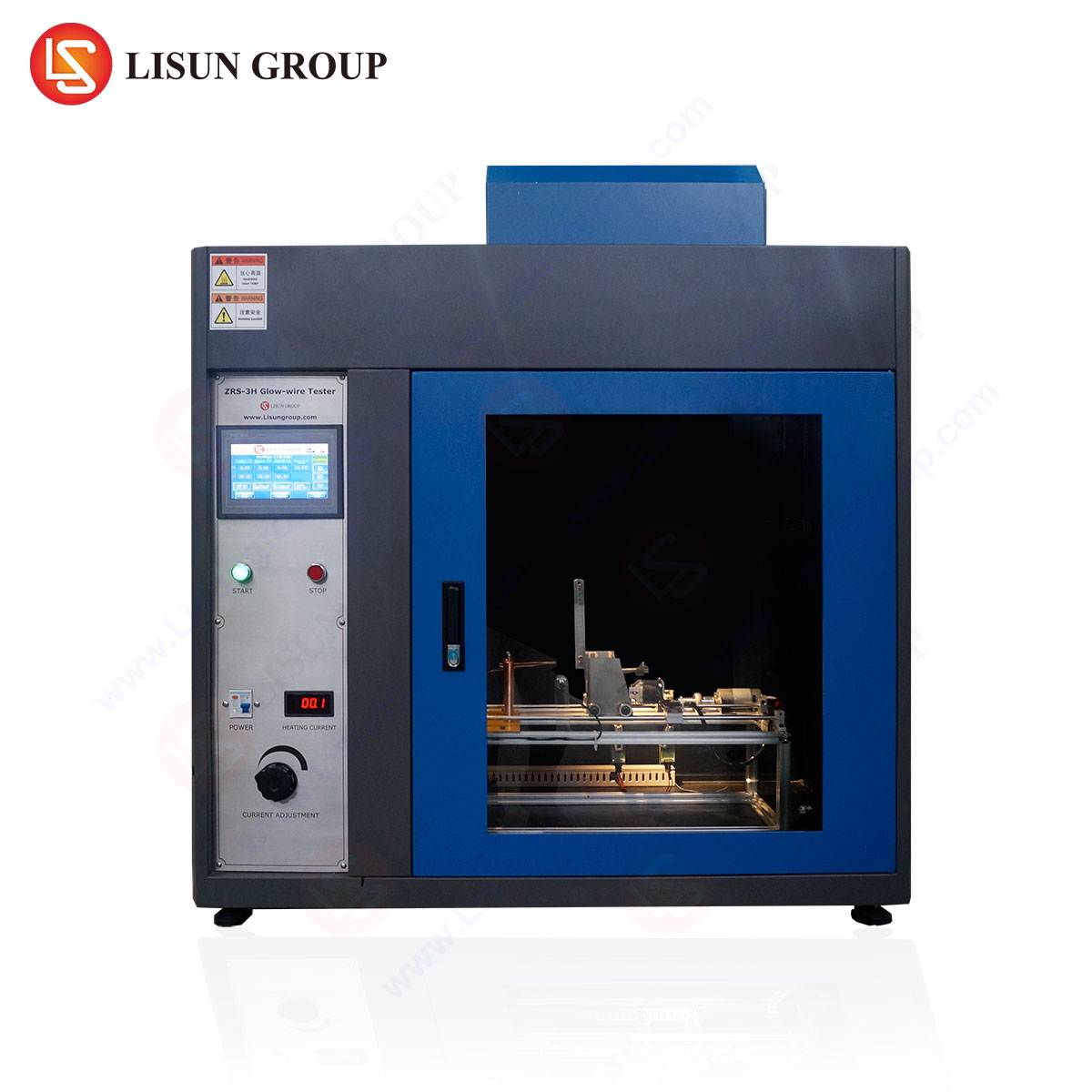
Accurate and repeatable flammability testing demands instrumentation engineered to exacting standards. The LISUN ZY-3 Needle Flame Test Apparatus is designed specifically to comply with IEC 60695-2-2, GB/T 5169.5, and related standards for needle flame testing. Its design philosophy centers on precision, user safety, and data integrity.
Specifications and Testing Principles: The apparatus features a calibrated needle burner with precise fuel flow control to maintain the required flame height and temperature. A sophisticated ignition system ensures consistent flame application. The test chamber is constructed from stainless steel with heat-resistant viewing windows, integrating a specimen holder that allows for adjustable positioning as per standard specifications. An integrated timing device automatically records application and afterflame durations. The fundamental principle involves positioning the test specimen, applying the needle flame for a predetermined period (e.g., 30 seconds), and observing the subsequent combustion behavior, including ignition, flame spread, and burning droplets.
Industry Use Cases: The ZY-3 is deployed in quality assurance and R&D laboratories across the aforementioned sectors. For instance, a medical device manufacturer would use it to validate that the plastic housing around a power supply board does not propagate flame if an internal SMT component overheats. An automotive electronics supplier would test connector assemblies to ensure a fault in one circuit does not compromise the entire wiring module.
Competitive Advantages: The LISUN ZY-3 distinguishes itself through enhanced operational safety features, such as integrated gas leak detection and automatic flame cut-off. Its construction from durable, corrosion-resistant materials ensures long-term calibration stability. The user interface is designed for intuitive operation while maintaining comprehensive data logging capabilities, crucial for audit trails and compliance documentation. Furthermore, its design accommodates testing of both finished products and material specimens, offering versatility for laboratories serving multiple phases of product development.
Data Correlation and Specification Strategy
A coherent material specification strategy involves understanding the relationship between different tests. The table below summarizes the key criteria for UL 94 classifications:
| Classification | Test Orientation | Afterflame Time per Application (Max) | Total Afterflame Time for 5 Specimens (Max) | Flaming Drips Igniting Cotton? | Afterglow Time (Max) |
|---|---|---|---|---|---|
| V-0 | Vertical | 10 seconds | 50 seconds | No | 30 seconds |
| V-1 | Vertical | 30 seconds | 250 seconds | No | 60 seconds |
| V-2 | Vertical | 30 seconds | 250 seconds | Yes | 60 seconds |
| HB | Horizontal | Burn Rate ≤ 40 mm/min (thickness ≥3mm) | Not Applicable | Permitted | Not Applicable |
It is imperative to note that performance is thickness-dependent; a material rated V-0 at 3.0mm may only achieve V-2 or HB at 1.0mm. Therefore, specifications must always reference the required thickness. Moreover, a comprehensive safety approach may require a multi-standard validation: a material may be specified as “UL 94 V-0 @ 1.6mm and compliant with IEC 60695-2-2 needle flame test,” ensuring robustness against both generalized and localized ignition sources.
Frequently Asked Questions (FAQ)
Q1: Can a material be both UL 94 V-0 and pass the needle flame test?
Yes, these tests evaluate different but complementary hazards. UL 94 V-0 assesses reaction to a defined Bunsen burner flame in a vertical orientation. The needle flame test (e.g., IEC 60695-2-2) assesses resistance to ignition from a smaller, simulated fault-condition flame. A high-performance material, often through specific flame-retardant formulations, can be engineered to pass both, which is a common requirement in high-reliability sectors like automotive and aerospace.
Q2: Why is the prohibition on cotton-igniting drips so critical in the V-0 vs. V-2 distinction?
Flaming drips represent a secondary ignition hazard. In an enclosed device, a burning droplet falling from a vertically mounted part (like a circuit board or connector) can ignite lower-lying components, wiring, or other combustible materials, thereby propagating fire beyond the origin point. V-0’s prohibition on such drips significantly contains the fire risk within the initial component.
Q3: How does the LISUN ZY-3 apparatus ensure consistent flame application for reproducible results?
The ZY-3 employs a precision needle burner with a calibrated orifice and a regulated fuel supply system to maintain a consistent gas flow rate. This ensures the flame height remains at the standard-defined 12mm ± 1mm. Automated timing controls and a rigid specimen positioning system guarantee that the flame application duration and angle are repeatable across tests, which is fundamental for generating reliable, comparable data.
Q4: Is a Horizontal Burning (HB) rating sufficient for any consumer product?
Generally, no. HB indicates the material is slow-burning but will still support combustion. Most regulatory frameworks for electrical and electronic goods (e.g., IEC 62368-1) require a minimum of a V-2 classification for enclosures and structural parts due to the greater risk of vertical flame spread. HB is typically reserved for internal, non-structural parts where fire risk is deemed negligible or where the material is used in large, horizontal surfaces only.
Q5: What are the key calibration and maintenance requirements for a needle flame test apparatus like the ZY-3?
Primary requirements include regular verification of the fuel flow rate and burner orifice condition to ensure correct flame geometry and temperature. The timing mechanisms must be calibrated for accuracy. The apparatus should be kept clean of soot and residue from previous tests. Periodic validation using reference materials with known behavior is recommended to confirm the entire system’s performance aligns with standard specifications.