

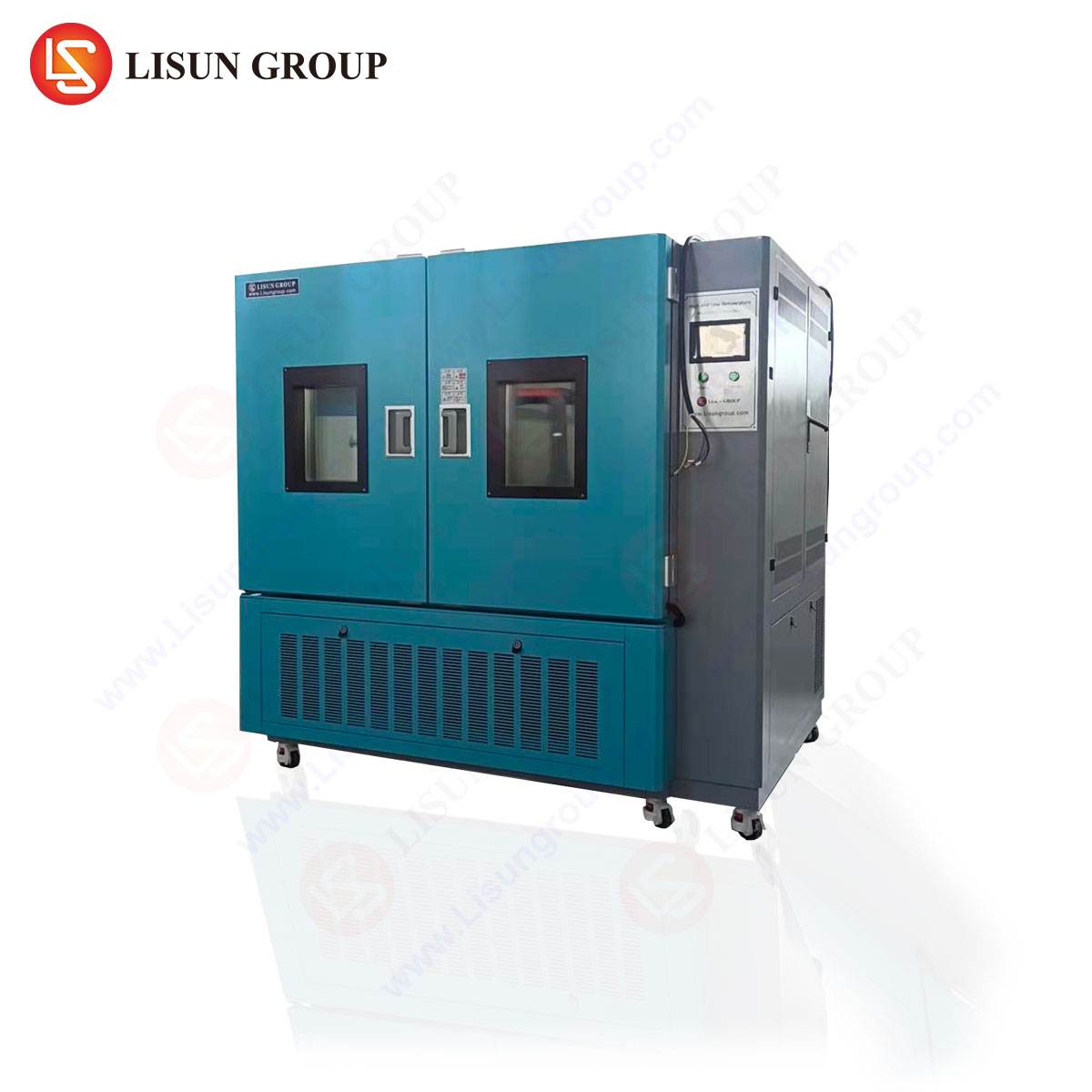



Understanding Xenon Weathering Chambers: Principles, Applications, and Integrated Environmental Testing
The Photochemical Basis of Accelerated Weathering
Xenon arc weathering chambers represent a critical technology for the predictive evaluation of material durability. These instruments simulate the full spectrum of solar radiation, from ultraviolet to infrared wavelengths, within a controlled laboratory environment. The core principle hinges on the generation of light via a xenon arc lamp, which, when filtered appropriately, provides a spectral power distribution that closely approximates natural sunlight. This artificial irradiation, when combined with precise control of temperature, relative humidity, and moisture cycles, accelerates the photochemical and thermal degradation processes that materials undergo during outdoor exposure. The objective is not merely to induce failure, but to replicate the fundamental chemical and physical mechanisms of degradation—such as polymer chain scission, pigment fading, loss of gloss, chalking, and embrittlement—thereby providing correlative data for service life prediction. This methodology is foundational to quality assurance and research across industries where product longevity under environmental stress is a non-negotiable requirement.
Spectral Fidelity and Irradiance Control in Simulation
The efficacy of a xenon weathering test is intrinsically linked to the spectral fidelity of the light source. Unlike simpler UV chambers, xenon systems utilize a combination of optical filters to tailor the output spectrum. Daylight filters, commonly borosilicate inner and outer filters, are employed to simulate terrestrial sunlight, cutting off short-wavelength UV radiation not present at the Earth’s surface. For materials destined for behind-glass applications, such as automotive interior components or display screens, Window Glass filters are used to replicate the spectral cutoff of standard glazing. Precise irradiance control, typically at a defined wavelength like 340 nm or 420 nm, is maintained through closed-loop feedback systems. This ensures consistent radiant exposure (measured in Joules per square meter) across tests and between laboratories, a prerequisite for reproducible, standards-compliant testing. Variations in irradiance, often programmable to simulate diurnal cycles or geographic solar intensity, directly influence the kinetic energy available for photochemical reactions, making its control a paramount technical consideration.
The Synergy of Multi-Stress Factors: Beyond Light Alone
Isolated light exposure provides an incomplete simulation of real-world conditions. Advanced xenon weathering chambers integrate multiple, simultaneous environmental stressors. Specimens are subjected to cyclic periods of light and darkness, during which temperature is independently controlled. Black Standard Temperature (BST) or Black Panel Temperature (BPT) sensors provide a critical measurement of the maximum temperature a dark, opaque specimen might attain under irradiation, guiding the chamber’s thermal regulation. Humidity is controlled during both light and dark phases, with high humidity periods often inducing thermal shock or promoting hydrolytic degradation in polymers. Furthermore, simulated rain cycles via direct water spray—typically using deionized water to prevent contamination—introduce mechanical thermal shock and leach soluble degradation byproducts. This confluence of photolytic, thermal, oxidative, and hydrolytic stresses creates a synergistic acceleration environment that more accurately mirrors complex outdoor phenomena than any single factor could achieve.
Correlative Validation and the Challenge of Acceleration
A central challenge in accelerated weathering is establishing valid correlation between laboratory hours and months or years of outdoor exposure. Acceleration factors are not universal; they are material-specific and depend on the dominant degradation mechanisms. A formulation that degrades primarily via UV-initiated oxidation may exhibit a different acceleration rate compared to one susceptible to hydrolysis induced by humidity. Consequently, robust testing protocols rely on benchmark materials with known outdoor performance. Standards organizations such as ASTM International, ISO, and IEC provide foundational methodologies—e.g., ASTM G155, ISO 4892-2, IEC 60068-2-5—which define parameters for specific applications. However, these are often starting points. Sophisticated users develop proprietary exposure profiles that intensify specific stresses relevant to their product’s end-use environment, such as the high UV and heat of Arizona desert testing or the damp, cooler conditions of a Florida subtropical climate.
Integrating Xenon Testing into a Comprehensive Reliability Regime
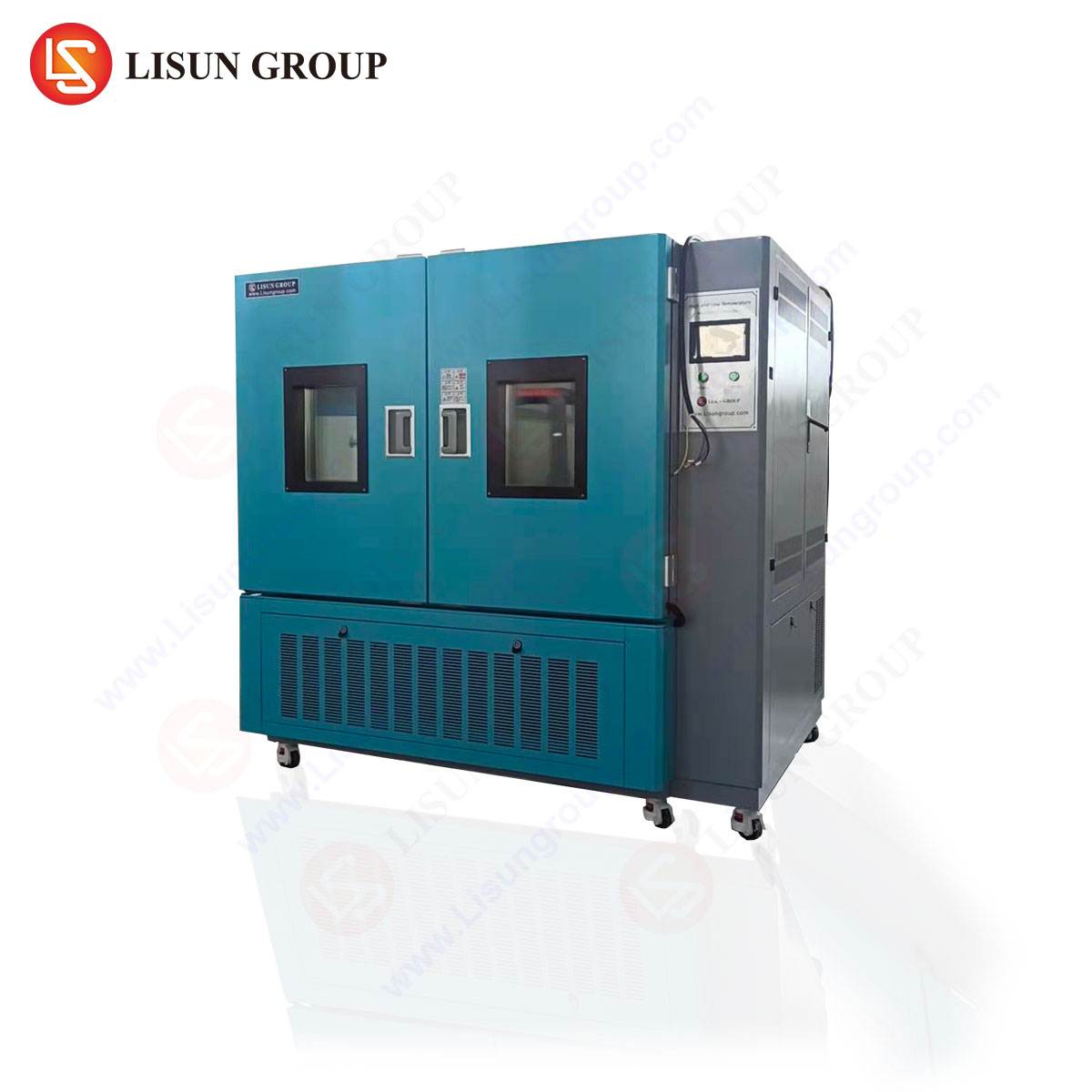
Xenon weathering is rarely a standalone test. It is a core component of a broader product validation strategy that includes other specialized environmental stress tests. For instance, a product may first undergo xenon exposure to evaluate coating weatherability and colorfastness, followed by a HLST-500D Thermal Shock Test Chamber to assess the robustness of material interfaces and solder joints against extreme thermal transients. The HLST-500D employs a two-zone (high-temperature and low-temperature) or three-zone principle, where the test specimen is rapidly transferred between chambers set at opposing temperature extremes. This induces high mechanical stress due to differential coefficients of thermal expansion (CTE) between bonded materials.
HLST-500D Specifications and Testing Principle:
- Temperature Range: High Temperature Chamber: +60°C to +200°C; Low Temperature Chamber: -10°C to -65°C.
- Recovery Time: ≤5 minutes after specimen transfer.
- Transfer Time: ≤10 seconds (manual or automatic transfer systems minimize dwell time at intermediate temperatures).
- Chamber Volume: 500 Liters (provides ample space for multiple components or small assemblies).
- Control System: Programmable controller for defining dwell times, number of cycles, and temperature extremes.
The testing principle involves cycling components between the extremes, for example, from +125°C (simulating under-hood automotive conditions or powered operational heat) to -40°C (simulating cold startup or storage). Dwell times are sufficient for the specimen to reach thermal equilibrium, ensuring the stress is fully realized.
Industry Use Cases for Combined Testing:
- Automotive Electronics: An engine control unit (ECU) housing is subjected to xenon weathering to ensure its plastic resin does not fade or become brittle from sun exposure. Subsequently, the populated ECU board is placed in the HLST-500D to verify that solder connections between large ceramic capacitors and the FR-4 PCB can withstand thousands of temperature cycles from desert heat to winter cold without fracture.
- Telecommunications Equipment: An outdoor 5G antenna radome must maintain signal transparency and structural integrity. Xenon testing validates the UV stability of the polycarbonate cover. Following this, the internal RF amplifier modules are thermally shocked in the HLST-500D to screen for latent manufacturing defects in ball-grid-array (BGA) solder joints before field deployment.
- Aerospace and Aviation Components: Cockpit display panels undergo xenon exposure to guarantee legibility under intense canopy sunlight. The integrated display’s electronic assemblies are then subjected to thermal shock testing to ensure reliability during rapid ascents/descents that cause drastic ambient temperature shifts.
Competitive Advantages of a System like the HLST-500D:
The HLST-500D’s rapid transfer time and precise temperature recovery are critical for applying a severe thermal gradient, a key differentiator from slower, single-chamber temperature cycling ovens. Its 500-liter capacity allows for testing larger batches or sizable sub-assemblies, improving throughput. The independent control of two extreme zones enables a true shock profile, which is more effective at precipitating CTE mismatch failures than ramped temperature cycles.
Application-Specific Protocols Across Industries
The parameterization of xenon tests varies significantly by industry, guided by both consensus standards and proprietary knowledge.
- Electrical & Electronic Equipment / Industrial Control Systems: Focus is on the durability of enclosures (impact resistance post-weathering), connector integrity, and labeling legibility. Tests often emphasize humidity cycling to promote corrosion of metallic contacts and conformal coating evaluation.
- Household Appliances & Consumer Electronics: For products used outdoors or near windows (e.g., garden appliance housings, television bezels), color change (ΔE) and gloss retention are critical metrics. Tests may use lower irradiance levels with extended humidity to assess cosmetic degradation.
- Lighting Fixtures: Outdoor luminaires are tested for lens yellowing, which reduces luminous flux, and for gasket sealing integrity after prolonged UV and thermal exposure, which prevents ingress of moisture.
- Medical Devices: Disposable devices with plastic components that may be stored in sunlit areas are tested for biocompatibility changes (e.g., plasticizer leaching) and mechanical property retention post-irradiation.
- Cable and Wiring Systems: Insulation and jacketing materials are evaluated for cracking, chalking, and tensile strength loss. Tests frequently include a periodic mechanical flexing cycle during exposure to simulate wind-induced movement.
Data Acquisition and Quantitative Degradation Metrics
Modern xenon chambers are integrated with sophisticated data acquisition systems. Continuous monitoring of irradiance, BST, chamber temperature, and relative humidity ensures protocol adherence. Quantitative analysis of specimens is performed at regular intervals using both instrumental and subjective methods. Instrumental techniques include spectrophotometry for color and gloss measurements, Fourier-transform infrared spectroscopy (FTIR) for tracking chemical bond changes, and mechanical testers for tensile strength or elongation-at-break. Visual inspections, often using standardized gray scales for color change and photographic documentation, provide complementary qualitative data. The resulting dataset—property degradation versus cumulative radiant exposure—allows for the construction of degradation curves, enabling extrapolation to end-of-life performance thresholds.
The Critical Role of Calibration and Maintenance
The generation of reliable, repeatable data mandates rigorous calibration and preventive maintenance. Xenon arc lamps degrade over time, with their spectral output shifting; thus, regular lamp rotation and replacement on a defined schedule (often after 1,500 hours) are essential. Optical filters must be kept clean and replaced as per manufacturer guidelines to maintain spectral accuracy. Calibration of irradiance sensors, temperature probes (particularly BST sensors), and humidity transducers should be performed traceably to national standards. Water quality for humidification and spray cycles must be controlled to prevent mineral deposition on specimens or chamber components. A robust quality system for the chamber itself is as important as the test protocol for the materials under evaluation.
Future Trajectories in Accelerated Weathering Technology
The evolution of xenon weathering technology is oriented towards greater precision, intelligence, and integration. Trends include the development of more spectrally tunable light sources, allowing for on-the-fly simulation of different global solar conditions. Increased automation, with robotic handling for specimen insertion, rotation, and removal for interim measurements, reduces variability and labor costs. Furthermore, the integration of in-situ monitoring techniques, such as small-spot FTIR or optical coherence tomography, allows for the observation of degradation kinetics without interrupting the test. The convergence of large-scale weathering data with predictive machine learning models also holds promise for more accurate service life forecasting, moving from empirical correlation to mechanistic modeling.
Frequently Asked Questions (FAQ)
Q1: What is the primary difference between a xenon weathering chamber and a UV condensation weatherometer?
A xenon chamber replicates the full solar spectrum (UV, visible, and IR) and allows for independent, precise control of light, temperature, and humidity in complex, programmable cycles. A UV condensation device typically uses fluorescent UV lamps (UVA-340 or UVB-313) emitting a narrow band of UV light and relies on condensation for moisture, providing a less spectrally complete but often faster and more cost-effective test for screening materials where UV degradation is the dominant concern.
Q2: How do you determine the appropriate irradiance level and filter combination for testing a specific material?
The selection is governed by the material’s end-use environment and relevant industry standards. For most outdoor applications under direct sunlight, a borosilicate daylight filter with an irradiance control point at 0.55 or 0.65 W/m² at 340 nm is common. For behind-glass applications, a Window Glass filter is mandatory. The specific irradiance level is often prescribed by the test standard (e.g., ASTM G155, Table 1). For proprietary testing, historical correlation data or benchmarking against a known material’s outdoor performance guides the parameter selection.
Q3: Why is thermal shock testing, like that performed in the HLST-500D, often conducted after xenon weathering?
Xenon weathering can induce micro-cracking, embrittlement, and changes in the material’s coefficient of thermal expansion. A subsequent thermal shock test assesses whether these weathering-induced changes have compromised the product’s ability to withstand sudden temperature fluctuations encountered in real-world use. It tests the synergistic effect of photo-degradation followed by severe thermal mechanical stress, a common sequence for electronics in automotive or aerospace environments.
Q4: Can xenon testing accurately predict absolute product lifetime in years?
Not directly. Xenon testing provides an accelerated relative comparison. It is most effectively used to rank material formulations, compare lot-to-lot consistency, or qualify a new product against a predecessor with a known field performance history. Predicting an absolute lifetime in years requires establishing a correlation factor between accelerated test hours and real-time outdoor exposure for that specific material system, which requires long-term outdoor data for calibration.
Q5: What are the key specifications to verify when qualifying a thermal shock chamber like the HLST-500D for testing electronic assemblies?
Critical specifications include: Temperature Range (ensuring it covers the required extremes, e.g., -55°C to +125°C for military-grade components), Recovery Time (should be short to maintain the chamber’s setpoint after the hot mass is introduced), Transfer Time (must be rapid, typically <10 seconds, to induce a true "shock"), and Chamber Volume/Capacity (to accommodate the test specimen size and quantity). The stability and uniformity of temperatures in each zone are also vital for test consistency.