

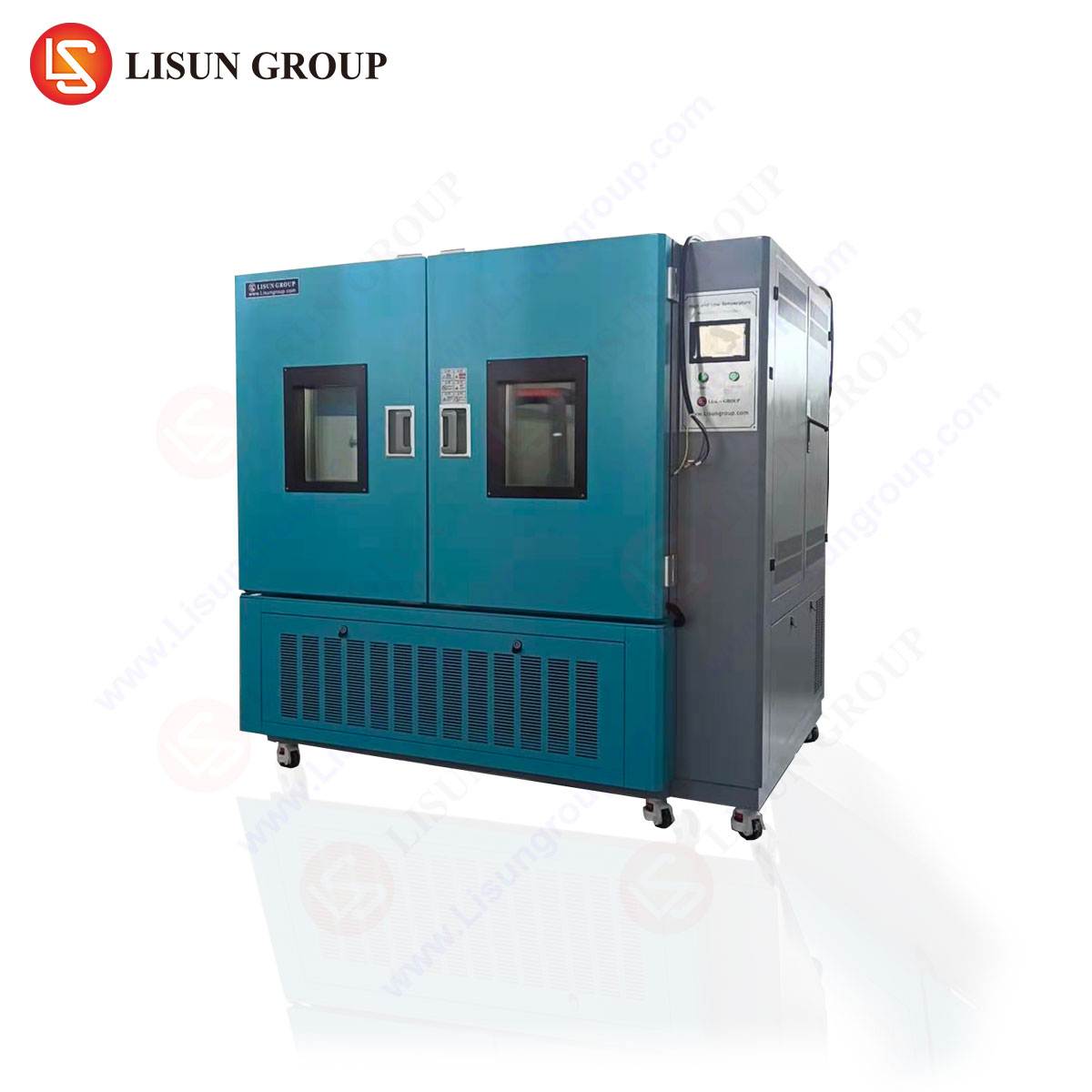



Mastering Environmental Testing with LISUN‘s ESPEC Climatic Chamber
Introduction: The Imperative of Controlled Environmental Simulation
The reliability and longevity of modern manufactured goods are inextricably linked to their performance under diverse and often extreme environmental conditions. For industries ranging from automotive electronics to aerospace components, failure in the field is not merely an inconvenience; it can represent significant safety risks, financial loss, and reputational damage. Consequently, environmental testing has evolved from a final quality check into a fundamental, integrated phase of the product development lifecycle. This process involves subjecting components, sub-assemblies, and finished products to precisely controlled climatic stresses within specialized equipment, thereby accelerating aging, identifying design flaws, and validating performance specifications before market release.
Central to this discipline is the climatic test chamber, a sophisticated apparatus designed to replicate and exceed the temperature and humidity conditions a product may encounter throughout its operational life. Among the advanced solutions in this field, LISUN’s ESPEC series of climatic chambers represents a convergence of engineering precision, operational reliability, and user-centric design. This article provides a technical examination of environmental testing methodologies, with a focused analysis on the application and capabilities of a specific chamber model, the GDJS-015B Temperature Humidity Test Chamber. We will explore its operational principles, technical specifications, and its critical role in ensuring product robustness across a multitude of high-stakes industries.
Fundamental Principles of Combined Temperature and Humidity Stress Testing
The core objective of a temperature humidity test chamber is to create a stable, uniform, and controllable environment where both thermal and hygrometric variables can be manipulated independently or in concert. The scientific basis for this testing rests on several key physical principles. Temperature cycling induces expansion and contraction in materials, testing the integrity of solder joints, adhesive bonds, and mechanical assemblies. The coefficient of thermal expansion (CTE) mismatch between dissimilar materials—such as silicon chips and epoxy substrates or metal casings and polymer gaskets—is a primary driver of stress-induced failures.
Humidity, particularly when combined with temperature, introduces a more complex set of failure mechanisms. High relative humidity (RH) can lead to moisture absorption by hygroscopic materials, resulting in swelling, plasticization, and degradation of dielectric properties. Condensation, which occurs when the product surface temperature falls below the dew point of the chamber atmosphere, can cause immediate electrical short circuits, galvanic corrosion, and metal migration. The synergistic effect of temperature and humidity is often more severe than the sum of the individual stresses, accelerating chemical reactions like hydrolysis in polymers and facilitating the growth of dendritic filaments on printed circuit boards (PCBs), a phenomenon known as conductive anodic filament (CAF) growth.
Testing standards, such as IEC 60068-2-1 (Cold), IEC 60068-2-2 (Dry Heat), and IEC 60068-2-30 (Damp Heat, Cyclic), provide standardized profiles to ensure reproducibility and comparability of test results across laboratories. These profiles define not only the extreme setpoints but also critical parameters like transition rates, dwell times, and tolerances, which the test chamber must accurately maintain.
Technical Architecture of the GDJS-015B Climatic Chamber
The LISUN GDJS-015B is a benchtop temperature humidity test chamber engineered for precision testing of small components, modules, and prototypes. Its design incorporates a cascade refrigeration system and a sophisticated humidity generation and control scheme to achieve a broad performance envelope within a compact footprint.
The chamber’s workspace dimensions are 500 x 500 x 600 mm (Width x Depth x Height), offering a 150-liter volume suitable for a batch of electronic control units, a series of sensor modules, or multiple batches of connectors and switches. The exterior construction utilizes powder-coated cold-rolled steel, while the interior is fabricated from SUS304 stainless steel, chosen for its corrosion resistance and durability under constant humidity exposure. Insulation is provided by rigid polyurethane foam, ensuring thermal stability and energy efficiency.
The temperature system is capable of a range from -70°C to +150°C. The extended low-temperature capability, down to -70°C, is particularly valuable for testing automotive electronics destined for cold-climate markets or aerospace components operating at high altitudes. The heating system typically employs nickel-chromium alloy electric heaters for rapid and responsive temperature increases.
Humidity generation is achieved through a boiler system, which produces pure steam by heating deionized water. This method prevents mineral contamination of the test specimen and chamber interior. The humidity range is 20% to 98% RH, with a critical constraint: the lower humidity limit is applicable only when the chamber temperature is above the dew point. For example, achieving 20% RH at +10°C is feasible, but at -20°C, the absolute moisture content is so low that precise control at very low RH becomes physically constrained. Humidity control is managed via a balanced dehumidification system, often involving a dedicated evaporator coil within the air circulation circuit to condense and remove excess moisture.
Air circulation is driven by a centrifugal fan and ducted through a carefully designed plenum to ensure optimal vertical airflow (meeting standards like IEC 60068-3-5 for chamber performance verification). This is critical for maintaining temperature and humidity uniformity, typically specified within ±0.5°C and ±2.5% RH, respectively, across the defined workspace. The chamber is controlled via a programmable touch-screen controller, allowing for the creation of complex multi-segment profiles linking temperature and humidity steps, ramps, and soaks.
Industry-Specific Applications and Test Protocols
The versatility of the GDJS-015B chamber makes it an indispensable tool across numerous sectors. Its applications are defined by the specific failure modes relevant to each industry.
- Automotive Electronics & Industrial Control Systems: Electronic Control Units (ECUs), sensors, and power modules are tested against extended temperature cycles and humidity saturation. Tests often simulate engine compartment heat (up to 125°C) coupled with under-hood humidity, followed by cold-soak cycles representing overnight parking in sub-zero conditions. This validates resistance to thermal fatigue in solder joints and the integrity of conformal coatings on PCBs.
- Telecommunications Equipment & Consumer Electronics: Devices such as routers, smartphones, and base station components undergo damp heat cyclic tests (e.g., 40°C, 93% RH for 10 cycles of 24 hours) to assess long-term reliability. This exposes vulnerabilities to CAF growth and the degradation of RF shielding effectiveness due to corrosion.
- Medical Devices & Aerospace Components: For these highly regulated fields, testing verifies functionality under storage and transport conditions. An insulin pump’s internal electronics might be subjected to temperature-humidity bias (THB) testing to ensure battery performance and sensor accuracy are not compromised by moisture ingress. Aerospace connectors are tested for insulation resistance after exposure to humid environments to prevent arcing at low pressure.
- Lighting Fixtures & Electrical Components: LED drivers, ballasts, and switches are tested for performance degradation under high-temperature, high-humidity conditions. This accelerates the darkening of epoxy encapsulants, tests the seal integrity of waterproof connectors (per IP rating validation sequences), and checks for contact corrosion in relays and sockets.
- Cable and Wiring Systems: Insulation materials (PVC, XLPE) are evaluated for changes in dielectric strength and mechanical flexibility after prolonged exposure to heat and humidity, simulating attic or underground conduit installations.
Operational Advantages and Technical Differentiation
The GDJS-015B incorporates several design features that translate into tangible operational benefits, distinguishing it within the benchtop chamber segment.
A primary advantage is its cascade refrigeration system. Unlike single-stage systems that struggle to achieve or efficiently maintain temperatures below -40°C, the cascade system uses two independent refrigerant circuits. The first stage cools the condenser of the second stage, allowing the final stage to achieve much lower evaporator temperatures. This results in faster pull-down rates to extreme low temperatures, more stable temperature maintenance, and reduced compressor workload, enhancing long-term reliability and energy efficiency.
The humidity generation system utilizing a separate boiler, as opposed to atomizing or ultrasonic methods, provides superior control and cleanliness. Steam injection allows for rapid humidity increase without wetting the test samples or creating a fine mist that could settle on products. It also eliminates the risk of water droplet impingement on sensitive electronic components during the humidification phase.
Furthermore, the chamber’s control system and software facilitate not only profile creation but also real-time monitoring and data logging. This is essential for audit trails in ISO/IEC 17025 accredited laboratories. The ability to simulate altitude (low pressure) conditions when connected to an optional vacuum system expands its testing scope to include aerospace standards like DO-160 for equipment airborne environmental conditions.
From a usability perspective, the compact benchtop design allows for deployment in R&D labs, on production floors for batch acceptance testing, or in quality control departments without requiring extensive floor space or special facility modifications. The robust construction and use of corrosion-resistant materials minimize maintenance downtime, a critical factor in high-throughput testing environments.
Integrating Chamber Data into Product Development Lifecycles
The true value of environmental testing is realized when its data is systematically integrated into the product design and validation process. Data from the GDJS-015B is not merely a pass/fail metric; it provides quantitative insights. Monitoring the in-situ performance of a device under test—logging its power consumption, signal output, or sensor readings synchronously with the chamber’s environmental profile—allows engineers to pinpoint the exact climatic conditions that trigger a performance deviation or failure.
This enables failure mode and effects analysis (FMEA). For instance, if a communication module fails during the transition from -40°C to +85°C, the data can help correlate the failure with the thermal strain on a specific BGA package. This feedback loop allows for targeted design revisions, such as selecting a substrate with a better-matched CTE or modifying the reflow soldering profile.
Moreover, test data supports accelerated life testing (ALT) models. By applying the Arrhenius equation for temperature or the Peck model for temperature-humidity effects, engineers can use failure data from high-stress conditions in the chamber to extrapolate a product’s expected mean time between failures (MTBF) under normal operating conditions. This predictive capability is vital for warranty analysis and lifecycle costing in industries like automotive and telecommunications.
Conclusion: Ensuring Reliability in an Interconnected World
As products become more electronically dense and are deployed in increasingly diverse and demanding environments, the role of precise, reliable environmental simulation grows ever more critical. Benchtop climatic chambers like the LISUN GDJS-015B provide the essential bridge between theoretical design and proven field reliability. By enabling engineers to discover and rectify latent weaknesses in a controlled, accelerated, and repeatable manner, these instruments directly contribute to enhanced product quality, safety, and customer satisfaction. The technical sophistication embedded in its cascade refrigeration, pure steam humidity control, and precise regulation systems makes it a potent tool for mastering the complex interplay of environmental stresses, ultimately fostering innovation by providing the confidence that new products will perform as intended, anywhere in the world.
FAQ Section
Q1: What is the meaning of the “temperature uniformity” specification (±0.5°C), and how is it measured?
Temperature uniformity refers to the spatial variation of temperature within the chamber’s defined workspace at a stable setpoint. A specification of ±0.5°C means that after stabilization, the temperature at any point in the workspace will not deviate more than 0.5°C from the setpoint. It is measured according to standards like IEC 60068-3-5, using a sensor array (typically 9 or more probes) placed at the geometric corners and center of an empty workspace. This metric is crucial as poor uniformity can mean some test samples experience different stress levels than others.
Q2: Why is a cascade refrigeration system necessary for achieving -70°C, and what are its maintenance implications?
A single-stage refrigeration cycle using common refrigerants like R404A becomes physically inefficient below approximately -40°C due to declining pressure ratios and volumetric efficiency. A cascade system uses a high-temperature circuit (e.g., with R404A) to cool the condenser of a low-temperature circuit (e.g., with R23), enabling the latter to achieve much lower evaporator temperatures. Maintenance implications include managing two separate refrigerant charges and monitoring two compressors, but the design typically increases overall system reliability for low-temperature operation by preventing excessive strain on a single compressor.
Q3: For testing automotive components, is the GDJS-015B suitable for performing thermal shock tests?
No, the GDJS-015B is a steady-state or cyclic temperature-humidity chamber. Thermal shock testing requires a much more rapid transition between extreme temperatures (often in less than 10 seconds). This is typically performed in a dedicated two-zone or three-zone thermal shock chamber (like the LISUN HLST series), where the test item is mechanically transferred between independently controlled hot and cold zones. The GDJS-015B performs controlled ramps, not instantaneous transfers.
Q4: Can the chamber test products that dissipate significant heat internally?
Yes, but this requires consideration of the “heat load.” The chamber’s specifications for temperature range and uniformity are typically quoted for a “dry,” empty, or lightly loaded condition. A product that generates substantial internal heat (e.g., a powered server blade or motor controller) acts as an additional heat source. The chamber’s refrigeration capacity must overcome this load to maintain the low-temperature setpoint. For such applications, a heat load calculation should be performed, and a chamber with adequate compressor capacity, or a dedicated “heat load” version, may be required.
Q5: What is the purpose of using deionized water in the humidity system?
Using deionized (DI) or demineralized water is essential to prevent scaling and contamination. Standard tap water contains minerals (calcium, magnesium) that will precipitate out as the water is boiled into steam or evaporated. This scale can clog water lines, coat heaters and sensors, and be carried by the steam to deposit onto the test samples, potentially causing electrical leakage or corrosion. DI water ensures clean steam generation and protects the chamber’s internal components and the devices under test.