






Understanding the 1 mm Diameter Probe Requirement in IEC 62368-1: A Technical Analysis of Energy Hazard Containment
Introduction to the Hazard-Based Safety Engineering Framework
IEC 62368-1, formally titled “Audio/video, information and communication technology equipment – Part 1: Safety requirements,” represents a paradigm shift from prescriptive safety standards to a hazard-based safety engineering (HBSE) methodology. This standard, now widely adopted and harmonized across many national regulations (e.g., UL 62368-1 in North America, EN 62368-1 in Europe), does not merely list construction rules. Instead, it provides a systematic framework for identifying potential energy sources within equipment, classifying them according to their severity, and prescribing safeguards to protect persons from injury. The fundamental premise is that injury results from the transfer of harmful energy to a body. The standard categorizes these energy sources—electrical, thermal, chemical, kinetic, and radiation—and defines protective measures to mitigate their risks.
Within this framework, a critical aspect of safeguarding against electrical energy hazards involves ensuring that live parts are inaccessible. Accessibility is not merely a function of panel covers or enclosures; it is rigorously defined through the application of standardized test probes. These probes simulate parts of the human body—fingers, hands, tools, and wires—that may inadvertently contact hazardous parts during normal operation, foreseeable misuse, or after the failure of a single safeguard. The specification of a 1 mm diameter test probe, often colloquially termed a “test pin,” addresses a specific and severe risk scenario: access to hazardous live parts through small openings. This article provides a detailed technical examination of the 1 mm diameter safety requirement, its rationale within the IEC 62368-1 hierarchy, and the critical role of precision test equipment, such as the LISUN series of compliance probes, in validating product safety across diverse industries.
Hierarchy of Accessibility Probes and the Role of the 1 mm Test Pin
IEC 62368-1 employs a graduated series of test probes to evaluate accessibility, each corresponding to a different body part or object and associated with specific clauses and hazard levels. The progression typically moves from larger to smaller probes, reflecting increasing levels of intrusion and associated risk.
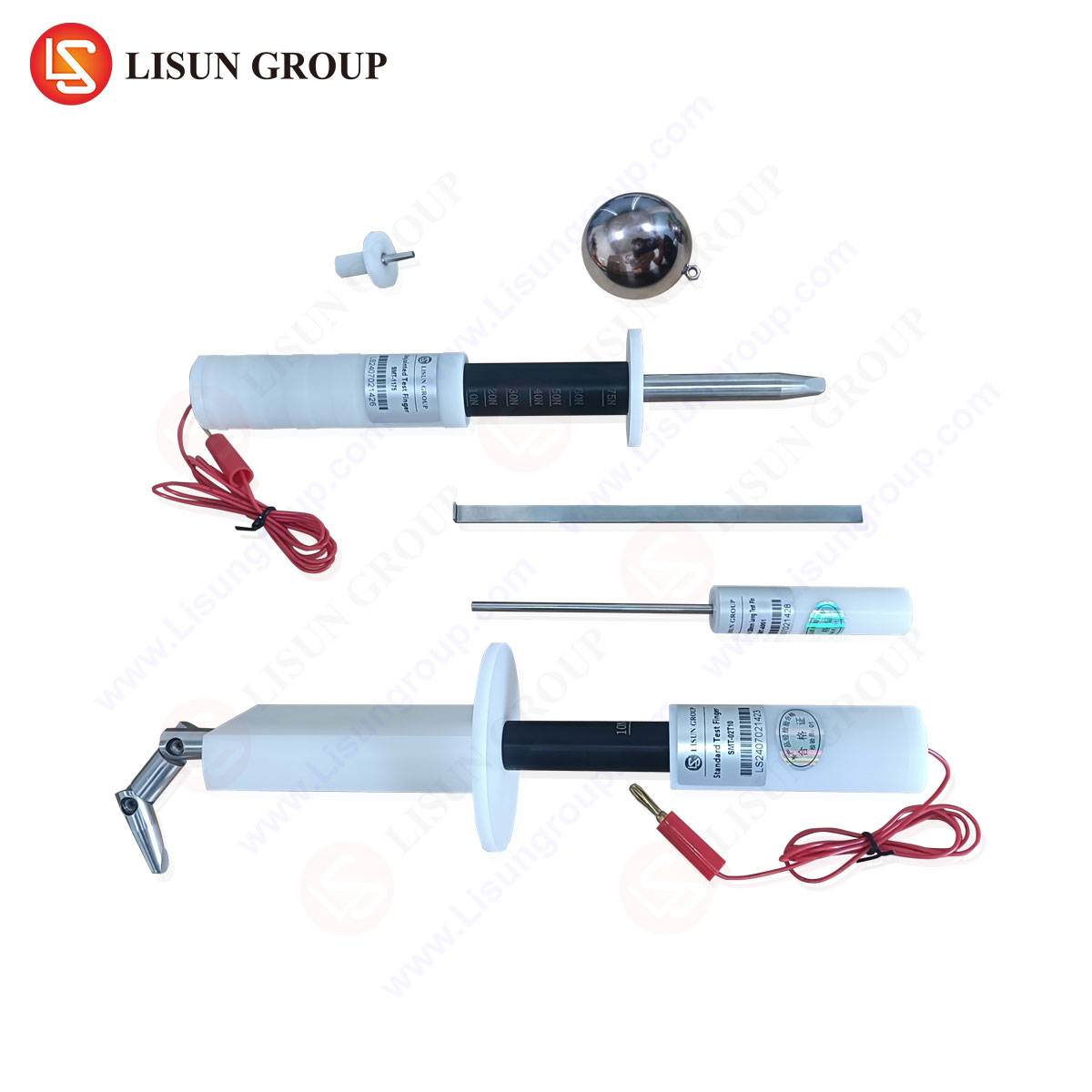
- Jointed Test Finger (IEC 61032 Probe 11): This probe, simulating an adult finger, is the first line of assessment for accessibility to hazardous parts under conditions of normal operation. Its dimensions are defined to represent the worst-case finger size. If a hazardous part is accessible to this probe, it is considered accessible to the user and requires primary safeguards.
- Test Probe (IEC 61032 Probe 13): Often a straight, unjointed finger-like probe of specific dimensions, it is used to assess accessibility under conditions of increased pressure or for openings that might be probed more deliberately.
- Test Wire (IEC 61032 Probe 18): A flexible wire with a specified diameter and force, simulating a necklace, chain, or similar object that could be inserted into an opening.
- 1 mm Diameter Test Pin (IEC 61032 Probe 19): This is the most stringent of the common mechanical probes. It is designed to assess whether a hazardous live part is accessible through very small openings, gaps in joints, or ventilation slots. Its application is often tied to conditions involving foreseeable misuse or after the failure of a single safeguard (a “single fault condition”). The underlying principle is that a slender, rigid object like a paperclip, tool fragment, or child’s toy could be inserted into an opening. If such an object can contact a part carrying hazardous voltage, the risk of electric shock is significant.
The standard stipulates that for equipment containing Energy Source Class 2 (ES2) or Class 3 (ES3) electrical sources, accessibility shall be checked with the 1 mm probe. ES2 represents an energy level sufficient to cause a shock but with limits that make certain safeguards permissible, while ES3 represents higher, more dangerous energy levels requiring robust protection. The probe must be applied with a force of 1 N ± 10%. It must not contact hazardous live parts or uninsulated live parts that are only separated from accessible parts by basic insulation. The pass/fail criterion is binary: if the probe can make electrical contact, the design fails this specific safety requirement.
Technical Specifications and Calibration of the 1 mm Test Probe
The precise geometry and application of the test probe are non-negotiable for reproducible, standards-compliant testing. Any deviation can lead to false passes (accepting a hazardous design) or false fails (rejecting a safe design), both of which carry significant liability and commercial consequences.
According to IEC 61032 (the standard detailing probe designs), Probe 19, the “test pin,” has the following critical specifications:
- Diameter: 1.0 mm ± 0.05 mm across its active length.
- Tip Geometry: The tip must be hemispherical with a radius of 0.5 mm ± 0.05 mm. A sharp or pointed tip is non-compliant, as it does not accurately simulate the foreseeable object.
- Length: The protruding active length must be sufficient to penetrate deeply enough to assess the internal layout, typically at least 50 mm.
- Material: It must be rigid and conductive (typically steel).
- Application Force: 1 Newton (N) ± 10%. This is a light but deliberate force, equivalent to roughly 100 grams-weight.
Maintaining these tolerances requires high-precision manufacturing. Furthermore, the probe must be part of a calibrated test apparatus that ensures the force is applied axially and can be measured. Regular calibration of both the probe’s dimensions and the force application mechanism is essential for laboratory accreditation (e.g., ISO/IEC 17025) and to maintain the integrity of test reports.
The LISUN Test Finger, Test Probe, and Test Pin System: Engineering for Compliance
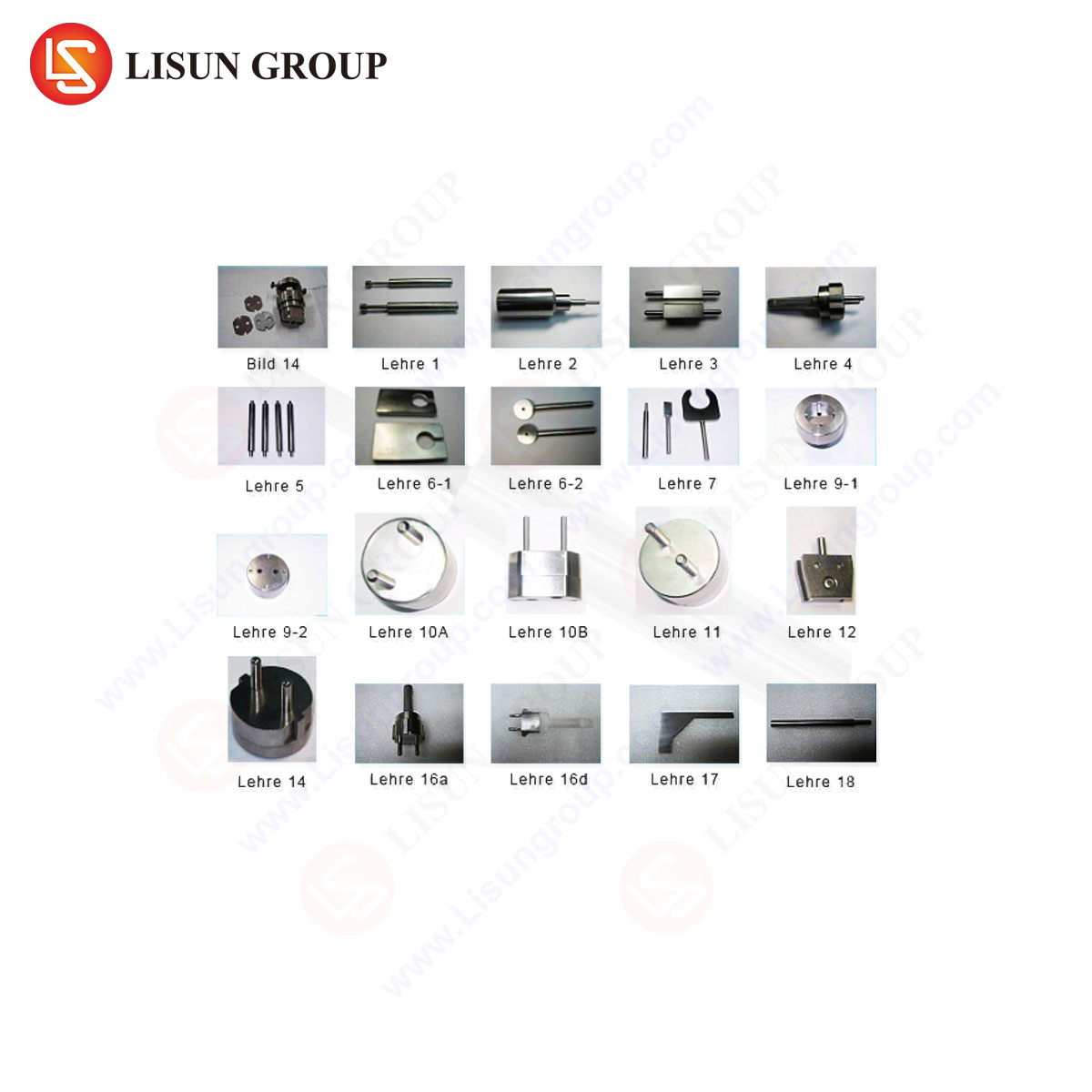
To meet the exacting demands of global safety testing, manufacturers and test laboratories require reliable, traceable, and fully compliant test equipment. The LISUN series of accessibility probes, including the LISUN Test Finger (LP-F01 series), Test Probe (LP-P13 series), and Test Pin (LP-P19 series), are engineered specifically for this purpose. These devices are not generic tools; they are precision instruments designed to mirror the specifications of IEC 61032 and related standards.
Specifications and Design Principles:
The LISUN LP-P19 Test Pin is machined from high-grade stainless steel to ensure consistent diameter, tip radius, and rigidity. It is mounted within a handle assembly that incorporates a spring-force mechanism calibrated to apply the mandated 1 N force. The handle often includes a visual indicator or can be integrated with a digital force gauge (e.g., LISUN’s optional force measurement system) for real-time verification. Similarly, the LISUN jointed test finger (LP-F01) replicates the complex articulated joints and dimensions of Probe 11, allowing for natural articulation during testing to simulate finger probing accurately.
Industry Use Cases and Application:
The application of these probes spans the entire scope of IEC 62368-1. Consider the following industry-specific examples:
- Consumer Electronics & Telecommunications Equipment: Testing USB ports, DC power jacks, ventilation slots on routers/switches, and seams on plastic enclosures of laptops to ensure internal PCBs carrying ES2/ES3 voltages cannot be contacted.
- Household Appliances & Lighting Fixtures: Assessing openings in motor housings of food processors, control panel gaps on ovens, and light-emitting cavities of LED fixtures where a child might insert a small metal object.
- Automotive Electronics & Industrial Control Systems: Verifying the integrity of IP-rated connector seals, gaps in industrial PLC (Programmable Logic Controller) housings, and openings in automotive infotainment or control units, where vibration and environmental stress could create new access points.
- Medical Devices & Aerospace Components: Performing critical safety validation on patient-connected monitoring equipment and in-flight entertainment systems, where failure is not an option. The 1 mm probe test ensures that even in high-reliability environments, fundamental accessibility hazards are controlled.
- Electrical Components & Office Equipment: Testing socket outlets, switch openings, and the internal compartments of printers or copiers accessible during user maintenance (e.g., clearing a paper jam).
Competitive Advantages of Precision Test Equipment:
Using a calibrated system like LISUN’s offers distinct advantages. First, it ensures regulatory defensibility. Test reports generated using traceably calibrated equipment are accepted by certification bodies (UL, TÜV, Intertek, etc.) globally. Second, it provides design feedback. Consistent, repeatable probing helps design engineers identify marginal failures early in the prototyping phase, saving costly rework. Third, it mitigates risk. Relying on imprecise, homemade probes introduces uncertainty into the safety assessment, potentially leaving hazardous designs in the field or causing unnecessary design constraints.
Interpreting Test Results and Implementing Design Safeguards
A failure during 1 mm probe testing necessitates a redesign or the implementation of additional safeguards. The HBSE approach in IEC 62368-1 offers several pathways to compliance:
- Increase Physical Separation (Distance): Modify the enclosure design to increase the depth of the opening or add internal barriers so that the 1 mm probe cannot reach a hazardous part, even when applying the full 1 N force. This may involve adding ribs, relocating PCBs, or using deeper connectors.
- Reduce Opening Size: If the opening is for ventilation, it can be redesigned using a mesh or louvres with gaps less than 1 mm. However, other probes (like the test wire) may still apply, requiring a holistic assessment.
- Implement Protective Impedance or Insulation: Use reinforced or double insulation on the live parts themselves, so that even if contacted, the part is not “hazardous live.” Alternatively, introduce a protective impedance that limits current to a safe level even upon direct contact.
- Incorporate an Interlock: For openings that are only present during service (e.g., a cover removed by a tool), a safety interlock can be used to disconnect the ES2/ES3 energy source before the opening becomes accessible.
The choice of safeguard depends on the product’s function, user group, and the nature of the energy source. The 1 mm probe test is a crucial tool for validating that the chosen safeguard is effective under the stringent condition of small-object intrusion.
Conclusion: The Critical Role of Precision in Hazard Prevention
The 1 mm diameter test probe requirement in IEC 62368-1 is a scientifically grounded response to a well-documented risk scenario. It moves beyond the assumption that users will only interact with equipment using their fingers, acknowledging the reality of misuse and the potential for failure. As technology miniaturizes and product forms evolve, the challenge of containing energy hazards within compact enclosures only intensifies. Rigorous compliance testing with precisely engineered tools is not a bureaucratic hurdle but a fundamental engineering discipline. It is the final, objective verification that a product’s safety architecture performs as intended, protecting users across a vast spectrum of industries from the potentially severe consequences of accessing hazardous live parts. The integrity of this verification process hinges on the accuracy and reliability of the test equipment employed, making the selection of fully compliant, calibrated probe systems a cornerstone of any credible product safety program.
FAQ Section
Q1: Can a simple metal pin or paperclip be used for IEC 62368-1 1 mm probe testing instead of a calibrated tool?
No. While a paperclip may have a similar diameter, it lacks the standardized hemispherical tip radius, precise force application (1 N ± 10%), and rigid straightness required by the standard. Using a non-compliant tool invalidates the test results, as it may not accurately simulate the specified probe or may apply excessive force, leading to results that are not reproducible or defensible with certification bodies.
Q2: In what testing scenarios is the 1 mm probe typically applied versus the jointed test finger?
The jointed test finger (Probe 11) is primarily used to assess accessibility during normal operation. It simulates what a user might touch or probe with a finger without applying excessive force. The 1 mm test pin (Probe 19) is applied under more stringent conditions, often specified for checking accessibility during foreseeable misuse (e.g., poking objects into openings) or after a single fault condition has occurred in the equipment. It is also the prescribed probe for checking openings that are inherently too small for a finger.
Q3: How often should test probes like the LISUN LP-P19 be calibrated?
Calibration intervals should be determined based on usage frequency, laboratory accreditation requirements (ISO/IEC 17025 typically requires annual calibration), and the manufacturer’s recommendation. For active test laboratories, an annual calibration cycle is standard practice. The calibration should verify the critical dimensions (diameter, tip radius) and the application force. A certificate of calibration traceable to national standards should be maintained for each probe.
Q4: Does passing the 1 mm probe test automatically ensure compliance with all accessibility requirements in IEC 62368-1?
No. The 1 mm probe test addresses a specific hazard. Full compliance requires a sequence of tests using the entire family of probes (test finger, test probe, test wire, etc.) under the appropriate conditions (normal operation, single fault, etc.) as outlined in the standard. Each probe evaluates different access scenarios. A design must pass all applicable probe tests to be deemed fully compliant for accessibility.
Q5: Are there industries or product types where the 1 mm probe test is of particular importance?
It is critically important for any product with accessible openings and circuits classified as ES2 or ES3. This is especially true for Consumer Electronics (e.g., portable chargers with small ports), Children’s Products (where probing with small objects is highly foreseeable), Household Appliances with ventilation slots, and Industrial Equipment where metallic debris or tools could be present. Any industry where product miniaturization is a trend faces increasing design challenges related to this test.