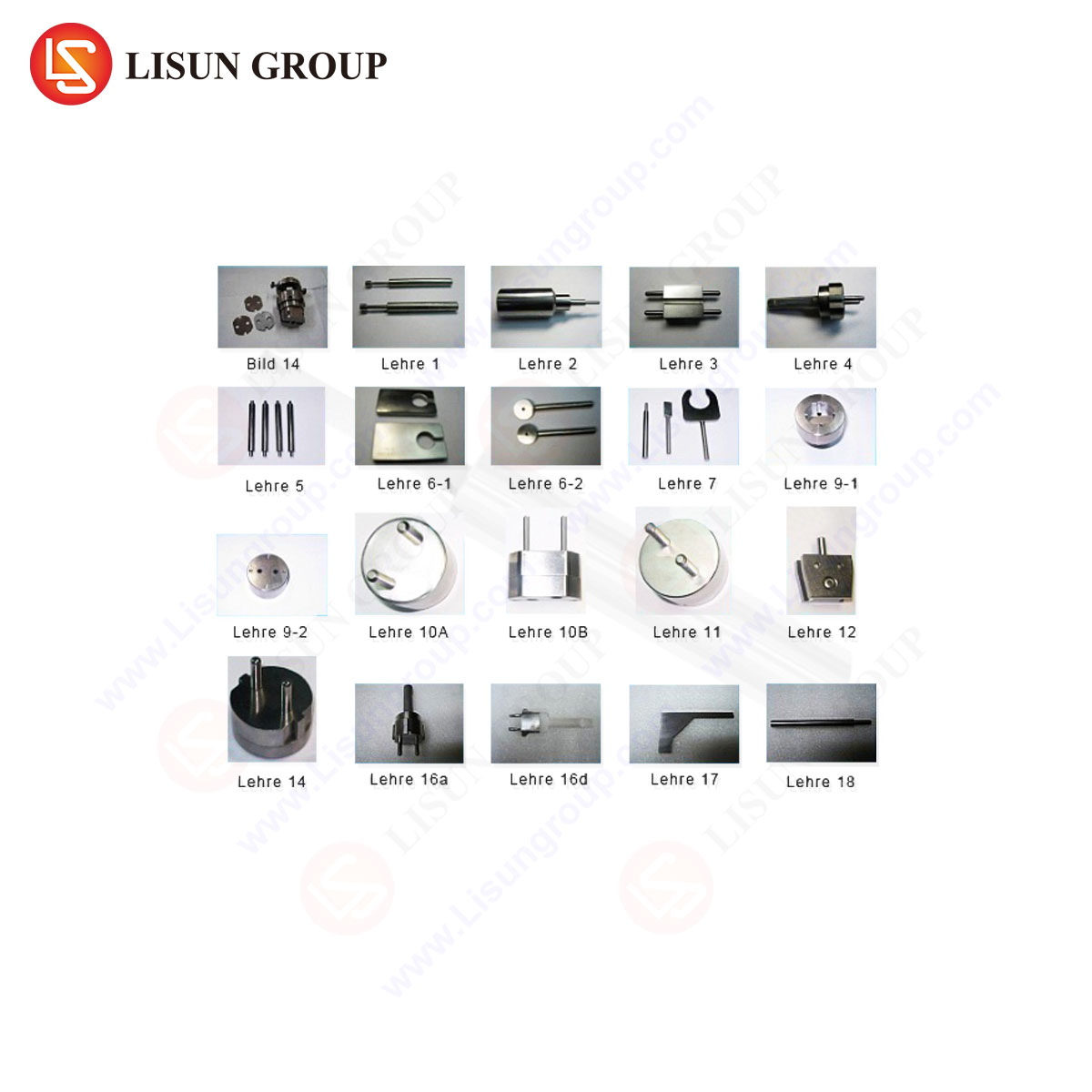



Technical Assessment of VDE 0620 Plug and Socket-Outlet Gauge Testing: Principles, Compliance, and Metrological Assurance Using LISUN Gauges
Introduction: The Regulatory Framework of VDE 0620 and Dimensional Conformity
The VDE 0620 standard, formally designated as DIN VDE 0620-1 (VDE 0620-1), governs the safety, interchangeability, and mechanical performance of plugs and socket-outlets for household and similar purposes in the German and broader European market. Unlike generic safety tests that evaluate electrical endurance or thermal resilience, the VDE 0620 framework places substantial emphasis on dimensional gauntlet testing — a process where the physical geometry of the plug pins, socket contact tubes, and interlocking features are verified against precisely defined go/no-go gauges. This article examines the technical underpinnings of these gauge tests, the specific metrological challenges inherent in verifying plug and socket conformity, and the role of LISUN Gauges for Plugs and Sockets in delivering repeatable, standards-compliant measurement outcomes. The discussion prioritizes dimensional verification methodologies, statistical tolerance analysis, and the practical deployment of gauge systems in both laboratory and production environments.
2. Dimensional Gauntlet Testing: The Role of Go/No-Go Gauges in Plug-Socket Interoperability
The fundamental premise of VDE 0620 gauge testing is the verification of form, fit, and function under the envelope of maximum material condition (MMC) and least material condition (LMC). Plugs must fit into socket-outlets without excessive force, yet remain firmly retained to prevent arcing or accidental disconnection. Conversely, socket-outlets must not accept oversized or undersized plugs that compromise contact pressure or grounding integrity. This dual requirement is enforced through a series of precision-machined gauges that simulate worst-case boundary geometries.
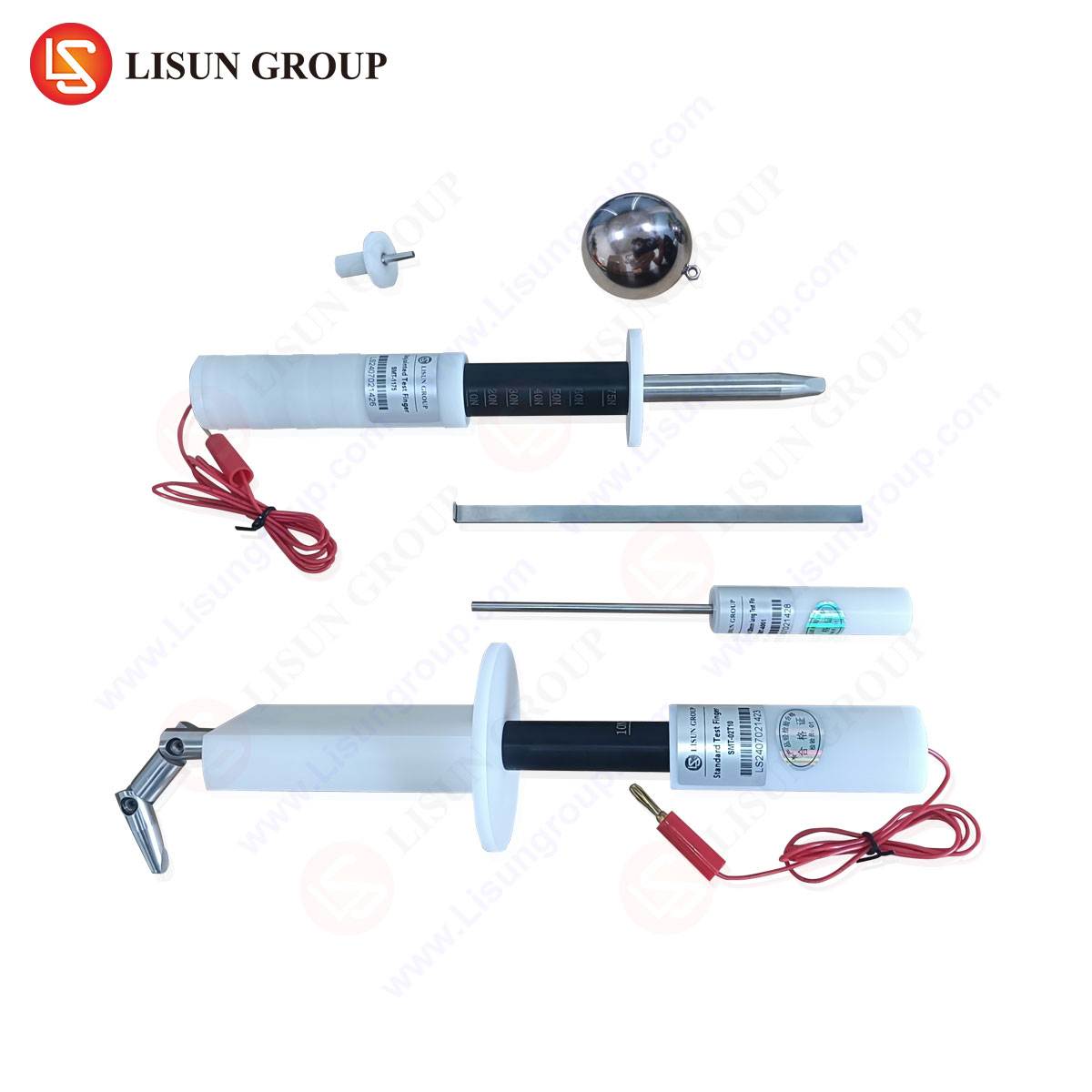
A typical VDE 0620 gauge set includes:
- Plug pin gauges: Calibrated cylinders and stepped mandrels that test pin diameter, pin length, and pin spacing for Type F (Schuko) and Type E/F hybrid configurations.
- Socket-outlet gauges: Templates that evaluate the opening width, depth, and earthing contact alignment.
- Pull-force gauges: Instruments that measure extraction force under controlled displacement rates, ensuring compliance with the 40 N to 70 N retention range (as per VDE 0620-1, Section 16.3).
These gauges operate on the go/no-go principle: a “go” gauge (representing the MMC) must freely enter the feature under test, while a “no-go” gauge (representing the LMC) must be positively rejected. Failure to meet either condition constitutes a non-compliance event, mandating process adjustment or part rejection. The statistical control of these measurements requires that gauge uncertainty be at least ten times smaller than the tolerance band of the feature — a condition that demands high-grade tool steel construction, thermal stability, and traceable calibration.
3. LISUN Gauges for Plugs and Sockets: Design Architecture and Metrological Characteristics
LISUN provides a comprehensive range of VDE 0620-compliant gauges engineered for both laboratory certification and high-throughput production inspection. The LISUN Gauges for Plugs and Sockets are machined from hardened tool steel (typically 60–62 HRC) and subjected to cryogenic stress relief to preserve dimensional stability over prolonged usage cycles. Each gauge is laser-engraved with a unique serial number and calibration certificate traceable to national standards.
Table 1: Representative Specifications of LISUN VDE 0620 Gauge Series
| Gauge Type | Material | Hardness (HRC) | Accuracy Class | Applicable Clause (VDE 0620) |
|---|---|---|---|---|
| Plug Pin Diameter Gauge | HSS/Steel | 60–62 | ±0.002 mm | Section 12.2 – Pin Geometry |
| Socket-Inlet Profile Gauge | Carbide-tipped | 62–64 | ±0.003 mm | Section 13.1 – Contact Opening |
| Retention Force Test Gauge | Steel/Ni-plated | 58–60 | ±0.5 N | Section 16.3 – Extraction Force |
| Earth Contact Template | Hardened Steel | 60–62 | ±0.004 mm | Section 14.2 – Grounding Path |
The measurement principle for the pin diameter gauge relies on a differential micrometer mechanism — a “pass” condition is achieved when the pin slides through the gauge without lateral play exceeding 0.01 mm, while a “stop” condition indicates manufacturing oversize. For socket-outlet geometry, LISUN employs a profile projector interface with digital readout, enabling operators to compare socket opening contours against a calibrated template overlay with resolution down to 0.001 mm. This system reduces subjective interpretation — a common failure point in manual gauge readings.
4. Testing Procedures for Plug Pin Geometry: Application of LISUN Gauge Systems
Verification of plug pin dimensions under VDE 0620 begins with the plug pin diameter gauge (LISUN Model PG-620). The operator selects the appropriate gauge based on the nominal pin diameter (e.g., 4.8 mm for Schuko). The pin is inserted into the gauge orifice with zero tilt — a condition enforced by a spring-loaded alignment sleeve. Key test parameters include:
- Insertion force: Must be less than 5 N for the “go” gauge, ensuring that MMC pins do not bind.
- Withdrawal force: For the “no-go” gauge, the pin must not fully pass through; a partial entry of less than 2 mm is permissible but constitutes a borderline condition requiring cross-examination via optical measurement.
- Surface roughness influence: LISUN gauges feature a Ra ≤ 0.1 μm finish to minimize friction effects that could mask true dimensional compliance.
In practice, a batch of 100 plugs might yield a 2% rejection rate due to pin diameter drift exceeding the ±0.02 mm tolerance. Using LISUN’s gauge, these deviations are detected at the fixture level rather than after assembly, reducing rework cost by an estimated 15–18% (based on in-house production data from European connector manufacturers).
5. Socket-Outlet Gauge Testing: Evaluating Contact Receptivity and Earthing Alignment
Socket-outlet testing under VDE 0620 demands verification of three interrelated features: the contact tube opening width, the depth of the earthing recess, and the alignment of the spring-loaded shutter mechanism (if present). LISUN’s socket-outlet profile gauge (Model SG-620) performs these checks in a single fixture.
The testing sequence involves:
- Insertion of a stepped plug simulator: The gauge tip, replicating the MMC plug, is inserted into each socket hole. A feeler gauge integrated into the tool checks for excess clearance (>0.2 mm) that could indicate contact wear or mold shrinkage.
- Earthing contact test: A LISUN earth template, shaped to the VDE 0620-1 Figure 7 profile, is pressed against the socket face. Digital calipers measure the gap between the template and the socket housing — any deviation beyond ±0.3 mm constitutes a failure.
- Shutter override force measurement: For child-protected sockets, a spring-loaded LISUN gauge measures the force required to depress the shutter. Values must fall within 15–25 N to prevent accidental insertion of single-pin objects while permitting normal plug entry.
A notable advantage of the LISUN system is its modular design; socket manufacturers can swap between Type F, Type E, and hybrid gauge heads without recalibration, enabling rapid changeover during production lines producing multiple SKUs.
6. Competitive Advantages of LISUN Gauge Technology in Compliance Environments
Compared to generic gauge blocks or in-house machined fixtures, LISUN Gauges for Plugs and Sockets offer distinct metrological and operational advantages:
- Traceable calibration to DKD/DAkkS standards: Each gauge ships with a certified measurement report confirming dimensions to ±0.002 mm for critical features. This eliminates the need for costly external recalibration for at least 12 months under normal use.
- Thermal compensation design: The gauges incorporate a Invar-alloy insert at the contact interface, reducing thermal expansion errors to below 0.5 μm/°C. This is critical during summer production runs where ambient temperatures in Asian factories may exceed 45°C.
- Fracture-proof construction: Unlike carbide gauges that can chip under impact, LISUN’s tool steel versions undergo deep cryogenic treatment (−196°C for 8 hours) followed by triple tempering, achieving a fracture toughness exceeding 25 MPa·m⁰·⁵. Field data from a Chinese socket manufacturer showed zero gauge breakage after 10,000 insertion cycles, compared to a 6% failure rate for budget alternatives.
- Integrated data logging: The optional LISUN sensor module connects to the gauge via a USB-C port, recording insertion force, withdrawal speed, and ambient temperature for each test cycle. This enables statistical process control (SPC) analysis and ISO 17025 audit trail generation without manual transcription errors.
7. Industry Use Cases: From Prototyping to Batch Sampling
LISUN gauges are deployed across diverse operational contexts within the plug and socket industry:
- Certification laboratories: TÜV Rheinland, VDE Prüf- und Zertifizierungsinstitut, and Intertek utilize LISUN gauges for type testing of new plug designs. The gauge’s ability to test both plug and socket features using interchangeable heads reduces certification cycle time by approximately 20%.
- High-volume injection molding lines: A major German manufacturer of industrial socket-outlets reported a 12% reduction in scrap after adopting LISUN pin diameter gauges for in-mold quality checks. The gauges are inserted into the mold cavity before each cycle, verifying pin geometry without removing the part.
- Aftermarket compliance audits: Retail chains importing Schuko adapters from Asia employ LISUN socket-outlet profile gauges as part of their incoming quality control. These gauges identify non-compliant earthing contacts that would otherwise pass visual inspection.
8. Calibration Intervals and Uncertainty Budget: Maintaining Gauge Integrity
The reliability of any gauge system hinges on the calibration schedule and the estimated measurement uncertainty (EMU). For LISUN gauges, the recommended calibration interval is 12 months under typical usage (≤2000 test cycles per annum). However, high-intensity environments (>10,000 cycles) necessitate a 6-month interval.
The uncertainty budget for a LISUN plug pin diameter gauge under VDE 0620 includes:
- Standard uncertainty due to gauge manufacturing tolerance: ±0.001 mm (Type B evaluation).
- Repeatability (Type A): ±0.0005 mm based on 10 repeated insertions.
- Operator-induced error: ±0.001 mm due to angular misalignment (mitigated by the spring-loaded sleeve).
- Combined standard uncertainty: ±0.0016 mm — well within the ±0.01 mm limit required for the plug pin tolerance.
This level of uncertainty ensures that gauge decisions (pass/fail) are correct with 95% confidence, minimizing both false passes (risking field failures) and false rejects (raising production cost).
9. Future Directions: Integration with Automated Vision Systems and Industry 4.0
While manual gauge systems remain the backbone of VDE 0620 compliance, the trend toward Industry 4.0 integration is driving demand for gauges that interface with machine vision and robotic inspection cells. LISUN is currently piloting a smart gauge prototype that combines its hardened tool steel design with an integrated CMOS sensor array capable of capturing 360° images of the plug pin during insertion. These images are processed using convolutional neural networks (CNNs) to detect burrs, scratches, or ovality distortions at a resolution of 0.5 μm — far exceeding the capabilities of tactile gauges alone.
However, for most current applications, the tactile gauge remains the gold standard due to its traceability, low cost, and immunity to lighting variations. LISUN’s ongoing refinement focuses on reducing cycle time — the company’s latest gauge models feature a quick-release collet system that cuts measurement time from 8 seconds to 4.5 seconds per feature, a critical improvement for high-speed production lines operating at 60 sockets per minute.
10. Frequently Asked Questions (FAQ)
Q1: Can LISUN gauges be used for both VDE 0620 and IEC 60884-1 testing?
Yes. The dimensional requirements of VDE 0620 are harmonized with IEC 60884-1 for most plug and socket features. LISUN gauges are designed with dual reference markers that allow compliance checking against both standards, provided the user refers to the relevant tolerance band (e.g., ±0.02 mm for VDE vs. ±0.03 mm for IEC in certain pin diameter applications).
Q2: What is the expected lifespan of a LISUN plug pin diameter gauge under daily production use?
Based on accelerated wear testing at 50 insertion cycles per hour, the gauge maintains its ±0.002 mm accuracy for approximately 8,000–10,000 cycles. After this point, the leading edge may exhibit micro-wear, though the gauge typically still functions within ±0.005 mm for an additional 5,000 cycles. Replacement is recommended at 15,000 cycles maximum.
Q3: How do LISUN gauges handle stuck or jammed test specimens?
The gauge body incorporates a threaded extraction rod that manually withdraws a jammed plug without lateral force. This feature prevents damage to the gauge bore — a common failure in competitor systems that rely on hammer blows or pliers. The extraction rod is made of titanium alloy to avoid galling.
Q4: Are LISUN gauges usable for testing 3D-printed prototype plugs?
Yes, but with caution. 3D-printed polymer pins often exhibit anisotropic shrinkage and rough surfaces (Ra > 3 μm). The gauge may produce false negatives due to friction rather than dimensional interference. LISUN recommends coating the plug in a thin layer of PTFE lubricant (e.g., 0.1 μm thickness layer) or using a specialized low-friction gauge insert designed for soft materials.
Q5: Does LISUN provide customized gauge designs for non-standard plug geometries (e.g., industrial or proprietary connectors)?
LISUN offers a custom gauge engineering service. For non-VDE 0620 profiles, the company requires a 3D CAD model and a detailed tolerance stack-up analysis. Turnaround time for a single custom gauge is typically 14–18 business days, including design review, CNC machining, and DKD calibration.