




The Critical Role of Thermal Cycling Chambers in Modern Product Validation and Reliability Engineering
Introduction to Accelerated Life Testing and Environmental Stress Screening
In the relentless pursuit of product reliability and longevity, manufacturers across high-stakes industries must simulate years of operational stress within compressed development timelines. Environmental stress screening (ESS) and accelerated life testing (ALT) have emerged as indispensable methodologies, with thermal cycling representing a cornerstone technique. Thermal cycling chambers, specialized environmental test equipment, are engineered to subject components and assemblies to precisely controlled, repeated fluctuations between extreme high and low temperatures. This process is not merely a test of survival; it is a deliberate, scientifically-grounded provocation designed to uncover latent defects, validate design margins, and predict field failure rates. The fundamental principle hinges on the differential thermal expansion and contraction of dissimilar materials, inducing mechanical stress at interfaces, solder joints, and within composite structures. By accelerating the fatigue mechanisms inherent in real-world diurnal and seasonal cycles, these chambers provide a critical, data-rich forecast of product performance and durability.
Mechanisms of Failure Acceleration Through Controlled Thermal Stress
The efficacy of thermal cycling as an accelerated test modality is rooted in well-established physics-of-failure models. The primary damage mechanism is thermo-mechanical fatigue, driven by Coefficients of Thermal Expansion (CTE) mismatch. When bonded materials—such as silicon dies and epoxy substrates, or copper traces and FR-4 printed circuit boards (PCBs)—experience temperature transitions, they expand and contract at different rates. This mismatch generates shear and tensile stresses at the interface. Repeated cycling leads to the initiation and propagation of cracks in solder joints, delamination of conformal coatings, and fracture of wire bonds. Furthermore, rapid temperature changes can induce condensation in inadequately sealed units, leading to electrochemical migration and short circuits. A chamber’s ability to precisely control ramp rates, dwell times, and extreme temperatures allows engineers to tailor the stress profile to target specific failure modes relevant to the product’s end-use environment, transforming qualitative assumptions into quantifiable reliability metrics.
Quantifying Reliability: From Empirical Data to Predictive Metrics
Advanced thermal cycling transcends pass/fail binary outcomes. Instrumented tests, where units are monitored for intermittent electrical discontinuities or parametric shifts during cycling, generate time-to-failure data sets. This data is subsequently analyzed using statistical distributions, such as the Arrhenius model (for temperature-activated failures) or the Coffin-Manson relationship (for thermo-mechanical fatigue). By testing at exaggerated temperature extremes and rapid transition rates, a test equivalent to a decade of field operation can be condensed into weeks. For instance, 1,000 cycles between -40°C and +125°C with rapid transitions may correlate to over 100,000 operational power cycles for an automotive engine control unit. This mathematical extrapolation enables the calculation of key metrics like Mean Time Between Failures (MTBF) and Failure In Time (FIT) rates, which are essential for warranty analysis, lifecycle costing, and compliance with industry-specific reliability standards such as ISO 16750 for automotive or MIL-STD-810 for aerospace.
The HLST-500D Thermal Shock Test Chamber: A Paradigm of Rapid Transition Testing
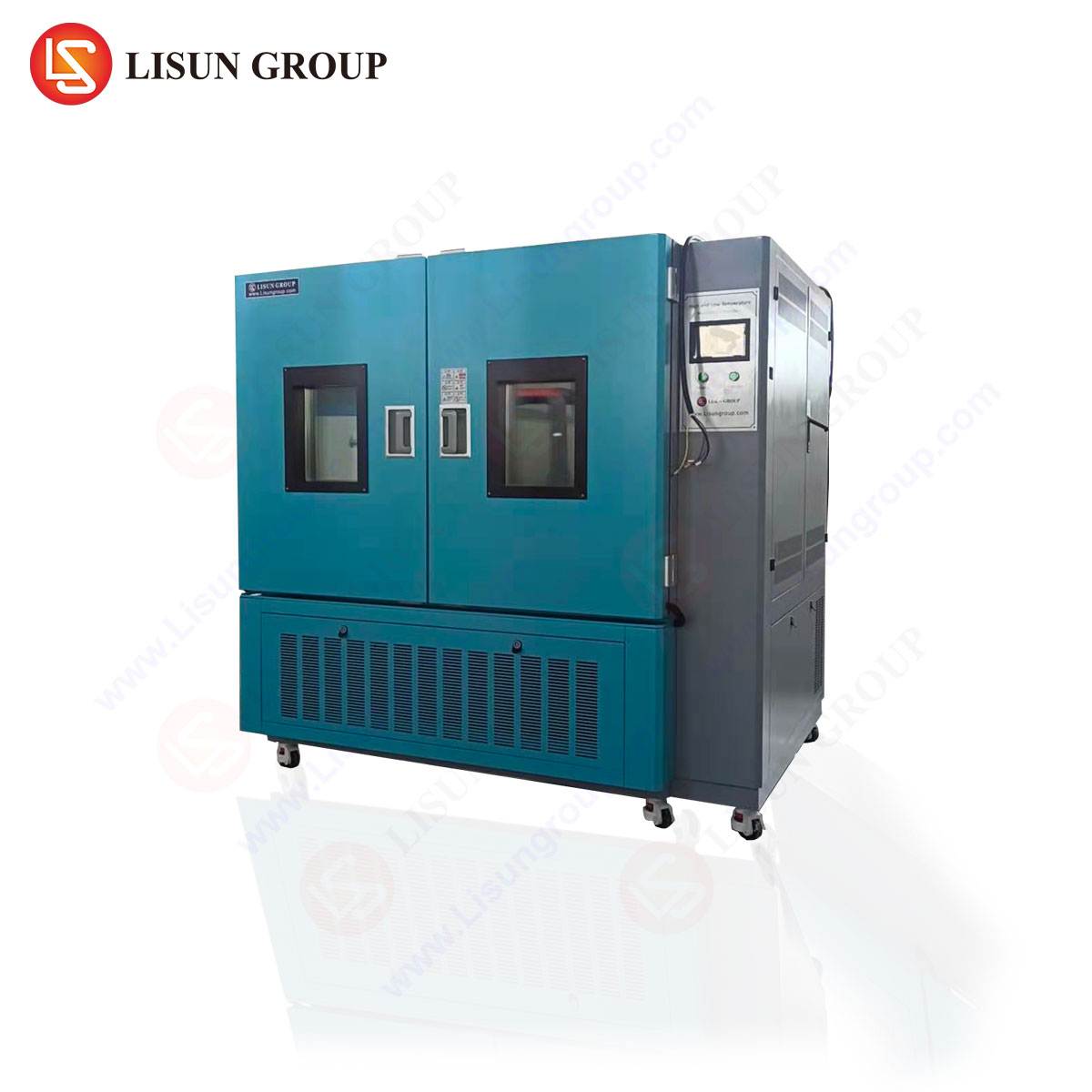
For applications where the rate of temperature change is the dominant stress factor, dedicated thermal shock chambers are employed. The LISUN HLST-500D Thermal Shock Test Chamber exemplifies this class of equipment, designed to induce severe, rapid thermal transitions that exceed the capabilities of standard single-chamber cycling units. The HLST-500D operates on a three-zone principle: a high-temperature zone, a low-temperature zone, and a specimen basket that mechanically transfers the test items between them. This basket transfer system facilitates temperature transition rates that are significantly faster than those achievable with single-chamber air-stream systems, creating a more severe shock condition.
Key Specifications and Testing Principle:
- Test Volume: 500 Liters.
- Temperature Range: High Temperature Chamber: +60°C to +200°C; Low Temperature Chamber: -10°C to -65°C (extendable to -80°C).
- Recovery Time: ≤5 minutes (from +150°C to -55°C or vice-versa, after specimen placement).
- Basket Transfer Time: <10 seconds (minimizing temperature stabilization during transfer).
- Control System: Programmable, multi-channel controller for defining cycle count, dwell times, and temperature extremes.
The testing principle is one of extreme thermal momentum. A device is stabilized at a high temperature (e.g., +125°C), then within seconds is plunged into a sub-zero environment (e.g., -55°C). This instantaneous shock maximizes CTE mismatch stress, making it exceptionally effective at precipitating failures in interconnects, packaged components, and encapsulated assemblies. Dwell times at each extreme ensure the specimen’s internal temperature stabilizes, ensuring the full stress is realized with each cycle.
Industry-Specific Applications of Thermal Shock and Cycling Regimens
The HLST-500D and similar chambers address critical validation needs across a diverse industrial landscape.
- Automotive Electronics: Components like electronic control units (ECUs), sensors, and LED headlamps must endure engine compartment heat followed by cold winter starts. Thermal shock testing simulates these brutal transitions, validating solder joint integrity in under-hood control modules and preventing lens cracking in lighting fixtures.
- Aerospace and Aviation Components: Avionics systems experience rapid temperature drops during ascent and descent. Testing to standards like RTCA DO-160 using chambers such as the HLST-500D ensures reliability of navigation and communication equipment under these shock conditions.
- Telecommunications Equipment: Outdoor base station electronics and fiber optic transceivers are subject to daily and seasonal cycles. Thermal shock testing accelerates aging of hermetic seals and internal connections, critical for maintaining 5G network integrity.
- Medical Devices: Implantable devices and portable diagnostic equipment require absolute reliability. Thermal cycling validates the longevity of battery connections and the sealing integrity of housings that protect sensitive internal electronics from sterilization cycles or bodily fluids.
- Lighting Fixtures (LED): LED drivers and arrays are prone to failure from thermal fatigue. Rapid cycling between the heat of operation and ambient cold tests the integrity of solder bonds on the MCPCB (Metal Core PCB) and the phosphor layer, predicting lumen maintenance and catastrophic failure.
Competitive Advantages of Precision Engineered Shock Chambers
The operational value of a thermal shock chamber is dictated by its precision, repeatability, and durability. The HLST-500D incorporates several design features that confer distinct advantages in rigorous testing environments. Its dual-compressor cascade refrigeration system for the low-temperature zone ensures stable and rapid pull-down rates, even under full load. The use of high-quality insulation and robust basket actuation mechanics guarantees consistent transfer times and minimal temperature loss during specimen movement. Furthermore, advanced controller logic allows for complex, multi-step test profiles that can include intermediate temperature plateaus, enabling testing not just to generic standards but to tailored, mission-specific profiles that more accurately simulate a product’s unique lifecycle stresses. This flexibility, combined with robust construction, minimizes test chamber downtime and ensures the validity of long-duration, high-value reliability campaigns.
Integration into Broader Quality Assurance and Compliance Frameworks
Thermal cycling and shock testing are rarely isolated activities. They form a critical link within a comprehensive Product Qualification Plan (PQP). Data from these tests feed into Failure Reporting, Analysis, and Corrective Action Systems (FRACAS), closing the loop between design, testing, and manufacturing. A failure during thermal shock testing is not merely a reject; it is a diagnostic opportunity. Subsequent failure analysis—using techniques like scanning acoustic microscopy (CSAM) to detect delamination or microsectioning to examine solder joint grain structure—provides actionable feedback to redesign materials, modify assembly processes, or adjust derating guidelines. Moreover, successful completion of defined thermal cycling regimens is often a mandatory prerequisite for component approval in supply chains for automotive (AEC-Q100/Q101), industrial, and aerospace sectors, serving as a gatekeeper for market entry.
Conclusion: An Indispensable Tool for Risk Mitigation and Market Confidence
In an era where product failures can lead to catastrophic safety consequences, massive financial recalls, and irreparable brand damage, thermal cycling and thermal shock chambers stand as essential instruments of risk mitigation. They move reliability engineering from a reactive, field-failure-based discipline to a proactive, predictive science. By deliberately applying quantified stress, manufacturers can identify weakness points, improve designs, and substantiate reliability claims with empirical data. Equipment like the LISUN HLST-500D Thermal Shock Test Chamber provides the controlled, severe environment necessary to conduct this essential work with precision and repeatability. The investment in such rigorous testing protocols ultimately translates into enhanced product robustness, reduced total cost of ownership for the end-user, and fortified confidence in the manufactured goods that underpin modern technological society.
FAQ Section
Q1: What is the fundamental difference between a thermal cycling chamber and a thermal shock chamber like the HLST-500D?
A thermal cycling chamber typically uses a single workspace where the temperature is ramped up and down at a controlled rate. A thermal shock chamber utilizes two (or three) independent climatic zones—one hot, one cold—and a mechanical basket to rapidly transfer specimens between them. The shock chamber achieves much faster transition rates, applying a more severe thermal stress focused on the effects of the instantaneous change, rather than the slower ramp.
Q2: How do I determine the appropriate temperature extremes and cycle count for my product test?
The test profile should be derived from a combination of sources: the product’s specified operational and storage temperature ranges (per its datasheet), the relevant industry standard (e.g., IEC 60068-2-14, JESD22-A104), and an understanding of its real-world environment. Accelerated testing often uses extremes beyond the specification limits. Cycle count is determined by the target equivalent operational life, using acceleration factor models like Coffin-Manson. A reliability engineer typically performs this calculation based on the product’s materials and failure mechanisms.
Q3: Can the HLST-500D accommodate powered testing (powered on and functioning during the test)?
Yes, most advanced thermal shock chambers, including the HLST-500D, are designed with ports or feed-throughs to allow for electrical wiring to pass into the test area. This enables in-situ monitoring (in-situ monitoring) and powered testing, where the device under test is actively powered and its performance monitored for parametric drift or functional interruption during the thermal shocks. This provides a much richer data set than simple passive storage testing.
Q4: What maintenance is critical for ensuring the long-term accuracy and performance of a thermal shock chamber?
Regular preventive maintenance is crucial. Key tasks include: checking and tightening electrical connections, cleaning condensers and filters to maintain refrigeration efficiency, calibrating temperature sensors (RTDs or thermocouples) annually, verifying basket transfer timing and alignment, and inspecting door seals for integrity. The refrigeration system’s gas charge and compressor oil should also be checked periodically per the manufacturer’s schedule.
Q5: For a new product, at what stage in the development cycle should thermal shock testing be introduced?
Thermal shock testing should be integrated at multiple stages. It is first used in the design validation phase on engineering prototypes to identify fundamental design or material flaws. It is then applied during product qualification on pre-production units to verify the design is robust. Finally, it is used as part of ongoing reliability testing (ORT) on samples from the production line to monitor process drift and ensure continued manufacturing quality.