




Understanding the IPX6 Waterproof Test: A Critical Evaluation for Product Durability
In the rigorous landscape of product reliability validation, ingress protection (IP) testing stands as a fundamental protocol for determining the resilience of enclosures against foreign bodies and moisture. Among the various classifications defined by the International Electrotechnical Commission (IEC) standard 60529, the IPX6 rating represents a significant threshold for protection against powerful water jets. This specification is not merely a marketing term but a quantifiable, repeatable laboratory test that simulates extreme environmental conditions. Achieving and verifying IPX6 compliance is a non-negotiable prerequisite for electronic and electrical components destined for applications where exposure to high-pressure water is a foreseeable operational or environmental hazard. The integrity of this testing process, therefore, hinges on the precision, repeatability, and standardization of the equipment employed.
Deciphering the IP Code: The Significance of the Second Numeral
The IP code, as per IEC 60529, is a two-digit system where the first digit (0-6) denotes protection against solid particle ingress, and the second digit (0-9K) defines protection against liquids. The ‘X’ placeholder, often used in designations like IPX6, indicates that the solid particle protection rating is not specified or not relevant to the declaration. The numeral ‘6’ in the second position carries a very specific meaning: protection against powerful water jets. The standard meticulously defines the test parameters to eliminate ambiguity. A product certified as IPX6 must withstand water projected in powerful jets (12.5 mm nozzle) from any direction at a flow rate of 100 liters per minute, a pressure of 100 kPa at a distance of 3 meters, for a minimum duration of 3 minutes per square meter of the enclosure surface, with a minimum total test time of 3 minutes. This test is designed to replicate conditions such as deck washing on marine vessels, pressure washing in industrial settings, or driving rain in severe storms.
The Hydrodynamic Principles of IPX6 Testing
The efficacy of the IPX6 test is rooted in controlled hydrodynamic force. The test is not solely about water volume but about the impact pressure and kinetic energy delivered to the enclosure seams, seals, and interfaces. The standardized nozzle diameter (12.5 mm) and pressure (100 kPa) ensure a consistent jet stream with defined characteristics. The 3-meter distance is critical; it standardizes the dispersion pattern and impact area of the jet, ensuring that the water does not converge into a single pinpoint stream but maintains a specified force profile upon contact. The test’s objective is to probe for potential failure points—microscopic gaps in gaskets, insufficient sealant at cable entry points (glands), tolerance mismatches in housing joints, or weaknesses in membrane vents. The pass/fail criterion is typically a functional check and an internal inspection post-test, with no water ingress permitted to a degree that would interfere with normal operation or compromise safety.
Instrumentation for Compliance: The Role of Specialized Test Chambers
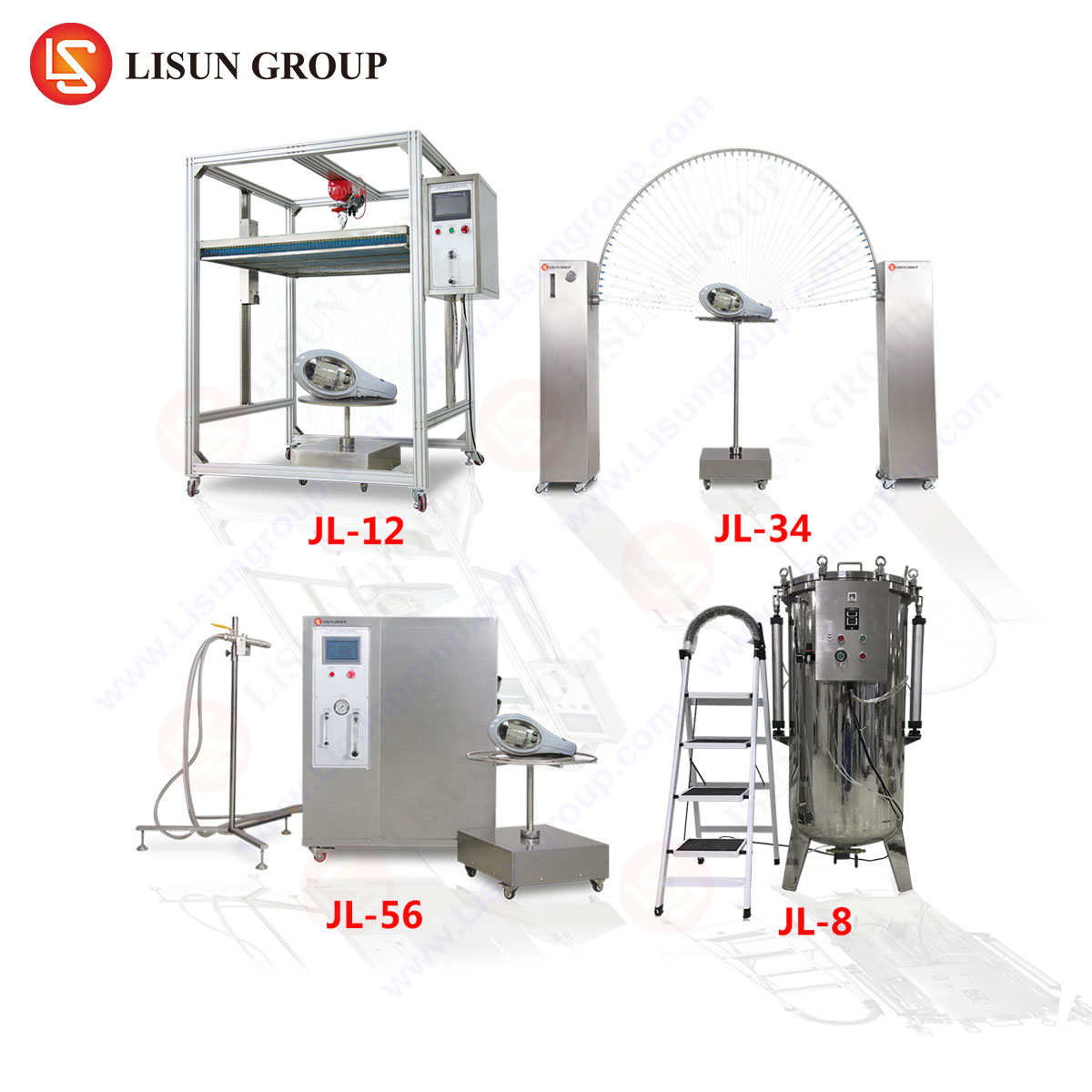
Accurate and certifiable IPX6 testing cannot be performed with ad-hoc equipment. It demands specialized apparatus that guarantees conformity to the standard’s stringent parameters. This is where dedicated waterproof test chambers, such as the LISUN JL-8 IPX6 Waterproof Test Equipment, become indispensable laboratory assets. The JL-8 is engineered specifically to meet the exacting requirements of IEC 60529 for IPX5 and IPX6 testing. Its design focuses on delivering the precise, repeatable conditions necessary for generating reliable compliance data.
The core of the JL-8 system is its high-pressure pump and calibrated nozzle assembly. The pump maintains a steady flow rate of 100 L/min at the mandated pressure, while the nozzle is manufactured to the exact 12.5 mm specification. The test sample is mounted on a motorized rotary table, which rotates at a controlled speed (typically 1-3 rpm) to ensure the water jet interrogates the entire surface area of the unit under test (UUT) from all angles, fulfilling the “from any direction” clause of the standard. The chamber itself is constructed from corrosion-resistant materials like stainless steel to withstand constant exposure to high-pressure water, and it includes integrated water circulation and filtration systems to conserve test water and maintain nozzle integrity.
Industry Applications and Imperatives for IPX6 Certification
The demand for IPX6 protection spans a broad spectrum of industries, each with unique failure mode implications.
- Automotive Electronics: Components such as electronic control units (ECUs), sensors (LiDAR, radar, parking), exterior lighting assemblies (headlamps, tail lights), and charging ports for electric vehicles must withstand high-pressure car washes and road spray. An IPX6 failure in a brake system sensor could have catastrophic safety implications.
- Telecommunications Equipment: Outdoor base station units, antennas, and junction boxes are exposed to monsoon-level rains and pressure washing for maintenance. Ingress here can lead to network downtime, costly repairs, and corrosion-induced long-term failures.
- Industrial Control Systems: Control panels, human-machine interfaces (HMIs), and motor drives located in manufacturing plants, food processing facilities, or wastewater treatment plants may require regular high-pressure washdowns for hygiene or cleaning. IPX6 protection ensures operational continuity in these harsh environments.
- Lighting Fixtures: Architectural flood lighting, stadium lights, and industrial high-bay lights are subject to directed, powerful rain and cleaning jets. Water ingress can cause short circuits, lumen depreciation, and hazardous electrical situations.
- Electrical Components & Wiring Systems: Outdoor switches, sockets, and cable gland assemblies must seal against driven rain. The IPX6 test validates the sealing performance of cable entry points, a common vulnerability.
- Medical Devices: Certain portable or transportable devices used in ambulances or field hospitals may need to resist cleaning with pressurized water or accidental exposure. While sterilization methods differ, general waterproofing is a key durability factor.
- Aerospace and Aviation: Components on the exterior of aircraft or in ground support equipment face extreme weather on the tarmac. Although subject to more specialized standards (e.g., DO-160), IP testing provides a foundational validation of sealing concepts.
Technical Specifications and Competitive Advantages of the LISUN JL-8 Tester
The LISUN JL-8 exemplifies the engineering required for standards-compliant testing. Its specifications are a direct reflection of the IEC 60529 mandates.
Key Specifications:
- Test Standards: Compliant with IEC 60529 IPX5 and IPX6.
- Nozzle Diameter: 6.3 mm for IPX5, 12.5 mm for IPX6.
- Water Flow Rate: 12.5 L/min ±5% (IPX5), 100 L/min ±5% (IPX6).
- Water Pressure: 30 kPa at nozzle outlet (IPX5), 100 kPa at nozzle outlet (IPX6).
- Jet Distance: 2.5 to 3 meters adjustable (IPX5 & IPX6).
- Rotary Table: Diameter, speed adjustable, electrically controlled rotation.
- Control System: PLC-based with touchscreen HMI for setting test time, rotation, and monitoring parameters.
- Construction: Stainless steel chamber, corrosion-resistant piping.
Competitive Advantages in Laboratory and Production Environments:
- Calibration and Traceability: The system is designed for easy connection to flow meters and pressure gauges, facilitating regular calibration to national standards, which is critical for audit trails and certification body acceptance.
- Automated Test Cycles: The programmable logic controller (PLC) automates the test sequence—rotation, jet duration, dwell times—minimizing operator error and ensuring strict adherence to the timed requirements of the standard.
- Robust Water Management: Integrated filtration and recirculation systems reduce water consumption, a significant operational cost factor, while preventing nozzle clogging from particulates, which could alter the jet dynamics and invalidate tests.
- Safety and Containment: The fully enclosed chamber design contains high-pressure spray, protecting laboratory personnel and preventing environmental slip hazards, while also allowing for precise collection of water for post-test inspection of the UUT.
- Versatility for Related Testing: By including both IPX5 (low-pressure jet) and IPX6 capabilities in one platform, the JL-8 provides a cost-effective solution for manufacturers needing to validate multiple protection levels or perform progression testing during product development.
Validating Performance: From Test Data to Product Certification
The output of an IPX6 test using equipment like the JL-8 is not merely a binary pass/fail result. It generates valuable engineering data. The test log, recording pressure stability, flow rate, and test duration, forms part of the technical construction file required for CE marking or other global market access certifications. In failure analysis, the test helps pinpoint the exact location and nature of a breach. Subsequent redesigns—such as specifying a higher-durometer elastomer for a gasket, adding a labyrinth seal, or redesigning a housing clip—can be quantitatively validated through repeated testing. This iterative process, grounded in standardized equipment, transforms IPX6 from a target specification into a verifiable and optimizable performance characteristic, ultimately reducing field failure rates, warranty claims, and brand reputation risk.
Frequently Asked Questions (FAQ)
Q1: Can a product that passes IPX7 (immersion to 1m) automatically be considered IPX6 compliant?
A1: No. The test methods are fundamentally different and not sequential. IPX7 involves static immersion at a specified depth and pressure over time, while IPX6 subjects the enclosure to dynamic, high-impact jets. A product may have seals that resist slow water penetration under pressure (IPX7) but fail when the kinetic energy of a jet forces water past the same seal. Each rating must be independently tested and certified.
Q2: How often should a laboratory calibrate its IPX6 test equipment, such as the LISUN JL-8?
A2: Calibration intervals should be based on usage, manufacturer recommendations, and the requirements of the laboratory’s quality management system (e.g., ISO/IEC 17025). Typically, annual calibration of the critical parameters—flow meter, pressure gauge, and timer—by an accredited body is considered industry best practice to maintain traceability and test validity.
Q3: For a product with multiple cable entries, does the IPX6 test include the cables and connectors, or just the gland?
A3: The test should be performed on the product as it is intended to be used in the field. If the product specification includes cables with connectors attached, these should be installed during the test. The standard assesses the sealing effectiveness of the entire enclosure system, including cable glands, mating interfaces of connectors, and any strain relief. Using dummy loads or sealed caps may be necessary for ports not in use during the test.
Q4: What is the key difference between the IPX6 test and the IPX9K test, which also uses high-pressure water?
A4: While both involve high pressure, the parameters are distinct. IPX6 uses a 12.5mm nozzle at 100 kPa (approx. 14.5 psi) with room-temperature water from 3 meters. IPX9K uses a specialized, much finer 0-degree fan nozzle with very high pressure (8-10 MPa, approx. 1160-1450 psi), high-temperature water (80°C), and a close distance (0.1-0.15m). IPX9K simulates high-pressure/steam cleaning in industrial and automotive contexts and is a more severe test.