


Abstract
In the competitive landscape of LED manufacturing, demonstrating long-term reliability through LM-80 LED testing is a non-negotiable requirement for market access and product credibility. This comprehensive technical article delves into the critical intersection of IESNA standard compliance and accurate lumen maintenance prediction, providing a roadmap for engineers and testing professionals. We will explore the scientific principles behind accelerated aging, the rigorous requirements of standards like IES LM-80 and TM-21, and the practical implementation of these tests. A core focus will be on the advanced methodologies enabled by modern test instrumentation, such as LISUN‘s dual-system platforms, which integrate Arrhenius Model-based software and configurable hardware to deliver precise, compliant data for life projection and quality validation.
1.1 Defining Lumen Depreciation and Critical Life Metrics
Unlike catastrophic failure, LED light output degrades gradually over time—a process known as lumen depreciation. Quantifying this depreciation is essential for predicting usable product life. The industry defines life metrics based on the percentage of initial light output retained. The L70 metric, indicating the time until lumen output depreciates to 70% of its initial value, is the most common benchmark for general lighting. For applications where maintaining higher light levels is less critical, such as some ambient or decorative lighting, the L50 (50% retention) metric may be used. Accurate determination of these points requires long-term, controlled testing as prescribed by IESNA standards.
1.2 Market Drivers: From Warranty Claims to Regulatory Compliance
Reliable lumen maintenance data directly impacts business outcomes and regulatory standing. Manufacturers utilize this data to substantiate product warranties, minimizing financial risk from premature failure claims. Furthermore, global energy efficiency programs and lighting standards, such as the U.S. Department of Energy’s Lighting Facts® label and DLC (DesignLights Consortium) qualifications, mandate LM-80 test data for listed products. For specifiers and end-users, this data provides confidence in long-term performance and total cost of ownership, making rigorous LM-80 LED testing a cornerstone of product development and marketing.
2.1 IES LM-80: The Foundational Measurement Standard
IES LM-80-20, Approved Method: Measuring Lumen Maintenance of LED Light Sources, is the definitive procedure for collecting lumen maintenance data. It standardizes the test conditions, requiring LEDs, arrays, or modules to be tested at a minimum of three case temperatures (e.g., 55°C, 85°C, and a third temperature chosen by the manufacturer) for a minimum of 6,000 hours, with data collected at least every 1,000 hours. Crucially, LM-80 is solely a measurement standard; it defines how to collect data but does not provide a method for projecting long-term life from that data. Compliance ensures data consistency and comparability across the industry.
2.2 TM-21 and TM-28: The Projection and System Reporting Standards
IES TM-21-11, Projecting Long-Term Lumen Maintenance of LED Light Sources, provides the mathematical framework for extrapolating the data collected per LM-80. It uses an exponential decay model to project the L70/L50 life, with strict limitations (e.g., projections cannot exceed 6x the test duration). IES LM-84-21 and its companion TM-28-21 extend this methodology to integrated LED luminaires, measuring performance in their complete, assembled form. This holistic approach is vital for understanding real-world system performance, as driver and thermal management effects are included.
2.3 Complementary Photometric Standards: IES LM-79 and CIE 127
Accurate lumen maintenance testing is predicated on precise initial photometry. IES LM-79-19 dictates the electrical and photometric measurements of solid-state lighting products, ensuring the initial luminous flux, efficacy, and color characteristics are correctly established. For measuring LED packages, CIE 127:2007 (Measurement of LEDs) provides standardized conditions for measuring luminous flux, which is often integrated into the test setups of instruments like LISUN’s LEDLM-80PL, ensuring traceability from package to final luminaire testing.
3.1 Core System Variants: LM-80 vs. LM-84 Compliance
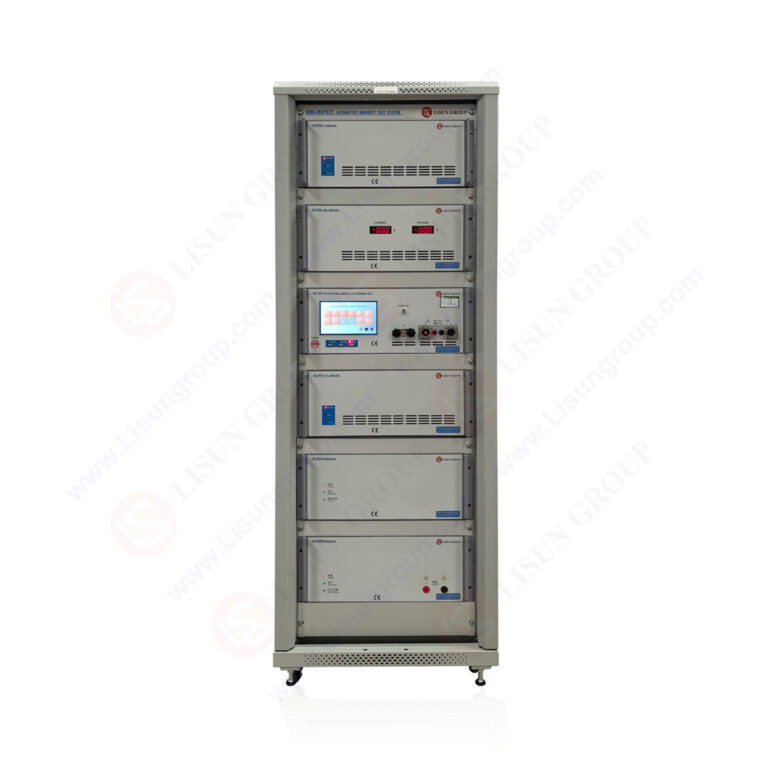
Modern test systems are specialized for their target standard. For example, the LISUN platform offers two primary variants: the LEDLM-80PL for LED package/array/module testing per LM-80/TM-21, and the LEDLM-84PL for complete luminaire testing per LM-84/TM-28. This specialization is critical, as the LEDLM-84PL requires a larger integrating sphere (e.g., 2m diameter) and different optical bench configurations to accommodate entire luminaires, while the LEDLM-80PL is optimized for smaller sources. Both systems share a core philosophy of automated, multi-channel data acquisition.
3.2 Hardware Configuration: Multi-Channel and Thermal Integration
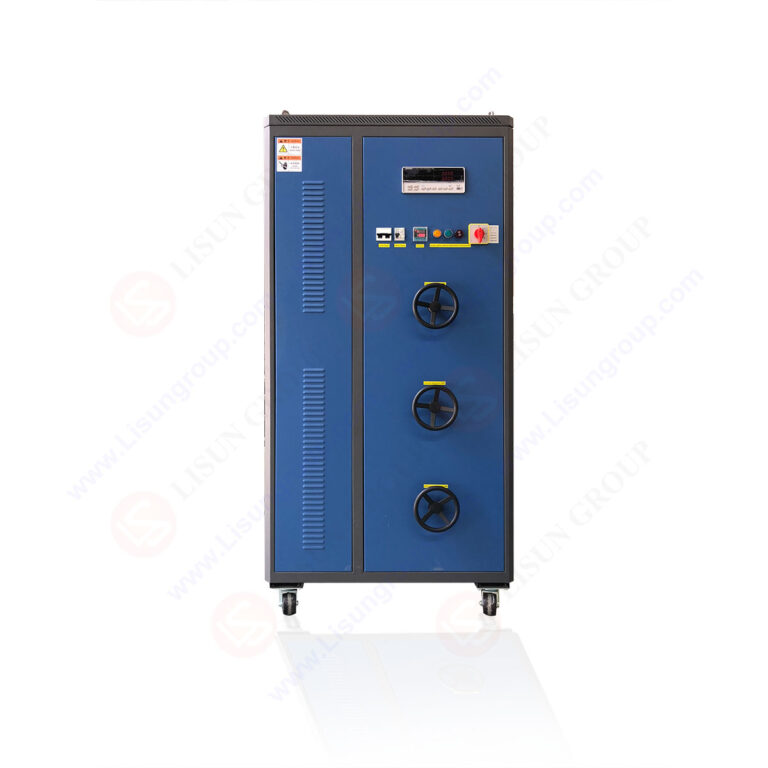
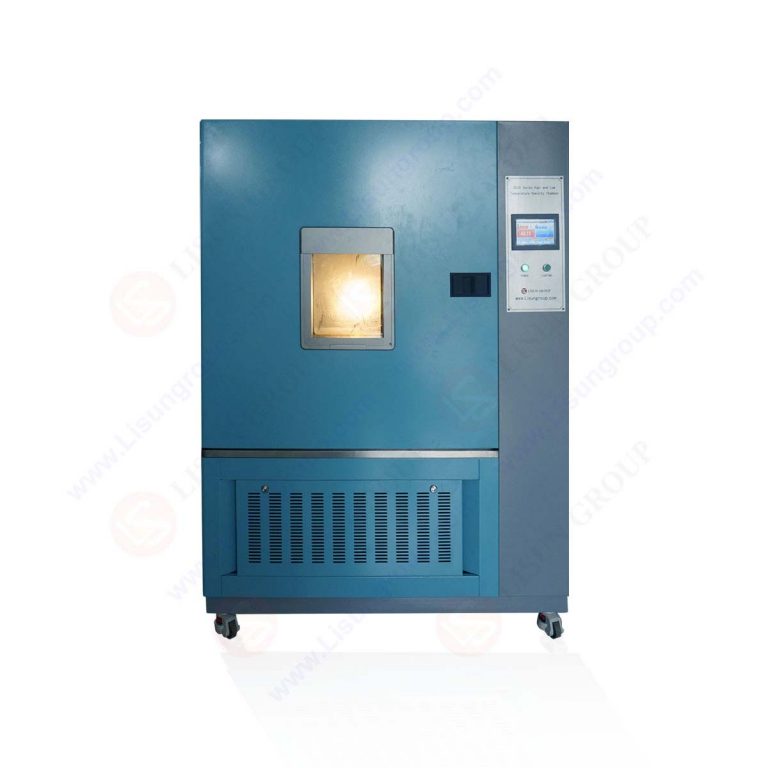
A robust system supports high-throughput testing. Advanced configurations allow for the connection of up to 3 independent temperature and humidity chambers to a single optical measurement mainframe. Each chamber can host multiple LED samples on dedicated test boards, with the system sequentially and automatically measuring each sample’s photometric output at programmed intervals. This parallel processing capability is essential for efficiently gathering the statistically significant data sets required for reliable TM-21 projections, making the 6,000-hour test duration manageable.
Table: LISUN LED Optical Aging Test System Core Configuration Comparison
| Feature | LEDLM-80PL (LM-80/TM-21 Focus) | LEDLM-84PL (LM-84/TM-28 Focus) |
| :— | :— | :— |
| Primary Compliance | IES LM-80, IES TM-21 | IES LM-84, IES TM-28 |
| Test Sample Type | LED Packages, Arrays, Modules | Complete LED Luminaires |
| Typical Sphere Size | 0.3m, 0.5m, 1m | 1.5m, 2m, or larger |
| Key Metric Output | L70/L50 for LED Source | L70/L50/Lx for Luminaire System |
| Thermal Chambers | Supports up to 3 connected chambers | Supports environmental room integration |
3.3 The Role of the Integrating Sphere and Spectroradiometer
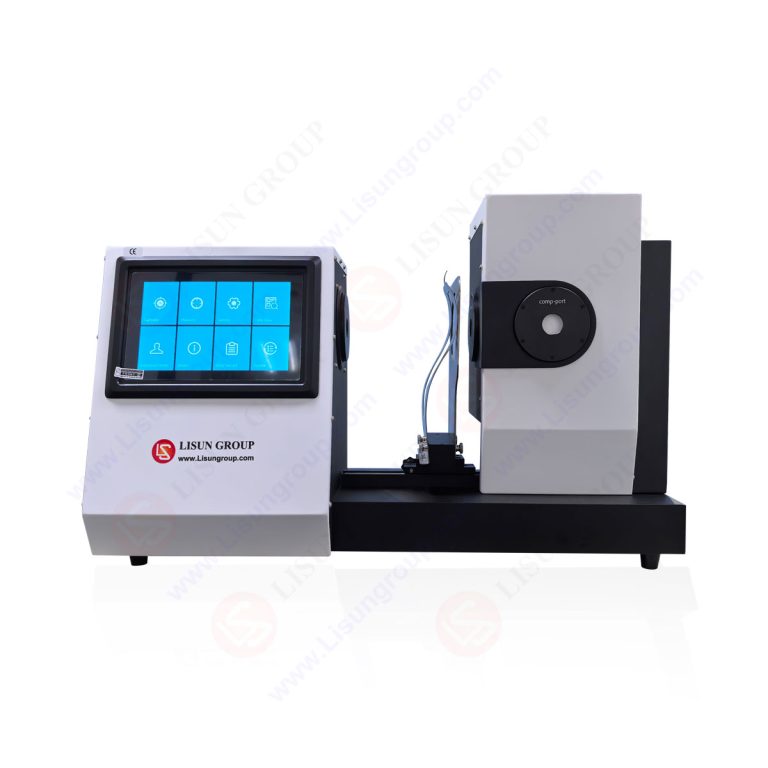
The heart of the optical measurement system is a calibrated integrating sphere coupled with a high-precision spectroradiometer. The sphere collects and diffuses the total luminous flux from the LED, while the spectroradiometer measures the spectral power distribution. This allows the system to track not only total lumen depreciation but also critical color maintenance parameters like chromaticity shift (Δu’v’) over time, which is a required reporting metric in LM-80. Calibration traceable to CIE 70 (The Measurement of Absolute Luminous Intensity Distributions) and CIE 084 (Measurement of Luminous Flux) underpins the absolute accuracy of these measurements.
4.1 Understanding the Arrhenius Model for Thermal Acceleration
The core principle of accelerated LED testing is the Arrhenius Model, which describes the temperature dependence of chemical reaction rates—including the degradation mechanisms within an LED. By testing at elevated temperatures (e.g., 85°C, 105°C), the degradation processes are accelerated. The model establishes a logarithmic relationship between the reaction rate and the inverse of absolute temperature. Sophisticated test software, like that used in LISUN systems, embeds this model to analyze degradation rates across multiple temperatures, validating the acceleration factor and ensuring that high-temperature failure modes are representative of those at normal operating conditions.
4.2 Dual Testing Modes: Real-Time vs. Alternate Aging
To maximize equipment utilization and data flexibility, advanced systems offer two operational modes. Real-Time Mode is the classic LM-80 approach: samples are aged at a constant elevated temperature, and the optical measurement system periodically interrupts aging to take a measurement at a standard temperature (typically 25°C). Alternate Aging Mode increases throughput by using multiple thermal chambers: one set of samples is being optically measured at room temperature while another set is actively aging in a high-temperature chamber, and they are swapped cyclically. This mode effectively doubles testing capacity without compromising data integrity.
5.1 Automated Data Logging and Curve Fitting
The system software automatically logs luminous flux, chromaticity, forward voltage, and input power at every test point. After collecting the prescribed data (e.g., at 1,000-hour intervals up to 6,000+ hours), the software performs a least-squares curve fit to the lumen maintenance data for each test temperature, as mandated by TM-21. This generates the exponential decay equation (Φ(t) = B * exp(-αt)) for each temperature stream, where ‘α’ is the decay rate constant. The software calculates the correlation coefficient (R²) to validate the fit’s quality—a poor fit can indicate unstable testing conditions or product anomalies.
5.2 Executing TM-21 Projections and Generating Compliance Reports
Using the fitted equations from the chosen data stream (often the highest temperature with a good fit), the software applies the TM-21 rules to project the time to L70 or L50. It enforces the projection limit (6x the test duration) and calculates the projected lumen maintenance value at 36,000 hours (a common reporting time). The final output is a standardized test report that includes all raw data, fitted curves, projection calculations, and a summary table, providing a complete, audit-ready package for compliance submission to agencies like the DLC or for customer technical documentation.
6.1 Sample Selection and Test Plan Development
A successful testing program begins with a statistically sound sample selection. LM-80 recommends a minimum of 20 samples per test condition, but best practices often involve larger batches to account for outliers. The test plan must define the specific case temperatures (aligned with product datasheet claims), the total test duration (beyond the 6,000-hour minimum for better projection confidence), and the measurement intervals. Integrating this plan with the test system’s scheduling software ensures unattended, consistent operation.
6.2 Interpreting Results and Addressing Common Anomalies
Engineers must critically evaluate results. A sudden lumen drop may indicate a solder joint failure rather than LED chip degradation. A poor curve fit (low R²) at one temperature may suggest inconsistent temperature control. Understanding these nuances is key to diagnosing product issues versus test artifacts. The ability to review correlated data—such as simultaneous chromaticity shift—can provide clues. For instance, a large blue shift often correlates with phosphor degradation, a different failure mechanism than lumen depreciation from chip or package issues.
7.1 Towards Stress Testing and Lifetime Validation
The industry is moving beyond simple lumen maintenance to more comprehensive stress testing that combines multiple environmental factors. While not yet standardized, testing that combines temperature cycling, humidity (damp heat), and electrical overstress provides a more complete picture of product robustness, especially for automotive (AEC-Q102) or outdoor applications. Modern, configurable systems are foundational for developing these bespoke validation protocols.
7.2 Integration with Digital Workflows and Smart Manufacturing
The future lies in connecting test data directly to product lifecycle management (PLM) and quality management system (QMS) software. Automated data uploads, real-time dashboard monitoring of test station health and sample performance, and AI-driven early anomaly detection are becoming differentiators. This digital thread transforms LM-80 LED testing from a compliance checklist item into a continuous feedback loop for R&D and manufacturing process improvement.
LM-80 LED testing, underpinned by IESNA standard compliance, remains the definitive methodology for quantifying and projecting lumen maintenance, serving as the bedrock of LED product reliability claims. As this article has detailed, executing these tests with precision requires a deep understanding of the standards’ nuances—from the data collection rigor of LM-80 to the mathematical projections of TM-21—coupled with advanced, purpose-built instrumentation. Modern systems, exemplified by LISUN’s configurable platforms, integrate Arrhenius-based acceleration science, dual testing modes, and scalable hardware to deliver efficient, accurate, and fully compliant data. For engineers and testing professionals, mastering this ecosystem is not merely about generating a report; it is about gaining actionable insights into product longevity, mitigating warranty risk, and ultimately building trust in LED technology through validated, data-driven performance. The evolution towards integrated luminaire testing (LM-84) and smarter data analytics will further solidify the role of rigorous testing in lighting innovation.
Q1: Can we use LM-80 data collected at 55°C and 85°C to claim an L70 life for a product operating at a lower case temperature, like 45°C?
A: Yes, this is a primary application of the TM-21 standard. IES TM-21 provides the mathematical procedure to extrapolate the lumen maintenance curve from the test temperatures (e.g., 55°C, 85°C) down to your product’s application temperature (e.g., 45°C). The underlying Arrhenius Model, often embedded in the analysis software of systems like the LEDLM-80PL, validates the thermal acceleration relationship. You would use the decay rate (‘α’) from your test data and the TM-21 equations to calculate the projected L70 life at the 45°C condition, ensuring the projection does not exceed 6 times your total test duration.
Q2: What is the practical difference between testing in Real-Time Mode versus Alternate Aging Mode, and how do I choose?
A: The core difference is throughput versus data continuity. Real-Time Mode ages and measures the same batch of samples sequentially, providing a continuous, unbroken degradation curve for each individual sample. This is the traditional LM-80 method. Alternate Aging Mode uses separate sample sets for aging and measurement, cycling them to keep chambers constantly active. It significantly increases throughput but provides a “stepped” data curve for each sample. Choose Real-Time Mode for maximum data fidelity on a critical new product. Use Alternate Aging Mode for high-volume production validation or when testing multiple similar product variants, as it optimizes equipment utilization.
Q3: Why is a minimum 6,000-hour test duration required by LM-80, and is testing longer beneficial?
A: The 6,000-hour (approximately 8-month) minimum is established to capture sufficient data points to fit a reliable exponential decay model for projection. Short-term tests (e.g., 1,000 hours) are highly susceptible to noise and initial stabilization effects, leading to inaccurate and unreliable TM-21 projections. Testing beyond 6,000 hours—to 8,000 or 10,000 hours—is highly beneficial. It provides a more stable curve fit, reduces the statistical impact of any anomalous early data points, and allows for a longer projection multiplier under TM-21 rules (up to 6x the test duration), resulting in a more confident and potentially longer projected L70 life.