









Abstract
Ensuring electronic equipment can withstand radio frequency interference conducted via its power and signal ports is a critical component of global electromagnetic compatibility (EMC) compliance. The LISUN RFCI61000-6 series RF Conducted Immunity Test System provides a fully integrated, precise, and compliant solution for performing these essential tests according to major international standards. This system, designed around the latest EN 61000-4-6:2023 requirements, integrates a signal source, power amplifier, and power meter into a single, user-friendly unit. Its core capabilities, including dual power variants (35W and 85W) and comprehensive coupling-decoupling network (CDN) support, deliver exceptional value for RF conducted immunity testing across regulated industries such as medical devices, industrial automation, and new energy, streamlining the path to certification.
1.1 The Principle of Conducted RF Disturbance
Radio frequency (RF) immunity testing evaluates an electronic device’s ability to function correctly when subjected to intentional electromagnetic interference. While radiated immunity tests expose the equipment to fields via antennas, conducted immunity addresses interference coupled directly onto cables, primarily power leads and lengthy signal/control lines. This interference, typically in the 150 kHz to 80 MHz or 230 MHz frequency range, can be induced by nearby RF transmitters or other electrical noise sources. The RF conducted immunity testing process involves injecting a calibrated RF disturbance signal onto these cables while monitoring the Equipment Under Test (EUT) for performance degradation or malfunction, simulating real-world electromagnetic environments.
1.2 Core Standards and Compliance Framework
Compliance with conducted immunity requirements is mandated by a suite of harmonized international standards. The foundational document is IEC 61000-4-6, which defines the test methods, equipment specifications, and severity levels. This standard is adopted regionally as EN 61000-4-6 in Europe and GB/T 17626.6 in China. The recent EN 61000-4-6:2023 edition clarifies test methodologies and equipment validation procedures, emphasizing the need for precise control of the injected test level. Key clauses, such as those detailing the use of Coupling/Decoupling Networks (CDNs, Clause 7) and the validation of the test setup (Annex A), are critical for generating reproducible and legally defensible test results. Adherence to these standards is non-negotiable for market access in regulated sectors.
2.1 Integrated Modular Design Philosophy
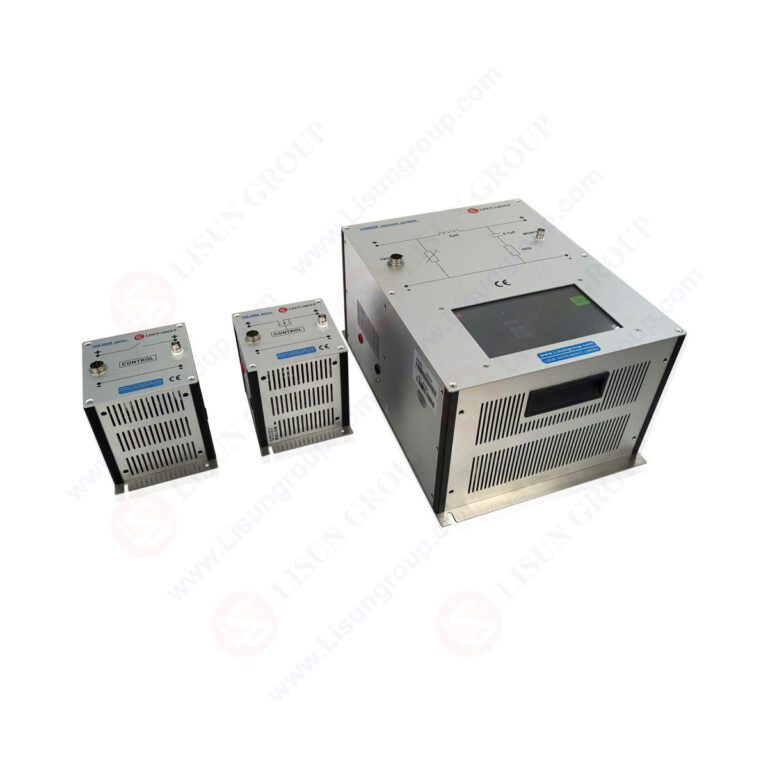
The LISUN RFCI61000-6 series embodies a fully integrated design philosophy, consolidating the signal generator, power amplifier, forward/reverse power meter, and control software into a single chassis. This integration eliminates the need for complex cabling and calibration between separate instruments, reducing setup time and potential for error. The system’s architecture is built around a high-stability synthesized signal source and a robust, linear power amplifier, ensuring the generated test signal meets the spectral purity and modulation requirements specified in standards like IEC 61000-4-6. The built-in directional power meter provides real-time monitoring of forward and reflected power, which is essential for maintaining the correct test level at the EUT injection point and for calculating system Voltage Standing Wave Ratio (VSWR).
2.2 Dual-Power Variant Configuration
To address the varying test level requirements across different product standards and severity levels, the series is offered in two primary power amplifier configurations. This allows laboratories to select a system that matches their specific testing scope without over-investing in unnecessary capability.
| Performance Metric | RFCI61000-6-35W Model | RFCI61000-6-85W Model |
|---|---|---|
| Output Power (Continuous) | 35 Watts | 85 Watts |
| Frequency Range | 150 kHz – 230 MHz | 150 kHz – 230 MHz |
| Typical Output Voltage (into 50Ω) | Up to 42 Vrms | Up to 65 Vrms |
| AM Modulation Depth | 0-99% | 0-99% |
| Pulse Modulation | Standard | Standard |
| Primary Application | Standard compliance testing per IEC/EN 61000-4-6 | High-severity testing for industrial, automotive, and military standards |
3.1 Precision Signal Generation and Modulation
Signal integrity is paramount for valid immunity testing. The system’s synthesized source provides high frequency accuracy and stability, with low harmonic and spurious content. It fully supports the 1 kHz sine wave at 80% depth amplitude modulation (AM) mandated by EN 61000-4-6:2023 for simulating realistic interference. Furthermore, it includes capabilities for pulse modulation, which is required by certain automotive and industrial standards. The automatic level control (ALC) loop, informed by the integrated power meter, ensures the set test level is maintained accurately across the entire frequency sweep, compensating for variations in system and EUT impedance.
3.2 Multi-Mode Injection and CDN Compatibility
The system supports all standard injection methods outlined in Clause 6 of IEC 61000-4-6. Its primary and most repeatable method is via Coupling/Decoupling Networks (CDNs). The LISUN RF Conducted Immunity Test System is designed for broad compatibility with a wide range of commercial CDNs for power lines (e.g., M1, M2, M3, M4, M5 types) and signal/control lines. The system’s low output VSWR ensures efficient power transfer to these networks. For situations where CDNs are impractical, the system can be configured for direct electromagnetic clamping (using current clamps) or bulk current injection (BCI) methods, providing the flexibility needed for testing large or complex EUTs.
4.1 Adherence to Standardized Test Methods
A test system is only as good as its ability to produce standards-compliant results. The LISUN RFCI61000-6 series is engineered to meet the stringent performance check requirements of EN 61000-4-6:2023, Annex A. This includes the validation of the uniform field area within a CDN and the calibration of the complete test setup. The system software typically guides the user through these essential verification steps, ensuring that the injected disturbance level at the EUT port is known with high certainty. This rigorous approach to method validation is critical for laboratories seeking ISO/IEC 17025 accreditation, as it provides documented evidence of measurement traceability.
4.2 Automated Test Sequencing and Data Logging
Modern compliance testing demands efficiency and rigorous documentation. The system’s control software allows for the complete automation of test sequences. Engineers can pre-program frequency ranges, dwell times, modulation settings, and test levels according to the applicable standard. During execution, the software continuously logs all key parameters: frequency, forward power, reverse power, VSWR, and any system alarms. This automated data logging not only speeds up the testing process but also creates an immutable audit trail for compliance reports, which is invaluable during certification audits or technical construction file reviews.
5.1 Regulated Medical and Industrial Equipment
In medical device manufacturing, compliance with EMC standards like IEC 60601-1-2 is a safety imperative. The LISUN RF Conducted Immunity Test System is used to verify that critical patient monitoring, diagnostic, and therapeutic equipment remains immune to RF interference from walkie-talkies, mobile phones, or other medical devices within a hospital. Similarly, in industrial automation, programmable logic controllers (PLCs), motor drives, and sensors must operate reliably in electrically noisy factory environments. Testing with this system ensures robustness against conducted disturbances, preventing costly production line failures.
5.2 Power, Energy, and Communication Infrastructure
Power conversion equipment, including inverters for solar installations and chargers for electric vehicles, must demonstrate high immunity to ensure grid stability and safety. These devices are tested to standards like IEC 61000-4-6 to guarantee they are not susceptible to conducted RF from broadcast bands. Telecommunications equipment, from base station components to network switches, also undergoes rigorous EMC immunity testing to ensure network integrity is maintained in the presence of strong RF fields, making systems like the RFCI61000-6 essential in their development and quality assurance labs.
6.1 Enhanced Usability with Touchscreen Interface
The system features an intuitive touchscreen interface that centralizes control and monitoring. Operators can quickly configure tests, view real-time power and VSWR graphs, and monitor system status without needing deep familiarity with standalone RF instrumentation. This user-centric design reduces training time and minimizes operator error, allowing both experienced EMC engineers and newer technicians to conduct tests efficiently and confidently.
6.2 System Reliability and Low VSWR Design
Reliability in a test system translates to predictable throughput and lower cost of ownership. The robust design of the amplifier and cooling systems ensures stable operation during long, automated test sweeps. A critically important performance aspect is the system’s low Voltage Standing Wave Ratio (VSWR). A low VSWR indicates good impedance matching between the amplifier, cabling, and injection device (CDN or clamp). This maximizes the efficient delivery of power to the EUT, protects the amplifier from damage due to reflected power, and ensures the accuracy of the calibrated test level, as per the validation procedures in GB/T 17626.6.
7.1 From R&D Validation to Type Approval Testing
The LISUN RFCI61000-6 series serves a vital role throughout the product lifecycle. During research and development, it allows design engineers to identify and rectify susceptibility issues early, using diagnostic sweeps and lower test levels. In the pre-compliance phase, it enables thorough vetting before the costly formal certification test. Finally, for type approval or acceptance testing, it delivers the fully calibrated, standards-compliant performance required by third-party test houses and notified bodies to issue official reports against IEC 61000-4-6 and its regional derivatives.
7.2 Complementary Systems for Full EMC Assessment
While focused on conducted immunity, this system is part of a broader EMC test ecosystem. A complete compliance lab will pair it with radiated immunity test systems (e.g., for IEC 61000-4-3), emission measurement systems (for CISPR standards), and electrostatic discharge (ESD) and electrical fast transient (EFT) test equipment. The data management and reporting philosophies are often aligned across these LISUN EMC Test Systems, allowing laboratories to build a cohesive, efficient, and fully accredited testing facility that can handle all aspects of a product’s EMC compliance journey.
The LISUN RFCI61000-6 series RF Conducted Immunity Test System represents a sophisticated, integrated solution for one of the core challenges in electromagnetic compatibility validation. By meticulously implementing the requirements of EN 61000-4-6:2023 and related standards, it provides testing engineers with a reliable, accurate, and user-friendly tool. Its technical strengths—including dual power amplifier options, comprehensive CDN support, low VSWR performance, and automated software control—directly address the practical needs of compliance testing across critical industries from medical devices to new energy infrastructure. For laboratories seeking to enhance their testing accuracy, efficiency, and defensible data generation, this system offers a compelling technical foundation for achieving and demonstrating robust RF conducted immunity.
Q1: What is the key difference between the 35W and 85W models, and how do I choose?
A: The core difference is the continuous output power of the integrated RF amplifier, which directly determines the maximum test voltage that can be delivered into a standard 50-ohm load (or CDN). The 35W model is typically sufficient for the majority of commercial product testing per IEC/EN 61000-4-6, which often requires test levels up to 10 Vrms. The 85W model is necessary for higher severity levels (e.g., 30 Vrms), for testing products with higher impedance that require more voltage, or for standards beyond the basic commercial scope, such as certain automotive, industrial, or military specifications. Selection should be based on the highest test level and load impedance specified in your target product standards.
Q2: How does the system ensure the correct test level is applied to the Equipment Under Test (EUT)?
A: The system ensures accuracy through its integrated directional power meter and closed-loop control. According to IEC 61000-4-6, the test level is defined as the RMS voltage across a 150-ohm resistor at the EUT port of the Coupling-Decoupling Network (CDN). The system software uses a calibration file for the specific CDN in use, which defines the relationship between forward power from the amplifier and the resulting voltage at the EUT port. During testing, the software continuously measures forward power, calculates the corresponding EUT voltage using the CDN calibration data, and automatically adjusts the amplifier output via the ALC circuit to maintain the set voltage level across the frequency sweep.
Q3: Can the LISUN RFCI61000-6 system be used for testing beyond the 150 kHz – 230 MHz range?
A: The standard configuration of the RFCI61000-6 series is optimized for the 150 kHz to 230 MHz range as defined in IEC 61000-4-6. This covers the vast majority of conducted RF immunity requirements. Some product family standards (e.g., for automotive or telecom) may extend the upper frequency limit to 1 GHz or higher for bulk current injection (BCI) methods. In such cases, the system’s core amplifier and source may reach their operational limits. For extended frequency testing, it is essential to consult the specific standard’s clauses on test methods and equipment, and verify the system’s specifications against those requirements, as specialized amplifiers may be needed.
Q4: What is the importance of low VSWR in an RF conducted immunity test system?
A: Low Voltage Standing Wave Ratio (VSWR) is critically important for system performance and accuracy. A high VSWR indicates significant impedance mismatch between the amplifier output, the connecting cable, and the injection device (CDN or clamp). This mismatch causes a portion of the forward power to be reflected back towards the amplifier. This reflected power can stress the amplifier, potentially causing overheating or damage. More importantly, it means the actual power delivered to the EUT is less than the forward power reading, leading to an under-test condition. A system with inherently low output VSWR, like the RFCI61000-6 series, ensures more efficient and accurate power transfer, which is essential for validating the test setup per the procedures in standards like EN 61000-4-6:2023, Annex A.