


Abstract
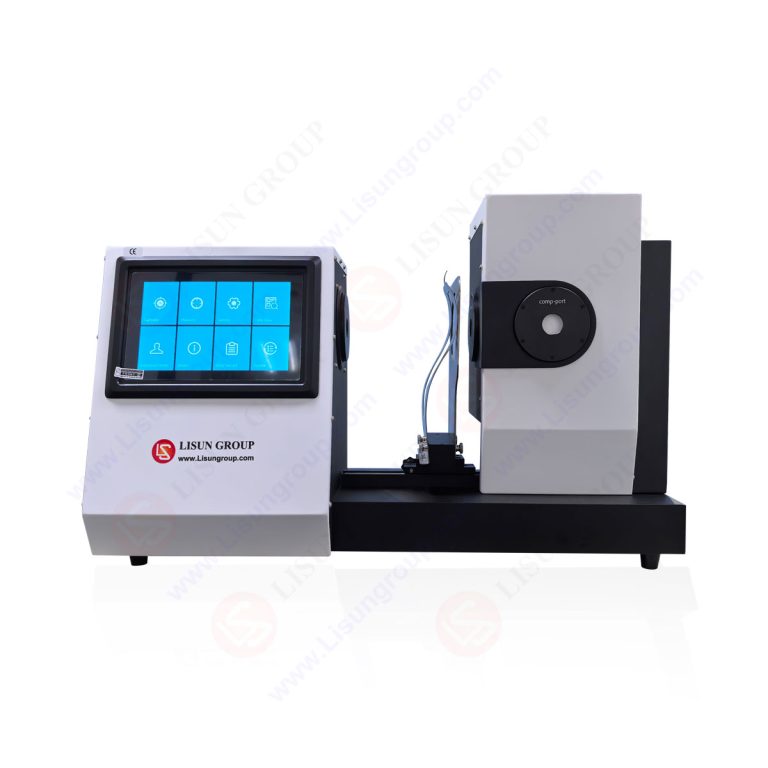
In modern manufacturing, achieving and maintaining precise color consistency is a critical component of quality control and brand integrity. The LISUN HSCD-800 portable spectrophotometer represents a pinnacle of mobile color measurement technology, engineered to deliver laboratory-grade accuracy in diverse industrial environments. This high-precision instrument empowers quality managers, R&D engineers, and lab technicians to perform reliable spectral analysis, quantify color differences, and ensure compliance with international standards directly on the production floor or at remote supplier sites. Its core value lies in bridging the gap between portable convenience and uncompromising technical performance, enabling data-driven decisions that reduce waste, accelerate time-to-market, and uphold stringent color quality benchmarks across sectors from automotive coatings to food packaging.
1.1 The Critical Role of Color Measurement
Color is a fundamental quality attribute influencing consumer perception, product safety, and brand recognition. In industrial settings, subjective visual assessment is insufficient for meeting today’s tight tolerances. Objective, numerical color data is essential for quantifying deviations, troubleshooting batch inconsistencies, and communicating specifications across global supply chains. Portable spectrophotometers have thus become indispensable tools, moving precision measurement from the controlled lab environment to the point of need—be it an incoming material inspection bay, a printing press, or an assembly line for plastic components.
1.2 Evolution of the LISUN HSCD Series
The LISUN HSCD series is the culmination of extensive research into the demands of field-based colorimetry. Building upon legacy bench-top designs, the HSCD series integrates advanced miniaturized optics, robust calibration architectures, and intuitive software to create a new class of portable device. Models like the HSCD-800 are designed not as compromises, but as purpose-built instruments that meet the rigorous repeatability and inter-instrument agreement standards required for serious industrial application, effectively making the production floor an extension of the quality laboratory.
2.1 Grating Spectroscopy and Dual-Beam Optical Design
At the heart of the HSCD-800’s performance is a high-resolution diffraction grating spectrometer. This technology disperses light reflected from a sample into its full spectral components, typically across the 400-700nm visible range with a 10nm wavelength interval. This allows for the calculation of colorimetric values under any illuminant and observer condition. Coupled with a stable dual-beam optical design, the instrument simultaneously measures the light from the sample and a reference path. This configuration compensates for fluctuations in the light source intensity and detector sensitivity in real-time, ensuring exceptional long-term stability and measurement reliability critical for trend analysis.
2.2 Nano-Integrated Optical Devices and Zirconium Calibration
LISUN employs nano-integrated optical devices to achieve a compact, robust, and thermally stable optical engine. This integration minimizes internal stray light and positional errors. For calibration, the HSCD series utilizes a zirconium ceramic calibration whiteboard. Zirconium offers superior hardness, chemical inertness, and reflectance stability compared to traditional materials like barium sulfate or PTFE. This results in a calibration tile that is highly resistant to yellowing, scratching, and contamination, providing a durable and reliable reflectance standard that underpins the instrument’s measurement accuracy over its entire service life.
3.1 Performance Parameters Defining Precision
The technical prowess of a portable spectrophotometer is defined by key metrics. Measurement repeatability, expressed as the mean deviation (ΔEab) on a white calibration tile, is a primary indicator of instrument stability; premium models achieve values as low as 0.04. Inter-instrument agreement (ΔEab) ensures different units measure the same sample identically, which is vital for multi-location operations. The choice of measurement aperture (e.g., MAV 8mm, SAV 4mm) allows adaptation to sample size and texture. The inclusion of both Specular Component Included (SCI) and Excluded (SCE) measurement modes provides data on both colorant formulation (SCI) and visual appearance (SCE).
3.2 LISUN HSCD Series Comparative Analysis
The HSCD series offers models tailored to specific precision and application requirements. The following table provides a technical comparison of key models.
| Feature / Model | HSCD-780 | HSCD-800 | HSCD-860 |
|---|---|---|---|
| Measurement Repeatability | ΔE*ab ≤ 0.08 | ΔE*ab ≤ 0.04 | ΔE*ab ≤ 0.04 |
| Inter-Instrument Agreement | ΔE*ab ≤ 0.40 | ΔE*ab ≤ 0.20 | ΔE*ab ≤ 0.20 |
| Standard Aperture | MAV: 8mm | MAV: 8mm | MAV: 8mm |
| Optional Aperture | SAV: 4mm | SAV: 4mm, LAV: 15mm | SAV: 4mm, LAV: 15mm |
| Light Source | LED | LED | Pulsed Xenon |
| Connectivity | USB, Bluetooth | USB, Bluetooth | USB, Bluetooth, Wi-Fi |
| Primary Application | General QC, Field Inspection | High-Precision R&D & QC | Lab-Grade Field & UV Analysis |
4.1 Foundational Colorimetric Standards
The validity of color data hinges on compliance with internationally recognized methodologies. The LISUN HSCD series is engineered to conform to a comprehensive suite of standards. It adheres to CIE No.15 for colorimetry and ISO 7724-1 for the general principles of color measurement by reflectance, ensuring its fundamental color calculations are globally accepted. The instrument’s calibration and measurement procedures follow ASTM E1164 for obtaining spectrophotometric data, guaranteeing consistent data acquisition practices. Furthermore, compliance with DIN 5033 Teil 7 verifies the instrument meets rigorous German engineering norms for photometric and colorimetric conditions.
4.2 Industry-Specific Standard Applications
Beyond foundational standards, the HSCD series supports compliance with sector-specific regulations. For traffic safety and signage in China, measurements align with GB 2893 (safety colors) and GB/T 18833 (retroreflective sheeting). In the plastics and paper industries, it facilitates tests per ISO 2470 for measuring diffuse blue reflectance factor (brightness). For whiteness and yellowness indices critical in polymers and textiles, the instrument calculates values according to ASTM E313 and ASTM D1925. Its spectral data is also used to assess compliance with GB/T 3978, the Chinese standard for object color measurement.
5.1 PC Software for Advanced Analysis
The portable spectrophotometer is paired with powerful PC software that transforms raw spectral data into actionable intelligence. This software enables the creation and management of extensive color libraries, sets precise tolerance limits (dEab, dL, da, db), and generates comprehensive pass/fail reports. Advanced features include trend analysis for statistical process control (SPC), metamerism index calculation to evaluate color matches under different light sources, and strength/difference analysis for colorant formulation adjustments. The software supports data export in multiple formats for integration into broader Quality Management Systems (QMS).
5.2 Mobile Connectivity and On-The-Go Operation
Understanding the need for agility, the HSCD series features robust connectivity via Bluetooth and, on advanced models, Wi-Fi. This allows the instrument to pair seamlessly with mobile devices or handheld terminals running dedicated apps. Operators can perform measurements, view results against standards, and generate instant reports directly on a tablet, eliminating the need to return to a PC workstation. This seamless workflow is invaluable for real-time quality decisions during production runs, supplier audits, or inspections of large or fixed objects like vehicle interiors or architectural coatings.
6.1 Manufacturing and Process Industries
In plastics and polymer manufacturing, the HSCD-800 ensures color consistency across batches of pellets, molded parts, and films, preventing costly production runs that are off-spec. For coatings and paints, it is used to verify the color of liquid batches, finished painted surfaces on appliances or automotive interiors, and to check for hiding power. The textile industry employs it to control dye lot acceptance, measure colorfastness samples, and match fabrics across different material types, where metamerism is a common challenge.
6.2 Printing, Packaging, and Consumer Goods
In printing, the spectrophotometer is vital for press-side color control, measuring color bars to maintain ink density and hue throughout a print run. Packaging converters use it to ensure brand colors are reproduced accurately on different substrates like corrugated board, flexible film, and labels. The food industry utilizes color as a quality indicator; the instrument can measure the color of powders, liquids, and solids to ensure product consistency and appeal, adhering to internal quality specifications.
7.1 Ensuring Measurement Accuracy
Consistent, accurate results require adherence to operational protocols. This includes regular calibration using the provided zirconium white tile and zero calibration box (for UV models). The instrument must be allowed to thermally stabilize in the measurement environment. Proper sample presentation is critical: surfaces should be clean, opaque, and uniform, and the measurement aperture must be fully covered. For textured or non-uniform samples, multiple measurements should be averaged. Regular proficiency testing with stable master samples helps monitor long-term instrument performance.
7.2 Instrument Care and Calibration
To preserve its precision, the HSCD spectrophotometer requires careful handling. The calibration whiteboard should be stored in its protective case and cleaned only with recommended methods to avoid damage. The instrument’s measurement window and lens must be kept clean using a soft, lint-free cloth. The device should be protected from extreme temperatures, humidity, dust, and direct shock. Following a scheduled recalibration and verification program, as recommended by LISUN, is essential to maintain traceability to national standards and ensure ongoing data integrity.
The LISUN HSCD-800 portable spectrophotometer stands as a testament to the convergence of high-precision optical engineering and practical industrial design. By incorporating core technologies such as grating spectroscopy, a dual-beam optical path, and a stable zirconium calibration standard, it delivers the spectral accuracy and repeatability once confined to laboratory benchtops. Its compliance with a wide array of international and industry-specific standards, including CIE No.15, ASTM E1164, and ISO 7724-1, ensures that the color data it generates is authoritative and globally recognized. From controlling pigment dispersion in plastics to ensuring brand color fidelity on printed packaging, the HSCD-800 provides quality professionals across manufacturing sectors with a definitive tool for objective color analysis. Ultimately, this instrument empowers organizations to enforce rigorous color quality control, streamline supply chain communication, and protect brand equity through data-driven, consistent color management from R&D through final production.
Q1: What is the practical difference between SCI and SCE measurement modes, and when should I use each?
A: The key difference lies in how surface appearance is handled. Specular Component Included (SCI) mode uses an integrating sphere to capture all reflected light, including the mirror-like specular reflection. This measures the colorant’s true color, independent of surface gloss, and is ideal for formulation and quality control of the color itself. Specular Component Excluded (SCE) mode blocks the specular reflection, measuring only the diffuse light. This correlates more closely with the visual appearance of a textured or glossy sample as seen by the human eye. Use SCI for color development and batch-to-batch comparison of material color. Use SCE for matching the final appearance of finished products, such as a matte vs. glossy paint.
Q2: How does the inter-instrument agreement (IIA) specification impact a multi-site or supply chain quality program?
A: A tight inter-instrument agreement, such as ΔE*ab ≤ 0.20 for the HSCD-800, is critical for successful multi-site operations. It ensures that color measurements taken on an instrument at a raw material supplier’s facility, a component manufacturer’s plant, and the final assembly factory are directly comparable with minimal instrumental bias. This eliminates disputes over color acceptability that arise from device variation, enabling the use of universal digital color tolerances. It allows for seamless data sharing and objective quality gates throughout the supply chain, reducing subjective approvals and ensuring that all partners are literally “seeing” color the same way.
Q3: Can the LISUN HSCD-800 measure fluorescent materials or evaluate whiteness/yellowness indices?
A: For accurate measurement of fluorescent materials, which contain optical brightening agents (OBAs), a spectrophotometer with a pulsed xenon light source that includes UV radiation is required, such as the HSCD-860 model. The HSCD-800 uses an LED light source with minimal UV output, so it will not fully excite OBAs. However, for non-fluorescent samples, the HSCD-800 is fully capable of calculating standard whiteness and yellowness indices (e.g., ASTM E313, ASTM D1925) from its spectral reflectance data. These indices are mathematically derived from the measured spectral values and are essential for quality control in industries like plastics, paper, and textiles where brightness and hue shift are key parameters.