









Abstract
Accurate and standardized LED Lumen Depreciation Testing for IEC 60068 & LM-80 Compliance is the cornerstone of validating long-term LED product reliability and lifetime claims. This technical article provides a comprehensive analysis of the methodologies, standards, and instrumentation required to execute these critical tests. We will delve into the scientific principles of lumen maintenance, the specific requirements of key IES and CIE standards, and the practical implementation using advanced systems like LISUN‘s LED Optical Aging Test Instruments. Tailored for engineers and lab technicians, this guide offers actionable insights into achieving reliable L70/L50 projections, leveraging Arrhenius-based acceleration models, and ensuring global regulatory acceptance through rigorous, data-driven testing protocols.
1.1 Defining Lumen Depreciation and Its Impact on Product Viability
Lumen depreciation refers to the non-recoverable decrease in light output of an LED over its operational life, a critical failure mode distinct from catastrophic failure. This gradual decline directly impacts the efficacy, energy efficiency, and usable lifetime of a lighting product. For manufacturers, accurately predicting this decay is essential for warranty formulation, product specification, and market competitiveness. Key metrics like L70 (the time for lumen output to depreciate to 70% of initial lumens) and L50 (depreciation to 50%) have become industry-standard benchmarks for lifetime claims, making their precise determination through standardized LED Lumen Depreciation Testing for IEC 60068 & LM-80 Compliance a non-negotiable step in the product development cycle.
1.2 Economic and Regulatory Drivers for Standardized Compliance
Beyond technical performance, economic and regulatory pressures mandate rigorous testing. Regulatory bodies and major specification authorities, such as ENERGY STAR and DesignLights Consortium (DLC), require LM-80 test data as a prerequisite for product qualification. Furthermore, inaccurate lifetime projections can lead to costly warranty claims, brand reputation damage, and failed bids on large-scale projects. Implementing a standardized testing framework mitigates these risks by providing defensible, third-party-verifiable data. Compliance with IES LM-80 and related standards is not merely a technical exercise; it is a strategic business imperative that underpins product credibility and market access in a globally competitive landscape.
2.1 IES LM-80-20: The Benchmark for LED Package, Array, and Module Testing
IES LM-80-20, “Approved Method: Measuring Lumen Maintenance of LED Light Sources,” is the foundational standard for collecting lumen maintenance data. It prescribes the test conditions, including a minimum test duration of 6,000 hours (with 10,000 hours recommended) at a minimum of three case temperatures (e.g., 55°C, 85°C, and a third temperature chosen by the manufacturer). The standard mandates measurement intervals, environmental controls, and data reporting formats. Crucially, LM-80 is a data collection standard—it defines how to measure the depreciation curve but does not provide a method for extrapolating that data to estimate useful life. This is where the companion TM-21 standard becomes essential.
2.2 IES TM-21-19 and TM-28-20: Projecting Long-Term Lumen Maintenance
IES TM-21-19, “Projecting Long-Term Lumen Maintenance of LED Light Sources,” provides the mathematical framework for extrapolating LM-80 data. It uses an exponential decay model to project the lumen maintenance curve beyond the tested period, with strict limitations (e.g., projection shall not exceed 6x the test duration). For luminaires, IES LM-84-21, “Measuring Luminous Flux and Color Maintenance of LED Luminaires,” and its projection guide, TM-28-20, perform an analogous function. These standards account for the complete system, including driver and thermal management effects. The accuracy of TM-21/TM-28 projections is entirely dependent on the quality and precision of the underlying LM-80/LM-84 data collection process.
3.1 System Overview: Integrating Sphere, Spectroradiometer, and Environmental Control
A compliant LED Lumen Depreciation Testing for IEC 60068 & LM-80 Compliance system integrates three core subsystems: a precision optical measurement engine, a controlled environmental stress chamber, and specialized software. The optical system typically centers on an integrating sphere paired with a high-accuracy spectroradiometer, which measures total luminous flux (lumens) and chromaticity per standards like IES LM-79-19 and CIE 127:2007. The environmental system consists of one or more temperature-controlled chambers that subject the LED samples to the precise thermal conditions mandated by LM-80. The software acts as the orchestrator, automating test sequences, data acquisition, and preliminary analysis.
3.2 LISUN’s Dual-System Approach: LEDLM-80PL and LEDLM-84PL
To address the distinct requirements of component versus system-level testing, LISUN offers specialized instrument variants. The LEDLM-80PL system is engineered for IES LM-80 and TM-21 compliance, ideal for testing LED packages, arrays, and modules. Its counterpart, the LEDLM-84PL, is configured for IES LM-84 and TM-28 compliance, designed to accommodate complete LED luminaires. Both systems share a core architecture but differ in integrating sphere size, sample mounting fixtures, and software reporting templates to align perfectly with the target standard’s requirements, ensuring that data collection is optimized for the subsequent projection analysis.
4.1 Dual Testing Modes: Sequential vs. Parallel Measurement
Advanced systems offer operational flexibility through dual testing modes. In Sequential Mode, a single spectroradiometer and sphere are used to measure samples from multiple temperature chambers one after another via an automated switching system. This is a cost-effective configuration suitable for many labs. In Parallel Mode, each temperature chamber is equipped with its own dedicated spectroradiometer and sphere, allowing for simultaneous, uninterrupted measurement of all test points. This mode maximizes data throughput and is critical for high-volume testing or when measurement timing is exceptionally precise. LISUN systems support connecting up to 3 temperature chambers, enabling scalable configurations for both modes.
4.2 Implementing the Arrhenius Model for Accelerated Life Testing
The Arrhenius equation describes the temperature-dependent rate of chemical reactions, which governs many LED degradation mechanisms. Sophisticated testing software, like that in LISUN instruments, incorporates this model to enable accelerated life testing (ALT). By testing at elevated temperatures (beyond normal operating limits), the degradation process is accelerated. The software then uses the Arrhenius model to analyze the degradation rates at different temperatures, allowing for the extrapolation of lifetime and L70/L50 values at normal use conditions. This provides vital early-life reliability predictions, significantly reducing the time needed for long-term lumen maintenance assessments.
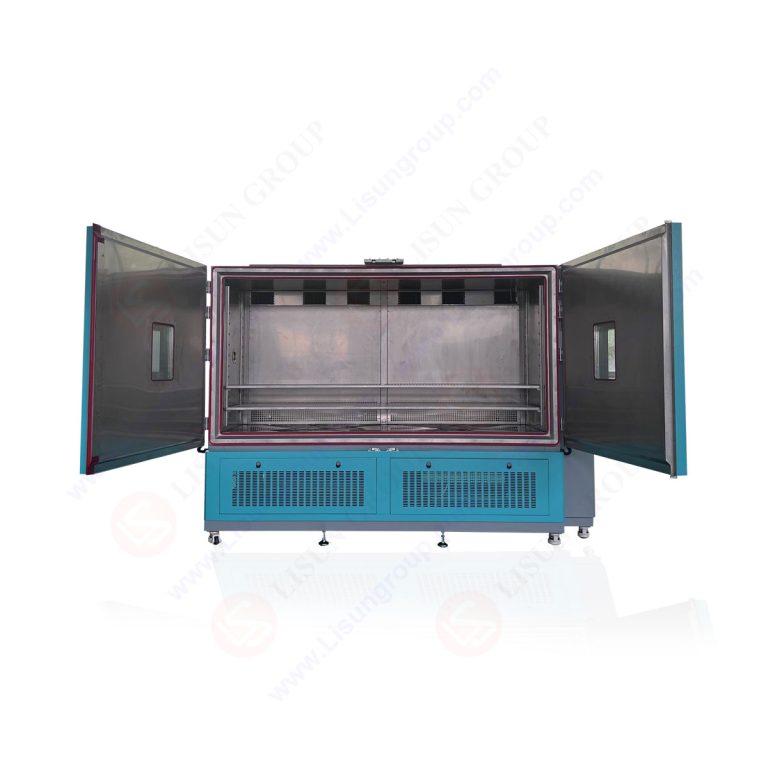
Table: Comparison of LISUN LED Optical Aging Test Instrument Core Specifications
| Feature | LEDLM-80PL (LM-80/TM-21) | LEDLM-84PL (LM-84/TM-28) |
| :— | :— | :— |
| Primary Compliance | IES LM-80-20, IES TM-21-19 | IES LM-84-21, IES TM-28-20 |
| Test Sample Type | LED Packages, Arrays, Modules | Complete LED Luminaires |
| Typical Sphere Diameter | 1.0m / 1.5m / 2.0m (configurable) | 2.0m or larger (configurable) |
| Max Connected Chambers | Up to 3 Temperature Chambers | Up to 3 Temperature Chambers |
| Core Measurement Standards | IES LM-79-19, CIE 127, CIE 084/CIE 70 | IES LM-79-19, CIE 127, CIE 084/CIE 70 |
| Key Output Metrics | Lumen Maintenance Curve, L70, L50, TM-21 Report | Lumen & Color Maintenance, L70, L50, TM-28 Report |
5.1 Traceable Calibration and Reference Standards
The validity of any long-term test hinges on measurement traceability. The spectroradiometer must be calibrated with traceability to national metrology institutes (NMI) using standard lamps. The integrating sphere’s spatial response must be characterized and corrected, as per CIE 084:1989 (measurement of luminous flux) and CIE 70:1987 (measurement of absolute luminous intensity distributions). Regular calibration intervals, verified using stable LED reference standards, are mandatory to detect and correct for any drift in the optical measurement system over the thousands of hours of a test campaign. Without this rigorous metrological foundation, the resulting depreciation data and lifetime projections are unreliable.
5.2 Operational Best Practices for Data Integrity
Best practices extend beyond calibration. Sample selection and mounting must be consistent and representative. Temperature monitoring must use calibrated sensors attached directly to the LED case or a designated thermocouple point (Tcp) as defined in LM-80. Electrical drive current must be stable and precisely controlled. The test environment must be free from vibrations and ambient light interference. Data should be automatically logged with timestamps, and raw spectral data should be archived to allow for re-analysis if standards evolve. Adherence to these practices minimizes experimental noise, ensuring that the observed lumen depreciation is a true reflection of the product’s performance and not an artifact of the test setup.
6.1 Automated Data Processing and TM-21/TM-28 Reporting
Upon completion of a 6,000-hour test, the volume of data is substantial. Advanced software automates the critical processing steps: it calculates lumen maintenance percentages at each interval, plots the depreciation curves for each test temperature, and applies the TM-21 or TM-28 algorithm. The software generates a preliminary projection report, calculating the projected L70 and L50 lifetimes at a user-specified application temperature. This automated analysis transforms raw photometric and thermal data into the standardized format required for compliance submissions, internal design feedback, and customer datasheets, dramatically reducing analysis time and potential for human error.
6.2 Interpreting Results for Design Improvement and Quality Control
The final test report is more than a compliance document; it is a powerful diagnostic tool. By comparing depreciation curves across different test temperatures, engineers can quantify the thermal sensitivity of their LED design. A steeper curve at high temperature may indicate weaknesses in the phosphor system or packaging materials. Analyzing variance between individual samples can reveal manufacturing consistency issues. These insights feed directly back into the R&D and quality control processes, enabling iterative design improvements, refining manufacturing tolerances, and ultimately leading to more robust, longer-lasting, and competitive LED products.
7.1 The Role of IEC 60068 in Comprehensive Reliability Assessment
While IES LM-80 focuses on steady-state thermal and photometric aging, the IEC 60068 series of standards addresses broader environmental reliability. Standards like IEC 60068-2-1 (cold tests), IEC 60068-2-2 (dry heat tests), and IEC 60068-2-14 (temperature change tests) evaluate a product’s robustness to storage, transportation, and operational environmental stresses. For a complete product qualification, LED Lumen Depreciation Testing for IEC 60068 & LM-80 Compliance should be viewed as complementary. LM-80 informs about long-term wear-out, while IEC 60068 tests uncover early-life failures due to thermal mechanical stress, moisture ingress, or other environmental factors.
7.2 Building a Holistic Test Regimen
A comprehensive reliability strategy sequences these tests appropriately. Initial qualification might involve IEC 60068 stress tests to weed out infant mortality failures. Surviving samples would then enter the long-term LM-80 lumen maintenance test to characterize wear-out lifetime. The data from both regimes are essential for building a complete reliability model. Modern test equipment facilitates this by allowing samples to be seamlessly transferred between dedicated environmental chambers (for IEC 60068 tests) and the stable-temperature aging chambers used for LM-80, all while maintaining rigorous sample tracking and data correlation.
Mastering LED Lumen Depreciation Testing for IEC 60068 & LM-80 Compliance is essential for any serious stakeholder in the LED industry. This process, governed by IES LM-80, LM-84, TM-21, and TM-28, transforms subjective lifetime claims into objective, data-driven projections. As demonstrated, success requires more than just a test chamber; it demands an integrated system—like LISUN’s LEDLM-80PL and LEDLM-84PL—that combines precision photometry via standards like CIE 127 and LM-79, precise thermal control, and intelligent software employing the Arrhenius model for insightful analysis. By implementing these rigorous methodologies, engineers and technicians can ensure product reliability, satisfy global regulatory requirements, and leverage test-derived insights for continuous product improvement. Ultimately, robust compliance testing is the technical foundation for market trust and long-term commercial success in the lighting industry.
Q1: What is the minimum required test duration for an IES LM-80-20 compliant report, and can we project lifetime with only this minimum data?
A: IES LM-80-20 mandates a minimum test duration of 6,000 hours. While this data can be used for a TM-21 projection, the results come with significant limitations. TM-21 restricts lifetime projections to a maximum of 6 times the test duration. Therefore, with 6,000 hours of data, you cannot project beyond 36,000 hours (~4.1 years). For more confident and longer projections—common for products claiming 50,000+ hour lifetimes—collecting 10,000 hours of data is strongly recommended, as it allows projections up to 60,000 hours and typically yields a more stable and reliable exponential decay curve fit.
Q2: How does testing an LED luminaire per LM-84 differ from testing an LED module per LM-80, and why is a different system needed?
A: The core difference is the Device Under Test (DUT). LM-80 tests the LED light source (package, array, module) in a controlled thermal environment, isolating its performance. LM-84 tests the complete, fully assembled luminaire, which includes its own driver, heat sink, and optics. This measures real-world system performance. A different system, like the LEDLM-84PL, is needed primarily due to physical scale: luminaires require a larger integrating sphere (e.g., 2m diameter or more) and different mounting fixtures. The software is also tailored to calculate system efficacy (lumens per watt) and generate TM-28 reports specific to luminaires.
Q3: Can the Arrhenius-based acceleration software predict lifetime without completing the full 6,000-hour LM-80 test?
A: Yes, that is a primary function of Arrhenius-based acceleration models within advanced testing software. By conducting tests at multiple, elevated temperatures (e.g., 85°C, 105°C, 125°C) and measuring the degradation rate at each, the software can fit an Arrhenius model to the data. This model can then extrapolate the expected degradation rate at a lower, normal operating temperature (e.g., 55°C or 25°C ambient). This provides an early estimate of L70/L50, which is invaluable for R&D and qualification cycles. However, for formal LM-80 compliance and a TM-21 report, the standard minimum duration at prescribed temperatures must still be fulfilled.
Q4: What are the key advantages of a system that can connect to multiple temperature chambers?
A: Connecting to multiple chambers (e.g., up to 3) offers significant efficiency and data quality benefits. First, it allows simultaneous testing at the three different case temperatures required by LM-80 within a single, synchronized system. Second, it enables high-throughput testing of multiple product batches or variants in parallel. Third, it ensures all samples are measured with the same calibrated optical bench, eliminating inter-instrument variation and ensuring the depreciation curves at different temperatures are directly comparable. This setup is crucial for generating the consistent, multi-temperature dataset required for accurate Arrhenius analysis and robust lifetime projection.
Q5: How do standards like CIE 127 and IES LM-79-19 relate to the lumen maintenance testing process?
A: These are the foundational photometric measurement standards that underpin the data collection in LM-80/LM-84. IES LM-79-19 prescribes the approved methods for measuring electrical and photometric characteristics of solid-state lighting products, including total luminous flux using an integrating sphere. CIE 127:2007 specifically provides guidelines for measuring the averaged LED intensity and luminous flux of LEDs, ensuring uniform measurement geometry. Every luminous flux data point collected during the thousands of hours of an LM-80 test is acquired according to these principles. Compliance with LM-79 and CIE 127 is therefore a prerequisite for ensuring each individual measurement within the long-term depreciation test is accurate and repeatable.