Abstract
Ensuring the long-term mechanical and electrical integrity of plugs, sockets, and switches is a fundamental requirement of international safety standards. This article provides a comprehensive technical analysis of IEC 60884-1 Clause 20 testing, which defines the rigorous durability and breaking capacity requirements for these components. We examine the specific test parameters, methodologies, and compliance criteria mandated by the standard. Furthermore, the article details how automated test systems, specifically the LISUN CZKS-3 series of plug socket analyzers, are engineered to execute these complex, repeatable test sequences with high precision and data integrity. The focus is on the technical application of these systems for validating product safety and reliability in manufacturing and certification laboratory environments.
1.1 Scope and Objective of Mechanical Endurance Tests
Clause 20 of IEC 60884-1, “Plugs and socket-outlets for household and similar purposes,” establishes the minimum requirements for mechanical and electrical endurance. The primary objective is to verify that a plug, socket-outlet, or switch can withstand the normal wear and tear of repeated operation without compromising safety. This involves simulating years of typical usage within a controlled laboratory environment to precipitate and identify potential failure modes such as contact wear, spring fatigue, insulation degradation, and loss of protective earthing continuity before products reach the market.
1.2 Key Test Parameters and Compliance Criteria
The clause specifies several critical test parameters that must be meticulously controlled. The core test is the mechanical operation cycle, which combines a defined number of insertion/withdrawal actions for plugs and sockets or ON/OFF operations for switches. Each mechanical cycle is often coupled with an electrical load cycle, where the device is subjected to its rated current at a specified power factor. The standard mandates that after completing the prescribed number of cycles—typically 5,000 for standard devices and 10,000 for switches—the device must not exhibit hazardous conditions like excessive heating, impaired protection against electric shock, or failure of switching function.
2.1 Simulating Real-World Fault Conditions
Beyond normal operation, Clause 20 incorporates breaking capacity tests, which are crucial for assessing safety under abnormal conditions. This test evaluates the ability of a switch or a socket-outlet to successfully make and break a specified overload current multiple times. It simulates scenarios such as a short-circuit or a motor start-up surge, ensuring that contacts do not weld together, insulation does not carbonize, and the device remains operable and safe after clearing the fault. This is a definitive test for contact material integrity and arc-quenching design.
2.2 Test Circuit and Performance Verification
The breaking capacity test requires a specialized circuit capable of delivering a current of 1.25 times the rated current at a power factor of 0.6 ± 0.05 for AC, or with a specific time constant for DC. The device undergoes 50 operation cycles under this load. Post-test, the device is inspected for permanent welding of contacts, and it must still successfully pass a dielectric strength test. This sequence rigorously validates that the component will not become a fire or shock hazard after interrupting an overload.
3.1 System Architecture and PLC Control
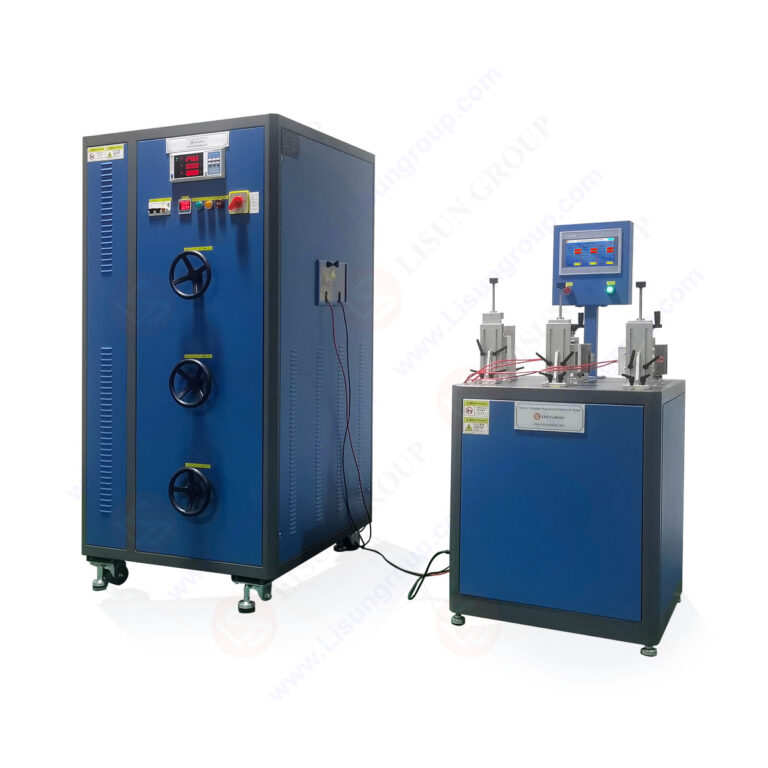
Manual execution of Clause 20 tests is impractical due to the high cycle counts, precise timing requirements, and need for consistent data logging. The LISUN CZKS-3 series addresses this through a fully automated, PLC-controlled architecture. The programmable logic controller orchestrates all mechanical actuators, electrical load application, and safety interlocks. This ensures every test cycle is identical, eliminating human error and providing the repeatability required for certified laboratory testing and high-volume production line quality verification.
3.2 Precision Actuation and Cycle Programming
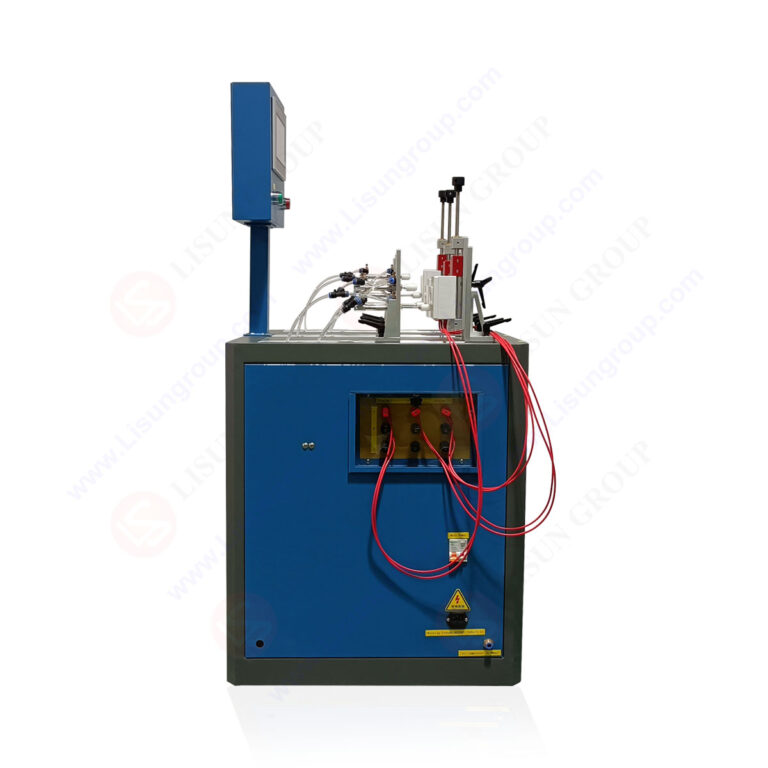
The mechanical action is driven by precision pneumatic or servo cylinders, which apply consistent force and speed for each insertion/withdrawal or toggle operation. The LISUN CZKS-3P model, for instance, allows for programmable cycle rates, dwell times, and stroke lengths to match the specific geometry and operation of the device under test (DUT). This flexibility is essential for testing a wide range of products, from standard household plugs to complex automotive connectors, all according to the precise timing specifications in standards like IEC 61058-1 for switches and GB/T 2099.1 (the Chinese national standard harmonized with IEC 60884-1).
4.1 Core Electrical Durability and Breaking Capacity
The primary function of the LISUN CZKS-3 series is to perform the integrated mechanical and electrical endurance tests. The system can apply a wide range of AC/DC resistive or inductive loads synchronized with the mechanical cycle. For breaking capacity tests, the integrated load bank can be configured to deliver the exact current and power factor specified in Clause 20. Real-time monitoring of voltage, current, and contact temperature during testing allows for the detection of incipient failures, such as increasing contact resistance.
4.2 Specialized Variants for Expanded Applications
To cater to diverse testing needs, the CZKS-3 platform includes several variants. The LISUN CZKS-3S may include additional sensors for measuring insertion/withdrawal force, critical for evaluating connector mating performance beyond basic durability. The LISUN CZKS-3A variant often incorporates enhanced data acquisition and analysis software for automated generation of test reports compliant with laboratory accreditation requirements. This model differentiation ensures manufacturers can select a system tailored to their specific compliance goals for standards like IEC 60669-1 for wall switches.
| Parameter | CZKS-3 (Base) | CZKS-3P (Programmable) | CZKS-3S (Sensor-Enhanced) | CZKS-3A (Advanced Analysis) |
|---|---|---|---|---|
| Max Test Current (AC) | 20A | 32A | 20A | 32A |
| Mechanical Cycle Speed | Fixed (adjustable) | 5-30 cycles/min (programmable) | 5-30 cycles/min (programmable) | 5-30 cycles/min (programmable) |
| Force Measurement | No | No | Yes (up to 200N) | Optional |
| Standard Compliance Data Logging | Basic | Standard | Standard | Comprehensive, with report generation |
| Primary Application | Basic durability | Precision cycle control | Force & durability studies | Full lab certification testing |
5.1 Pre- and Post-Test Electrical Verification
A complete compliance assessment requires electrical verification before and after the durability test. The LISUN CZKS-3 series systems are frequently integrated with or used alongside other LISUN testers to perform these measurements. This includes contact resistance tests to establish a baseline, dielectric withstand voltage tests (per IEC 60884-1 Clause 16), and insulation resistance verification. Performing these tests sequentially on a single sample provides a complete picture of how electrical properties degrade with mechanical stress.
5.2 Data Correlation and Failure Analysis
The true value of an automated system lies in its ability to correlate data across different test phases. By logging electrical parameters throughout the thousands of cycles, engineers can pinpoint the exact cycle at which contact resistance began to rise or temperature exceeded limits. This data is invaluable for failure analysis and root cause identification, guiding design improvements in contact geometry, spring materials, or arc chutes. The LISUN CZKS-3A excels in this area, providing graphical trends and exportable data for detailed engineering review.
6.1 Production Line Sampling and Quality Control
In a manufacturing setting, the LISUN CZKS-3P is used for routine sampling tests to ensure production batches maintain consistent quality. Its robustness and programmability allow for quick changeovers between different product lines. Automated pass/fail judgments based on pre-set criteria (e.g., cycle completion without electrical failure) enable non-specialist operators to conduct reliable checks, ensuring every shipped batch meets the durability requirements of IEC 60884-1 Clause 20.
6.2 Third-Party Laboratory Certification Testing
For test houses and certification bodies (e.g., UL, TUV, Intertek), the LISUN CZKS-3A is the preferred tool for generating auditable test reports. Its traceable calibration, comprehensive data capture, and secure software meet the stringent requirements for laboratory accreditation (ISO/IEC 17025). The system’s ability to precisely adhere to standard-mandated test sequences provides the defensible evidence needed to grant or deny certification marks.
7.1 Fixture Design and Sample Mounting
Accurate testing requires custom fixtures that rigidly hold the DUT while allowing the actuator to engage it naturally. Poor fixture design can introduce side loads or misalignment, invalidating the test. Engineers must design fixtures that replicate real-world mounting conditions for sockets or switches, as specified in the standard’s installation clauses. The modular design of the LISUN CZKS-3 series facilitates the integration of custom fixture plates.
7.2 Load Bank Configuration and Safety
Correctly configuring the electrical load bank is critical. The load must match the rated voltage, current, and power factor (typically 0.8 ± 0.05 for normal endurance, 0.6 ± 0.05 for breaking capacity) of the DUT. Safety enclosures with interlocked doors are mandatory on systems like the LISUN CZKS-3 series to protect operators from moving parts and potential electrical arc flashes during breaking capacity tests. Proper ventilation is also required to dissipate heat from the load bank and DUT over extended test durations.
IEC 60884-1 Clause 20 testing represents a non-negotiable benchmark for the safety and reliability of plugs, sockets, and switches. Successfully passing these rigorous mechanical endurance and breaking capacity tests is a direct indicator of a product’s quality and long-term safety performance. Manual execution of these tests is fraught with inconsistency and inefficiency. Automated test systems, exemplified by the LISUN CZKS-3 series, provide the necessary precision, repeatability, and data integrity to confidently verify compliance. From the programmable actuation of the CZKS-3P to the advanced analytical capabilities of the CZKS-3A, these systems enable manufacturers and certification laboratories to streamline their validation processes, uncover design insights through detailed failure analysis, and ultimately deliver safer electrical components to the global market. Investing in such dedicated test equipment is not merely a compliance cost but a fundamental component of robust product development and quality assurance.
Q1: What is the main difference between the normal electrical durability test and the breaking capacity test in IEC 60884-1 Clause 20?
A: The normal electrical durability test subjects the device to its rated current at a near-unity power factor (e.g., cos φ ~0.8) for thousands of cycles, simulating typical operational wear. The breaking capacity test is more severe and simulates a fault condition; it uses a higher current (1.25 x rated current) at a lower, more inductive power factor (cos φ 0.6) for a smaller number of cycles (typically 50). The key difference is objective: durability assesses long-term wear, while breaking capacity verifies the device can safely interrupt an overload without catastrophic failure like contact welding, which is a critical fire and safety risk.
Q2: Can the LISUN CZKS-3 series test devices according to standards other than IEC 60884-1?
A: Yes, absolutely. While optimized for IEC 60884-1 Clause 20, the programmability of the LISUN CZKS-3P and CZKS-3A models allows them to be configured for other international and national standards that specify mechanical/electrical endurance. This includes IEC 60669-1 for wall switches, IEC 61058-1 for appliance switches, GB/T 2099.1, and various automotive connector standards. The core functions—precise cyclic actuation with synchronized electrical loading—are universal. Compliance is achieved by programming the specific cycle count, load current, power factor, and timing parameters mandated by the target standard.
Q3: How does automated testing with the CZKS-3 series improve failure analysis compared to manual testing?
A: Manual testing primarily provides a pass/fail result at the end of thousands of cycles. An automated system like the LISUN CZKS-3A continuously monitors and logs key parameters (current, voltage, contact resistance, temperature) throughout the entire test. This creates a time-series data set. Engineers can analyze this data to identify when a parameter began to drift from its baseline—for example, a gradual increase in contact resistance at cycle 3,000 indicates progressive contact wear. This precise diagnostic capability pinpoints the failure mode and cycle, offering invaluable feedback for improving contact material, spring design, or arc management in the next product iteration.
Q4: What safety features are integrated into the CZKS-3 systems for breaking capacity testing?
A: Breaking capacity tests involve significant energy and potential arcing. The LISUN CZKS-3 series incorporates multiple safety features. Physically, the test chamber is enclosed with transparent, reinforced material, and the door is safety-interlocked to cut power and halt actuators when opened. Electrically, the system includes fast-acting circuit breakers and overload protection for the load bank. The control software features emergency stop buttons and fault detection algorithms that can abort the test if current exceeds safe limits or if a contact weld is detected. These measures protect both the operator and the equipment during high-stress fault simulation tests.