









Abstract
In the rigorous world of electrical accessory compliance testing, accurately simulating real-world loads is paramount. The LISUN DFX series Externally Ballasted Fluorescent Lamp Test Load Cabinet provides a critical, standardized solution for testing switches, sockets, and other accessories under the demanding conditions of fluorescent lamp circuits. This precision R-L-C load bank enables manufacturers and testing laboratories to verify performance against key international standards by simulating the specific resistive, inductive, and capacitive characteristics of ballasted lamp loads. Its core capabilities include precise power factor adjustment, automated cyclic testing, and high-accuracy measurement, delivering essential value for ensuring product safety, reliability, and market compliance.
1.1 The Challenge of Non-Linear Loads in Compliance Testing
Electrical accessories like switches and sockets are often subjected to loads from fluorescent lighting circuits, which present a complex, non-linear profile due to the inductive ballast. A simple resistive load is insufficient to validate performance under these real-world conditions. The Externally Ballasted Fluorescent Lamp Test Load Cabinet is engineered specifically to replicate this challenging electrical environment, ensuring that accessories can handle inrush currents, inductive kickback, and sustained operation without premature failure or safety hazards.
1.2 Core Function and Application Scope
The primary function of the DFX series is to serve as a precision, programmable R-L-C load bank. It is indispensable for executing standardized tests defined in IEC and GB standards for wiring accessories. Key applications include endurance testing (life cycle testing), temperature rise evaluation, and electrical strength verification under simulated fluorescent lamp loads. This makes it a cornerstone instrument for R&D validation, type approval testing in third-party labs, and final quality assurance checks in manufacturing.
2.1 R-L-C Load Network Configuration
At its heart, the DFX cabinet employs a configurable network of high-precision resistors, inductors, and capacitors. This network can be programmed to synthesize a wide range of load impedances. The system precisely mimics the current waveform, phase angle, and power factor of fluorescent lamp circuits with external electromagnetic ballasts, creating a consistent and repeatable test condition that is impossible to achieve with actual, variable physical lamps.
2.2 Precision Measurement and Control System
Integrated high-accuracy sensors continuously monitor test parameters including voltage, current, power, and power factor. A closed-loop feedback control system adjusts the R-L-C components in real-time to maintain the set load conditions, compensating for line voltage fluctuations or device-under-test (DUT) characteristics. This ensures that the specified test parameters, such as a cos φ of 0.6 ± 0.05 for inductive loads per standard requirements, are held with exceptional stability throughout the test duration.
3.1 Key Standard References and Test Clauses
The design and calibration of the LISUN DFX series are directly aligned with the test requirements of major international and national standards. It is the definitive tool for verifying compliance with specific clauses mandating ballasted lamp load testing:
- IEC 60669-1 Clause 19.2 & GB 16915.1 Clause 19.2: Specifies the endurance test conditions for switches, requiring operation under a resistive load and a separate test under a resistive-inductive load (cos φ = 0.6, provided by a ballast).
- IEC 60884-1 Clause 20 & GB 2099.1 Clause 20: Details the endurance test for socket-outlets, which includes tests with a resistive load and, for certain types, with a ballast load simulating a fluorescent lamp circuit.
- IEC 61058-1: Applies to appliance switches and outlines life testing with various load types, including inductive loads representative of motor or transformer components.
3.2 From Standard Clause to Practical Test Execution
The DFX cabinet translates these textual standard requirements into a fully automated, reliable test process. For example, to execute IEC 60669-1 Clause 19.2, an engineer simply selects the appropriate test profile (e.g., 16A, cos φ 0.6), connects the switch DUT, and initiates the program. The cabinet automatically applies the correct current at the specified power factor for the mandated number of cycles (e.g., 10,000 operations), while logging all electrical data for pass/fail analysis and reporting.
4.1 Core Performance Parameters
The DFX series offers high precision and wide programmability. Key technical specifications include a power factor adjustment range typically from 0.3 to 1.0, with a resolution of 0.01. Current measurement accuracy is within ±(0.5% of reading + 0.2% of range). The load capacitance range is selectable to simulate different circuit conditions, and the system supports programmable cyclic test counting from 1 to 9,999,999 cycles.
4.2 DFX Series Model Comparison
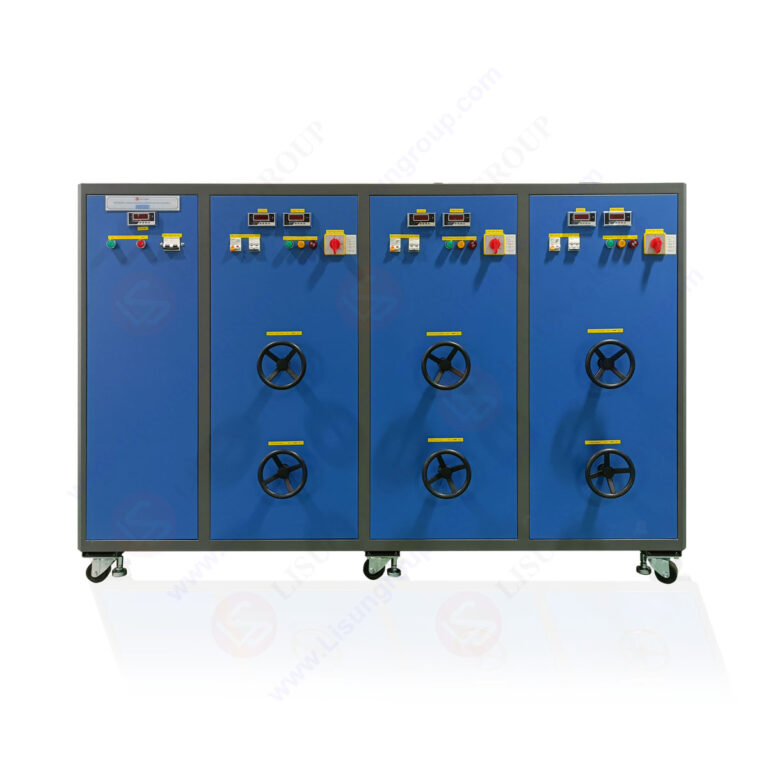
The series comprises several models to accommodate different testing scales and requirements, from single-channel benchtop units to multi-channel systems for high-throughput labs.
| Model | Output Current Range | Number of Test Channels | Input Power Requirement | Primary Application |
|---|---|---|---|---|
| DFX-20 | 1.0A – 20.0A | 1 Channel | AC 220V ±10%, 50/60Hz | Standard single-device endurance testing |
| DFX-20-3CH | 1.0A – 20.0A | 3 Independent Channels | AC 220V ±10%, 50/60Hz | Parallel testing of up to three devices |
| DFX-40 | 2.0A – 40.0A | 1 Channel | AC 220V ±10%, 50/60Hz | High-current accessory testing |
| DFX-60 | 3.0A – 60.0A | 1 Channel | AC 220V ±10%, 50/60Hz | Industrial-grade switch and connector testing |
| DFX-80 | 4.0A – 80.0A | 1 Channel | AC 380V ±10%, 50/60Hz | Maximum capacity testing for heavy-duty applications |
5.1 Compatibility with Mechanical Life Testers
The DFX Externally Ballasted Fluorescent Lamp Test Load Cabinet is designed to work seamlessly with LISUN’s mechanical actuation systems. It can be directly interfaced with the CZKS series life testers or SW-6 bending testers. In this configuration, the mechanical tester provides the precise, repetitive actuation (ON/OFF) of the switch or socket, while the DFX cabinet supplies and controls the standardized electrical load. This integration creates a fully automated, synchronized endurance test station that precisely fulfills standard mandates for both mechanical and electrical stress.
5.2 Data Acquisition and System Control
For comprehensive laboratory management, the DFX series can be integrated with higher-level data acquisition systems. Test parameters, real-time electrical readings, cycle counts, and final results can be centralized, enabling traceability, statistical process control (SPC), and the generation of standardized test reports required for certification submissions.
6.1 Consistency and Repeatability
Using actual fluorescent lamps and ballasts for testing introduces significant variability due to component tolerances, aging, and temperature effects. The DFX load test cabinet eliminates this variability by providing a purely electronic, software-defined load. This guarantees that a test performed today yields identical conditions to a test performed next year, ensuring benchmark consistency crucial for compliance and quality control.
6.2 Enhanced Safety and Operational Efficiency
Testing with high-power inductive loads can pose risks of arc flashes, overheating, and bulb rupture. The DFX cabinet is a fully enclosed, interlocked system that enhances operator safety. Furthermore, it removes the logistical burden of procuring, storing, and replacing physical lamps and ballasts, dramatically reducing material costs and downtime while increasing testing throughput.
7.1 For Electrical Product Manufacturers
In-house R&D and QC departments utilize the DFX cabinet to validate designs early, perform pre-compliance testing, and conduct rigorous production batch audits. This proactive approach reduces the risk of costly failures during external certification, accelerates time-to-market, and provides defensible data to support product claims of durability and safety.
7.2 For Third-Party Testing Laboratories
As an accredited calibration and testing tool, the DFX series provides the authoritative means to execute standardized compliance tests for clients seeking global market access (CE, CB, CCC marks). Its traceable accuracy and direct alignment with standard clauses make it an essential asset for generating reliable, accepted test reports for certification bodies like TÜV, UL, and Intertek.
The LISUN DFX series Externally Ballasted Fluorescent Lamp Test Load Cabinet represents a sophisticated and essential evolution from ad-hoc, variable physical load testing to precise, electronic simulation. By mastering the replication of complex R-L-C load characteristics, it delivers the consistency, safety, and efficiency required in modern electrical compliance testing. Its direct correspondence to critical clauses in IEC 60669-1, IEC 60884-1, and related standards provides manufacturers and laboratories with a definitive tool to verify product endurance and safety under real-world fluorescent lamp circuit conditions. Ultimately, integrating this precision load bank into the testing workflow is not merely about meeting a standard requirement—it is a strategic investment in product reliability, market access, and brand reputation, ensuring that electrical accessories perform safely and reliably throughout their intended service life.
Q1: How does the DFX load test cabinet improve test accuracy compared to using real fluorescent lamp ballasts?
A: Real electromagnetic ballasts and lamps have inherent manufacturing tolerances, and their characteristics drift with temperature and age, introducing unacceptable variability into compliance testing. The DFX cabinet replaces these physical components with a precision electronic R-L-C network controlled by a closed-loop feedback system. It generates a stable, programmable load with defined parameters (e.g., exact current at a power factor of 0.60). This eliminates component drift, ensures every test starts with identical conditions, and provides measurement accuracy traceable to national standards, which is a fundamental requirement for accredited laboratory testing.
Q2: Can the DFX series simulate loads for LED driver testing, or is it only for fluorescent ballasts?
A: While the DFX series is specifically optimized and standardized for testing against the inductive load profiles defined in standards for fluorescent lamp circuits (cos φ ~0.6), its programmable R-L-C nature offers broader utility. It can be configured to simulate a range of resistive, inductive, and capacitive loads. For LED drivers, which often present a capacitive or complex non-linear load, the DFX can simulate specific power factor conditions for input testing. However, for full compliance testing of LED drivers, specialized equipment designed for their unique output characteristics (constant current, PWM dimming) is typically recommended.
Q3: What is the benefit of the multi-channel DFX-20-3CH model for a production QC environment?
A: The DFX-20-3CH model provides three independent and simultaneously controllable test channels within a single chassis. In a production quality control setting, this allows technicians to test three separate switch or socket samples in parallel, tripling throughput without occupying additional bench space. Each channel can be set to different test parameters if needed, offering flexibility. This maximizes the utilization of the test equipment, reduces per-unit testing time and cost, and enables more robust statistical sampling of production batches for endurance verification.
Q4: How does the cabinet protect the device-under-test (DUT) and itself during a fault condition?
A: The DFX series incorporates multiple layers of protection. It features comprehensive electronic protection circuits including over-current, over-voltage, short-circuit, and over-temperature protection. In the event of a DUT failure (e.g., a welded contact causing a sustained short), the system will immediately cut off the output and alert the operator, preventing damage to the cabinet’s internal components and containing the fault. This safeguards both the valuable test equipment and provides a clear diagnostic indication of the DUT’s failure mode.