


Here is the comprehensive technical article generated according to your specifications.
Abstract
Achieving IEC 62368-1 compliance for LED lighting products demands rigorous validation of optical performance and long-term reliability. This technical article provides a deep dive into the LISUN LED Optical Aging Test Instrument: IEC 62368-1 Compliance, focusing on its dual-system architecture (LEDLM-80PL and LEDLM-84PL) designed for LM-80/TM-21 and LM-84/TM-28 standards. We explore the instrument’s integration of the Arrhenius Model for accelerated life testing, its dual testing modes, and customizable hardware. By providing precise data on lumen maintenance, color shift, and lifespan extrapolation (L70/L50 metrics up to 6000+ hours), this instrument enables engineers to validate product safety and longevity efficiently, ensuring adherence to global regulatory frameworks.
1.1 Understanding the Scope of IEC 62368-1
IEC 62368-1 is the hazard-based safety standard for audio/video, information, and communication technology equipment, which now encompasses many LED-based lighting and display systems. Unlike traditional safety standards focusing solely on electrical shock, this standard requires the evaluation of energy sources, including optical radiation. An LED’s output degrades over time, potentially leading to reduced safety margins or failure. The LISUN LED Optical Aging Test Instrument is designed specifically to generate the photometric degradation data required to demonstrate that an LED component will not fall below a safe operational level within its stated lifetime.
1.2 The Role of Lumen Depreciation in Safety Compliance
A primary failure mechanism for LEDs is lumen depreciation. The standard mandates that components maintain their performance within a defined envelope. By utilizing the LISUN LED Optical Aging Test Instrument, engineers can precisely measure the decay curve of luminous flux against the Arrhenius Model. This data is critical for establishing the L70 and L50 values (time to 70% or 50% of initial lumen output), which serve as key metrics for reliability and safety certification. A device that fails too quickly may present a hazard, making accelerated aging testing non-negotiable.
1.3 Integrating Photometric and Thermal Analysis
The instrument’s capability to connect up to three temperature chambers allows for simultaneous multi-temperature stress testing—a core requirement of the LM-80 standard. This configuration enables the isolation of thermal runaway effects on optical performance, providing a comprehensive dataset for the IES TM-21 extrapolation formula.
2.1 LEDLM-80PL: The LM-80/TM-21 Workhorse
The LISUN LED Optical Aging Test Instrument is offered in two primary variants tailored to specific testing protocols. The LEDLM-80PL is designed for testing individual LED packages, arrays, or modules per the IES LM-80-15 standard. It supports long-term testing (typically 6000 hours) at three specific case temperatures (e.g., 55°C, 85°C, and a user-defined third point). The system’s software automatically applies the TM-21 methodology to extrapolate lumen maintenance life (L70) by fitting the data to an exponential decay function.
2.2 LEDLM-84PL: Addressing LM-84 and TM-28 for SSL Devices
For complete Solid-State Lighting (SSL) luminaires, the LEDLM-84PL variant is the appropriate choice. It complies with the IES LM-84-19 standard for measuring lumen maintenance of integral LED lamps and luminaires. The companion TM-28-14 protocol is used for projecting long-term lumen maintenance. The LEDLM-84PL system allows for the insertion of full luminaires into its aging racks, applying controlled currents and ambient temperatures while monitoring optical performance in real-time.
2.3 Technical Specification Comparison
The following table highlights the critical differences between the two primary system configurations.
| Feature/Parameter | LEDLM-80PL System | LEDLM-84PL System |
|---|---|---|
| Applicable Standard | IES LM-80-15 | IES LM-84-19 |
| Projection Standard | IES TM-21-11 | IES TM-28-14 |
| Test Subject | LED Packages, Arrays, Modules | SSL Luminaires, Integral Lamps |
| Typical Test Duration | 6000+ Hours (required) | 3000+ Hours (initial) |
| Temperature Chamber Ports | Up to 3 (e.g., 55°C, 85°C, Ts) | Up to 3 (Ambient control) |
| Measurement Cycle | Photometric, Colorimetric | Photometric, Colorimetric |
| Key Output Metric | L70 (B50/10) via Arrhenius | L70 via exponential regression |
| Typical Sample Size | 20 units per condition | 5-10 units per condition |
3.1 Application of the Arrhenius Equation for Acceleration
The LISUN software suite is built around the Arrhenius Model, which is central to predicting LED lifespan. The model uses the equation P = A exp(-Ea/kT), where Ea is the activation energy. By testing at elevated temperatures (e.g., 85°C vs. 55°C), the system accelerates the failure mechanism. The software analyzes the degradation rates at these different stress levels to calculate a single, unified acceleration factor. This allows for the prediction of room-temperature performance (e.g., 25°C or 55°C Ts) without waiting for a decade of real-time data.
3.2 Dual Testing Modes: Constant Current and Constant Voltage
The instrument supports two critical modes for aging:
- Constant Current (CC) Mode: This is the standard mode for LM-80 testing. It maintains a fixed forward current (e.g., 350mA or 1000mA), which is the typical driver configuration for most LEDs. This isolates the effect of junction temperature on optical decay.
- Constant Voltage (CV) Mode: This mode is critical for testing luminaires under LM-84. It simulates a real-world scenario where the driver maintains a fixed voltage. The software monitors how current draw and lumen output change as the LED degrades, providing stress data on the entire system.
3.3 Automated TM-21 and TM-28 Extrapolation
After the mandatory 6000-hour test (for LM-80) or 3000-hour test (for LM-84), the software automatically calculates the TM-21 lifetime projections. It reports L70 values (in hours) along with 90% lower confidence bounds. For TM-28, the software handles the more complex exponential regression required for luminaires.
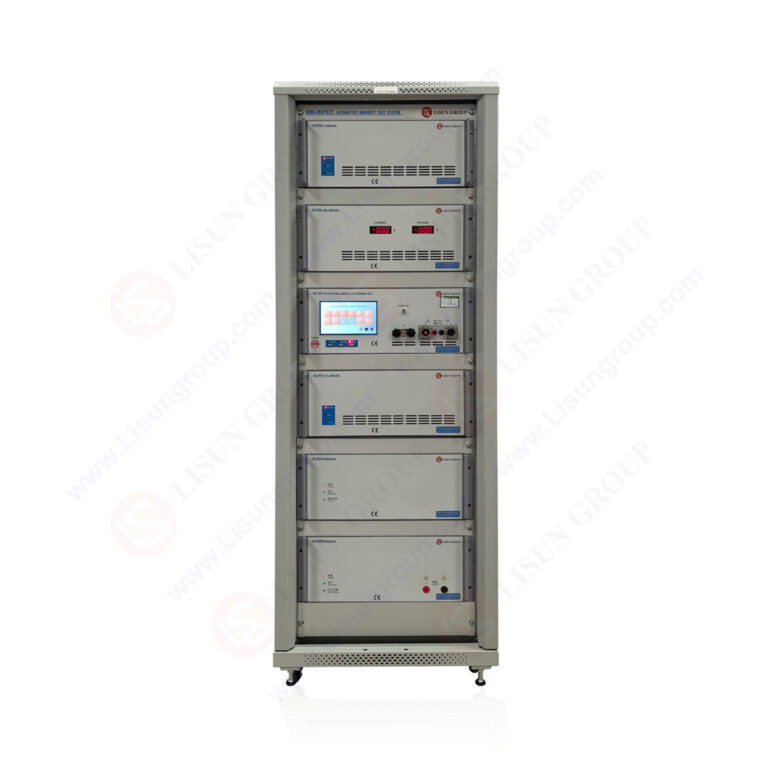
4.1 Modular Rack and Temperature Chamber Interface
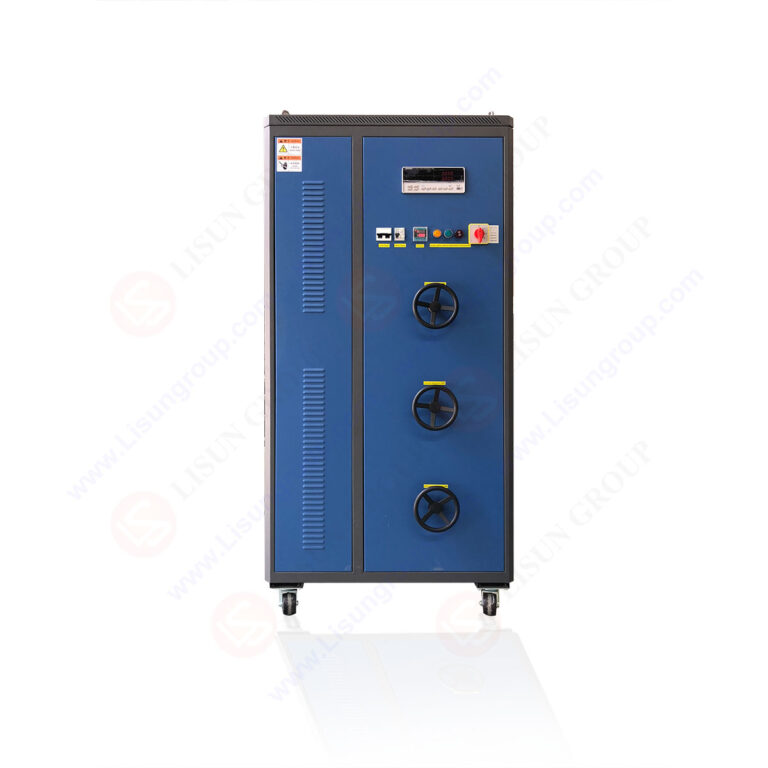
The LISUN LED Optical Aging Test Instrument is not a fixed system. The instrument can be configured to support up to 3 external temperature chambers simultaneously. This allows for testing at the standard LM-80 points (55°C, 85°C) plus a user-defined point (e.g., 105°C for high-temperature applications). Each chamber can house multiple sample trays, each with independent current control and monitoring.
4.2 Integration with Spectroradiometers and Integrating Spheres
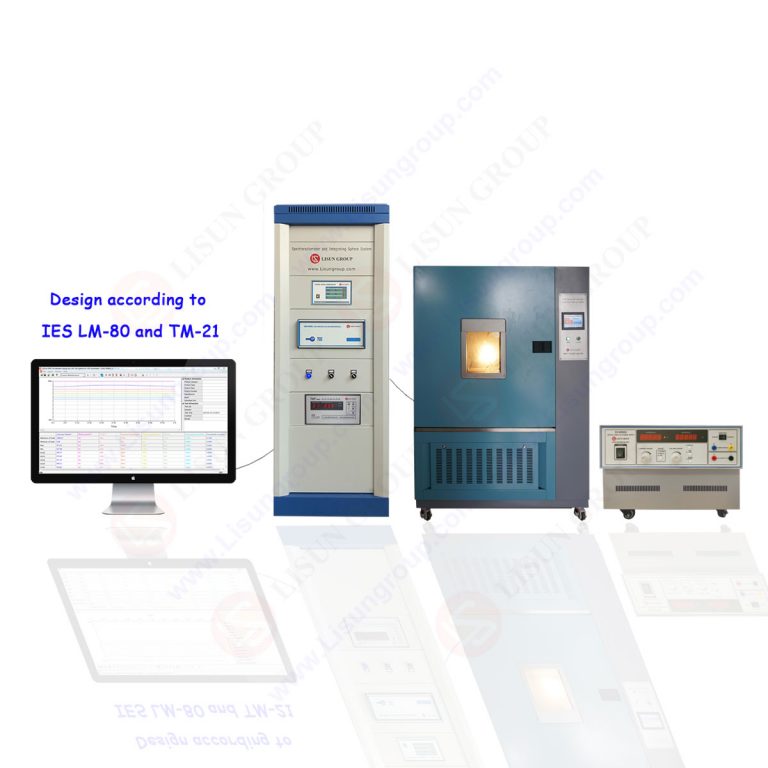
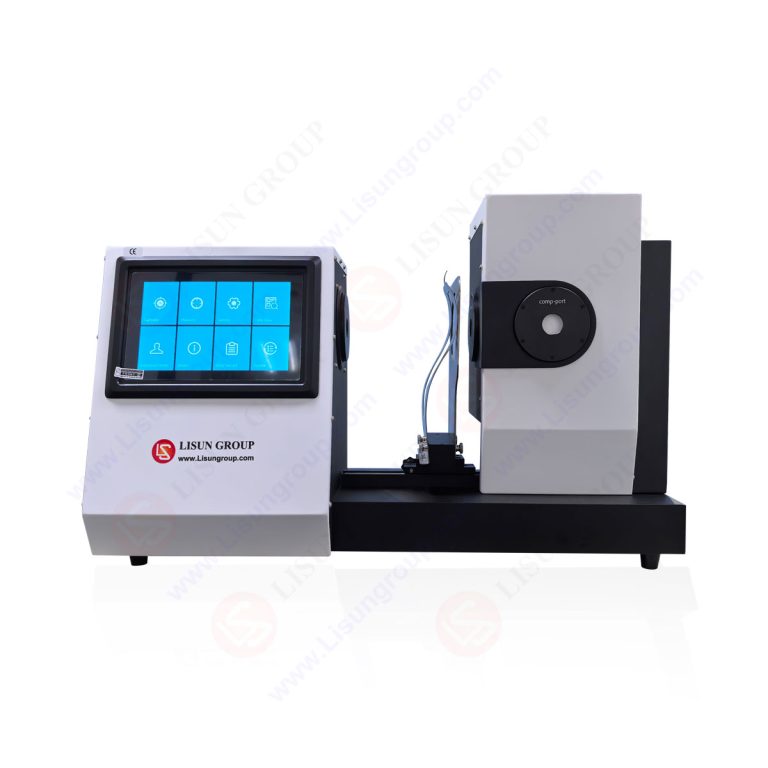
The system is designed for seamless integration with LISUN’s own spectroradiometers (e.g., the LPCE-2 series) and integrating spheres (e.g., 0.3m, 0.5m, or 1.0m). During the aging process, samples are removed at specific intervals (e.g., 0, 1000, 2000, 3000, 4000, 5000, 6000 hours) to measure:
- Total Luminous Flux (lm) per CIE 084.
- Chromaticity Coordinates (x,y) per CIE 127.
- Correlated Color Temperature (CCT) and Color Rendering Index (CRI).
4.3 High-Channel Current Monitoring
For systems like the LEDLM-80PL, the instrument can handle 32+ channels of independent current control. Each channel ensures the LED under test receives a stable, ripple-free DC current (critical for accurate photometric testing). This hardware reliability is paramount for generating repeatable data for IEC 62368-1 certification reports.
5.1 IES LM-79-19 (Electrical and Photometric Measurements)
While LM-80 focuses on aging, the baseline data for the aging test must be taken using LM-79-19 procedures. The LISUN system ensures that initial “0-hour” data and all subsequent interval data are taken following the strict integration sphere and goniophotometer conditions defined by LM-79. This includes proper self-absorption correction and temperature stabilization.
5.2 CIE Standards: 084, 070, and 127
- CIE 084 (Measurement of Luminous Flux): The instrument’s software directly applies the CIE 084 standard for calculating total flux from sphere measurements.
- CIE 070 (Photometric Measurement of Light Sources): This standard informs the general measurement geometry and is used for goniophotometric data.
- CIE 127 (Measurement of LEDs): The system adheres to CIE 127 for defining the specific test conditions (e.g., pulse width and duty cycle for photometric measurements) to avoid self-heating artifacts during the measurement phase.
5.3 Coordinating IEC 62368-1 with L70/L50 Metrics
IEC 62368-1 defines “Persistently Luminous” sources. The LISUN LED Optical Aging Test Instrument provides the data to prove that an LED will remain above 50% of its initial luminosity for its rated lifetime. By generating the TM-21 report, engineers can directly input the L70(L50) values into their safety documentation, proving that the device will not become a dangerously dim or malfunctioning light source.
6.1 Sample Preparation and Initial Setup
Engineers must select 20 samples per test condition (e.g., 20 LEDs at 85°C). They are soldered to test boards and placed in the LISUN temperature chambers. The software records the initial flux, voltage, and CCT. The system then sets the required constant current.
6.2 Data Collection Intervals
The standard requires data points at 0, 1000, 2000, 3000, 4000, 5000, and 6000 hours. The LISUN software automatically schedules these measurements. During the 30-minute to 2-hour “gap” in aging, the samples are allowed to cool, measured in the sphere, and then returned to the chamber.
6.3 Data Analysis and Report Generation
After 6000 hours, the software performs the curve fitting. It calculates the decay exponent (α) and uses the Arrhenius Model to predict the L70 lifetime. The final report includes:
- Table of measured lumen maintenance vs. time.
- Graph of the TM-21 projection.
- Color shift vectors (Δu’v’) as required by ANSI C78.377.
7.1 Maintaining Photometric Calibration
To ensure IEC 62368-1 compliance data is valid, the integrating sphere must be calibrated with a standard lamp traceable to a national lab. The LISUN LED Optical Aging Test Instrument includes a dedicated calibration mode. Regular self-absorption corrections are critical, especially when large heat sinks are introduced.
7.2 Managing Temperature Chamber Drift
A common failure point is temperature gradient drift within the chamber. The LISUN system features redundant thermocouples. If the chamber temperature deviates by more than ±2°C from the setpoint (e.g., 85°C ± 2°C), the software flags the data point. This ensures the integrity of the Arrhenius Model calculations.
The LISUN LED Optical Aging Test Instrument: IEC 62368-1 Compliance offers a robust, standards-validated approach to LED reliability testing. By providing dedicated systems for both LM-80/TM-21 (packages) and LM-84/TM-28 (luminaires) along with the sophisticated application of the Arrhenius Model, this instrument allows engineers to perform accelerated life testing with high confidence. Its dual testing modes (CC/CV) and customizable hardware support for up to 3 temperature chambers make it a versatile tool for any LED manufacturing or testing lab. The generation of precise L70 and L50 projections up to 6000+ hours directly supports the safety documentation required for IEC 62368-1. By integrating photometric measurements (CIE 084, CIE 127) with thermal stress analysis, LISUN empowers technical professionals to deliver products that are not only long-lasting but also compliant with the highest global safety standards, ultimately reducing liability and improving product reliability.
Q1: How does the LISUN system meet the specific data quality requirements for IEC 62368-1 optical safety validation beyond lumen maintenance?
A: IEC 62368-1 focuses on the safety of energy sources. For optical safety, the standard is concerned with the risk of injury from high-intensity light—specifically, the potential for overexposure. The LISUN LED Optical Aging Test Instrument provides the data necessary to prove that the LED’s optical energy does not drop below a safe threshold. However, it also indirectly supports safety by ensuring the LED does not fail catastrophically. The system’s rigorous testing at elevated temperatures (via the Arrhenius Model) stresses the optical emitter and encapsulant to failure. The TM-21 report derived from our instrument gives engineers the L70 or L50 value, which they can directly map to the “Persistently Luminous” definitions in IEC 62368-1 Appendix F. This proves that the source will not fade to a level where the safety system assumes it’s off when it is actually still emitting a hazardous level of invisible IR or blue light.
Q2: My lab currently tests LEDs for LM-80. How do I configure the LISUN LED Optical Aging Test Instrument for the required three-temperature condition?
A: To satisfy LM-80-15, you must perform the test at three case temperatures (Ts). A typical configuration is 55°C, 85°C, and a third point like 105°C. The LISUN LED Optical Aging Test Instrument (specifically the LEDLM-80PL) can be configured to drive up to 3 independent temperature chambers. You set Chamber 1 to 55°C, Chamber 2 to 85°C, and Chamber 3 to 105°C. Each chamber holds your 20 samples under the same constant current. The system’s software schedules the measurement intervals. When the 6000-hour test is complete, the software pools the data from all three chambers to calculate the activation energy (Ea) for the Arrhenius Model. This is critical because TM-21 requires data from at least two temperature points to extrapolate properly.
Q3: What is the difference between the L70 value calculated by the LEDLM-80PL and the L70 from a real-time 30,000-hour test?
A: The primary difference is the application of the Arrhenius Model to accelerate time. A real-world 30,000-hour test takes roughly 3.5 years. The LISUN LED Optical Aging Test Instrument achieves this in 6000 hours (about 8.5 months) by stressing the LEDs at higher temperatures. The software uses the data from the 6000-hour test to predict L70 (e.g., 36,000 hours or 100,000 hours). This is a statistical extrapolation (TM-21) which has a 90% lower confidence bound. The accuracy depends on the failure mechanism following the exponential decay model. The LISUN instrument is validated to ensure that the failure mode at 85°C (the acceleration temperature) is the same as at 55°C (the use temperature). If the mechanism changes (e.g., silicone degradation vs. phosphor degradation), the extrapolation becomes less reliable. Our software includes diagnostic tools to check the linearity of the log(flux) vs. time plot, which helps you validate this assumption.