









The Burn-In Chamber for Accelerated Aging Test | LISUN represents a critical advancement in LED reliability validation, addressing the industry’s demand for precise lumen maintenance prediction under stringent standards compliance. This article examines LISUN’s LED Optical Aging Test Instrument, focusing on its dual-system architecture—LEDLM-80PL for IES LM-80/TM-21 testing and LEDLM-84PL for IES LM-84/TM-28 protocols—integrated with Arrhenius Model-based software for accelerated aging simulations. Technical professionals will gain insights into dual testing modes, customizable hardware configurations supporting up to three connected temperature chambers, and the instrument’s capability to conduct 6000-hour test durations while calculating L70/L50 metrics. By aligning with IES, CIE, and CIE standards, LISUN’s burn-in chamber ensures accurate photometric and colorimetric aging data, enabling manufacturers to optimize LED product lifespans and regulatory compliance in the competitive lighting market.
1.1 The Role of Burn-In Chambers in LED Lumen Maintenance Validation
Accelerated aging testing is indispensable for predicting LED performance over extended operational lifespans, often exceeding 50,000 hours. Burn-in chambers simulate elevated temperatures and controlled current conditions to induce lumen depreciation at an accelerated rate, allowing engineers to extrapolate long-term behavior using models like the Arrhenius equation. LISUN’s burn-in chamber for accelerated aging test adheres to IES LM-80 standards, which mandate testing at three case temperatures (typically 55°C, 85°C, and a third selected temperature) over 6000 hours minimum. This rigorous protocol ensures that L70 and L50 metrics—indicating time to 70% and 50% initial lumen output—are statistically valid for manufacturer warranty claims and Energy Star qualification.
1.2 Key Industry Standards Governing Accelerated Aging Test Protocols
Four primary standards govern LED accelerated aging: IES LM-80-15 defines the test method for measuring lumen maintenance of LED light sources, while TM-21-19 provides the mathematical projection model for extrapolating long-term data. For LED packages and arrays, IES LM-84-20 offers an alternative approach focusing on photometric flux maintenance under specific operating conditions, complemented by TM-28-19 for extrapolation. Additionally, IES LM-79-19 specifies electrical and photometric measurements for solid-state lighting products, and CIE 084, CIE 70, and CIE 127 provide foundational frameworks for photometry and colorimetry. LISUN’s instruments are designed to comply with all these standards, featuring integrated software that automates data collection and TM-21/TM-28 extrapolation calculations.
2.1 LEDLM-80PL: Optimized for LM-80/TM-21 Compliance
The LEDLM-80PL system is purpose-built for IES LM-80 testing, supporting up to three temperature chambers with precise control from ambient to 130°C ± 0.5°C. Each chamber accommodates 30 LED samples per test, enabling parallel testing across multiple temperatures simultaneously. The system integrates an Arrhenius Model-based software module that automatically calculates activation energy (Ea) and extrapolates lumen maintenance to 100,000 hours using TM-21 algorithms. For example, a 6000-hour test at 85°C can predict L70 values exceeding 60,000 hours, with statistical confidence intervals reported per TM-21 guidelines. The dual testing modes—constant current and constant voltage—allow engineers to simulate real-world driver conditions or stress-test LED junctions for failure analysis.
2.2 LEDLM-84PL: Tailored for LM-84/TM-28 Testing
The LEDLM-84PL variant targets IES LM-84 compliance, focusing on photometric flux maintenance of LED packages and arrays under defined electrical and thermal conditions. This system emphasizes luminous flux measurement using an integrating sphere with spectroradiometer integration, capturing spectral power distribution shifts during aging. The software implements TM-28 extrapolation, which differs from TM-21 by using a two-phase exponential decay model for improved accuracy with phosphor-converted white LEDs. The LEDLM-84PL supports up to 100 hours of continuous testing with real-time monitoring of color shift (Δu’v’) and chromaticity stability, critical for automotive and high-CRI applications where color consistency is paramount.
2.3 Technical Comparison: LEDLM-80PL vs. LEDLM-84PL
To aid engineers in selecting the appropriate system, Table 1 provides a comparative analysis of key specifications.
| Parameter | LEDLM-80PL (LM-80/TM-21) | LEDLM-84PL (LM-84/TM-28) |
|---|---|---|
| Primary Standard | IES LM-80-15, TM-21-19 | IES LM-84-20, TM-28-19 |
| Test Duration | Minimum 6000 hours | 6000–10000 hours |
| Temperature Range | Ambient to 130°C ± 0.5°C | Ambient to 120°C ± 0.3°C |
| Sample Capacity per Chamber | 30 LEDs | 24 LED packages/arrays |
| Lumen Measurement Method | Integrating sphere (1m or 2m) | Integrating sphere with spectroradiometer |
| Extrapolation Model | Single-exponential (TM-21) | Two-phase exponential (TM-28) |
| Color Measurement | Optional spectroradiometer | Integrated spectroradiometer |
| Maximum Connected Chambers | 3 | 3 |
| Software Compliance | Arrhenius Model, TM-21 | Arrhenius Model, TM-28 |
3.1 Theoretical Foundation: Arrhenius Equation in LED Testing
The Arrhenius model describes the temperature dependence of lumen depreciation rates, expressed as L(t) = L₀ × exp(-α × t), where α = A × exp(-Ea/kT). Here, Ea is activation energy (typically 0.3–0.7 eV for LEDs), k is Boltzmann’s constant, and T is absolute temperature. LISUN’s software automatically fits this model to raw photometric data collected at three temperatures, calculating Ea and the acceleration factor between test temperature and use temperature (e.g., 85°C test vs. 55°C ambient). This enables engineers to predict L70 and L50 at any specified temperature within the valid range, with TM-21 requiring a minimum of 6000 hours of data—precisely what LEDLM-80PL delivers.
3.2 Software Features: Automated Data Acquisition and TM-21/TM-28 Extrapolation
The software suite offers real-time data logging with 1-second sampling intervals, generating graphical trends of lumen maintenance vs. elapsed time. Users can configure test parameters—including current setpoints (10 mA to 2 A), temperature ramps, and data recording intervals—via an intuitive interface. The extrapolation engine calculates TM-21 projected L70 (Lp(70)) with 95% confidence bounds, reporting results in hours according to ANSI/IES TM-21-19 Annex B. For LEDLM-84PL users, the TM-28 module applies a biexponential function (L(t) = a × exp(-bt) + c × exp(-dt)) to account for rapid initial decay from phosphor degradation and slower long-term decay from LED chip degradation. All results are exportable in CSV or PDF formats for regulatory submissions.
4.1 Constant Current Mode: Simulating Driver-Less LED Operation
In constant current mode, the burn-in chamber maintains a fixed current across all LED samples, with voltage allowed to float as junction temperature stabilizes. This mode is essential for testing LED packages under ideal driving conditions, isolating thermal effects on lumen depreciation from driver-induced current fluctuations. The LEDLM-80PL supports current accuracy of ±0.1% over the range, ensuring repeatable stress conditions. Engineers can program stepwise current profiles to simulate dimmed operation or overload scenarios, with automatic shutdown at 120% of set threshold to prevent catastrophic failure.
4.2 Constant Voltage Mode: Replicating Real-World Driver Output
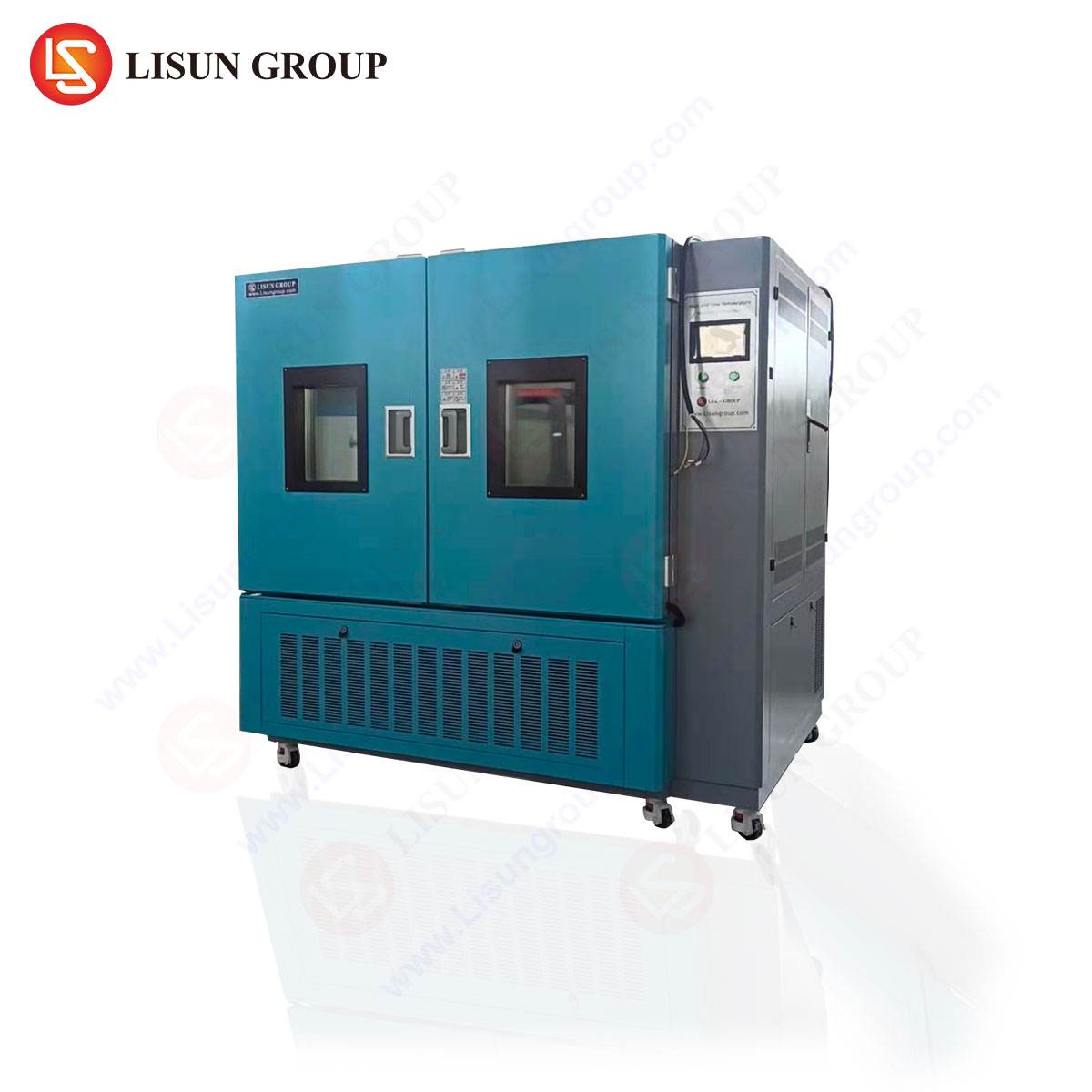
Constant voltage mode fixes output voltage to simulate LED arrays driven by constant voltage power supplies—common in linear lighting and sign applications. The system adjusts current dynamically to maintain the set voltage, enabling detection of junction degradation as voltage drift occurs. This mode is critical for TM-21 extrapolation validation, as field-deployed LEDs often operate under constant voltage drivers. LISUN’s software logs both current and voltage data across test duration, enabling calculation of power dissipation trends and their correlation with lumen depreciation rates.
5.1 Up to Three Temperature Chambers: Parallel Testing for Accelerated Validation
LISUN’s burn-in chamber supports expansion to three independently controlled temperature chambers, each maintaining a separate temperature setpoint (e.g., 55°C, 85°C, and 105°C) for simultaneous LM-80 testing. This configuration accelerates data collection by allowing 30 samples per chamber, totaling 90 LEDs under test concurrently. Each chamber includes forced air circulation with ±0.5°C stability, ensuring uniform thermal distribution across all samples. The chambers connect to a central control unit via RS-485 interface, with the software managing data aggregation and per-chamber reporting.
5.2 Modular Design for Custom Test Fixtures and Sample Handling
Standard test fixtures accommodate 3 mm to 10 mm LED packages on MCPCB (Metal Core Printed Circuit Board)-compatible substrates, with custom adapters available for chip-on-board (COB) modules and high-power SMD packages. The burn-in chamber includes 32-channel thermocouple inputs for monitoring junction temperature of individual samples, using T-type thermocouples with ±0.5°C accuracy. For current sensing, each channel features independent shunt resistors calibrated to 0.01Ω resolution, enabling precise measurement of forward voltage shifts during aging. These hardware configurations ensure compliance with IES LM-80 requirements for temperature measurement at the test board’s designated thermocouple location.
6.1 Integrating Sphere Integration for Lumen Flux Monitoring
The burn-in chamber integrates with LISUN’s LMS-series integrating spheres (1m, 2m, or 3m diameter) for periodic lumen flux measurements. During aging tests, samples are automatically shuttled from the temperature chamber to the sphere via a robotic arm, minimizing handling variability. The sphere uses a high-stability CCD array spectroradiometer (wavelength range 350–1100 nm, resolution 0.5 nm) to capture total luminous flux, correlated color temperature (CCT), and color rendering index (CRI). Measurements are taken at intervals defined by LM-80 (e.g., every 1000 hours for the first 6000 hours, then every 2000 hours), with data logged to the software’s database for trend analysis.
6.2 Color Shift Analysis (Δu’v’) and Chromaticity Maintenance
For LEDLM-84PL users, the system tracks chromaticity coordinates (u’, v’) per CIE 1976 UCS diagram, reporting color shift (Δu’v’) relative to initial measurements. This is critical for applications requiring color consistency, such as retail display lighting and medical illumination. LISUN’s software calculates the MacAdam ellipse progression and identifies color points that drift beyond acceptable thresholds—typically 0.007 (7-step MacAdam ellipse) for general lighting. The two-phase extinction model in TM-28 extrapolates color shift trends, predicting the time to exceed defined Δu’v’ limits and informing warranty policies.
7.1 Automated Report Generation with LM-80 and TM-21 Formatting
The software generates reports complying with IES LM-80-15 appendices, including test summary, temperature profiles, raw photometric data tables, and TM-21 projection results. Reports feature mandatory elements: test duration (e.g., 6000 hours), number of samples, temperatures used, and extrapolated L70 with confidence intervals. For Energy Star submissions, the software auto-populates the required LM-80 test report template, reducing documentation errors and accelerating certification timelines. All data is timestamped and archived with audit trail capabilities, supporting ISO 17025-compliant laboratory operations.
7.2 Export Capabilities and Integration with Third-Party Analysis Tools
Raw data can be exported in comma-separated values (CSV) format for import into Minitab, JMP, or MATLAB for custom statistical analysis. The software supports SQL database connectivity for enterprise-level data management, allowing multiple burn-in chambers to share a centralized database. Engineers can query historical test results across product families, comparing activation energies and identifying trends in manufacturing variability. LISUN provides an API for custom script integration, enabling automated data processing workflows for high-volume testing labs.
The Burn-In Chamber for Accelerated Aging Test | LISUN provides LED manufacturers and testing laboratories with a robust, standards-compliant solution for predicting lumen maintenance and color stability. By integrating dual-system variants (LEDLM-80PL and LEDLM-84PL) aligned with IES LM-80, LM-84, TM-21, and TM-28 protocols, the instrument ensures accurate accelerated aging validation across diverse LED applications. The Arrhenius Model-based software automates TM-21/TM-28 extrapolation, delivering reliable L70 and L50 metrics from 6000-hour test data. Customizable hardware configurations, including support for up to three temperature chambers and dual testing modes, enable engineers to simulate real-world conditions while optimizing lab throughput. The integration of photometric measurement systems—integrating spheres and spectroradiometers—facilitates comprehensive analysis of lumen flux decay and chromaticity shift (Δu’v’), critical for high-CRI and automotive lighting sectors. LISUN’s commitment to data management and regulatory reporting streamlines compliance with Energy Star, DLC, and IES standards, reducing time-to-market for new LED products. For R&D and QC teams seeking precise, scalable, and standard-adherent accelerated aging testing, LISUN’s burn-in chamber represents an indispensable asset for ensuring long-term LED reliability and performance excellence.
Q1: What is the minimum test duration required for TM-21 extrapolation using the LISUN LEDLM-80PL?
A: IES TM-21-19 mandates a minimum test duration of 6000 hours for extrapolation to 100,000 hours. The LISUN LEDLM-80PL system is optimized for this requirement, supporting continuous testing in constant current or constant voltage modes. During this period, the system collects photometric and thermal data at intervals specified by LM-80 (e.g., 1000-hour intervals). The Arrhenius Model software then performs exponential curve fitting using the three-temperature dataset to calculate activation energy and project L70 values. Users should note that longer test durations (e.g., 8000–10000 hours) improve extrapolation confidence, particularly for LEDs with low depreciation rates. The LEDLM-80PL accommodates extended tests without hardware modifications, and the software reports 95% confidence intervals per TM-21 Annex B guidelines.
Q2: How does the LISUN burn-in chamber handle chromaticity drift measurements for phosphor-converted white LEDs?
A: For phosphor-converted LEDs, chromaticity drift (Δu’v’) is a critical aging parameter that influences color consistency. The LEDLM-84PL variant integrates a CCD array spectroradiometer (0.5 nm resolution) with the temperature chamber, enabling periodic color measurements during test pauses. The software implements the TM-28 two-phase exponential decay model, which separates rapid blue-pump degradation from slower phosphor degradation. This model provides more accurate Δu’v’ projections than TM-21, especially for high-CCT white LEDs. The system reports chromaticity tracking per CIE 1976 UCS, with automatic flagging when Δu’v’ exceeds user-defined thresholds (default 0.007). For LM-80 compliance, the software generates color shift tables alongside lumen maintenance data, ensuring comprehensive aging analysis.
Q3: Can the LISUN burn-in chamber accommodate custom LED module form factors (e.g., COB or automotive LED arrays)?
A: Yes, the LEDLM-80PL and LEDLM-84PL systems feature modular test fixture designs that can be customized for chip-on-board (COB) modules, automotive SMD packages (3-pin/4-pin), and high-power LED arrays. Standard fixtures support MCPCB substrates with dimensions up to 100 mm × 100 mm, with custom adapters available for non-standard geometries. Each fixture includes independent thermocouple attachment points at the designated LM-80 temperature measurement location (typically 0.5 mm from the LED pad). The system’s current capability ranges from 10 mA to 2 A per channel, accommodating both low-current indicators and high-current automotive LEDs. Engineers can contact LISUN’s application engineering team for specific fixture designs, including provision for PWM control if required for specialized driver simulations.
Q4: What is the typical power consumption and cooling requirement for running three temperature chambers simultaneously at 130°C?
A: Each temperature chamber has a maximum heating power of 3 kW (for a 150-liter capacity), totaling 9 kW for three chambers at full load. The system requires a 208-240 VAC, 3-phase electrical supply (50/60 Hz) with 50 A capacity. For cooling, the chambers use forced air circulation with integrated Peltier cooling modules for rapid temperature recovery after sample insertion. Ambient operating conditions require a lab temperature between 15°C and 30°C with relative humidity below 80% (non-condensing). LISUN recommends a dedicated HVAC system maintaining room temperature at 25°C ± 2°C to ensure temperature stability within the chambers. For extended 6000-hour tests, the system includes fail-safe shutdown protocols for temperature runaway and current overload, with redundant thermal fuses at each chamber’s heating element.
Q5: How does the LISUN system ensure traceability and compliance with ISO 17025 for third-party testing labs?
A: LISUN’s burn-in chamber software includes full audit trail functionality, logging all configuration changes, measurement timestamps, and user actions for ISO 17025 compliance. Each measurement channel (current, voltage, temperature, lumen flux) is calibrated at LISUN’s factory with NIST-traceable reference standards, and calibration certificates are provided with each instrument. The integrating sphere spectroradiometer is calibrated against a NIST-traceable standard lamp for absolute spectral flux accuracy. Scheduled recalibration intervals (annually recommended) can be managed via the software’s calibration reminder module. For data integrity, raw measurement files are write-protected and stored in binary format, preventing tampering after collection. Third-party labs can generate unmodifiable PDF test reports that include all mandatory LM-80 elements (sample IDs, test conditions, raw data tables, and TM-21 extrapolation results) for submission to Energy Star or DLC program reviewers.