









The LISUN DFX series Externally Ballasted Fluorescent Lamp Test Load Cabinet represents a precision-engineered solution for simulating resistive, inductive, and capacitive (R-L-C) loads in energy meter and UPS performance testing. This advanced load test cabinet enables manufacturers and testing laboratories to evaluate electrical accessories under standardized worst-case conditions, ensuring compliance with international safety and performance requirements. With models ranging from the DFX-20 to DFX-80, the series supports current outputs from 0.2A to 80A, accommodating diverse testing protocols. The system integrates seamlessly with LISUN’s complementary equipment, including CZKS series life testers and SW-6 bending testers, to create comprehensive end-to-end testing workflows. This article examines the technical architecture, compliance capabilities, and practical applications of the DFX series for electrical product validation.
1.1 Fundamental R-L-C Load Topology
The LISUN DFX series employs a parallel R-L-C network configuration to simulate the electrical characteristics of ballasted fluorescent lamps. This advanced electrical accessory load tester replicates both steady-state and transient behaviors, including inrush currents and harmonic distortions typical of inductive ballast circuits. The resistive component (R) simulates lamp filament resistance, the inductive component (L) models ballast impedance, and the capacitive component (C) accounts for power factor correction elements. Each parameter is independently adjustable, allowing engineers to recreate specific load profiles required by testing standards.
1.2 Power Factor Adjustment and Measurement Resolution
The system achieves power factor (PF) adjustment within a range of 0.3 to 0.9, with resolution steps as fine as 0.01. This precision is critical for testing energy meters under varying power factor conditions, as specified in IEC 62053-21 for static meters for active energy. The load cabinet incorporates high-accuracy current transformers and voltage sensing circuits that provide real-time PF measurement with ±0.5% accuracy. This enables validation of energy meter performance across the entire PF spectrum, from resistive (PF=1.0) to highly inductive (PF=0.3) operating conditions.
1.3 Inrush Current Simulation Capabilities
A key feature of the DFX series is its ability to generate controlled inrush currents that replicate the starting characteristics of fluorescent lamps with magnetic ballasts. The inrush current can reach up to 20 times the rated current for durations of 1-5 milliseconds, aligning with the requirements of IEC 60669-1 Clause 19.2 for switch testing. This capability is essential for evaluating the performance of circuit breakers, relays, and energy meters under transient load conditions.
2.1 Comparative Technical Specifications
The following table presents the core specifications for the main DFX series models, enabling engineers to select the appropriate configuration based on testing requirements:
| Model | Current Output Range (A) | Channel Count | Input Voltage (VAC) | Maximum Power (kVA) | Measurement Accuracy (%) |
|---|---|---|---|---|---|
| DFX-20 | 0.2 – 20 | 1 | 220 ±10% | 4.4 | ±0.5 |
| DFX-20-3CH | 0.2 – 20 per channel | 3 | 220 ±10% | 13.2 | ±0.5 |
| DFX-40 | 0.5 – 40 | 1 | 220 ±10% | 8.8 | ±0.5 |
| DFX-60 | 0.5 – 60 | 1 | 380 ±10% | 22.8 | ±0.5 |
| DFX-80 | 1.0 – 80 | 1 | 380 ±10% | 30.4 | ±0.5 |
2.2 Application-Specific Model Recommendations
For energy meter testing under single-phase conditions, the DFX-20 provides sufficient current capacity for residential meter validation. The DFX-20-3CH offers simultaneous three-channel operation, making it ideal for testing three-phase meters or parallel load configurations. High-current applications, such as UPS performance evaluation for industrial systems, benefit from the DFX-60 or DFX-80 models, which support three-phase input and provide up to 80A per channel. Load capacitance values range from 1μF to 200μF, selectable in stepped increments to match specific ballast circuit requirements.
3.1 IEC Standard Alignment
The DFX series is designed to meet the worst-case load simulation requirements of multiple IEC standards. For IEC 60884-1 Clause 20, which specifies tests for switches and sockets under inductive load conditions, the load cabinet provides precise inductive components with quality factor (Q) values between 0.3 and 0.8. IEC 60669-1 Clause 19.2 requires switches to withstand specified inrush currents during lamp load testing—the DFX series replicates these conditions with programmable current surge durations and magnitudes.
3.2 GB Standard Compliance for Chinese Market
For manufacturers targeting the Chinese domestic market, the DFX series complies with GB 16915.1 and GB 2099.1 requirements for electrical accessory testing. These standards reference similar worst-case load parameters as their IEC counterparts but include additional specifications for power factor and harmonic content measurement. The load cabinet’s built-in data logging capabilities capture current, voltage, power, and power factor readings at 1ms intervals, providing the documentation required for GB standard certification audits.
3.3 Energy Meter Performance Verification
IEC 62053-21 and IEC 62053-22 establish accuracy requirements for static watt-hour meters under various load conditions. The DFX series generates the specified test points, including 1%, 5%, 10%, 50%, and 100% of rated current at power factors of 1.0, 0.5 inductive, and 0.8 capacitive. This comprehensive coverage ensures that energy meters can be validated across their entire operating envelope, with measurement uncertainty below 0.2% for reference meter comparison.
4.1 CZKS Series Life Tester Compatibility
The DFX series integrates seamlessly with LISUN’s CZKS series life testers for accelerated aging and endurance testing of electrical accessories. The CZKS units provide programmable cyclic switching patterns (e.g., 30-second ON/OFF cycles) while the DFX load cabinet maintains the specified R-L-C load profile. This combination enables automated life testing per IEC 60884-1 and IEC 60669-1 endurance requirements, which often mandate 10,000 to 50,000 operational cycles under full rated load.
4.2 SW-6 Bending Tester Workflow Integration
For cord-connected devices requiring flexing tests, the SW-6 bending tester can be synchronized with the DFX load cabinet to maintain continuous load during mechanical stress testing. The integration allows simultaneous evaluation of conductor integrity and contact performance under worst-case electrical load conditions, as specified in IEC 60884-1 Clause 23 for bending endurance tests. Data from both instruments can be consolidated into a single test report, streamlining certification documentation.
4.3 Automated Testing System Architecture
The DFX series supports RS-232, RS-485, and Ethernet communication interfaces, allowing integration into automated testing systems. Engineers can develop custom test sequences using LabVIEW or Python, controlling load parameters, measurement acquisition, and data logging. This capability reduces manual intervention and ensures repeatable test conditions across multiple product samples, which is critical for statistical quality control in high-volume manufacturing environments.
5.1 Load Parameter Adjustment Mechanisms
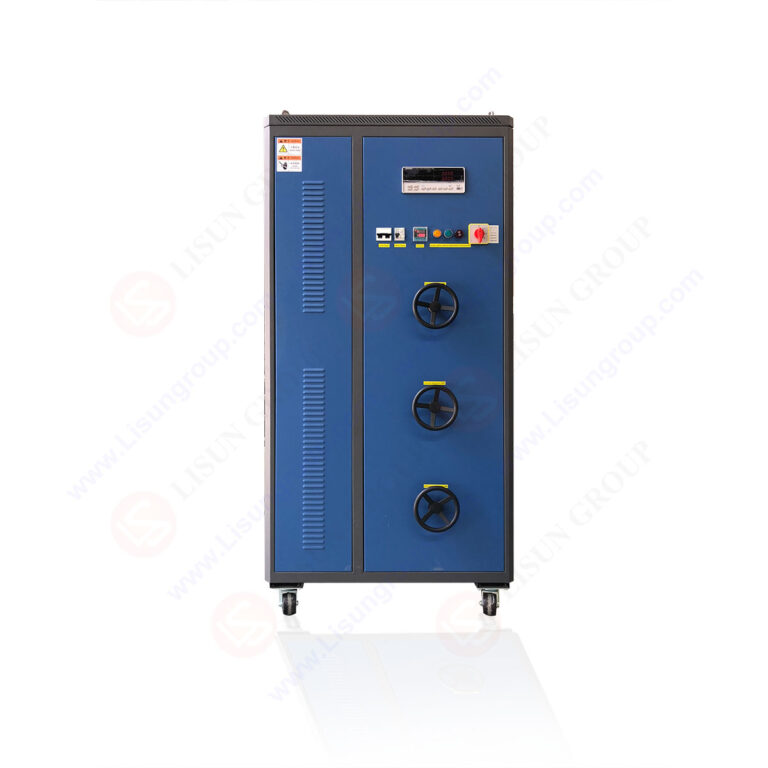
The DFX series employs stepped resistive elements with wire-wound construction for high power dissipation and thermal stability. Inductive components use laminated silicon steel cores to minimize losses and maintain consistent impedance across the operating frequency range of 50-60 Hz. Capacitive elements are metallized polypropylene film types with low equivalent series resistance (ESR). All load components are mounted within forced-air cooled cabinets to maintain thermal stability during extended testing sessions.
5.2 Measurement System Architecture
The integrated measurement system uses hall-effect current sensors and precision voltage dividers with 24-bit analog-to-digital conversion. This provides 0.5% reading accuracy for current measurements from 0.2A to 80A and 0.2% accuracy for voltage measurements from 100V to 440V. Power calculations use four-quadrant multiplication, enabling accurate measurement of active, reactive, and apparent power under both sinusoidal and distorted waveform conditions.
5.3 Cyclic Test Counting and Logging
The DFX series incorporates programmable cyclic test counting with capabilities for up to 999,999 cycles per test sequence. Each cycle can be configured with specific load levels, power factor settings, and duration parameters. The system logs time-stamped data for each cycle, including peak and RMS current values, power factor at switching instants, and temperature readings from internal sensors. This data supports failure analysis and trend identification during long-duration endurance tests.
6.1 Overcurrent and Overvoltage Protection
The DFX series includes multiple protection layers to safeguard both the test equipment and the device under test (DUT). Overcurrent protection triggers at 110% of the set current limit, with a response time of less than 5ms. Overvoltage protection monitors the test circuit voltage and disconnects loads if levels exceed the DUT’s rated voltage by 20%. These protection systems use independent sensing circuits with redundant trip mechanisms to ensure fail-safe operation.
6.2 Thermal Management and Derating
Internal temperature sensors monitor load component temperatures and automatically initiate protective derating or shutdown if thresholds are exceeded. The forced-air cooling system maintains component temperatures below 85°C under full-rated continuous operation. For cyclic testing with high inrush currents, the system calculates thermal accumulation and adjusts maximum allowable duty cycles to prevent cumulative thermal damage.
6.3 Ground Fault and Isolation Features
The DFX series incorporates ground fault detection with sensitivity adjustable from 30mA to 300mA, compliant with IEC 61008-1 residual current device standards. Test circuits are galvanically isolated from control circuits through optocouplers and isolated power supplies, ensuring operator safety during configuration and data access. Emergency stop switches are positioned on both the front panel and the rear connection area for immediate system shutdown.
7.1 Energy Meter Verification Procedure
For energy meter testing, the DFX series is configured with the target current level and power factor as specified in the relevant accuracy class standard. The load cabinet is connected between the reference meter and the meter under test, with both meters measuring the same load. Test sequences automatically step through required load points while recording percentage error values. The system calculates mean percentage error and consistency metrics for each test point, automatically flagging results that exceed class limits.
7.2 UPS Performance Validation
UPS testing requires evaluation under various load conditions, including resistive, inductive, and capacitive combinations. The DFX series can simulate the mixed loads typical of data center environments, where power factors range from 0.7 inductive to 0.9 capacitive. The system measures UPS output voltage regulation, frequency stability, and transient response during load steps from 0% to 100% of rated capacity. Data from these tests validates UPS performance against IEC 62040-3 classification requirements.
7.3 Switch and Socket Endurance Testing
For electrical accessory endurance testing per IEC 60884-1 and IEC 60669-1, the DFX load cabinet is paired with the CZKS life tester to automate the specified test sequence. The system applies the required inductive or lamp load during each switching operation, while the life tester controls the number of cycles and switching frequency. Throughout the test, the DFX series monitors contact resistance and temperature rise, providing early detection of contact degradation before complete failure occurs.
7.4 Compliance with Minimum Standard Requirements
The following table compares the DFX series capabilities against minimum testing requirements specified in key standards:
| Parameter | Minimum Standard Requirement | DFX Series Capability | Margin |
|---|---|---|---|
| Current Range (IEC 60884-1) | 0.2A to 16A | 0.2A to 80A | 5x |
| Power Factor Range | 0.3 to 1.0 | 0.3 to 0.99 | Equivalent |
| Inrush Current Duration | 1-5ms | 0.5-10ms | 2x |
| Measurement Accuracy | ±1.0% | ±0.5% | 2x |
| Operating Cycles | 10,000 | 999,999 | 100x |
| Temperature Monitoring | Optional | Standard | Exceeds |
The LISUN DFX series Externally Ballasted Fluorescent Lamp Test Load Cabinet delivers precision R-L-C load simulation for comprehensive energy meter and UPS performance testing. With current ranges from 0.2A to 80A across five models, the series accommodates diverse testing requirements from residential single-phase meters to industrial UPS systems. The system’s alignment with IEC 60884-1, IEC 60669-1, IEC 62053-21, and GB 16915.1 standards ensures reliable compliance validation for international markets. Integration with LISUN’s complementary equipment, including CZKS life testers and SW-6 bending testers, enables end-to-end testing workflows that automate complex certification procedures. The DFX series provides the technical foundation for rigorous electrical accessory testing, supporting product development, quality assurance, and regulatory compliance activities across the electrical testing industry.
Q1: What is the difference between the DFX-20 and DFX-20-3CH models for energy meter testing?
A: The DFX-20 provides a single output channel with a maximum current of 20A, suitable for single-phase energy meter testing. The DFX-20-3CH offers three independent channels, each capable of delivering 0.2A to 20A simultaneously. This multi-channel configuration is essential for testing three-phase energy meters, where all phases must be loaded concurrently to evaluate cross-phase interaction and total power calculation accuracy. The 3CH model also supports testing multiple single-phase meters in parallel, increasing throughput for production validation. Both models maintain ±0.5% measurement accuracy and include identical load simulation capabilities, with the channel count being the primary differentiator.
Q2: How does the DFX series simulate the inrush current characteristics of fluorescent lamps?
A: The DFX series incorporates programmable current surge generation circuits that produce inrush currents up to 20 times the steady-state rated current for durations of 0.5 to 10 milliseconds. This replicates the starting characteristics of magnetic ballast fluorescent lamps, where the lamp’s cold resistance is significantly lower than its operating resistance. The system’s control software allows engineers to define surge magnitude, duration, and decay profile, matching the specific lamp and ballast combination specified in the testing standard. Real-time current waveform monitoring verifies that inrush parameters remain within the ±5% tolerance required by IEC 60669-1 Clause 19.2.
Q3: Can the DFX series be integrated into an existing automated test system?
A: Yes, the DFX series supports multiple communication protocols including RS-232, RS-485, and Ethernet with Modbus TCP/IP for seamless integration into automated test systems. The load cabinet provides LabVIEW and Python example code for developing custom test sequences. Engineers can control all load parameters (current, power factor, inrush settings) programmatically and retrieve measurement data in real-time. The system’s trigger input/output ports allow synchronization with external switching controllers and life testers, enabling coordinated multi-instrument test sequences without manual intervention.
Q4: What thermal management capabilities does the DFX series offer for extended endurance testing?
A: The DFX series uses forced-air cooling with temperature sensors monitoring each load component continuously. During extended endurance tests, the system logs component temperatures and automatically initiates protective derating when temperatures approach 85°C. The thermal management system calculates cumulative thermal stress based on test cycle profiles, adjusting maximum allowable duty cycles to prevent component degradation without interrupting valid test sequences. For high-current testing above 40A, the system recommends maximum continuous operation of 2 hours followed by a 30-minute cooling period to maintain component longevity and measurement accuracy.
Q5: How does the DFX series ensure measurement accuracy for power factor values below 0.5?
A: At low power factors (0.3 to 0.5), the DFX series uses wide-bandwidth current and voltage sensors with 24-bit analog-to-digital conversion to capture the phase relationship accurately. The measurement system employs four-quadrant power calculation algorithms that compensate for phase errors in the current transformers through factory-calibrated correction factors stored in non-volatile memory. Regular calibration verification using external reference meters ensures that power factor measurement accuracy remains within ±0.5% across the entire operating range. The system also provides independent current and voltage output terminals for connection to external measurement instruments, allowing cross-validation during critical compliance tests.