









Here is the comprehensive technical article generated based on your instructions.
Abstract
This technical article provides an in-depth analysis of the LISUN Aging Oven for IEC 60068 Temperature Testing, a critical solution for validating LED component reliability under thermal stress. As a Senior LED Testing Engineer at LISUN, I detail how this system integrates accelerated aging protocols with precise temperature control to meet stringent industry standards. The article explores the dual-system variants (LEDLM-80PL for LM-80/TM-21 and LEDLM-84PL for LM-84/TM-28), the application of the Arrhenius Model for lifetime prediction, and the hardware’s role in generating reliable L70/L50 metrics. By leveraging data from up to three connected temperature chambers, engineers can simulate 6000-hour test durations efficiently. This piece offers practical insights for R&D and quality control professionals seeking to align their testing procedures with global photometric and reliability benchmarks.
1.1 The Role of Thermal Aging in LED Reliability
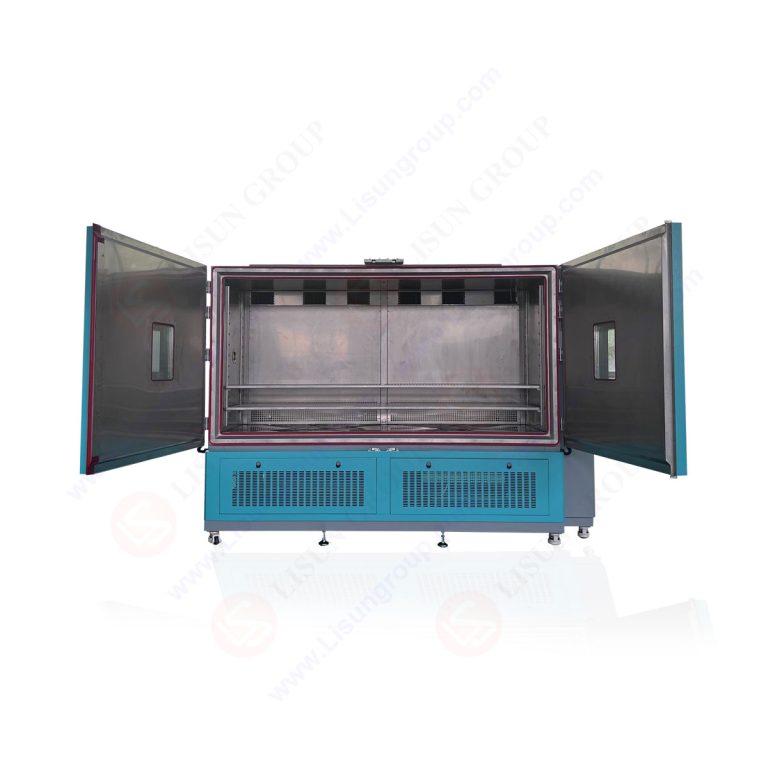
The long-term performance of an LED is predominantly determined by its junction temperature and the resulting lumen depreciation. The Aging Oven for IEC 60068 Temperature Testing | LISUN is specifically engineered to replicate the thermal cycling and steady-state heat conditions required by the IEC 60068 series. This standard is foundational for environmental testing, ensuring that electronic components withstand operational temperature extremes. For LED manufacturers, this means validating that a light engine will maintain its luminous flux output over a projected lifespan, typically defined by L70 (time to 70% lumen maintenance) or L50 metrics.
1.2 Core Design Philosophy: Precision and Parallelism
LISUN’s aging oven distinguishes itself through a modular design that supports dual testing modes. The system is not a simple heat chamber; it is an integrated platform that combines thermal stress with continuous photometric monitoring. The ability to connect up to three separate temperature chambers allows for simultaneous testing at different temperature set points (e.g., 55°C, 85°C, and 105°C) as recommended by the IES LM-80 standard. This parallelism drastically reduces total test time for a 6000-hour aging study, enabling engineers to gather statistically significant data on lumen depreciation across multiple thermal conditions.
2.1 LEDLM-80PL: The LM-80 / TM-21 Workhorse
The LEDLM-80PL system is tailored for testing components such as LED packages, modules, and arrays per IES LM-80-15. This variant integrates a high-precision integrating sphere (typically 0.3m, 0.5m, or 1.0m diameter) that measures total luminous flux. The system includes a dedicated photometric detector and spectroradiometer to capture spectral power distribution (SPD) data at defined intervals (e.g., every 1000 hours up to 6000+ hours). The data feeds directly into LISUN’s proprietary software, which performs TM-21-19 extrapolation to project L70/L50 lifespan beyond the actual test duration, using non-linear regression based on the Arrhenius model.
2.2 LEDLM-84PL: Precision for LM-84 and TM-28
For engineers focused on LED light engines or luminaires, the LEDLM-84PL variant complies with the IES LM-84-21 standard. While LM-80 tests components, LM-84 evaluates the “non-substitutable” light engine. The LEDLM-84PL employs a different measurement methodology, often utilizing an integrating sphere with specific baffling and self-absorption correction to account for the larger geometry of the device under test (DUT). The associated TM-28-21 projection method is then applied. The core hardware—the Aging Oven for IEC 60068 Temperature Testing | LISUN—remains identical for both variants, only the measurement instrumentation and software modules differ.
Table 1: Technical Comparison of LISUN Aging Oven System Variants
| Feature | LEDLM-80PL | LEDLM-84PL |
|---|---|---|
| Primary Standard | IES LM-80-15, TM-21-19 | IES LM-84-21, TM-28-21 |
| Test Object | LED Packages, Modules, Arrays | LED Light Engines, Non-substitutable Luminaires |
| Measurement Focus | Luminous Flux (Total) & SPD | Luminous Flux & Chromaticity Shifts |
| Projection Method | TM-21 (Exponential Decay) | TM-28 (Linear or Quadratic Decay) |
| Typical Test Duration | 6000 hours (min), up to 10000 hours | 6000 hours (min), up to 10000 hours |
| Temperature Chamber | Up to 3 Connected Chambers (e.g., 55/85/105°C) | Up to 3 Connected Chambers (e.g., 55/85/105°C) |
| Key Output Metric | L70(B), L50(B) Lifespan | L70(F), L50(F) for Light Engines |
3.1 Constant Temperature and Switching Mode (Hot-Cold)
The Aging Oven for IEC 60068 Temperature Testing | LISUN supports two critical test modes. The first is Constant Temperature Mode, where the chamber maintains a steady ambient temperature (e.g., 85°C) for the entire duration. This is the standard method for generating base data for TM-21. The second is Switching Mode (Hot-Cold), which introduces thermal shock by cycling between a high temperature (e.g., +125°C) and a low temperature (e.g., -40°C) over short periods. This mode is vital for testing solder joints and LED die attach integrity, as per the IEC 60068-2-14 standard for temperature change.
3.2 Data Analysis via the Arrhenius Model
The core of LISUN’s lifetime projection software is the Arrhenius Equation: L = A * exp(Ea / (k * T)). Here, Ea is the activation energy (typically 0.4eV to 0.7eV for LEDs), k is Boltzmann’s constant, and T is the absolute temperature. By testing at multiple temperatures within the aging oven, the software solves for the activation energy and acceleration factor. This allows the engineer to predict the lumen maintenance at a reference use temperature (e.g., 55°C) long before the actual 6000-hour test concludes, provided the failure mechanism remains consistent.
4.1 IES LM-79-19 and CIE 127
While the aging oven focuses on long-term reliability, it is typically paired with an upstream measurement using the IES LM-79-19 standard for electrical and photometric characterization. LISUN’s system often includes a separate measurement station for initial flux, color temperature (CCT), and color rendering index (CRI) per CIE 127:2007. This ensures the baseline data for the DUT is validated before it enters the Aging Oven for IEC 60068 Temperature Testing. CIE 084 and CIE 070 standards are referenced for the accurate measurement of luminous flux in the integrating sphere.
4.2 Decoding TM-21 Extrapolation Parameters
The LISUN software automatically generates TM-21 compliant reports. The extrapolation rules are strict: if the 6000-hour test shows >6000 hours of data, the projection limit is 6x the test duration (e.g., 36,000 hours). The report must include L70(B) for the total lumen maintenance. The system calculates the exponential decay coefficient (α) from the normalized flux data. The Aging Oven for IEC 60068 Temperature Testing | LISUN ensures the ambient temperature stability (typically ±2°C) required to prevent noise from corrupting this exponential fit.
5.1 Scalability from Single to Three Chambers
A key advantage of the LISUN system is its scalability. A single control unit can operate one, two, or three independent temperature chambers. Each chamber can be set to a different temperature, enabling the engineer to run an entire acceleration study (e.g., 55°C, 85°C, 105°C for LM-80) concurrently. The chambers are designed with forced air convection to ensure uniform thermal distribution across all DUTs, preventing “hot spots” that could skew data. The system supports up to 48 DUTs per chamber (depending on size), allowing for robust sample sizes.
5.2 Power Supply and Monitoring Options
Each DUT in the oven is connected to a programmable DC power supply. The system controls the drive current (e.g., 350mA, 700mA, 1000mA) to match the manufacturer’s specified rating. Crucially, the LISUN system performs in-situ measurement. The DUTs are not removed from the oven for testing; instead, a mechanical switching mechanism shunts the light from each DUT into the integrating sphere while maintaining its thermal environment. This eliminates errors caused by cooling the DUT for measurement.
6.1 From Raw Data to L70 Metrics
The primary output of a 6000-hour test is the lumen maintenance curve. The L70 metric represents the projected time when the light output drops to 70% of the initial value. The Aging Oven for IEC 60068 Temperature Testing | LISUN software plots the normalized luminous flux (Φ(t)/Φ(0)) against time. Using the TM-21 method, it fits an exponential function: Φ(t) = A * exp(-α*t). The L70 is calculated as L70 = ln(0.70) / (-α) * (1/-1). This is automatically adjusted for different temperatures using the acceleration factor derived from the Arrhenius Model.
6.2 Precision of Measurement: The Role of the Integrating Sphere
The accuracy of the L70 projection depends entirely on the quality of the raw data. LISUN’s integrating sphere meets the requirements of IES LM-79 and CIE 84 for self-absorption correction. The spectral range of the spectroradiometer (typically 350nm-1100nm) captures the full SPD. The Aging Oven for IEC 60068 Temperature Testing maintains the DUTs at a stable temperature during the measurement cycle, which is critical because luminous flux is temperature-dependent. A 1°C fluctuation can introduce a 0.5% error in the measurement, which propagates through the TM-21 regression.
7.1 Setting Up a Valid LM-80 Test
To utilize the Aging Oven for IEC 60068 Temperature Testing | LISUN effectively, follow this protocol:
- Sample Size: Use a minimum of 20 DUTs per test condition per IES LM-80.
- Current Control: Set the drive current to the rated value (e.g., 350mA).
- Temperature Selection: Choose three temperatures: a low (55°C), a medium (85°C), and a high (105°C).
- Monitoring Intervals: Program measurements at 0, 1000, 2000, 3000, 4000, 5000, and 6000 hours.
- Data Validation: Ensure the
R²value for the TM-21 fit is >0.90.
7.2 Common Pitfalls and Troubleshooting
Engineers often encounter issues with chromaticity shift (Δu’v’). The LISUN system monitors CCT stability. If the Δu’v’ exceeds 0.007 over 6000 hours, it indicates potential phosphor degradation, which can invalidate the TM-21 projection. Another common issue is lead wire oxidation at high temperatures. Ensure the use of high-temperature (PTFE) wires and secure connections to prevent open circuits during the test. The oven’s data logging software will flag any DUT failures immediately.
The Aging Oven for IEC 60068 Temperature Testing | LISUN represents a highly integrated solution for the rigorous demands of LED reliability engineering. By combining a robust thermal chamber with precision photometric measurement and advanced analytical software based on the Arrhenius Model, it enables engineers to generate defensible L70 and L50 lifetime projections. Its compliance with a wide array of standards—including IES LM-80, LM-84, TM-21, TM-28, and IEC 60068—ensures that test data is accepted by regulatory bodies and lighting designers globally. The ability to test across multiple temperatures simultaneously and in constant or switching modes provides a complete picture of device reliability. For any engineer tasked with validating LED component durability or complying with warranty claims, this system offers the necessary accuracy, scalability, and traceability to the core industry standards governing photometric and thermal testing.
Q1: Can the LISUN Aging Oven for IEC 60068 Temperature Testing simultaneously perform LM-80 and LM-84 testing?
A: Yes, but with certain hardware configurations. The core temperature chamber and control system are identical. However, the measurement instrumentation differs. The LEDLM-80PL system requires a specific integrating sphere setup designed for small components (packages/modules), while the LEDLM-84PL system requires a larger sphere or a different measurement geometry for light engines. To run both tests concurrently, you would typically need two separate measurement stations (spheres) connected to a single control unit, or run them as separate test batches. The LISUN software suite can manage both protocols, but the physical hardware for light collection must match the DUT type per IES LM-79 guidelines.
Q2: What is the minimum test duration required for a reliable TM-21 report from this system?
A: The IES LM-80-15 standard mandates a minimum of 6000 hours of test data for a valid TM-21-19 report. While the LISUN aging oven can run tests longer (e.g., 10,000 hours), the 6000-hour mark is the industry standard for initial qualification. If you have less than 6000 hours of data, the TM-21 software will still attempt a projection, but the results are considered preliminary and have a wider confidence interval. The extrapolation limit is strictly 6x the test duration, so 6000 hours of data allows for a 36,000-hour projection. Shorter tests reduce the reliability of the exponential fit.
Q3: How does the system handle power supply failures or temperature deviations during a 6000-hour test?
A: The LISUN control system includes comprehensive supervisory monitoring. If a temperature deviation exceeds the specified tolerance (e.g., ±3°C), the system logs the event and can trigger an alarm (audible or via email). For power failures, the system has a robust data recovery protocol. All measurement data is stored on non-volatile memory (SSD) in real-time. Upon power restoration, the system will automatically resume the test from the last logged data point, noting the interruption in the report. This is critical for maintaining the integrity of the Arrhenius model calculation, as the aging time is cumulative.
Q4: What is the difference between “dry” and “wet” current in the context of the Aging Oven testing?
A: In the LM-80 testing context, “dry” current refers to the use of a constant DC current to drive the LEDs. “Wet” current is not a standard term and does not apply to this testing. The LISUN system strictly uses “dry” constant current sources. The term you may be thinking of is “wet” testing for corrosion resistance (e.g., IEC 60068-2-52), which involves salt spray or humidity. The Aging Oven for IEC 60068 Temperature Testing is a dry heat test; it controls temperature, not humidity, unless a specific humidity module is integrated for combined environmental testing (e.g., damp heat).
Q5: Can the system test automotive-grade LEDs that require 1000-hour tests per AEC-Q102?
A: While the LISUN system is primarily designed for IES LM-80/84 (which is 6000+ hours), it is fully capable of performing the shorter Aging Oven for IEC 60068 Temperature Testing cycles required by AEC-Q102, such as the 1000-hour High Temperature Operating Life (HTOL) test at 85°C or 105°C. The key difference is the data analysis. For AEC-Q102, you are typically looking for catastrophic failure (e.g., 20% degradation) rather than L70 projection. The LISUN software can easily log data for a 1000-hour test and provide the final pass/fail report based on the percentage of lumen maintenance measured in the integrating sphere.