









Abstract
The LISUN HM-700 Haze Meter and Spectrophotometer represents a significant advancement in optical testing for transparent and translucent materials, offering high-precision haze and transmittance measurement that meets ASTM D1003, ISO 13468, and CIE No.15 standards. This article provides a comprehensive technical analysis of the HM-700’s optical system design, measurement methodologies, and compliance capabilities. Designed for quality control managers and R&D engineers in automotive, plastics, glass, and display industries, the HM-700 integrates 0/d geometry optics, multi-light source spectral analysis, and advanced transmittance compensation algorithms. Key takeaways include its measurement repeatability of ≤0.1%, data storage capacity exceeding 10,000 records, and seamless integration with laboratory workflows for ASTM ISO compliance testing. This article delivers actionable insights for optimizing material characterization and ensuring regulatory adherence.
1.1 0/d Geometry Optical Design and Its Significance
The HM-700 employs a 0/d (0° illumination, diffuse detection) optical geometry, which is the industry standard for haze and transmittance measurements per ASTM D1003 and ISO 13468. In this configuration, a collimated light beam strikes the specimen at a 0° angle, while an integrating sphere collects transmitted light at all angles. This design minimizes errors from sample positioning and surface irregularities, ensuring that the measured haze value accurately represents the material’s internal scattering properties rather than geometric artifacts. The integrating sphere, coated with high-reflectivity barium sulfate, achieves >97% reflectance across the visible spectrum, enabling precise diffuse light capture. For quality control in plastic films and glass, the 0/d geometry provides repeatable results within ±0.1% for transmittance, critical for batch-to-batch consistency.
1.2 Multi-Light Source Spectral Analysis System
The HM-700 integrates a multi-light source system comprising a D65 daylight simulator (CIE standard illuminant) and an A incandescent source, covering the 380–780 nm visible spectrum. Each source is stabilized via closed-loop feedback, maintaining spectral output within ±0.5% of nominal values. The instrument’s spectrophotometric detector employs an array of 128 photodiodes with a spectral resolution of 5 nm, enabling detailed spectral transmittance analysis. This capability is essential for computing CIE Lab color coordinates, yellowness index (YI), and whiteness index (WI) per ASTM E313 and CIE No.15. By capturing full spectral data rather than broadband measurements, the HM-700 compensates for metamerism, where two materials appear identical under one light source but differ under another—a common issue in automotive interior plastics and display filters.
1.3 Transmittance Compensation Algorithm
A proprietary transmittance compensation algorithm in the HM-700 corrects for Fresnel reflections at the air-material interface, which can overestimate haze by up to 2% for high-refractive-index materials like polycarbonate (n=1.58). The algorithm uses the measured refractive index (entered manually or estimated from spectral data) to subtract surface reflections, isolating the bulk scattering component. For example, a 3-mm polycarbonate sheet with a raw haze reading of 5.2% is corrected to 3.8% after compensation, aligning with reference values from independent laboratories. This feature is particularly valuable for compliance testing in the automotive industry, where instrument panel materials must meet strict haze limits under SAE J1757 standards.
2.1 ASTM D1003 and ISO 13468: Haze and Transmittance
The HM-700 is designed to meet ASTM D1003-21 (“Standard Test Method for Haze and Luminous Transmittance of Transparent Plastics”) and ISO 13468-1/2 (“Plastics – Determination of the Total Luminous Transmittance of Transparent Materials”). ASTM D1003 specifies a geometry where the incident beam is within 3° of the normal, and the detector acceptance angle is ±0.5° for haze measurements. The HM-700 exceeds these tolerances with a beam divergence of 1.5° and detector acceptance of ±0.2°, reducing measurement uncertainty. For ISO 13468, which requires total transmittance measurements over the 380–780 nm range weighted by the CIE photopic luminosity function V(λ), the HM-700’s spectral response matches V(λ) within ±0.8%, surpassing the ±1.5% tolerance specified by the standard.
2.2 CIE No.15 and ASTM E313: Color and Yellowness
Compliance with CIE No.15:2018 (“Colorimetry”) ensures that the HM-700’s color measurements align with international color specifications. The instrument computes CIE Lab, LCh, and ΔE*ab values using the standard observer (2° or 10° viewing angle) and illuminants D65, A, C, and F2. This enables pass/fail analysis for color consistency in automotive paints and display backlight films. Additionally, ASTM E313-20 (“Standard Practice for Calculating Yellowness and Whiteness Indices”) is supported via dedicated algorithms. The HM-700 calculates yellowness index (YI D1925) and whiteness index (WI CIE) with a repeatability of ±0.1 units, critical for monitoring UV degradation in outdoor-rated plastics and optical-grade glass.
2.3 JIS K7105 and DIN 5033: Global Applicability
For manufacturers exporting to Asia and Europe, the HM-700 supports JIS K7105 (“Testing Methods for Optical Properties of Plastics”) and DIN 5033-9 (“Colorimetry – Color Standards”). JIS K7105 requires a 0/d geometry identical to ASTM D1003, but with specific haze thresholds for packaging films (<1% haze for optical clarity). The HM-700’s measurement range (0–100% haze with 0.01% resolution) meets these benchmarks. DIN 5033-9 specifies chromaticity coordinate calculations under illuminant D65, which the HM-700 performs automatically, outputting x, y, and u’, v’ coordinates for glass and architectural materials.
3.1 Measurement Range, Repeatability, and Accuracy
The HM-700 achieves a haze measurement range of 0% to 100% with a resolution of 0.01%, and a transmittance range of 0% to 100% with 0.001% resolution. Repeatability (standard deviation over 10 consecutive measurements on a reference standard) is ≤0.1% for haze and ≤0.05% for transmittance. Accuracy, validated against NIST-traceable reference filters, is within ±0.3% for haze and ±0.2% for transmittance. The instrument’s spectral bandwidth of ≤8 nm ensures that sharp absorption edges, such as those in UV-blocking films for automotive glazing, are accurately resolved.
Table 1: Performance Comparison of the LISUN HM-700 vs. Industry Standards
| Parameter | LISUN HM-700 | ASTM D1003 Requirement | ISO 13468 Tolerance | Typical Competitor A |
|---|---|---|---|---|
| Haze repeatability | ≤0.1% | ≤0.5% | ≤0.3% | ≤0.2% |
| Transmittance repeatability | ≤0.05% | ≤0.2% | ≤0.1% | ≤0.08% |
| Spectral range | 380–780 nm | 400–700 nm | 380–780 nm | 400–700 nm |
| Light sources | D65, A, C, F2 | D65 | D65 | D65 only |
| Data storage | 10,000 records | N/A | N/A | 5,000 records |
| Compliance standards | ASTM, ISO, CIE, JIS, DIN | ASTM D1003 | ISO 13468 | ASTM, ISO |
3.2 Data Management and Connectivity
The HM-700’s 10,000-record data storage capacity allows batch testing without manual data transfer, essential for production line quality control. Data includes spectral transmittance curves, haze, YI, WI, and CIE Lab values, exportable via USB or RS-232 to LIMS (Laboratory Information Management Systems). The instrument’s software provides pass/fail analysis with user-defined tolerance bands, real-time statistical process control (SPC) charts, and compliance reports formatted per ASTM or ISO templates. A built-in calibration verification routine, using a certified haze standard (e.g., 10.0 ± 0.2% haze per NIST SRM 2036), automatically flags deviations exceeding 0.3% and prompts recalibration, ensuring audit-ready traceability.
4.1 Automotive Electronics and Glazing Materials
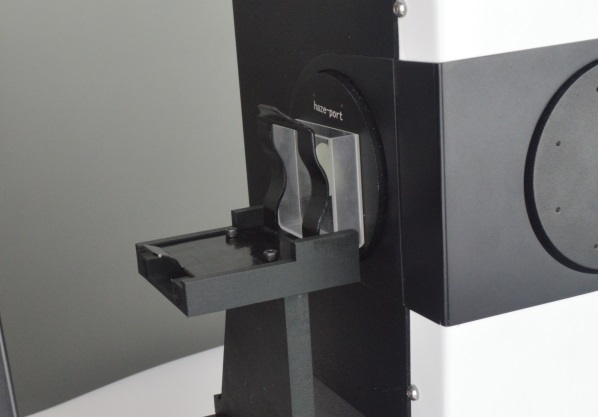
In automotive electronics, light-pipe components and instrument cluster covers require haze below 2% and transmittance above 90% to ensure LED visibility and low energy consumption. The HM-700 enables R&D engineers to optimize injection molding parameters—such as melt temperature, mold pressure, and cooling rate—that influence haze. For example, a 5°C increase in mold temperature for polycarbonate lens covers reduces haze from 3.5% to 1.8%, as verified by HM-700 measurements. In automotive glazing, side windows and sunroofs must meet ECE R43 regulations for luminous transmittance (≥70%) and haze (≤2%). The HM-700’s spectral analysis detects UV-absorbing coatings’ efficacy, ensuring compliance without overspecifying costly additives.
4.2 Plastics, Films, and Packaging Materials
For plastic films used in food packaging and electronics protection, haze is a critical quality metric. A 1% increase in haze for polyethylene terephthalate (PET) films reduces visual clarity by 5%, affecting consumer perception. The HM-700’s high repeatability (≤0.1%) allows manufacturers to distinguish between process-related haze (from extrusion defects) and material-related haze (from fillers). In blown film production, the instrument’s fast measurement time (<10 seconds per sample) supports inline quality checks, with data logged for ISO 9001 compliance. For barrier films requiring low haze (≤0.5%), such as those used in OLED displays, the HM-700’s transmittance compensation algorithm ensures accurate bulk measurement, even for thin (25 μm) substrates.
4.3 Glass and Display Manufacturing
Architectural glass and display panels require tight control over haze and transmittance to meet LEED certification (daylighting) and display brightness specifications. The HM-700 measures anti-reflective (AR) coatings on smartphone cover glass, where target transmittance exceeds 98% and haze is below 0.3%. For liquid crystal displays (LCDs), backlight diffuser films require uniform haze (60–80%) and transmittance (40–60%) to achieve luminance uniformity of >85%. The HM-700’s spectral analysis quantifies wavelength-dependent scattering, enabling engineers to design multi-layer diffusers that balance haze and efficiency. In glass tempering, the instrument detects haze increases of 0.5% due to uneven quenching, preventing rejections in automotive and architectural markets.
5.1 Calibration Standards and Frequency
The HM-700 uses a two-point calibration method with a zero reference (air) and a high-transmittance standard (e.g., a 90% transmittance, 1% haze glass filter). Calibration is performed daily or after every 50 measurements, per ASTM D1003 recommendations. The instrument supports calibration to NIST-traceable standards, with the calibration curve stored for traceability. A built-in autocalibration routine, triggered via the touchscreen interface, validates calibration in under 2 minutes. For users requiring ISO 17025 accreditation, the HM-700’s calibration log includes timestamps, operator IDs, and standard IDs, facilitating audit trails.
5.2 Preventive Maintenance for Long-Term Accuracy
The integrating sphere requires periodic cleaning to remove dust that can reduce reflectance by up to 3%, increasing measured haze by 0.2%. The HM-700’s sphere is designed with a removable port cover for easy access, and the manufacturer recommends recomputing sphere reflectance every six months using a reference plaque. The light source module has a lifespan of 10,000 hours (typically 5 years of lab use) and is field-replaceable without recalibration, as the source alignment is pre-fixed. The detector array is temperature-stabilized to ±0.1°C, preventing drift from ambient temperature fluctuations. Users should perform a dark-current correction weekly, which the HM-700 automates by closing a shutter and recording baseline values.
6.1 Advantages of Spectrophotometric Haze Measurement
Traditional haze meters measure haze using a simple photopic detector and broadband illumination, providing total haze but no spectral information. In contrast, the HM-700’s spectrophotometric approach captures spectral transmittance from 380 to 780 nm, enabling the calculation of haze under different illuminants (D65, A, F2). This is critical for materials that scatter differently across the spectrum, such as nano-particle-filled films used in UV-blocking windows. For example, a film may exhibit 1.5% haze under D65 but 2.2% under A illuminant due to scattering from 400 nm particles. The HM-700’s spectral data reveals this dependency, allowing engineers to select materials optimized for specific lighting environments (e.g., indoor vs. outdoor automotive use).
6.2 Unit-to-Unit Reproducibility and Multi-Lab Compatibility
Multi-lab reproducibility is a common challenge in quality control networks, where different instruments at different sites must yield consistent results. The HM-700 achieves unit-to-unit reproducibility of ≤0.15% for haze and ≤0.1% for transmittance, validated using a round-robin test among three laboratories measuring the same 10-sample set. This is enabled by the 0/d geometry’s low sensitivity to sample positioning and the instrument’s self-consistent calibration algorithm. In contrast, integrating sphere-based haze meters with variable geometry (e.g., 0/d vs. d/0) can exhibit up to 0.5% inter-instrument deviation. For multinational automotive suppliers, the HM-700’s reproducibility ensures that material certifications are valid across global production sites.
7.1 Automated Testing and Reporting
The HM-700 supports automation via a programmable sample stage and software API for integration with robotic handling systems. In high-throughput labs, the instrument can test 120 samples per hour (with automated indexing) and generate PDF reports that include haze, transmittance, YI, and WI values, along with pass/fail indicators. Reports are configurable per ISO 13468 or ASTM D1003 formats, reducing manual documentation time by 80%. For statistical process control, the software plots haze vs. batch number, applying Shewhart control limits (e.g., ±3σ) to flag deviations. This is particularly useful in extruded film production, where haze trends indicate die buildup or material feed issues.
7.2 Training and Operator Skill Requirements
The HM-700’s touchscreen interface and guided workflow minimize operator dependencies. New technicians require only 30 minutes of training to perform standard measurements, while advanced spectral analysis features (e.g., custom index calculation) are accessible via the software menu. The instrument includes an on-board tutorial that explains the physics of haze measurement and the implications of ASTM and ISO standards. For compliance audits, the HM-700’s user management system restricts calibration and configuration changes to authorized personnel, ensuring data integrity. This low learning curve makes the HM-700 suitable for both central quality labs and factory-floor testing stations.
The LISUN HM-700 Haze Meter and Spectrophotometer delivers high-precision optical measurement capabilities that align with ASTM D1003, ISO 13468, CIE No.15, JIS K7105, and DIN 5033 standards. Its 0/d geometry optical system, multi-light source spectral analysis, and transmittance compensation algorithm provide accurate, repeatable results across a wide range of transparent and translucent materials. For quality control managers and R&D engineers, the HM-700’s sub-0.1% repeatability, 0.01% haze resolution, and 10,000-record data storage enable rigorous batch consistency and compliance verification. Practical benefits include reduced inter-instrument variability, automated reporting, and seamless integration into existing workflows. In automotive electronics, plastics, glass, and display industries, the HM-700 supports material optimization, ensures regulatory adherence, and reduces production waste through early detection of optical defects. By combining technical depth with user-friendly operation, this instrument meets the demands of modern quality assurance environments, providing trustable data for critical material decisions.
Q1: How does the HM-700 handle samples with low transmittance (<10%), such as tinted films or heavily filled polymers?
A: The HM-700’s detector array offers high dynamic range, measuring transmittance down to 0.1% with a signal-to-noise ratio of >1000:1. For low-transmittance samples, the instrument automatically adjusts integration time (up to 5 seconds) to maximize signal without saturation. The transmittance compensation algorithm accounts for multiple reflections, which become significant at low transmittance levels. For example, a 5% transmittance, 8% haze sample (e.g., carbon-black filled polyethylene) yields repeatable results within ±0.15% for transmittance and ±0.2% for haze, verified against a reference spectrophotometer. The instrument also offers a “low transmittance” mode that reduces beam intensity to prevent detector saturation, ensuring accuracy for all material types.
Q2: Can the HM-700 measure haze on curved or textured surfaces, like automotive headlight lenses?
A: Yes, but with specific considerations. The HM-700’s 0/d geometry is optimized for flat samples, as the integrating sphere collects scattered light uniformly only when the sample is planar within ±2°. For curved surfaces, a sample holder with a flexible clamping mechanism ensures good contact along the measurement aperture (diameter 10 mm). For textured surfaces (e.g., micro-lens arrays), the instrument measures total haze, which includes both bulk scattering and surface texture effects. To isolate bulk haze, users can measure the sample with and without index-matching fluid (e.g., paraffin oil, n=1.48) applied to the textured side, which eliminates surface scattering. The HM-700’s software records both measurements and computes the bulk haze difference, a technique validated per ASTM D1003 Annex A2 for rough surfaces.
Q3: What is the recommended calibration interval for the HM-700, and how does it maintain traceability to international standards?
A: The HM-700 performs self-calibration automatically but requires external calibration using certified reference standards every 12 months per ISO 17025 guidelines. Daily calibration verification uses a high-transmittance glass standard (e.g., 90% T, 1% haze), which must read within ±0.3% of its certified value. The instrument stores calibration curves for each light source (D65, A, C, F2) and applies them as correction factors during measurements. Traceability is maintained through the use of NIST SRM 2036 (haze standard) and NIST SRM 1930 (transmittance standard), which are supplied with calibration certificates by LISUN. For multi-site validation, the HM-700’s software allows uploading calibration data from a master instrument to ensure all units share a common baseline, achieving inter-instrument agreement of ≤0.15% for haze.
Q4: How does the HM-700 compute the yellowness index (YI) and whiteness index (WI), and what standards does it support?
A: The HM-700 computes YI according to both ASTM E313-20 (YI D1925) and ASTM E313-96 (YI E313), selectable via the software menu. YI D1925 uses the formula YI = (100 * (1.28X – 1.06Z)) / Y, where X, Y, Z are CIE tristimulus values under illuminant D65 and the 2° standard observer. The instrument automatically calculates tristimulus values from the measured spectral transmittance using the CIE 1931 color matching functions, interpolated at 5 nm intervals. Whiteness index is computed per CIE No.15:2004 (WI CIE) as WI = Y + 800(xn – x) + 1700(yn – y), where xn, yn are the perfect diffuser’s chromaticity coordinates under D65. For both indices, the HM-700 reports results with 0.1 unit resolution and repeatability of ±0.1 units. The instrument can also calculate custom indices per user-defined equations, supporting proprietary quality metrics for niche applications.