









Here is a comprehensive technical article generated according to your specifications.
Abstract
This article provides a detailed technical analysis of the High Low Temperature Humidity Test Chamber for IEC 60068 Compliance Testing, specifically focusing on its application within LED reliability validation. It explores the critical role of accelerated aging testing in predicting lumen maintenance, leveraging Arrhenius Model-based software for accurate lifetime projections. For engineering professionals, this piece details how dual-system hardware configurations, such as the LISUN LEDLM-80PL and LEDLM-84PL, integrate with thermal cycling to validate metrics like L70 and L50. By outlining compliance pathways for IES LM-80, TM-21, and IEC 60068 standards, this article offers a data-driven framework for enhancing product durability and regulatory conformance.
1.1 The Necessity of Environmental Stress Testing for Solid-State Lighting
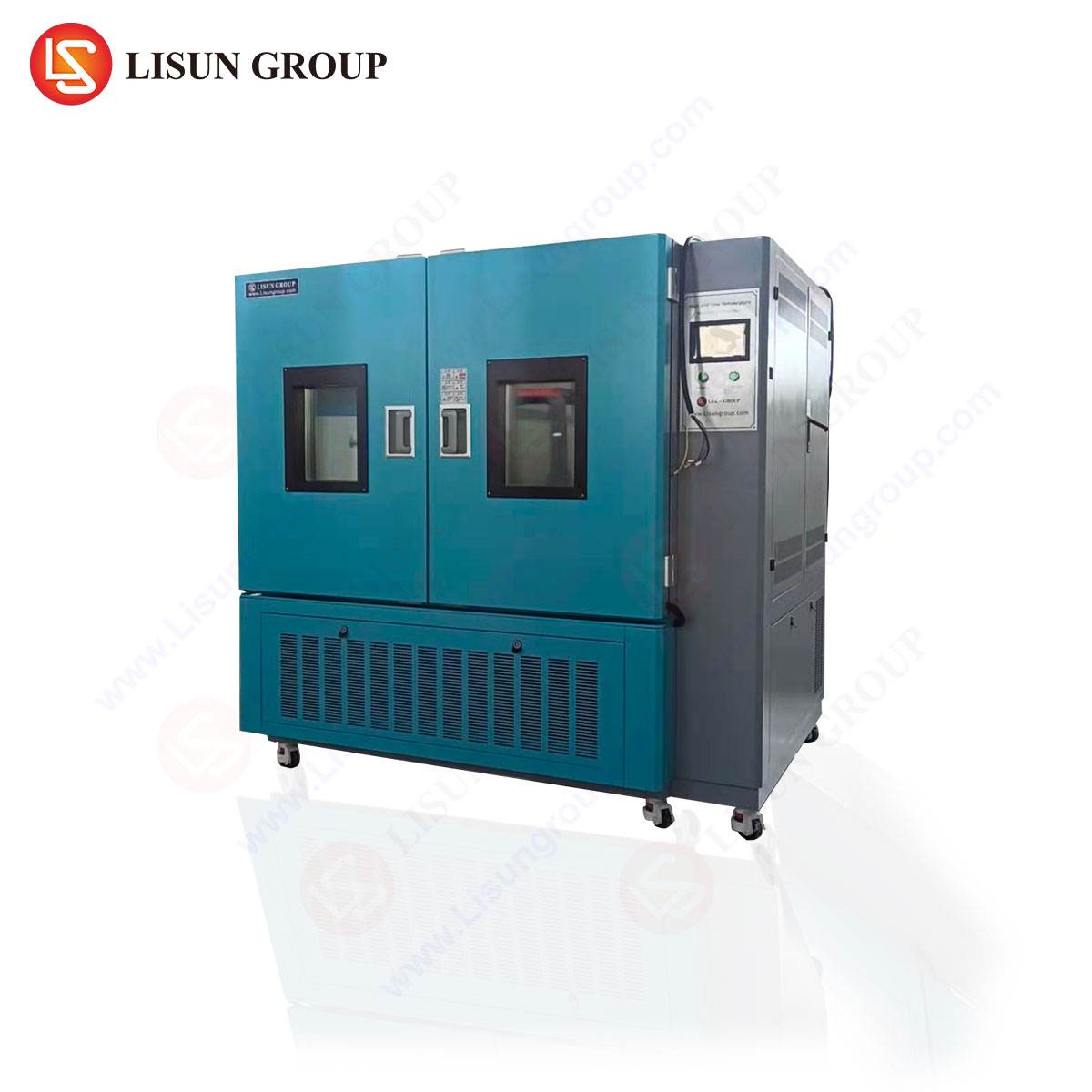
The transition to solid-state lighting (SSL) has placed unprecedented demands on reliability engineering. Unlike traditional light sources, LEDs experience a non-linear lumen depreciation influenced heavily by junction temperature and ambient humidity. A High Low Temperature Humidity Test Chamber for IEC 60068 Compliance Testing is therefore not merely a container but a critical tool for characterizing degradation kinetics. These chambers simulate extreme diurnal cycles and humid environments that accelerate failure mechanisms such as phosphor degradation, solder joint fatigue, and encapsulant yellowing. By replicating real-world conditions in a controlled setting, engineers can predict whether a luminaire will maintain its photometric performance over a 50,000-hour design life.
1.2 Interpreting the Dual Role of Thermal and Humidity Stress
The primary function of a temperature and humidity chamber is to impose controlled environmental stress while the Device Under Test (DUT) is electrically active. This combination is crucial because elevated temperature accelerates chemical reactions, while humidity introduces corrosion and leakage current risks. The IEC 60068-2-78 standard specifically dictates damp heat test procedures, which are essential for assessing the ingress protection of LED housings. Furthermore, thermal shock transitions, as per IEC 60068-2-14, are used to test the mechanical integrity of solder points and substrate adhesion. The ability to program rapid temperature changes (e.g., 15°C/min) within a 1000L workspace is a defining characteristic of advanced systems.
2.1 IES LM-80 and TM-21: The Pillars of LED Lifetime Prediction
The IES LM-80 standard is the benchmark for measuring lumen maintenance of LED packages, arrays, and modules. It mandates testing at specific case temperatures (typically 55°C, 85°C, and a third test point) for a minimum of 6,000 hours. The High Low Temperature Humidity Test Chamber provides the stable thermal environment necessary for this duration. Once test data is collected, the TM-21 standard provides the mathematical protocol for extrapolating data to calculate L70 (time to 70% lumen output) and L50 metrics. For example, a 6,000-hour test at 85°C can statistically project a lumen maintenance of 90% at 36,000 hours, provided the chamber maintains a tolerance of ±1°C.
2.2 IES LM-84 and TM-28: Testing the Complete Luminaire
While LM-80 focuses on components, IES LM-84 evaluates the entire LED luminaire. This standard is crucial for end-product certification and requires real-time measurement of photometric performance under thermal stress. A dedicated system like the LISUN LEDLM-84PL integrates the chamber with an AC power source and data acquisition unit. The resultant data is then processed for TM-28 extrapolation. The key difference is that LM-84 allows for operational stresses like driver ripple current and ambient temperature interaction, which a standalone component test cannot capture. This holistic view is essential for compliance with energy star and designlights consortium requirements.
2.3 The Role of IEC 60068 in Electronic Subsystem Validation
The IEC 60068 family of standards provides the test methods for environmental robustness of electronic equipment. For LED drivers and control gear, tests such as IEC 60068-2-1 (Cold), IEC 60068-2-2 (Dry Heat), and IEC 60068-2-30 (Damp Heat, Cyclic) are mandatory. These tests verify that the power supply remains operational after exposure to -40°C and that it can start reliably at high humidity (95% RH). The chamber must be capable of rapid dew point formation and precise humidity control (±3% RH) to satisfy these stringent requirements.
3.1 Dual-Mode System Configuration: LEDLM-80PL and LEDLM-84PL
LISUN’s approach to compliance testing involves a “2-in-1” system architecture. The LEDLM-80PL is configured for component-level testing, supporting up to 3 connected temperature chambers for simultaneous testing of different current groups or temperature points. In contrast, the LEDLM-84PL is designed for luminaire testing, incorporating an integrating sphere for real-time flux measurement. This modularity allows a single facility to perform both TM-21 and TM-28 extrapolations without purchasing separate hardware.
Table 1: Technical Comparison of LISUN System Variants
| Feature | LEDLM-80PL (Component) | LEDLM-84PL (Luminaire) |
|---|---|---|
| Primary Standard | IES LM-80, TM-21 | IES LM-84, TM-28 |
| Test Object | LED Packages, Modules, Arrays | Complete Luminaires |
| Photometric Method | External Measurement (Pre/Post) | Real-time Integrating Sphere |
| Max. Chamber Support | 3 Units | 1-2 Units (High Power) |
| Typical Current Range | Up to 2A per channel | Up to 10A per channel |
| Key Metric | L70/L50 at 6,000h | L70 at 6,000h (Operational) |
3.2 Critical Sensors and Control Logic
To maintain the precision required for validity, the chamber employs a “T” type thermocouple and a platinum resistance temperature detector (RTD) for redundancy. The humidity sensor is a capacitive polymer type, known for long-term stability. The control logic utilizes a PID algorithm with auto-tuning, capable of maintaining temperature stability of ±0.5°C across a -40°C to +150°C range. For the High Low Temperature Humidity Test Chamber, the cooling system relies on a cascade refrigeration cycle using R404A and R23 refrigerants, enabling reliable pull-down rates necessary for thermal shock profiling.
4.1 Arrhenius Model Implementation
The Arrhenius Model is the mathematical backbone of accelerated aging analysis. The LISUN software calculates the activation energy (Ea) of the LED package based on the slope of the lumen depreciation curve at different temperatures. A typical Ea value for phosphor-converted white LEDs ranges from 0.3 to 0.5 eV. The software uses this data to shift the degradation curve from the test temperature (e.g., 85°C) to the operating temperature (e.g., 55°C). This allows engineers to estimate that 1,000 hours at 105°C might be equivalent to 10,000 hours at 55°C, providing a rapid feedback loop for material selection.
4.2 Data Acquisition and Extrapolation Accuracy
The data acquisition unit (DAQ) in these chambers scans multiple channels (voltage, current, temperature) simultaneously. The software records these data points at intervals no greater than one hour for static tests and every minute for cycling tests. The TM-21 extrapolation algorithm uses a non-linear regression of the data to fit a second-order polynomial. The system calculates the “L70” specifically by identifying the time at which the relative luminous flux drops to 0.70. The software provides a confidence interval (typically 90%) for this prediction, which is critical for warranty risk assessment.
5.1 Static Aging vs. Temperature Cycling Profiles
The chamber supports two primary testing modes. Static aging maintains a constant temperature (e.g., 85°C) for the entire 6,000-hour duration. This is standard for LM-80 compliance. Temperature cycling, conversely, ramps between temperature extremes. This mode is critical for assessing Coefficient of Thermal Expansion (CTE) mismatch between the LED die and the ceramic substrate. A typical profile cycles from -10°C to +100°C with a dwell time of 30 minutes at each peak. This test is not just about failure; it identifies latent defects like wire bond lift-off.
5.2 Customizable Hardware for Specific Standards
Beyond standard LM-80, customers often request customization to match specific automotive or aerospace tests. This includes adding a UV filter port for measuring phosphor degradation under UV exposure or integrating a 4-wire Kelvin sense for accurate junction temperature (Tj) measurement. The ability to support up to 3 connected chambers allows for parallel testing of different color temperatures (2700K vs. 5000K) or binning groups simultaneously. This parallelism is a significant operational advantage, reducing time-to-market for new product development cycles.
6.1 Temperature Uniformity and Stability Metrics
A critical specification for any High Low Temperature Humidity Test Chamber is its spatial uniformity. According to IEC 60068-3-5, the temperature deviation across the working volume should be less than ±2.0°C, with a time stability of ±1.0°C. High-performance chambers achieve a uniformity of ±1.5°C and a stability of ±0.5°C. Humidity uniformity is tighter, typically ±3% RH. These tolerances ensure that every DUT in a batch receives an identical stress profile, making the statistical analysis of failure rates (Weibull distribution) valid.
6.2 Calibration Traceability and Reporting
Calibration is traceable to national standards (e.g., NIST). The calibration routine involves placing 9 to 15 sensors throughout the workspace to map thermal gradients. The software auto-generates a compliance report that includes:
- Test duration (e.g., 6,000 hours)
- Chamber setpoint and measured range
- Photometric data (Lm flux vs. time)
- Extrapolated L70/L50 values
- TM-21 projection curve
This report is acceptable for submission to CSA, UL, or TUV for certification.
7.1 Electrical Load Management
The chamber must handle the heat load from the DUT. For high-power luminaires, the internal heat sink can raise the chamber’s internal temperature, causing the controller to oscillate. The LISUN system compensates for this by using a high-velocity air circulation system and a large heat exchanger. The maximum continuous heat dissipation capacity of a standard 1,000L chamber is roughly 3-5 kW. Exceeding this can cause the compressor to cycle excessively, leading to premature wear.
7.2 Safety and Alarm Systems
Safety is paramount in environmental testing. The chamber must include:
- Over-temperature protection: Independent thermostats that cut off power if the setpoint is exceeded by 10°C.
- Refrigerant high-pressure protection.
- Over-current protection for the DUT.
- Low water level alarm (for humidity system).
These features prevent catastrophic failure and protect expensive prototypes.
The integration of a High Low Temperature Humidity Test Chamber for IEC 60068 Compliance Testing into an LED R&D workflow is a strategic investment in quality and market acceptance. By adhering to strict thermal uniformity standards and utilizing software driven by the Arrhenius Model, engineers can derive statistically sound predictions for L70 and L50 metrics. LISUN’s dual-system approach (LEDLM-80PL and LEDLM-84PL) provides the necessary flexibility to test both components and luminaires, ensuring compliance with IES LM-80, TM-21, and LM-84. The ability to run 6,000-hour static cycles or complex thermal shock profiles makes this chamber indispensable for identifying failure modes early in the product lifecycle. Ultimately, this equipment transforms raw environmental stress data into actionable reliability intelligence, directly supporting the goals of LED manufacturing engineers and third-party testing labs.
Q1: What is the minimum test duration required for a valid TM-21 extrapolation?
A: The IES TM-21 standard specifies that the test data used for extrapolation must be at least 6,000 hours in length. However, for a more robust projection, a testing period of 10,000 hours is recommended. The software uses a non-linear least squares regression analysis to model the data. The confidence interval of the prediction improves significantly with longer test durations. While a 6,000-hour test is the industry minimum for a reportable L70 value at 85°C, the actual chamber and software can support longer durations without interruption. It is critical that the High Low Temperature Humidity Test Chamber maintain its temperature setpoint within ±1°C for this entire period to ensure the data’s validity for extrapolation.
Q2: How does the chamber handle the internal heat generated by the LED test samples?
A: This is a common concern, as high-power LEDs generate significant heat. The chamber is equipped with a powerful forced-air convection system and a large evaporator coil. The PID controller dynamically adjusts the cooling power to compensate for the heat load from the DUT (Device Under Test). For the LISUN system, the maximum internal heat dissipation capacity is typically rated in the product datasheet (e.g., 5 kW). If the combined wattage of your test samples exceeds this capacity, the chamber may struggle to reach and maintain low temperatures. You must pre-calculate the thermal load and possibly reduce the number of samples or use a chamber with a larger cooling capacity.
Q3: Can the LEDLM-80PL system run tests for both IES LM-80 and IEC 60068 standards simultaneously?
A: No, these two standards have fundamentally different test objectives. IES LM-80 requires a steady-state temperature for lumen maintenance analysis, whereas IEC 60068 tests often require dynamic temperature and humidity cycling (e.g., damp heat, thermal shock). A single chamber can be used for both types of tests, but not simultaneously. You would configure the chamber for a static 6,000-hour test for LM-80. Once complete, you can reprogram the chamber controller with a cycling profile for an IEC 60068 test on a different batch of samples. The hardware is capable of supporting both, but the software log must be configured to match the specific standard being validated.