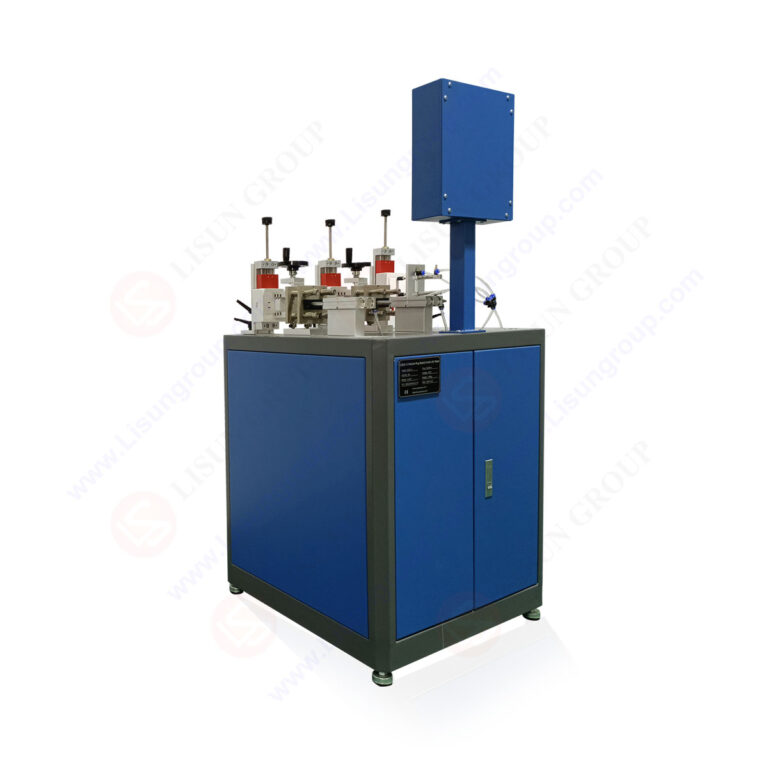
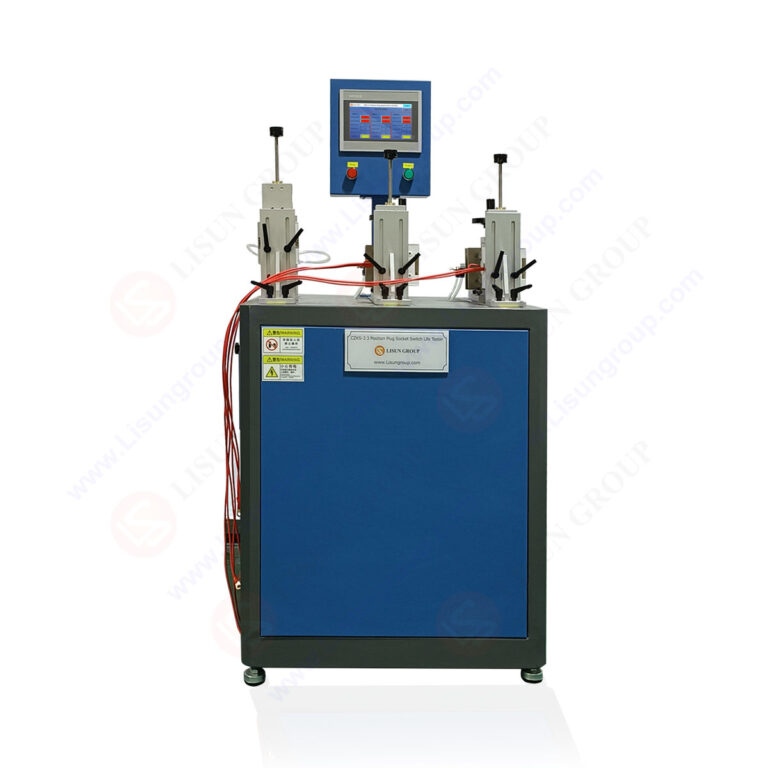
This article provides a comprehensive technical analysis of IEC 60669-1 Clause 19, which governs the mechanical endurance test standards for switches used in household and similar fixed electrical installations. The mechanical endurance standard test is critical for verifying the operational lifespan and reliability of switches under repeated actuation cycles. This article examines how the LISUN CZKS-3 series, including the CZKS-3P, CZKS-3S, and CZKS-3A variants, addresses the stringent requirements of this clause through automated test solutions. The discussion covers test parameter definitions, actuation mechanisms, failure mode analysis, and compliance verification methodologies. By referencing IEC 60669-1, IEC 60884-1, and related standards, this article serves as a practical guide for electrical component manufacturers, testing laboratories, and quality control engineers seeking to implement robust mechanical endurance verification protocols.
1.1 Scope and Purpose of Mechanical Endurance Testing
IEC 60669-1 Clause 19 defines the mechanical endurance test requirements for switches intended for household and fixed electrical installations. The primary objective is to verify that switches can withstand repeated mechanical operations without experiencing failure modes such as contact welding, excessive wear, or loss of electrical continuity. The standard specifies that switches must undergo a defined number of actuation cycles—typically 10,000 cycles for manual switches and 20,000 cycles for electronic switches—under specified load conditions. Each cycle consists of one opening and one closing operation, executed at a rate that does not cause excessive temperature rise or mechanical fatigue. The test apparatus must replicate real-world operational forces and travel distances to ensure representative results. Compliance with Clause 19 directly impacts product certification and market access for switch manufacturers worldwide.
1.2 Key Test Parameters and Actuation Specifications
The mechanical endurance test under IEC 60669-1 Clause 19 requires precise control of several parameters including actuation force, travel distance, operating speed, and electrical load during switching. For rocker-type switches, the standard mandates a minimum actuation force of 5 N with a maximum travel distance of 10 mm, while push-button switches require forces between 2 N and 15 N depending on the design. The operating frequency must not exceed 30 cycles per minute to allow sufficient time for mechanical settling between operations. The test equipment must also accommodate variations in switch geometry, mounting configurations, and terminal connections. The LISUN CZKS-3 series has been designed to meet these precise requirements, offering programmable force profiles and adjustable actuation parameters that align with the standard’s specifications.
1.3 Failure Criteria and Pass/Fail Determination
IEC 60669-1 Clause 19 defines specific failure criteria that must be monitored throughout the mechanical endurance test. These include interruption of electrical current during the closed state, persistent arcing exceeding 5 milliseconds, mechanical jamming preventing full actuation, and visible damage to switch components that affects safety or function. The standard requires continuous monitoring of contact resistance, which must not exceed 100 milliohms for the duration of the test. Additionally, dielectric strength tests must be performed before and after the endurance sequence, with minimum withstand voltages of 2000 V for basic insulation and 4000 V for reinforced insulation. Any deviation from these criteria constitutes a test failure, requiring design modification and retesting before certification can be granted.
2.1 System Design and Core Components
The LISUN CZKS-3 series comprises automated mechanical endurance test systems specifically engineered for IEC 60669-1 Clause 19 compliance testing. The base model CZKS-3 incorporates a PLC-controlled actuation mechanism driven by precision pneumatic cylinders, enabling repeatable force application within ±1% tolerance. The system features modular test stations that can accommodate up to eight switches simultaneously, significantly reducing test cycle times for high-volume verification programs. Each station includes independent load circuits capable of switching currents from 0.1 A to 20 A at voltages up to 250 V AC or 30 V DC. The CZKS-3P variant adds enhanced force sensing capabilities with a load cell integrated into each actuator, providing real-time force feedback for closed-loop control. This design ensures that actuation parameters remain within the tight tolerances required by the mechanical endurance standard.
2.2 Variant Differentiation and Application Fit
| Parameter | CZKS-3 | CZKS-3P | CZKS-3S | CZKS-3A |
|---|---|---|---|---|
| Maximum Test Stations | 8 | 8 | 16 | 4 |
| Force Range (N) | 2–50 | 1–50 | 2–50 | 5–100 |
| Force Accuracy | ±2% | ±1% | ±2% | ±1.5% |
| Maximum Cycle Rate (cycles/min) | 30 | 30 | 20 | 25 |
| Load Current Range (A) | 0.1–20 | 0.1–20 | 0.1–32 | 0.1–50 |
| Integrated Force Feedback | No | Yes | No | Yes |
| High-Switch Capacity | No | No | Yes | No |
| High-Force Actuation | No | No | No | Yes |
The CZKS-3S variant is optimized for high-volume switch testing with 16 independent stations, making it ideal for production line quality assurance where simultaneous testing of multiple samples is required. Conversely, the CZKS-3A variant focuses on high-force applications, supporting actuation forces up to 100 N for testing industrial-grade switches or components with heavy-duty construction. Both the CZKS-3P and CZKS-3A incorporate integrated force feedback systems that automatically adjust actuation parameters to maintain compliance with IEC 60669-1 Clause 19 tolerances, even when switch mechanisms exhibit wear over the test duration. This adaptive capability ensures that test results accurately reflect switch endurance without being confounded by test equipment drift.
3.1 Sample Preparation and Mounting Configuration
Before initiating mechanical endurance testing per IEC 60669-1 Clause 19, switches must be mounted on rigid fixtures that replicate their intended installation environment. The LISUN CZKS-3 series includes adjustable mounting plates compatible with standard switch patterns, including single-gang, double-gang, and European DIN rail configurations. Each mounting fixture incorporates torque-controlled terminal connections to ensure consistent electrical contact resistance across all test samples. The standard requires that switches be tested in their as-received condition without pre-conditioning or lubrication. For switches designed with removable actuators, the actuator must be included in the test assembly to ensure that all mechanical interfaces are subjected to wear. The CZKS-3 series software guides operators through the setup process, automatically verifying mounting alignment and connection integrity before test initiation.
3.2 Cycle Execution and Parameter Monitoring
During test execution, the mechanical endurance standard requires continuous monitoring of actuation parameters and electrical performance. The CZKS-3 series implements a real-time data acquisition system that records force-displacement curves, contact resistance, and switching transient characteristics for every cycle. For each test station, the system logs the number of completed cycles, cumulative contact wear, and any deviation from the defined pass/fail criteria. The test sequence can be configured to pause automatically if a failure condition is detected, allowing operators to inspect the switch and document the failure mode. The system supports both constant-load and cyclic-load profiles, where the electrical load is applied only during specific portions of the actuation cycle as defined by the mechanical endurance standard. This flexibility enables testing under conditions that simulate worst-case operational scenarios.
3.3 Data Analysis and Reporting
Upon completion of the mechanical endurance test, the CZKS-3 series generates comprehensive test reports formatted for direct submission to certification bodies. The reports include statistical summaries of actuation force variation, contact resistance trends, and failure distribution across test samples. IEC 60669-1 Clause 19 requires that test reports document the number of cycles completed, any anomalies observed, and the final electrical safety test results. The system’s software automatically calculates pass/fail status based on pre-defined thresholds and highlights any parameters that approached or exceeded the mechanical endurance standard limits. Additionally, the system stores raw cycle-by-cycle data for forensic analysis, enabling engineers to correlate specific failure modes with measured changes in actuation force or contact resistance over the test duration.
4.1 Integration with IEC 60884-1 Requirements
While IEC 60669-1 Clause 19 focuses specifically on switch mechanical endurance, the LISUN CZKS-3 series also supports testing per IEC 60884-1 for plugs and socket-outlets. This standard includes similar mechanical endurance requirements but with different force and cycle specifications. IEC 60884-1 Clause 20 mandates 5,000 cycles for socket-outlets with a minimum insertion force of 30 N and extraction force of 15 N. The CZKS-3 series software includes pre-configured test profiles for both standards, allowing laboratories to perform IEC 60669-1 switch testing and IEC 60884-1 socket testing on the same platform. This dual-standard capability reduces equipment duplication and streamlines laboratory operations. The system’s force feedback mechanism can be calibrated to meet the tighter tolerances required by IEC 60884-1, which specifies ±10% accuracy for force measurements.
4.2 Alignment with IEC 61058-1 for Appliance Switches
IEC 61058-1 defines the general requirements for switches used in electrical appliances, which share many test methodologies with IEC 60669-1 but include additional parameters such as low-current and logic-level switching endurance. The CZKS-3A variant, with its extended force range and high-current capability up to 50 A, is particularly well-suited for testing appliance switches that require verification at both rated load and overload conditions. The mechanical endurance standard for appliance switches typically requires 10,000 to 100,000 cycles depending on the switch category. The CZKS-3 series software allows users to define custom test profiles that incorporate multiple load levels and actuation sequences, ensuring comprehensive compliance with both IEC 60669-1 and IEC 61058-1 requirements. This flexibility is essential for manufacturers producing switches destined for multiple market segments.
4.3 Compliance with GB/T 2099.1 for Chinese Market
For manufacturers targeting the Chinese market, compliance with GB/T 2099.1 is mandatory, and this standard incorporates mechanical endurance requirements closely aligned with IEC 60669-1 Clause 19. The CZKS-3 series includes test profiles specifically configured for GB/T 2099.1 compliance, including the required 10,000 cycles for household switches and 5,000 cycles for socket-outlets. The system supports the Chinese standard’s requirements for ambient temperature conditioning between 15°C and 35°C and relative humidity below 85%. The CZKS-3 series test chambers can be integrated with environmental conditioning systems to maintain these parameters throughout extended test runs. This integration capability ensures that testing laboratories can offer one-stop compliance verification for both IEC and GB/T standards using a single automated platform.
5.1 Household Switch Durability Verification
The most common application of the CZKS-3 series is the verification of household switch durability according to IEC 60669-1 Clause 19. Manufacturers of wall switches, dimmers, and electronic touch switches rely on these tests to validate product lifespan before market release. A typical test campaign involves 10,000 cycles at rated load for manual switches, with intermediate inspections at 2,500, 5,000, and 7,500 cycles to document wear progression. The CZKS-3 system’s ability to test eight samples simultaneously allows manufacturers to complete a full certification test in under 180 hours, compared to over 300 hours for manual testing. The system’s data logging capabilities provide objective evidence of consistent actuation performance throughout the test, supporting claims of product reliability in marketing materials and technical documentation.
5.2 Automotive Electronics Component Testing
Automotive switches and connectors demand higher reliability thresholds due to the harsh operating environments encountered in vehicles. The CZKS-3A variant, with its high-force actuation capability up to 100 N, is suitable for testing heavy-duty automotive switches used in power window controls, seat adjustment systems, and ignition circuits. While automotive standards such as ISO 21782 incorporate mechanical endurance requirements, many manufacturers reference IEC 60669-1 Clause 19 as a baseline test protocol, supplementing it with additional vibration and thermal cycling requirements. The CZKS-3 series can be configured to perform sequence testing that combines mechanical endurance with electrical load cycling, simulating real-world usage patterns where switches are operated under varying electrical loads. This capability is particularly valuable for validating the longevity of switches used in electric vehicle charging systems, where repeated high-current switching can accelerate contact wear.
6.1 Common Failure Mechanisms in Switch Endurance Testing
The mechanical endurance standard requires identification and documentation of specific failure modes that can occur during lifecycle testing. The most prevalent mechanism is contact erosion caused by arcing during the break operation, which progressively reduces contact surface area and increases resistance. The CZKS-3 series monitors contact resistance in real time, detecting increases beyond the 100 milliohm threshold before complete failure occurs. Another common failure is mechanical binding of the actuator mechanism, often caused by wear particles accumulating in the switch housing. The system’s force-displacement analysis can identify binding events by detecting force spikes that exceed the normal actuation profile by more than 20%. Contact adhesion, where contacts remain stuck in the closed position after actuation, is detected through continuity monitoring that verifies successful opening within the specified timing window.
6.2 Predictive Diagnostics Using Trend Analysis
The CZKS-3 series software includes advanced trend analysis algorithms that forecast impending failures based on measured parameter drift. By analyzing the rate of change in actuation force, contact resistance, and switching time over the initial cycles, the system can predict whether a switch will successfully complete the full endurance test. This predictive capability enables manufacturers to identify design weaknesses during the prototyping phase without waiting for test completion. For example, if contact resistance increases at a rate of 0.5 milliohms per 100 cycles, the system can estimate that the switch will exceed the 100 milliohm limit at approximately 20,000 cycles—well beyond the 10,000-cycle requirement for most applications. This analysis is particularly valuable for validating design modifications aimed at improving mechanical endurance, as it provides early feedback on the effectiveness of material selection or geometry changes.
7.1 Force and Displacement Calibration Procedures
Accurate mechanical endurance testing requires regular calibration of the force and displacement measurement systems to maintain traceability to international standards. The CZKS-3 series includes built-in calibration fixtures that allow operators to verify force sensors using certified dead weights traceable to national metrology institutes. The standard requires that force measurements be accurate to within ±2% of the applied value, with displacement measurements accurate to within ±0.2 mm. The system’s software prompts users to perform calibration verification at intervals defined by the user’s quality management system, typically every 30 days for high-volume testing environments. Calibration results are logged automatically, creating an auditable chain of evidence for certification bodies reviewing test data. The CZKS-3P and CZKS-3A variants with integrated force feedback systems require more frequent calibration due to the continuous closed-loop control, but the software automates this process to minimize operator burden.
7.2 Preventive Maintenance Schedule and Procedures
To ensure consistent test results in compliance with IEC 60669-1 Clause 19, the CZKS-3 series requires preventive maintenance at defined intervals. Pneumatic cylinders should be inspected for seal wear every 500,000 cycles, with replacement recommended at 1,000,000 cycles to maintain force accuracy. Electrical load relays must be replaced every 250,000 cycles to prevent contact degradation that could affect test measurements. The system’s software tracks component usage and generates automated maintenance reminders, ensuring that operators do not overlook critical replacement intervals. Additionally, the load circuits should be verified for voltage drop and current accuracy monthly, using calibrated reference meters. The CZKS-3 series modular design simplifies maintenance by allowing individual test stations to be serviced without affecting the operational status of other stations, maximizing overall system availability for testing laboratories.
The mechanical endurance test standard defined by IEC 60669-1 Clause 19 establishes rigorous requirements for verifying the reliability and safety of switches used in household and fixed electrical installations. The LISUN CZKS-3 series, encompassing the CZKS-3, CZKS-3P, CZKS-3S, and CZKS-3A variants, provides a comprehensive automated solution for achieving compliance with this critical standard. By integrating PLC-controlled actuation, real-time parameter monitoring, and predictive diagnostics, these systems enable manufacturers and testing laboratories to conduct mechanical endurance testing with accuracy, repeatability, and efficiency. The ability to support multiple international standards including IEC 60884-1, IEC 61058-1, and GB/T 2099.1 further enhances the value proposition of the CZKS-3 series for organizations serving diverse global markets. As electrical component safety requirements continue to evolve, investment in automated test infrastructure that delivers precise, auditable, and standard-compliant results becomes increasingly essential for maintaining competitive advantage and regulatory compliance.
Q1: What is the minimum number of cycles required by IEC 60669-1 Clause 19 for manual switches?
A: IEC 60669-1 Clause 19 specifies a minimum of 10,000 operating cycles for manual switches intended for household and fixed electrical installations. Each cycle consists of one complete opening and closing operation under rated electrical load conditions. Electronic switches, such as touch-sensitive or remote-controlled types, require 20,000 cycles due to their higher expected reliability in applications like smart home systems. The LISUN CZKS-3 series can be programmed for any cycle count up to 999,999, allowing laboratories to perform both minimum-requirement tests and extended reliability validation for premium product lines. The system automatically counts cycles and pauses testing at predefined intervals for intermediate inspections as required by the mechanical endurance standard.
Q2: How does the CZKS-3 series handle switches with non-standard actuation geometries?
A: The CZKS-3 series features adjustable mounting fixtures and customizable actuator heads that accommodate a wide range of switch geometries including rocker, push-button, toggle, and rotary designs. The system’s PLC control allows operators to program the actuation stroke, force profile, and operating speed to match the specific switch mechanism under test. For switches with asymmetrical actuators or non-linear force-displacement characteristics, the force feedback variants CZKS-3P and CZKS-3A can adapt the actuation profile in real time to ensure consistent contact between the actuator and the switch mechanism throughout the test. This flexibility ensures that the mechanical endurance standard requirements are met regardless of switch design, while maintaining the repeatability needed for comparative testing across different product variants.
Q3: What is the typical throughput time for testing eight switches simultaneously on the CZKS-3 system?
A: For the standard 10,000-cycle mechanical endurance test per IEC 60669-1 Clause 19 at the maximum rate of 30 cycles per minute, the CZKS-3 system completes the test for eight switches in approximately 5.6 hours of continuous operation. However, the standard requires intermediate inspections at specified intervals, which extend the total test duration to approximately 24 hours including setup, inspections, and documentation. The CZKS-3S variant with 16 independent stations can test 16 switches in the same time frame, doubling the testing throughput for high-volume verification programs. The system’s automated data logging and report generation reduce post-test analysis time by up to 80% compared to manual testing methods.
Q4: Can the CZKS-3 series be used for testing switches rated for DC applications?
A: Yes, the CZKS-3 series supports both AC and DC load testing as required by IEC 60669-1 Clause 19, which applies to switches rated for alternating current up to 440 V and direct current up to 250 V. The system’s load circuits include polarity-reversal capability for DC testing, ensuring that arcing and material transfer effects are evaluated under both polarities as specified by the standard. For DC applications, the load circuits can switch currents up to 20 A for the standard CZKS-3 model and up to 50 A for the CZKS-3A variant. The system automatically adjusts load parameters based on the selected standard profile, ensuring that test conditions match the requirements for both AC and DC switch certification.
Q5: What maintenance is required to keep the CZKS-3 system calibrated for IEC 60669-1 compliance?
A: The mechanical endurance standard requires that test equipment calibration be verified at intervals not exceeding 12 months, though the CZKS-3 series software recommends monthly force sensor verification using the included dead weight calibration fixture. Pneumatic cylinder seals should be inspected every 500,000 cycles and replaced at 1,000,000 cycles to maintain force accuracy within the ±2% tolerance. The system’s built-in calibration procedure is fully automated, completing in under 15 minutes for all test stations. Calibration certificates can be generated directly from the software for inclusion in test reports submitted to certification bodies. The CZKS-3P and CZKS-3A models include self-diagnostics that alert operators when calibration drift exceeds 0.5% of the setpoint, enabling proactive correction before out-of-tolerance conditions develop.