









The LISUN RFCI61000-6 series RF Conducted Immunity Test System is a comprehensive solution designed for conducting electromagnetic compatibility (EMC) immunity testing against RF conducted disturbances as specified in international standards. This integrated platform combines a signal source, power amplifier, and power meter within a single enclosure, delivering precise RF interference injection for compliance validation across multiple industry sectors. The system supports multi-mode injection methods including direct coupling, coupling-decoupling networks (CDN), and electromagnetic clamp injection, accommodating frequencies from 150 kHz to 230 MHz. Available in 35W and 85W power variants, the RFCI61000-6 series addresses the testing requirements for LED lighting, medical electronics, power equipment, industrial controllers, and new energy charging infrastructure. This article provides a detailed technical examination of the system architecture, performance specifications, compliance pathways, and application-specific testing methodologies.
1.1 Integrated Signal Source and Power Amplifier Module
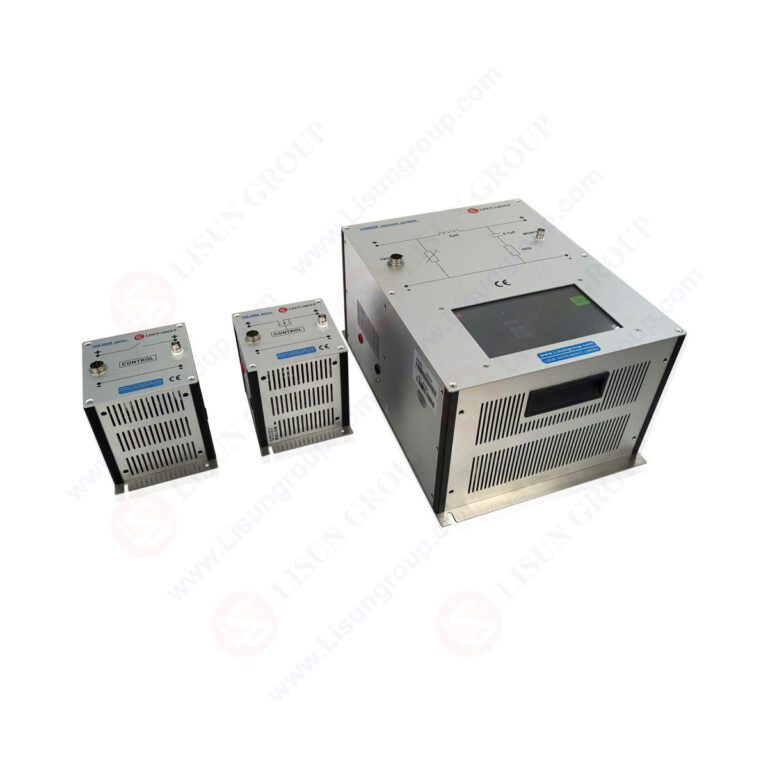
The RFCI61000-6 series incorporates a fully integrated RF signal generator and broadband power amplifier module, eliminating the need for external instrument stacking. The internal signal source generates continuous wave (CW) signals across the full 150 kHz to 230 MHz frequency range with a frequency resolution of 1 Hz. The power amplifier section delivers linear amplification with low harmonic distortion, ensuring that the injected disturbance accurately represents the test signal without unwanted spectral components. The combined module architecture reduces system complexity, minimizes cable losses, and improves measurement repeatability compared to discrete instrument configurations. The total harmonic distortion (THD) for the amplifier output remains below -20 dBc across the operating bandwidth, meeting the stringent signal purity requirements of IEC 61000-4-6 clause 6.2.
1.2 Built-in Power Meter and Feedback Control
An internal power meter module provides real-time monitoring of forward and reflected power at the output port. This measurement capability enables closed-loop power leveling, maintaining the required test voltage across the EUT input impedance variations. The power meter measures with an accuracy of ±1 dB across the full frequency range, supporting precise calibration of injection levels before testing commences. The system automatically adjusts the amplifier gain to compensate for variations in load impedance and cable attenuation, ensuring consistent disturbance injection regardless of the connected CDN or injection device. The reflected power measurement also provides a continuous indication of the Voltage Standing Wave Ratio (VSWR) at the system output, alerting operators to impedance mismatches that could compromise test validity.
1.3 Touchscreen Control Interface and Automation
A 10-inch capacitive touchscreen display provides the primary operator interface for test configuration and execution. The graphical user interface allows users to define frequency sweeps, modulation parameters, and test level profiles without external computer connections. Standard test routines can be programmed and stored as preset configurations, enabling rapid switching between different product testing scenarios. The interface supports real-time graphical display of forward power, reflected power, and modulation envelope, giving operators immediate visual feedback during testing. An Ethernet port provides remote control capability via standard SCPI commands, facilitating integration into automated test sequences managed by external software platforms.
2.1 RFCI61000-6-35W and RFCI61000-6-85W Technical Parameters
The RFCI61000-6 series offers two power configurations to match different immunity testing requirements. The -35W model delivers 35 watts of output power suitable for most standard compliance testing, while the -85W model provides higher power capability for testing EUTs requiring elevated disturbance levels or those with significant input impedance mismatches. Both models maintain the same frequency range, modulation capabilities, and measurement accuracy. The higher power variant is particularly beneficial when testing large EUTs with multiple cable interfaces or when using injection methods that introduce higher insertion losses.
| Parameter | RFCI61000-6-35W | RFCI61000-6-85W | IEC 61000-4-6 Requirement |
|---|---|---|---|
| Frequency Range | 150 kHz – 230 MHz | 150 kHz – 230 MHz | 150 kHz – 80 MHz (extended optional) |
| Maximum Output Power | 35 W | 85 W | ≥ 5 W (minimum for CDN injection) |
| Output Voltage (open circuit) | 30 Vrms (80 MHz) | 45 Vrms (80 MHz) | 10 Vrms (level 3) to 30 Vrms (level X) |
| Amplitude Modulation | 1 kHz, 80% depth | 1 kHz, 80% depth | 1 kHz sine wave, 80% AM (clause 6.3) |
| Pulse Modulation | 1 Hz, 50% duty cycle | 1 Hz, 50% duty cycle | Optional per product standard |
| VSWR Tolerance | < 2.5:1 | < 2.5:1 | Typically < 3:1 for stable operation |
| Output Impedance | 50 Ω | 50 Ω | 50 Ω nominal |
2.2 Modulation Capabilities and Frequency Accuracy
Both models support continuous wave (CW) and 1 kHz amplitude modulation (AM) at 80% modulation depth as required by IEC 61000-4-6 clause 6.3 for conducted immunity testing. The AM modulation frequency is generated by an internal precision oscillator with less than 0.1% frequency deviation. For product standards requiring pulsed or burst modulation, the system provides pulse modulation at 1 Hz repetition rate with 50% duty cycle. The frequency accuracy of the internal signal source is maintained at ±10 ppm over the operating temperature range, ensuring precise alignment with required test frequencies. The system also supports frequency sweeping with adjustable step sizes from 1% to 10% of current frequency per IEC 61000-4-6 Annex B recommendations.
3.1 Direct Coupling and CDN Injection
The RFCI61000-6 series supports direct injection of RF disturbances through coupling-decoupling networks connected to individual cables of the EUT. CDNs provide impedance matching between the 50 Ω test system output and the specific cable impedance (typically 150 Ω for unshielded cables). The system is compatible with the full range of LISUN CDN models including CDN-M2 for mains power cables, CDN-AF2 for signal lines, and CDN-T2 for telecom ports. Each CDN incorporates integrated coupling capacitors and decoupling inductors to isolate the RF disturbance from the auxiliary equipment while injecting onto the EUT cable. The system automatically recognizes connected CDN types and adjusts power calibration factors accordingly, simplifying test setup changeover.
3.2 Electromagnetic Clamp Injection Method
For applications where direct connection to individual cables is impractical, the RFCI61000-6 series can drive electromagnetic (EM) clamps for capacitive coupling onto cable bundles. EM clamps accommodate multiple cables simultaneously, reducing test time for complex EUTs with numerous interconnections. The system’s output power level is sufficient to drive EM clamps with typical insertion losses of 15-25 dB while maintaining the required test voltage levels. This injection method is particularly advantageous for field testing or when testing fully assembled equipment where cable breakout is not feasible. The system includes predefined correction tables for common EM clamp models, automatically compensating for frequency-dependent transfer characteristics.
3.3 Current Injection Probe Method
Current injection probes provide an alternative coupling mechanism, particularly useful for testing cables where CDN insertion is not possible or where galvanic isolation must be maintained. The RFCI61000-6 series drives injection probes rated up to 230 MHz, supporting both single-cable and multi-cable injection configurations. The built-in power meter enables precise measurement of the injected current via external current monitors, allowing operators to correlate disturbance levels to the current injection limits specified in product family standards. The system supports the substitution method for calibration as described in IEC 61000-4-6 clause 7.2, where the injected current is measured with the EUT disconnected and the injection probe connected to a calibration fixture.
4.1 Voltage Level Setting and Flatness
The RFCI61000-6 series generates test levels from 1 Vrms to 30 Vrms (open circuit) for the -35W model and up to 45 Vrms for the -85W model, covering all defined severity levels in IEC 61000-4-6 (level 1 through level X). The output level flatness across the frequency range is maintained within ±1.5 dB after automatic calibration, meeting the ±2 dB requirement specified in IEC 61000-4-6 clause 6.2. Before testing, the system performs a self-calibration routine that measures the output power at the test port and stores correction factors for each frequency point. During testing, these correction factors are applied in real-time to ensure the actual injected voltage matches the programmed test level within the tolerance limits.
4.2 Calibration Fixture and Process
Calibration of the RF injection path requires a standard 50 Ω calibration fixture or a 150 Ω converter as specified in IEC 61000-4-6 clause 7.1. The RFCI61000-6 system guides operators through the calibration procedure, displaying the required connection diagram and acceptance criteria. For CDN injection, the calibration includes the specific CDN and any interconnecting cables, establishing the relationship between the system output power setting and the voltage appearing at the EUT port. The system stores up to 50 calibration profiles, allowing rapid switching between different test configurations without recalibration. The calibration data can be exported for documentation purposes, supporting compliance records required for ISO 17025 accredited testing.
5.1 LED Lighting and Luminaire Testing
For LED lighting products, the RFCI61000-6 series provides conducted immunity testing in accordance with EN 61547 and EN 55015 references. LED drivers with switched-mode power supplies are particularly susceptible to RF disturbances coupled through mains cables, which can cause flicker, dimming instability, or complete malfunction. Testing requires injection on the mains input cable via CDN-M2 at test levels of 3 Vrms (residential) or 10 Vrms (industrial). The system’s ability to hold the injected level stable regardless of the LED driver’s varying input impedance is critical for repeatable results. The pulse modulation function is useful for evaluating transient response of LED control systems.
5.2 Medical Device Compliance Testing
Medical electrical equipment per IEC 60601-1-2 requires conducted immunity testing at elevated levels for life-supporting devices. The RFCI61000-6-85W model provides the necessary power headroom for testing medical equipment with multiple patient cables and communication interfaces. Testing protocols require injection onto each cable type individually using the appropriate CDN: CDN-M2 for mains, CDN-AF2 for patient leads, and CDN-T2 for data ports. The system’s low VSWR characteristics ensure stable injection when driving the complex impedance networks typical of patient monitoring equipment. The graphical display aids operators in observing performance degradation during the frequency sweep, essential for identifying susceptible operating frequencies.
5.3 Industrial Control and Power Equipment
For programmable logic controllers (PLCs), variable frequency drives, and power distribution equipment, compliance with EN 61000-6-2 (industrial environment) requires testing at 10 Vrms across the full 150 kHz to 80 MHz range. The RFCI61000-6 series supports injection onto multiple cable ports simultaneously when used with multiple CDNs and power splitters. The system’s ability to store complex multi-step test sequences reduces operator workload when testing large control cabinets with dozens of cable interfaces. The built-in test logging function records all test parameters and results, providing the necessary documentation for certification bodies.
6.1 Electric Vehicle Charging Station Testing
Electric vehicle (EV) charging stations require conducted immunity testing per EN 61851 series and regional grid codes. The RFCI61000-6-85W model is particularly suited for charging station testing due to the high power delivery and multiple communication interfaces (control pilot, proximity detection, PLC communications). CDN-M2 models rated for high currents (up to 32A or 63A) are required for the mains power input, while CDN-AF2 models handle the control and communication lines. The system supports the extended frequency testing up to 230 MHz required by some charging station standards, covering potential interference from wireless power transfer systems.
6.2 Communication Infrastructure Testing
Telecommunications equipment, data centers, and networking hardware require conducted immunity testing per standards including ITU-T K.20 and ETSI EN 300 386. The RFCI61000-6 series supports injection onto twisted pair cables (CDN-T2), coaxial cables (CDN-S2), and fiber optic cable housing. For Power over Ethernet (PoE) equipment, special CDN models that can handle DC bias voltages up to 57V are compatible. The system’s Ethernet remote control interface enables integration with automated test sequences that cycle through different power and communication configurations during immunity testing, identifying performance anomalies under continuous RF stress.
7.1 Automated Test Logging and Data Export
The RFCI61000-6 series maintains a complete test log for each session, recording test level, frequency steps, modulation parameters, forward and reflected power, and any alarm conditions. The log data is exportable in CSV, XML, and PDF formats, facilitating integration with laboratory information management systems (LIMS). The system timestamps each frequency step and can record operator annotations for specific frequency points where EUT performance anomalies are observed. This comprehensive logging supports the test report structure required by accreditation bodies for demonstrating full traceability of test conditions.
7.2 Compliance Certificate Generation
For laboratories providing third-party testing services, the system can generate summary compliance certificates directly, indicating the tested frequency range, injection levels, modulation types, and pass/fail criteria. The certificate includes the system calibration date and operator identification, supporting the quality management system requirements of ISO 17025. The system automatically calculates the uncertainty budget based on the calibration data and instrument specifications, providing expanded measurement uncertainty values for each test level.
The LISUN RFCI61000-6 series RF Conducted Immunity Test System delivers a complete, integrated solution for EMC conducted immunity testing across the 150 kHz to 230 MHz frequency range. The combination of signal source, power amplifier, and power meter in a single chassis eliminates the complexity and variability of discrete system configurations. The availability of 35W and 85W power variants allows laboratories to match test system capability to their specific product testing requirements, from consumer electronics to high-power industrial equipment. The system’s compatibility with the full range of CDNs, EM clamps, and injection probes ensures flexibility for testing any cable interface type. With support for all major conducted immunity standards including IEC 61000-4-6, EN 61000-4-6, and GB/T 17626.6, the RFCI61000-6 series provides engineers and compliance professionals with the tools necessary to achieve reliable, repeatable, and certifiable immunity test results across LED lighting, medical devices, industrial controls, new energy, and communication applications.
Q1: What is the frequency range of the LISUN RFCI61000-6 series and how does it compare to the standard IEC 61000-4-6 requirements?
A: The RFCI61000-6 series covers a frequency range from 150 kHz to 230 MHz, which exceeds the 80 MHz upper limit specified in IEC 61000-4-6 clause 4.1 for the basic conducted immunity standard. The extended frequency coverage up to 230 MHz is critical for product family standards that require testing above 80 MHz, such as medical device standard IEC 60601-1-2 and some automotive or industrial standards. The lower frequency boundary at 150 kHz aligns precisely with the standard’s definition of conducted disturbances, covering the transition between inductive coupling and RF injection methods. For testing strictly per IEC 61000-4-6 base standard, the system is configured with a default frequency sweep from 150 kHz to 80 MHz, but the extended range is accessible for specific product requirements.
Q2: How does the RFCI61000-6 series maintain stable output power when connected to different CDN types?
A: The system employs a closed-loop power leveling mechanism that continuously monitors forward and reflected power at the output port using the internal power meter. When connected to a CDN, the system first performs a calibration routine where the power required to achieve the desired test voltage at the EUT port is established for each frequency point. During testing, the power amplifier adjusts its gain to maintain the calibrated output level, compensating for frequency-dependent variations in CDN insertion loss and impedance mismatch. The system’s low VSWR tolerance of 2.5:1 ensures stable operation even when driving CDNs connected to reactive EUT loads. The automatic calibration procedure eliminates the need for manual power adjustments when switching between CDN models or cable configurations.
Q3: Can the RFCI61000-6 series be used for testing equipment with multiple cables simultaneously?
A: Yes, the system supports multi-cable injection through several methods. For simultaneous injection on multiple identical cable types, the system can drive multiple CDNs in parallel when used with appropriate power splitters, though total power capacity must be considered. For sequential testing of different cable types, the system’s preset memory allows rapid recall of test configurations for each cable interface. The electromagnetic clamp injection method provides simultaneous coupling onto multiple cables within a single clamp, suitable for cable bundles. When testing equipment with mixed cable types (mains, signal, data), the standard approach is to test each cable type sequentially using the appropriate CDN, as injecting on multiple cables simultaneously complicates determination of which cable port is the dominant interference path.
Q4: What modulation types are available on the RFCI61000-6 series and when should each be used?
A: The system provides continuous wave (CW), 1 kHz amplitude modulation (AM) at 80% depth, and 1 Hz pulse modulation at 50% duty cycle. CW modulation is used for calibration verification and for product standards that permit unmodulated test signals. The 1 kHz AM at 80% depth is the default modulation required by IEC 61000-4-6 clause 6.3 for conducted immunity testing, as it represents the worst-case envelope of typical RF interference sources and is most likely to detect susceptibility in analog and digital circuits. The pulse modulation function is specified in some product family standards, such as for evaluating transient immunity in power line communication systems or for testing medical equipment per IEC 60601-1-2 where pulsed RF fields are relevant. The operator selects the modulation type during test program setup, and the system automatically applies it across the entire frequency sweep.