









This technical article examines the High Precision Life Test Chamber for IEC 60068 Compliance developed by LISUN, focusing on its critical role in LED reliability validation and accelerated aging testing. As LED technology advances, manufacturers face stringent requirements for lumen maintenance prediction and lifetime estimation under standards such as IES LM-80, TM-21, and CIE 127. The LISUN LED Optical Aging Test Instrument, available in LEDLM-80PL and LEDLM-84PL configurations, addresses these challenges through dual testing modes—constant current and constant temperature—integrated with Arrhenius Model-based software for precise degradation analysis. Supporting up to 6000-hour test durations with L70/L50 metrics and accommodating up to three connected temperature chambers, this system provides a comprehensive solution for achieving IEC 60068 compliance. Engineers and laboratory technicians will gain insights into configuration strategies, data analysis workflows, and practical implementation for reliable LED lifetime assessment.
1.1 The Necessity for Standardized Accelerated Aging Testing
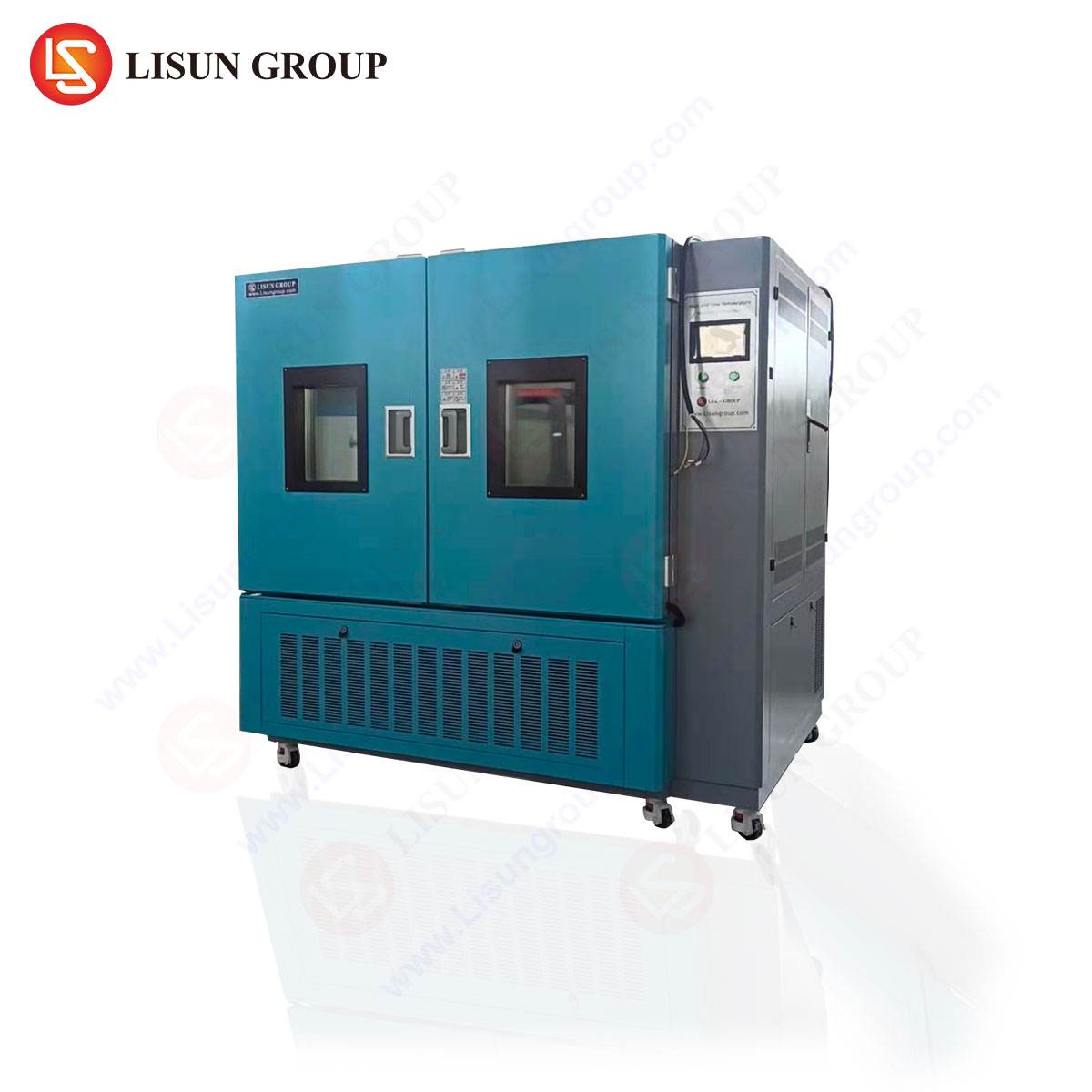
LED lighting systems are expected to deliver operational lifespans exceeding 50,000 hours, making real-time testing impractical for product validation. Accelerated aging tests, conducted under elevated temperatures and controlled electrical stress, simulate years of operation within weeks. The High Precision Life Test Chamber for IEC 60068 Compliance provides the environmental control necessary for such tests, ensuring that thermal cycling, humidity exposure, and current variations do not introduce artifacts in lumen depreciation data. Without standardized chambers, manufacturers risk inconsistent results that fail regulatory audits.
1.2 Relevance of IEC 60068 to LED Applications
IEC 60068 specifies environmental testing methods for electrotechnical products, including temperature and humidity endurance tests. For LED components, compliance with IEC 60068-2-1 (cold testing), IEC 60068-2-2 (dry heat), and IEC 60068-2-78 (damp heat) is mandatory for market entry in many jurisdictions. LISUN’s chamber integrates these protocols directly into its programmable control system, allowing seamless switching between test profiles. This capability reduces setup time and ensures reproducibility across multiple test campaigns.
1.3 Integration with LISUN’s Photometric Measurement Ecosystem
LISUN’s life test chambers are designed to interface with integrating sphere systems and spectroradiometers for simultaneous photometric data acquisition. For example, during a 6000-hour test, the chamber can trigger automated measurements at predefined intervals—typically 1000 hours—via the LEDLM-80PL software. This integration eliminates manual handling errors and aligns with IES LM-79-19 requirements for electrical and photometric measurements of solid-state lighting products.
2.1 Dual System Variants: LEDLM-80PL and LEDLM-84PL
The LISUN LED Optical Aging Test Instrument is available in two primary configurations:
| Feature | LEDLM-80PL (LM-80/TM-21 Focus) | LEDLM-84PL (LM-84/TM-28 Focus) |
|---|---|---|
| Primary Standard | IES LM-80-15 | IES LM-84-19 |
| Extrapolation Method | TM-21-19 (L70/L50) | TM-28-14 (L70/L50) |
| Test Duration | 6000 hours (standard) | 6000 hours (standard) |
| Temperature Channels | Up to 3 chambers | Up to 3 chambers |
| Measurement Intervals | 1000 hours minimum | 1000 hours minimum |
| Data Output | Lumen maintenance factor, color shift | Lumen maintenance, chromaticity shift |
| Sample Capacity | 50+ LED packages per chamber | 30+ LED modules per chamber |
Both systems utilize identical chamber hardware but differ in software algorithms and reporting templates, ensuring strict compliance with their respective IES standards.
2.2 Hardware Configuration and Customizability
The chamber supports modular expansion, allowing users to connect up to three independent temperature chambers for simultaneous testing under different thermal conditions. Each chamber can be set to a unique temperature profile, from 25°C to 85°C, with ±0.5°C stability. Customizable test fixtures accommodate various LED packages—from surface-mount devices (SMD) to chip-on-board (COB) arrays—without requiring mechanical redesign. The power supply system delivers constant current up to 2A per channel with 0.1% accuracy, critical for preventing thermal runaway during extended tests.
2.3 Software Platform with Arrhenius Model Integration
The proprietary software performs real-time data logging and automatically applies the Arrhenius Model to extrapolate lifetime metrics. By inputting activation energy values—typically 0.4–0.7 eV for LED phosphor degradation—the software calculates projected L70 and L50 lifetimes at rated operating temperatures. For example, a test at 85°C yielding 20% lumen drop after 6000 hours can be extrapolated to predict L70 at 55°C, saving weeks of additional testing.
3.1 Constant Current Mode for LM-80 Compliance
In constant current mode, each LED sample receives a fixed drive current throughout the test duration, as required by IES LM-80-15. This mode isolates lumen depreciation caused by intrinsic material degradation—phosphor conversion efficiency loss, die attachment fatigue, and encapsulant yellowing—from current-related effects. The High Precision Life Test Chamber for IEC 60068 Compliance maintains current regulation within ±0.5% despite ambient temperature fluctuations, ensuring that thermal derating does not confound results. Data collected under this mode directly feeds TM-21 extrapolation algorithms.
3.2 Constant Temperature Mode for Thermal Stress Analysis
Constant temperature mode fixes the chamber ambient temperature while allowing current to vary as needed to maintain junction temperature stability. This mode is particularly useful for assessing solder joint reliability and thermal interface material performance under IEC 60068-2-2 dry heat conditions. By comparing results from both modes, engineers can decouple thermal stress effects from electrical stress effects, enabling targeted design improvements. LISUN’s software generates comparative plots of lumen maintenance versus temperature for both modes, facilitating root-cause analysis.
3.3 Mode Selection Criteria Based on Testing Objectives
Selecting the appropriate mode depends on the failure mechanism under investigation:
- Constant current: Preferred for LED package qualification per IES LM-80, where intrinsic lumen maintenance is the primary concern.
- Constant temperature: Recommended for system-level validation where thermal management is critical, such as automotive LED modules under hood.
- Dual mode testing: For comprehensive characterization, run both modes concurrently across two chambers to generate a complete degradation model.
4.1 IES LM-80 and TM-21: Lumen Maintenance Projections
IES LM-80-15 specifies the test method for measuring lumen maintenance of LED packages, arrays, and modules over 6000 hours at three case temperatures (typically 55°C, 85°C, and a third temperature selected by the manufacturer). The High Precision Life Test Chamber for IEC 60068 Compliance supports this requirement by allowing up to three chambers to run simultaneously at different temperatures. TM-21-19 then extrapolates the 6000-hour data to project L70 (time to 70% lumen maintenance) and L50 (time to 50% lumen maintenance) lifetimes. LISUN’s software automatically calculates confidence intervals for these projections, as mandated by the standard.
4.2 IES LM-84 and TM-28: Color Maintenance and Chromaticity Shift
While LM-80 focuses on lumen maintenance, IES LM-84-19 addresses chromaticity maintenance for LED modules. The LEDLM-84PL variant incorporates a CCD spectrometer to monitor color shift (Δu’v’) over the test duration. TM-28-14 provides extrapolation methodologies for chromaticity stability, essential for architectural lighting applications where color consistency is critical. The chamber’s temperature stability (±0.5°C) is particularly important here, because color shift is more temperature-sensitive than lumen depreciation.
4.3 Supporting Standards: CIE 084, CIE 70, CIE 127, and IES LM-79-19
CIE 084 (measurement of luminous flux), CIE 70 (absolute methods for photometry), and CIE 127 (measurement of LEDs) provide the photometric foundation for all measurements. IES LM-79-19 governs the electrical and photometric characterization of solid-state lighting products. LISUN’s integration of an integrating sphere with the life test chamber ensures that all flux measurements comply with these standards, including corrected 2π or 4π geometry settings.
4.4 IEC 60068 Compliance Testing Capabilities
The chamber is programmed with standard IEC 60068-2 profiles:
| Standard | Test Description | Chamber Capability |
|---|---|---|
| IEC 60068-2-1 | Cold test at -10°C to -65°C | Programmable low temperature (optional chiller) |
| IEC 60068-2-2 | Dry heat at up to 85°C | Standard operating range |
| IEC 60068-2-14 | Temperature change | Ramp rate control up to 5°C/min |
| IEC 60068-2-78 | Damp heat, 85°C/85% RH | Optional humidity control module |
5.1 Temperature Control Accuracy and Uniformity
The High Precision Life Test Chamber for IEC 60068 Compliance achieves temperature uniformity of ±0.5°C across the working volume, verified using a 9-point thermocouple array per IEC 60068-3-5 guidelines. The control system employs PID algorithms with predictive tuning to minimize overshoot during temperature transitions. Long-term drift is less than 0.1°C per month, and annual recalibration using NIST-traceable standards is recommended.
5.2 Electrical Measurement Precision
Current supply accuracy is ±0.1% of setpoint with resolution of 0.1 mA. Voltage measurement precision is ±0.05% with 1 mV resolution. These specifications exceed the requirements of IES LM-80, which mandates ±0.5% accuracy for current and ±0.2% for voltage. The system performs automated zero-span calibration before each measurement cycle to eliminate drift.
5.3 Data Acquisition and Logging Frequency
Photometric data (luminous flux, color temperature, CRI) are acquired at user-defined intervals—typically every 1000 hours for LM-80 compliance. The system supports continuous logging at 1-minute intervals for thermal profiling. Data storage capacity exceeds 10,000 measurement points per test run, with automatic backup to external storage via USB or network drive.
6.1 Setting Up a 6000-Hour Lifetime Test Campaign
A typical campaign begins by programming three chambers to 55°C, 85°C, and 95°C (manufacturer-defined third temperature). Each chamber receives 20 LED samples per test condition, meeting the minimum sample size for statistical validity per IES LM-80. The system automatically logs initial photometric values at time zero, then at 1000-hour intervals. Failures are detected by real-time monitoring of current consumption—a sudden drop indicates an open circuit failure—and recorded with timestamp data.
6.2 Data Analysis Using LISUN’s Arrhenius Software
After 6000 hours, the software exports raw lumen maintenance data into TM-21 calculation templates. The engineer inputs the test temperatures and selects the activation energy model (fixed or optimized). The software calculates:
- L70(6k): Lumen maintenance at 6000 hours (must exceed 91.8% per ENERGY STAR)
- Projected L70: Extrapolated lifetime in hours with 90% confidence bounds
- Δu’v’: Chromaticity shift at each measurement interval
Example output: A test at 85°C shows 93% lumen maintenance at 6000 hours, with projected L70 of 45,000 hours at 55°C case temperature.
6.3 Troubleshooting Common Testing Artifacts
- Condensation during humidity tests: Ensure chamber door seals are intact and pre-bake samples at 105°C for 1 hour before testing.
- Current drift: Replace test sockets every 2000 hours due to contact resistance oxidation.
- Temperature overshoot: Reduce ramp rate to 2°C/min for sensitive LED packages.
7.1 Thermal Cycling for Automotive LED Qualification
Automotive LEDs must survive -40°C to 125°C thermal cycles per AEC-Q102. The chamber supports ramped thermal cycling at up to 5°C/min with dwell times programmable from 30 minutes to 8 hours. LISUN’s system logs in-situ luminous flux during cycling, revealing transient degradation patterns invisible in steady-state tests.
7.2 High-Temperature Operating Life (HTOL) Testing
HTOL tests at 85°C/85% RH per JEDEC JESD22-A101 are critical for LED driver components. The optional humidity module extends the chamber’s capability to 95% RH, enabling combined temperature-humidity bias testing. The Arrhenius software models acceleration factors using Peck’s model for humidity-enhanced degradation.
7.3 Integration with Industry 4.0 and Automated Labs
The chamber supports Ethernet and RS-485 communication for remote monitoring. LISUN provides API documentation for integration with lab information management systems (LIMS). Alarms for out-of-spec conditions are sent via email or SMS, reducing the need for 24/7 human oversight. This connectivity is essential for high-throughput testing facilities managing 20+ concurrent test runs.
The High Precision Life Test Chamber for IEC 60068 Compliance from LISUN represents a critical investment for LED manufacturers and testing laboratories seeking reliable, standardized lifetime validation. By supporting dual testing modes—constant current for IES LM-80/TM-21 compliance and constant temperature for thermal stress analysis—the system provides versatile capabilities for both package-level and system-level reliability assessment. The integration of Arrhenius Model-based software enables accurate extrapolation of L70 and L50 lifetimes from 6000-hour test data, reducing time-to-market for new LED products. With support for up to three connected temperature chambers, customizable fixtures, and strict adherence to IEC 60068 environmental testing protocols, this instrument ensures that all accelerated aging tests produce reproducible, audit-ready data. LISUN’s commitment to photometric measurement accuracy, combined with robust hardware design and comprehensive software analytics, makes this life test chamber an essential tool for any organization serious about LED quality assurance. By aligning with IES standards and enabling proactive failure analysis, engineers can confidently deliver products that meet regulatory requirements and customer expectations for long-term reliability.
Q1: What is the minimum test duration required for IES LM-80 compliance using the High Precision Life Test Chamber for IEC 60068 Compliance?
A: The IES LM-80-15 standard mandates a minimum test duration of 6000 hours (approximately 8.3 months) for lumen maintenance data used in TM-21 extrapolations. However, LM-80 permits interim reporting at 3000 hours if the manufacturer declares the product’s expected lifetime. LISUN’s chamber and software are fully configured for both 3000-hour interim and 6000-hour full compliance testing. The system automatically logs data at 1000-hour intervals and can generate preliminary TM-21 projections at 3000 hours, provided the data shows monotonic degradation. Engineers should note that ENERGY STAR requires full 6000-hour data for L70 calculations, so interim reports are only suitable for R&D screening purposes.
Q2: Can the chamber test LED modules with different form factors simultaneously?
A: Yes, the LISUN LED Optical Aging Test Instrument features customizable test boards and fixtures that support a wide range of LED packages and modules, including SMD, COB, mid-power, and high-power types. The system allows mixing different sample types within the same chamber as long as they share the same test temperature and current conditions. However, for rigorous IES LM-80 compliance, each distinct LED model should be tested separately to avoid cross-contamination of data. The LEDLM-84PL variant includes adjustable clamping mechanisms for modules up to 100mm x 100mm. Users can purchase additional fixture kits to accommodate multiple form factors without modifying the chamber hardware.
Q3: How does the Arrhenius Model software handle activation energy uncertainty?
A: LISUN’s software offers two activation energy (Ea) modes: fixed-value and optimized. In fixed-value mode, the engineer enters an Ea value (typically 0.5 eV for phosphor degradation, 0.6 eV for die attach fatigue). The software then calculates L70 projections using standard Arrhenius acceleration formulas. In optimized mode, the software fits the Ea value to the collected data by minimizing the sum of squared errors between measured and predicted lumen maintenance across all test temperatures. The optimized mode is more accurate but requires data from at least three temperature conditions. The software reports 90% confidence intervals for all projections, accounting for both measurement uncertainty and Ea variability. For initial screening, LISUN recommends using the default Ea of 0.6 eV for phosphor-converted white LEDs.