









Abstract
This article provides a comprehensive technical overview of the LISUN Environmental Stress Screening Chamber for IEC 60068 Compliance, focusing on its integration with the LED Optical Aging Test Instrument series for accelerated lumen maintenance testing. Designed for LED manufacturing engineers and third-party laboratory technicians, the system supports dual variants—LEDLM-80PL for IES LM-80/TM-21 compliance and LEDLM-84PL for IES LM-84/TM-28 applications—alongside Arrhenius Model-based predictive software. Key capabilities include 6000-hour test durations, L70/L50 metric extrapolation, and support for up to three interconnected temperature chambers. By aligning with IEC 60068 environmental stress screening protocols and referencing standards such as CIE 127, IES LM-79-19, and CIE 084, this article delivers actionable insights into accelerated aging validation, hardware configurability, and data-driven reliability engineering for the global lighting industry.
1.1 Core Design Philosophy and Dual System Architecture
The LISUN Environmental Stress Screening Chamber for IEC 60068 Compliance serves as the backbone for accelerated aging tests, simulating thermal, humidity, and operational stresses that LEDs encounter over extended lifetimes. The system is engineered around two distinct variants: the LEDLM-80PL, optimized for IES LM-80-15 testing, and the LEDLM-84PL, tailored for IES LM-84-19 requirements. Both variants share a common chamber platform that maintains temperature uniformity within ±0.5°C, critical for reproducible lumen depreciation measurements. The chamber supports simultaneous operation of multiple test specimens under controlled conditions, with data acquisition intervals configurable from 1 minute to 24 hours. This architecture ensures that the LISUN Environmental Stress Screening Chamber for IEC 60068 Compliance meets the rigorous demands of global lighting standards, enabling engineers to validate LED performance across diverse application scenarios.
1.2 Integration with IEC 60068 Stress Screening Protocols
IEC 60068 provides the foundational framework for environmental testing of electrotechnical products, including temperature cycling, damp heat, and steady-state thermal stress. The LISUN chamber fully implements these protocols, offering programmable profiles for temperature ramping, dwell times, and humidity control (20% to 98% RH). For LED components, the chamber applies accelerated aging at elevated temperatures—typically 55°C, 85°C, and 105°C—to trigger failure mechanisms such as phosphor degradation, solder joint fatigue, and encapsulant yellowing. Data from these tests feed directly into the Arrhenius Model software, which calculates activation energies (Ea) and extrapolates lumen maintenance at user-specified time points (e.g., L70 at 6000 hours or L50 at 10000 hours). This integration bridges laboratory stress screening with real-world reliability predictions, a key requirement for IEC 60068 compliance audits.
2.1 Constant Temperature Mode for Steady-State Aging
The constant temperature mode is the default configuration for LEDLM-80PL and LEDLM-84PL operations, maintaining a fixed setpoint for the entirety of the 6000-hour test duration. This mode is ideal for establishing baseline lumen depreciation curves under stable thermal conditions, as specified in IES LM-80-15. The chamber’s PID controller ensures temperature stability within ±0.5°C, minimizing noise in luminous flux measurements. Test specimens are typically loaded at three temperature points (e.g., 55°C, 85°C, and 105°C) to generate sufficient data for Arrhenius Model fitting. Each chamber can accommodate up to 30 LED modules or 100 individual LEDs, depending on the sample holder configuration. The software records luminous flux, forward voltage, and correlated color temperature (CCT) at user-defined intervals, facilitating real-time monitoring of degradation trends.
2.2 Temperature Cycling Mode for Thermal Fatigue Assessment
Temperature cycling mode introduces dynamic thermal stress by alternating between low and high temperature extremes, typically over 2-4 hour cycles. This mode is critical for assessing solder joint reliability, hermetic seal integrity, and die attach delamination—failure mechanisms that are not accelerated under constant temperature alone. The LISUN Environmental Stress Screening Chamber for IEC 60068 Compliance supports ramp rates from 1°C/min to 10°C/min, with programmable dwell times at each extreme. For LEDLM-84PL tests, cycling between -40°C and +125°C is common, aligning with automotive and outdoor lighting requirements. Data collected during cycling tests are used to compute cycle-to-failure metrics and validate TM-28 extrapolation models. The chamber’s ability to handle up to three connected units enables simultaneous testing across multiple temperature profiles, reducing overall validation time.
3.1 Theoretical Foundation and Activation Energy Calculation
The Arrhenius Model software embedded in the LISUN system applies the fundamental equation: L(t) = L0 exp(-t/τ), where τ is proportional to exp(Ea/(kT)). By measuring lumen depreciation at multiple temperatures, the software solves for the activation energy (Ea) using linear regression on the ln(τ) versus 1/T plot. Typical Ea values for LED packages range from 0.3 eV to 0.7 eV, depending on phosphor composition and encapsulant material. The software automatically generates Arrhenius plots and provides confidence intervals (e.g., 90% or 95%) for extrapolated lifetimes. This capability is essential for TM-21 compliance, which requires at least 6000 hours of real-time data to project L70 values up to 60000 hours. The LISUN Environmental Stress Screening Chamber for IEC 60068 Compliance ensures that data quality meets the statistical rigor demanded by these extrapolation methods.
3.2 Integration with IES TM-21 and TM-28 Standards
TM-21 governs the extrapolation of lumen maintenance data for solid-state lighting products using exponential decay models, while TM-28 addresses high-power LEDs and laser diodes. The LISUN software supports both standards by applying the appropriate curve-fitting algorithms (e.g., exponential decay for TM-21, double exponential for TM-28). Users input test duration, temperature points, and target current (e.g., 350 mA, 500 mA, or 700 mA) to generate comprehensive reports that include L70, L80, and L50 projections. The software also outputs data in IES TM-21-19 compliant formats, facilitating submission to ENERGY STAR or DesignLights Consortium programs. By linking chamber test data directly to predictive models, the system reduces time-to-market for new LED products while ensuring regulatory conformity.
4.1 Chamber Design and Environmental Control Parameters
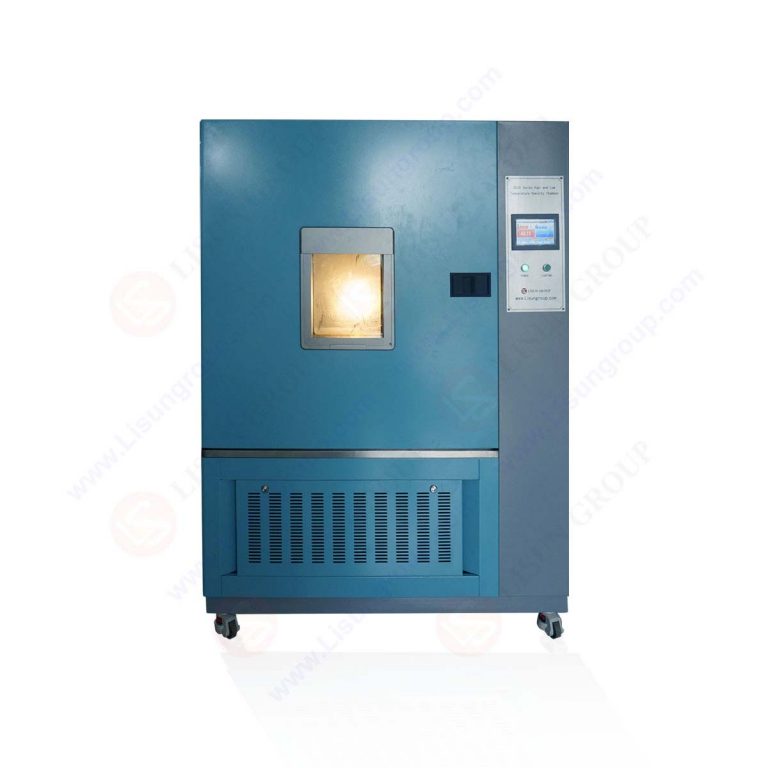
The LISUN Environmental Stress Screening Chamber for IEC 60068 Compliance features a robust double-wall construction with stainless steel interior and powder-coated exterior, providing thermal insulation and corrosion resistance. Key specifications include a temperature range of -40°C to +150°C (standard model) with an extended range of -70°C to +180°C available for specialized applications. Humidity control spans 20% to 98% RH with ±3% accuracy, supported by a steam injection system equipped with PID regulation. The test volume varies from 100 liters to 1000 liters per chamber, with custom sizes available for large-scale production testing. Each unit includes a 7-inch touchscreen interface for parameter programming and data logging, with RS-232 and Ethernet ports for remote monitoring. The system supports up to three interconnected chambers, enabling simultaneous testing at multiple temperatures or humidity levels.
4.2 Comparison Table: LEDLM-80PL vs. LEDLM-84PL Configurations
| Parameter | LEDLM-80PL (LM-80/TM-21) | LEDLM-84PL (LM-84/TM-28) |
|---|---|---|
| Applicable Standard | IES LM-80-15, TM-21-19 | IES LM-84-19, TM-28-19 |
| Test Duration | 6000 hours minimum | 6000 hours minimum |
| Temperature Points | 3 (e.g., 55°C, 85°C, 105°C) | 3 (e.g., 55°C, 85°C, 105°C) |
| Temperature Range | -40°C to +150°C | -70°C to +180°C (extended) |
| Humidity Control | Optional (20%-98% RH) | Integrated (20%-98% RH) |
| Sample Capacity | 30 modules or 100 LEDs per chamber | 20 modules or 80 LEDs per chamber |
| Data Acquisition | Luminous flux, CCT, forward voltage | Luminous flux, spectral power distribution |
| Extrapolation Standards | TM-21 (exponential decay) | TM-28 (double exponential decay) |
| Max Connected Chambers | 3 | 3 |
This comparative table highlights distinct feature sets: the LEDLM-84PL integrates spectral measurement capabilities and extended temperature range, making it suitable for high-power LED and laser diode applications, while the LEDLM-80PL focuses on cost-efficiency for mainstream SSL testing.
5.1 Aligning with IES LM-80-15 and LM-84-19 Protocols
IES LM-80-15 establishes standardized methods for measuring lumen maintenance of LED packages and arrays over 6000 hours, with reporting requirements for L70 and L50 values. The LISUN Environmental Stress Screening Chamber for IEC 60068 Compliance fully automates this process, from sample loading to data export. The chamber’s temperature sensors—calibrated per NIST-traceable standards—ensures that each setpoint remains within ±1°C of the target, as required by LM-80-15 subsection 5.2. Similarly, LM-84-19 adds spectral power distribution (SPD) measurements and chromacity shift tracking, demanding spectrometer integration; the LEDLM-84PL variant includes a built-in high-speed spectrometer (350-800 nm range) for simultaneous lumen and colorimetric data acquisition. This dual compliance capability reduces the need for separate equipment, streamlining lab workflow.
5.2 Reference to CIE 084, CIE 70, and CIE 127 for Photometric Accuracy
CIE 084 defines the standard for luminous flux measurement using integrating spheres, which is the primary method for characterizing LEDs during stress screening. The LISUN system integrates a 0.5-meter or 1.0-meter sphere (user-selectable) coated with high-reflectance barium sulfate, achieving photometric accuracy of ±2% for luminous flux. CIE 70 complements this by providing guidelines for photometry of LEDs, including correction for self-absorption and spectral mismatch. Meanwhile, CIE 127 specifies electrical and photometric measurement procedures for LEDs—particularly for junction temperature estimation. The LISUN Environmental Stress Screening Chamber for IEC 60068 Compliance automatically calculates junction temperature from forward voltage measurements using the K-factor method, as per CIE 127 Annex C. This multi-standard integration ensures that test results are both traceable and reproducible across global laboratories.
6.1 Lumen Depreciation Mechanisms and L70/L50 Metrics
Accelerated aging tests within the LISUN chamber reveal key degradation pathways: phosphor conversion efficiency loss, encapsulant carbonization, and die attach resistance increase. Lumen depreciation data—typically tracked at 1000-hour intervals—are fitted to the general decay model: L(t)/L0 = α exp(-βt), where α represents initial lumen output and β the decay rate. L70 (time to 70% initial lumen output) and L50 (time to 50%) are extrapolated using inverse functions of this model. For example, a sample tested at 105°C might show L70 = 4500 hours, which when adjusted using the Arrhenius Model with Ea=0.5 eV, projects to L70 = 35000 hours at 65°C operating temperature. The LISUN Environmental Stress Screening Chamber for IEC 60068 Compliance automates these calculations, generating pass/fail reports that compare against ENERGY STAR minimum thresholds (e.g., L70 ≥ 25000 hours for residential LEDs).
6.2 Spectral Shift and Color Stability Assessment
Beyond lumen maintenance, color stability is a critical reliability metric, especially for applications requiring consistent CCT (e.g., medical lighting, retail displays). The system’s spectrophotometer records SPD at each data point, enabling calculation of CCT shift (ΔCCT) and chromaticity drift per CIE 1976 UCS coordinates. Acceptable thresholds per IES LM-80-15 include a ΔCCT less than 150 K at L70 endpoint. The chamber’s temperature cycling mode accelerates phosphorus thermal quenching, which manifests as blue-shifted SPD spectra. Data from these tests feed into TM-28 extrapolation models, which incorporate dual decay constants to account for both lumen and color degradation. The LISUN Environmental Stress Screening Chamber for IEC 60068 Compliance provides automated SPD analysis, flagging samples that exceed drift limits before the end of the 6000-hour test.
7.1 Data Management and Reporting for Compliance Audits
For third-party testing laboratories, data traceability is paramount. The LISUN software generates encrypted log files containing raw luminous flux measurements, temperature profiles, humidity readings, and timestamps. These logs are exportable to common formats (CSV, XLSX, PDF) for integration with lab information management systems (LIMS). The software also produces TM-21 compliant summary tables, listing test parameters, measured L70 values, extrapolated lifetimes, and confidence intervals. For IEC 60068 audits, the system can output thermal cycling profiles and validation certificates for each chamber calibration. The LISUN Environmental Stress Screening Chamber for IEC 60068 Compliance thus serves as both a test platform and a documentation engine, reducing the administrative burden for accredited labs.
7.2 Multi-Chamber Expansion and Remote Monitoring
The ability to connect up to three chambers (e.g., LEDLM-80PL units) over a single control interface allows laboratories to scale testing capacity linearly—equivalent to testing 300 modules simultaneously. Each chamber can operate independently with distinct temperature schedules, enabling parallel testing of different product families or failure modes. Remote monitoring via Ethernet or Wi-Fi supports alerts for out-of-tolerance conditions (e.g., temperature deviation >2°C, humidity drift >5% RH) via email or SMS. This feature is particularly valuable for long-duration 6000-hour tests, where continuous human supervision is impractical. The system’s redundant power supplies and emergency cooling loops ensure uninterrupted operation, crucial for maintaining test integrity over months-long campaigns.
The LISUN Environmental Stress Screening Chamber for IEC 60068 Compliance represents a comprehensive solution for accelerated LED aging validation, combining dual testing modes, Arrhenius Model-based predictive software, and multi-standard compliance (IES LM-80, LM-84, TM-21, TM-28, CIE 084, CIE 70, and CIE 127). With support for up to three connected temperature chambers, 6000-hour test durations, and automated L70/L50 metrics, the system streamlines reliability engineering from sample loading to final report generation. Technical professionals in LED manufacturing, third-party testing, and regulatory compliance can leverage its precise thermal control (±0.5°C) and spectral measurement capabilities to achieve IEC 60068 conformance while reducing time-to-market. The dual-variant architecture (LEDLM-80PL for mainstream SSL and LEDLM-84PL for high-power applications) ensures that diverse product categories—from residential bulbs to automotive LEDs—are tested under consistent, traceable conditions. By integrating failure mode analysis, spectral shift tracking, and data management tools, the LISUN chamber empowers engineers to make data-driven decisions that enhance product reliability and accelerate certification cycles.
Q1: How does the LISUN Environmental Stress Screening Chamber ensure compliance with IES LM-80-15 for 6000-hour testing?
A: The LISUN chamber maintains temperature stability within ±0.5°C across three setpoints (e.g., 55°C, 85°C, 105°C) as per LM-80-15 subsection 5.2, using NIST-traceable sensors. The system’s integrated spectrophotometer records luminous flux at user-defined intervals, typically every 1000 hours, and generates TM-21 compliant extrapolation reports. Dual-mode operation (constant temperature or cycling) allows users to mimic industry-specific profiles, while the optional humidity control (20%-98% RH) enables damp heat testing for outdoor LED applications. The chamber’s data logging includes encrypted timestamps and temperature profiles, providing auditable records for regulatory inspections.
Q2: What is the difference between the LEDLM-80PL and LEDLM-84PL variants for accelerated aging tests?
A: The LEDLM-80PL is optimized for IES LM-80-15 testing, supporting L70/L50 extrapolation via TM-21 with a standard temperature range of -40°C to +150°C and optional humidity control. In contrast, the LEDLM-84PL is designed for IES LM-84-19 and TM-28-19 applications, featuring an extended temperature range (-70°C to +180°C), integrated humidity control, and a built-in spectrometer for spectral power distribution (SPD) measurements. The LEDLM-84PL supports double exponential decay models required for high-power LEDs and laser diodes, while the LEDLM-80PL uses single exponential decay. Both variants support up to three interconnected chambers but differ in sample capacity (30 vs. 20 modules) and data acquisition scope.
Q3: Can the LISUN chamber perform temperature cycling tests for thermal fatigue assessment?
A: Yes, the LISUN Environmental Stress Screening Chamber for IEC 60068 Compliance includes a programmable temperature cycling mode with ramp rates from 1°C/min to 10°C/min and dwell times configurable from 5 minutes to 12 hours. This mode is critical for evaluating solder joint reliability, die attach integrity, and hermetic seal performance under thermal shock conditions. Typical cycling profiles for automotive LEDs range from -40°C to +125°C over 4-hour cycles, while outdoor luminaires may use 0°C to +85°C cycles. The software records cycle-to-failure metrics and integrates with TM-28 extrapolation for combined thermal-mechanical-optical degradation analysis.
Q4: How does the Arrhenius Model software handle activation energy calculation for unknown LED materials?
A: The software uses a multi-temperature approach: it inputs lumen depreciation data from at least three temperature points (e.g., 55°C, 85°C, 105°C) and performs linear regression on the ln(τ) versus 1/T plot, where τ is the time constant for exponential decay. For LEDs with Encapsulant materials having unknown activation energies (Ea), the software automatically computes Ea from the slope, with typical values ranging from 0.3 eV to 0.7 eV. The software provides 90% and 95% confidence intervals for extrapolated L70 values and flags outliers due to measurement noise or premature failures. Users can override calculated Ea values (e.g., from supplier datasheets) if preferred.
Q5: What photometric standards does the system reference for luminous flux and color measurements?
A: The system integrates a high-reflectance integrating sphere compliant with CIE 084 for luminous flux measurement (accuracy ±2%) and a spectrometer per CIE 127 for junction temperature estimation via forward voltage K-factor. Chromaticity coordinates are calculated per CIE 1976 UCS, with CCT drift tracked as per IES LM-80-15. For color stability, the system references CIE 70 for spectral mismatch correction, ensuring that flux and color data are traceable to international standards. This multi-standard alignment guarantees that test results are accepted by Energy Star, DesignLights Consortium, and automotive OEM qualification programs.