









This comprehensive technical article examines the critical role of the LISUN Temperature Humidity Test Chamber for IEC 60068 Compliance Testing in LED reliability validation, focusing on accelerated aging protocols and lumen maintenance prediction. The LISUN LED Optical Aging Test Instrument, with its dual system variants (LEDLM-80PL for LM-80/TM-21 and LEDLM-84PL for LM-84/TM-28), integrates the Arrhenius Model-based software, dual testing modes, and customizable hardware configurations to enable precise degradation analysis. By supporting up to three connected temperature chambers and 6000-hour test durations, this system empowers engineers to calculate L70/L50 metrics accurately. Reference to standards including IES LM-80, TM-21, IES LM-79-19, and CIE 127 provides contextual depth for technical professionals seeking robust compliance solutions.
1.1 Overview of IEC 60068 and LED Reliability Standards
The IEC 60068 standard series establishes global protocols for environmental testing of electrical and electronic equipment, including thermal and humidity cycling assessments critical for LED longevity validation. For LED manufacturers, compliance with IEC 60068 ensures that temperature and humidity fluctuations do not accelerate lumen depreciation beyond acceptable thresholds. The LISUN Temperature Humidity Test Chamber for IEC 60068 Compliance Testing directly addresses these requirements by providing controlled environments that simulate real-world operational stress. Technical professionals in LED manufacturing quality control must integrate these chambers with photometric measurement systems to validate reliability claims, particularly when pursuing IES LM-80 certification for energy-efficient lighting products.
1.2 LISUN’s Integrated Approach to Accelerated Aging
The LISUN LED Optical Aging Test Instrument family, comprising the LEDLM-80PL and LEDLM-84PL models, represents a paradigm shift in accelerated aging testing. These systems combine temperature humidity chambers with high-precision spectroradiometers and integrating spheres, enabling simultaneous thermal cycling and optical measurement. The LEDLM-80PL specifically supports IES LM-80 testing protocols, requiring 6000-hour minimum test durations at specified case temperatures (typically 55°C, 85°C, and a user-defined temperature). This integrated design eliminates measurement inconsistencies caused by sample transfer between separate chambers and photometric stations, a common challenge in legacy testing workflows.
2.1 LEDLM-80PL: LM-80 and TM-21 Compliance
The LEDLM-80PL is engineered specifically for IES LM-80-15 testing, which mandates lumen maintenance measurement at 0, 1000, 2000, 3000, 4000, 5000, and 6000 hours. This system supports up to three connected temperature chambers, each maintaining independent temperature (25°C to 85°C) and humidity (20% to 98% RH) profiles. The Arrhenius Model-based software embedded within LEDLM-80PL extrapolates TM-21 projections, calculating L70 (time to 70% lumen maintenance) and L50 (time to 50% lumen maintenance) with 95% confidence intervals. For example, a 6000-hour test at 85°C can predict L70 exceeding 50,000 hours for high-quality phosphor-converted white LEDs, aligning with TM-21-19 guidelines for extrapolated longevity.
2.2 LEDLM-84PL: LM-84 and TM-28 Applications
The LEDLM-84PL variant targets IES LM-84 testing for LED packages, arrays, and modules using smaller sample sizes (typically 5-10 units versus 20 for LM-80). This system supports TM-28 extrapolation methods, which differ from TM-21 by incorporating additional temperature-dependent degradation models. The LEDLM-84PL’s software integrates CIE 127:2007 measurement protocols for total luminous flux determination using integrating spheres, ensuring compliance with both photometric and environmental standards. This dual-mode capability allows laboratories to switch between LM-80 and LM-84 testing without hardware reconfiguration, reducing operational costs and testing turnaround times.
3.1 Temperature and Humidity Control Parameters
The LISUN Temperature Humidity Test Chamber for IEC 60068 Compliance Testing operates within a temperature range of -40°C to +150°C and humidity levels from 10% to 98% RH, meeting IEC 60068-2-1 (cold), IEC 60068-2-2 (dry heat), and IEC 60068-2-78 (damp heat) criteria. Temperature stability is maintained within ±0.5°C, while humidity stability holds at ±2.5% RH, essential for reproducible accelerated aging data. The chamber supports programmable profiles with up to 100 segments, enabling complex thermal cycling sequences that simulate diurnal temperature variations or power cycling events.
3.2 Customizable Hardware for Specific Test Protocols
System configurations include options for multi-channel power supplies (up to 32 independent channels), each with programmable current (0-2A) and voltage (0-60V) settings. This supports testing of LEDs with varying forward voltages simultaneously, a critical capability for array-level validation. The integrating sphere options range from 0.3m to 2.0m diameters, accommodating everything from individual SMD LEDs to large COB modules. Table 1 below compares the key specifications of the two primary system variants.
Table 1: Comparison of LEDLM-80PL and LEDLM-84PL System Specifications
| Parameter | LEDLM-80PL | LEDLM-84PL |
|---|---|---|
| Target Standard | IES LM-80-15 | IES LM-84-19 |
| Sample Size | Up to 20 units | 5-10 units |
| Test Duration | 6000 hours minimum | 6000 hours optional |
| Extrapolation Method | TM-21-19 | TM-28-19 |
| Temperature Chambers | Up to 3 | Up to 2 |
| Lumen Measurement | Integrating sphere (0.5m-2.0m) | Integrating sphere (0.3m-1.0m) |
| Software Features | Arrhenius Model, L70/L50 prediction | Temperature-dependent degradation models |
| Primary Application | High-power LED packages | Small to medium LED arrays |
4.1 Constant Temperature Mode for Baseline Assessment
The constant temperature mode maintains steady-state conditions (e.g., 85°C at 85% RH) throughout the test duration, enabling baseline lumen depreciation characterization without thermal cycling variables. This mode aligns with IES LM-80 requirements for three distinct case temperatures, typically 55°C, 85°C, and a user-defined temperature between 25°C and 75°C. Data collected in constant mode feeds directly into Arrhenius Model calculations, establishing the activation energy (Ea) for LED degradation processes. For typical phosphor-converted white LEDs, Ea values range from 0.3 to 0.7 eV, depending on phosphor composition and packaging materials.
4.2 Cycling Mode for Dynamic Stress Simulation
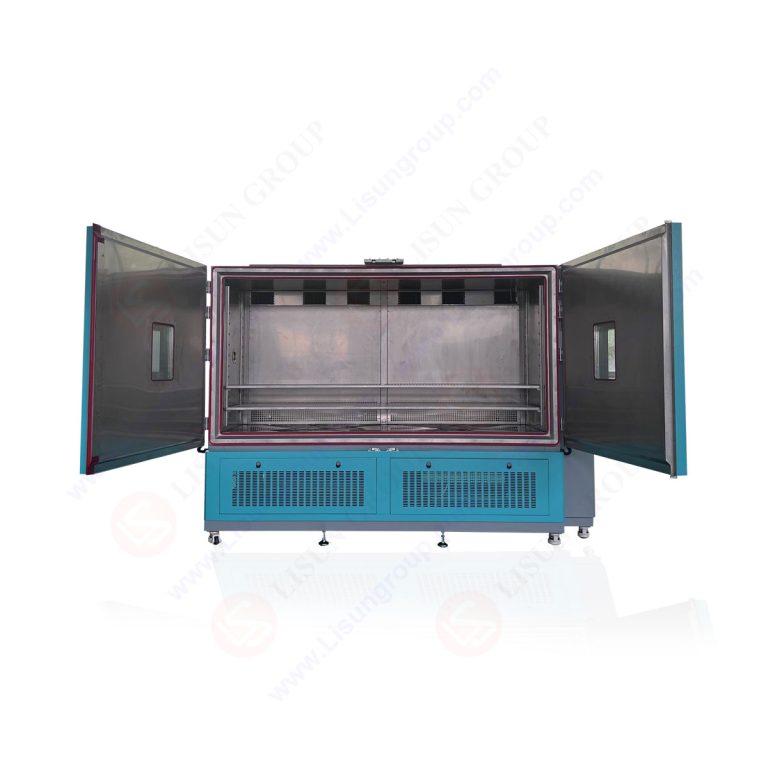
The thermal cycling mode alternates between temperature extremes (e.g., -40°C to +85°C) over 30-60 minute cycles, simulating real-world conditions in automotive or outdoor lighting applications. This mode is particularly relevant for IEC 60068-2-14 (temperature change) compliance, where thermal expansion mismatch can induce mechanical stress on solder joints and wire bonds. The LISUN system records lumen measurements at each cycle endpoint, enabling correlation between thermal cycling count and degradation rate. Data from cycling mode can be combined with constant mode results to validate Durability models, such as those proposed in CIE 70:1988 for long-term performance prediction.
5.1 Activation Energy Determination and Degradation Modeling
The embedded Arrhenius Model software processes time-to-failure data from multiple temperature conditions to calculate activation energy and acceleration factors. The software automatically fits lumen maintenance data to exponential decay functions, extracting degradation rates (k) for each test temperature. Using the Arrhenius equation: L(t) = L0 exp(-k t), where k = A exp(-Ea/(RT)), the system predicts L70 and L50 values at reference temperatures (typically 25°C or 55°C). This modeling approach is validated against TM-21 guidelines, which require that extrapolation not exceed 6 times the test duration (e.g., 36,000 hours from 6,000 hours of testing).
5.2 Confidence Interval Computation and Outlier Detection
The software computes 95% confidence intervals for extrapolated metrics using Student’s t-distribution and residual analysis. Outlier detection algorithms flag samples with degradation rates exceeding ±3σ from the population mean, enabling engineers to identify manufacturing defects or anomalous failure modes. The system generates comprehensive reports including raw data plots, fitted curves, and extrapolation graphs, directly compatible with IES LM-80-15 and TM-21-19 submission requirements for ENERGY STAR and DLC certification. This automation reduces manual data processing errors and ensures consistent interpretation across testing laboratories.
6.1 IES LM-79-19 and CIE 084 Measurement Protocols
Luminous flux measurements within the temperature chamber must adhere to IES LM-79-19 electrical and photometric measurement protocols, which specify photometric distances (for goniophotometers) or integrating sphere conditions (for total flux). The LISUN system incorporates self-absorbing corrections using auxiliary lamps, as per CIE 084:1989 guidelines, minimizing measurement errors from sample absorption within the sphere. This integration is critical because temperature-dependent spectral shifts can affect colorimetric parameters, which must be separately validated under CIE 127:2007 for LED cluster testing.
6.2 Automotive and Aerospace Industry Applications
For automotive LED components requiring AEC-Q102 qualification, the temperature humidity chamber supports IEC 60068-2-67 (damp heat steady state) and IEC 60068-2-30 (damp heat cyclic) test profiles. The system’s ability to maintain precise humidity levels (±2.5% RH) is essential for evaluating moisture-induced degradation in silicone encapsulants, a common failure mechanism in high-brightness automotive LEDs. Aerospace applications, governed by RTCA DO-160, similarly benefit from the chamber’s rapid temperature change rates (up to 15°C/min), enabling compliance with thermal shock requirements.
7.1 Setup and Calibration Procedures
Initial setup requires calibration of thermocouples (Type T or K) at three points within the chamber to verify spatial temperature uniformity (≤±1.0°C). Humidity sensors must be calibrated using saturated salt solutions (e.g., NaCl for 75% RH at 25°C). The integrating sphere requires absolute calibration using a standard lamp traceable to NIST, with spectral correction factors applied for LED source types. The LISUN software guides users through these procedures, logging calibration certificates for audit compliance.
7.2 Data Management and Reporting Excellence
The system generates automated reports including raw lumen maintenance data, fitted degradation curves, Arrhenius plots, and TM-21/TM-28 extrapolation tables. Data export to formats compatible with statistical analysis software (Python, MATLAB, or Minitab) enables advanced modeling. For laboratories managing concurrent tests across multiple chambers, the software supports batch processing and comparative analysis, highlighting performance differences between LED batches or manufacturing runs. This capability is particularly valuable for R&D teams optimizing phosphor formulations or package designs for extended lifetime.
The LISUN Temperature Humidity Test Chamber for IEC 60068 Compliance Testing delivers a comprehensive solution for LED reliability validation, integrating environmental stress simulation with high-precision photometric measurement. The dual system variants—LEDLM-80PL and LEDLM-84PL—address specific standard requirements for IES LM-80/TM-21 and IES LM-84/TM-28 protocols, respectively, while supporting customizable configurations including multi-channel power supplies and variable integrating sphere diameters. The Arrhenius Model-based software enables accurate L70/L50 predictions from 6000-hour test data, with confidence intervals ensuring statistical rigor. By combining constant temperature and cycling modes, engineers can validate both baseline degradation and dynamic stress responses, aligning with global standards like IEC 60068, IES LM-79-19, CIE 127, and automotive reliability requirements. For LED manufacturing quality control teams and third-party testing laboratories, this integrated system reduces testing complexity, enhances data reproducibility, and accelerates certification processes. The LISUN Temperature Humidity Test Chamber for IEC 60068 Compliance Testing stands as a critical tool for ensuring LED longevity claims meet rigorous industry standards, ultimately supporting the development of reliable, energy-efficient lighting products for global markets.
Q1: How does the LISUN Temperature Humidity Test Chamber for IEC 60068 Compliance Testing ensure alignment with TM-21 extrapolation guidelines?
A: The system’s Arrhenius Model-based software automatically applies TM-21-19 extrapolation rules, including the 6x test duration limitation (e.g., 36,000-hour maximum prediction from 6,000-hour data). The software calculates activation energy (Ea) from at least three test temperatures, typically 55°C, 85°C, and a user-defined condition (e.g., 70°C). It then computes L70 and L50 metrics with 95% confidence intervals using Student’s t-distribution. The system flags any samples with degradation patterns deviating from exponential decay assumptions, ensuring only valid data points contribute to extrapolations. This automation eliminates common manual errors in data fitting while maintaining strict compliance with IES guidelines for ENERGY STAR submissions.
Q2: Can the same test system accommodate both LM-80 (20 samples) and LM-84 (5-10 samples) testing without hardware modification?
A: Yes, the LISUN LED Optical Aging Test Instrument family supports both standards through the LEDLM-80PL and LEDLM-84PL software variants. The LEDLM-80PL includes hardware capable of testing up to 20 samples with independent power supplies, while the LEDLM-84PL software mode within the same system can be configured for 5-10 samples, adjusting monitoring frequency and data output formats accordingly. The integrating sphere size recommendation varies (0.5m-2.0m for LM-80; 0.3m-1.0m for LM-84), but the system can accommodate interchangeable spheres. This dual-mode capability allows laboratories to maximize utilization without dedicated hardware for each standard, significantly reducing capital expenditure in high-throughput testing environments.
Q3: What calibration procedures are recommended before initiating a 6000-hour IEC 60068 compliance test?
A: Pre-test calibration should include verification of temperature uniformity across all three chamber zones using calibrated thermocouples (±0.3°C accuracy), ensuring spatial variation ≤±1.0°C. Humidity sensors require calibration using saturated salt solutions (e.g., lithium chloride for 11% RH, magnesium chloride for 33% RH, sodium chloride for 75% RH). The integrating sphere must be calibrated with a NIST-traceable standard lamp (typically a tungsten-halogen source) using the substitution method. Spectral corrections for LED-specific spectral power distributions should be applied per IES LM-79-19 recommendations. The electrical measurement chain (power supplies and multimeters) should be verified using precision resistors and current shunts. All calibration certificates should be documented for audit review, with recalibration recommended every six months.
Q4: How does thermal cycling mode impact L70 prediction accuracy compared to constant temperature mode?
A: Thermal cycling mode introduces additional degradation mechanisms—primarily thermomechanical stress and moisture absorption/desorption—that are not captured in constant temperature testing. For L70 predictions, constant mode typically provides more conservative estimates since degradation kinetics follow purely Arrhenius behavior. However, for applications with significant thermal cycling (e.g., automotive LED headlamps), cycling mode data is critical for identifying failure modes like solder joint fatigue or encapsulant cracking. The LISUN system allows correlation between cycling count and lumen maintenance, enabling engineers to develop Durability models that combine Arrhenius acceleration factors with cycling-dependent degradation rates. For certification purposes, TM-21 extrapolation remains based on constant mode data, but cycling mode supplements this with application-specific validation.
Q5: What are the maximum test durations supported for L70 extrapolation beyond standard 6000-hour tests?
A: The LISUN system supports extended test durations up to 10,000 hours for research purposes, though IES LM-80-15 minimum duration remains 6,000 hours. For extrapolation beyond 6,000 hours, TM-21 allows a maximum of 6 times the test duration (e.g., 36,000 hours from 6,000-hour data). The Arrhenius Model software can perform these calculations automatically, but engineers must verify that the activation energy remains constant over time—this can be confirmed through goodness-of-fit tests. High-quality LEDs with stable phosphors may show consistent degradation beyond 10,000 hours, enabling extrapolations up to 60,000 hours. However, for certification purposes, laboratory reports should clearly specify the test duration and extrapolation limits to avoid misinterpretation by regulatory bodies.