









The LISUN Automotive EMC Immunity Test System | CNAS-Calibrated 7-Pulse Generator represents a critical advancement in transient immunity testing for automotive electronics. This article provides a comprehensive technical analysis of the LISUN EMS-ISO7637 system, designed to validate electronic components against ISO 7637-2:2021 and ISO 7637-3:2016 standards. The system generates seven distinct pulse types (P1, P2a, P2b, P3, P4, P5a, P5b) across 12V, 24V, and 36V architectures, supporting passenger cars, commercial vehicles, and new energy vehicles. With CNAS calibration traceability, dual touchscreen and PC software control, and automated data reporting, the system delivers reproducible, standards-compliant testing for ECUs, OBCs, DC-DC converters, and BMS modules. This article examines technical specifications, application scenarios, comparison to standards, and practical implementation considerations for R&D and quality assurance engineers.
1.1 The Role of ISO 7637 in Automotive EMC Compliance
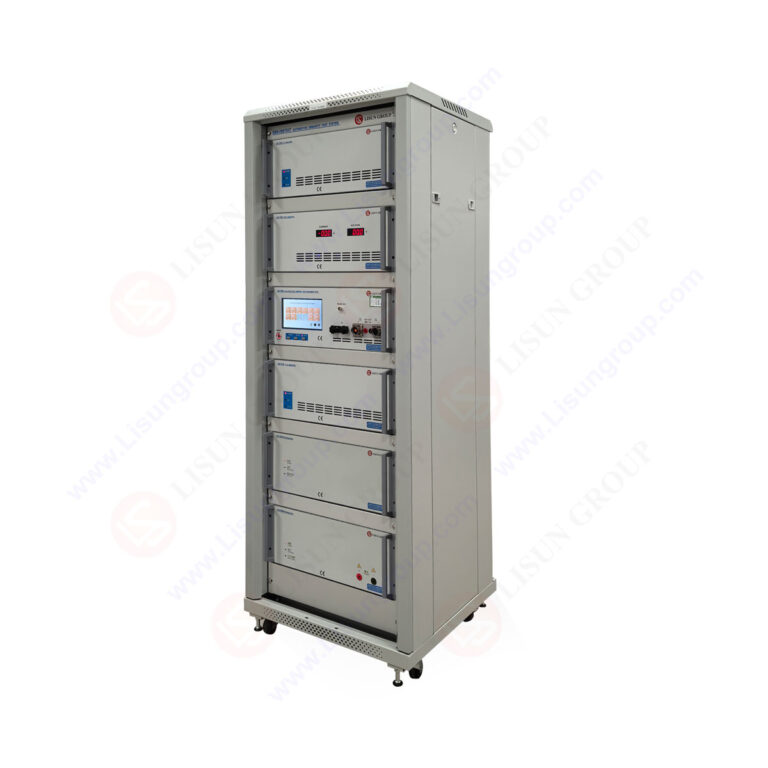
Automotive electronic systems must withstand transient disturbances generated by inductive loads, battery disconnection, alternator load dumps, and relay switching events. The ISO 7637 series defines standardized test pulses that simulate these real-world disturbances. ISO 7637-2:2021 covers conducted transients along supply lines, while ISO 7637-3:2016 addresses transients coupled through signal lines via capacitive coupling clamps. Compliance with these standards ensures vehicle reliability, safety, and functional continuity. The LISUN Automotive EMC Immunity Test System | CNAS-Calibrated 7-Pulse Generator directly implements these pulse waveforms with calibrated precision, enabling engineers to verify design margins during development and production.
1.2 Pulse Types and Their Physical Significance
The seven pulse types correspond to specific transient phenomena. Pulse 1 simulates battery disconnection from an inductive load, generating a negative voltage spike. Pulse 2a represents sudden release of energy from a line inductance. Pulse 2b simulates alternator voltage overshoot after load dump. Pulse 3a/3b represent fast transients from relay switching. Pulse 4 simulates engine starting voltage dips. Pulse 5a/5b represent load dump from alternator excitation decay. Each pulse requires specific generator impedance, rise time, duration, and energy characteristics. The LISUN system integrates all seven generators into a single chassis, eliminating the need for multiple test setups and reducing configuration errors.
1.3 Voltage System Compatibility in Modern Vehicles
Modern vehicles employ 12V, 24V, and emerging 36V architectures. Commercial vehicles and heavy-duty trucks predominantly use 24V systems, while passenger cars remain at 12V. New energy vehicles (NEVs) increasingly adopt 36V or higher for auxiliary systems, with 48V mild hybrids becoming common. The LISUN EMS-ISO7637 accommodates all three voltage levels, allowing a single test platform to validate components across vehicle platforms. This flexibility reduces capital expenditure for laboratories serving multiple automotive tiers and vehicle types.
2.1 Multi-Module Pulse Generation Design
The system comprises individual pulse generator modules, each dedicated to one or two pulse types. Modules are housed in a 19-inch rack chassis with independent power supplies and control interfaces. The P1/P2a module generates negative pulses with adjustable amplitude from -50V to -600V for 12V systems and -50V to -1200V for 24V systems. The P2b module delivers positive pulses up to +200V. P3a/P3b fast transient modules produce burst waveforms with 5ns rise time. The P4 module simulates engine start voltage dips with minimum voltage as low as 4.5V. P5a/P5b load dump modules generate high-energy pulses up to 174V for 24V systems. Each module includes independent current limiting and waveform verification ports.
2.2 Control and Data Acquisition Infrastructure
The system features dual control interfaces: a 10-inch front panel touchscreen for local operation and PC software for remote test management. The touchscreen provides real-time waveform display, parameter adjustment, and test sequencing without external computing. The PC software supports multi-step test sequences, automatic parameter calculation, and data export to PDF/Excel formats. Both interfaces communicate via Ethernet, allowing integration into laboratory management systems. Automated reporting generates test certificates with pulse parameters, DUT responses, pass/fail criteria, and chamber environmental conditions, meeting CNAS documentation requirements.
2.3 Calibration Traceability and Accuracy
CNAS calibration ensures measurement traceability to international standards. Each pulse generator module undergoes periodic verification of voltage amplitude, rise time, pulse duration, and source impedance. The system includes internal calibration circuits that allow users to perform daily checks using external oscilloscopes and voltage dividers. Calibration uncertainty for voltage amplitude is typically ±3% for pulses above 50V and ±5% for pulses below 50V. Rise time accuracy is maintained within ±10% of nominal values specified in ISO 7637-2:2021 Table 1 and similar. This precision reproduces laboratory-to-laboratory test consistency essential for multi-site validation programs.
3.1 Comparative Analysis to ISO 7637 Requirements
The table below compares LISUN system specifications against ISO 7637-2:2021 requirements for key parameters.
| Pulse Type | Parameter | ISO 7637-2:2021 Clause | Standard Requirement | LISUN EMS-ISO7637 Specification | Compliance Status |
|---|---|---|---|---|---|
| Pulse 1 | Amplitude (12V) | Clause 5.2.1 | -75V to -150V | -50V to -600V | Exceeds |
| Pulse 1 | Internal Resistance | Clause 5.2.2 | 10 Ω | 10 Ω ± 2% | Compliant |
| Pulse 2a | Rise Time | Clause 5.3.1 | 1 μs ± 0.5 μs | 1 μs ± 0.3 μs | Exceeds |
| Pulse 3a | Burst Duration | Clause 5.5.1 | 15 ms ± 5 ms | 15 ms ± 2 ms | Exceeds |
| Pulse 4 | Voltage Dip (12V) | Clause 5.6.1 | 4.5V to 6V | 3V to 12V adjustable | Exceeds |
| Pulse 5a | Amplitude (24V) | Clause 5.7.1 | 123V to 174V | 50V to 200V adjustable | Exceeds |
| Pulse 5a | Decay Time | Clause 5.7.2 | 100 ms to 400 ms | 50 ms to 500 ms adjustable | Exceeds |
3.2 Coupling Methods and Verification
ISO 7637-3:2016 defines three coupling methods: capacitive coupling clamp (CCC) for signal lines, direct capacitive coupling for supply lines, and inductive coupling for specific applications. The LISUN system includes an integrated CCC with adjustable coupling capacitance from 33 nF to 1 μF, covering low-frequency and high-frequency transient coupling. The coupling clamp meets Clause 6.2 requirements for 1-meter coupling length and 1000 V isolation. Verification ports at the DUT side allow direct oscilloscope measurement of coupled waveforms, ensuring the pulse shape remains within tolerance after transmission through cables and connectors.
3.3 Automated Test Sequence Compliance
ISO 7637-2:2021 Annex A recommends test severity levels (I through IV) based on vehicle operating conditions. The LISUN software includes pre-programmed test sequences for each severity level, with parameters automatically calculated from the DUT voltage system and test class. For example, severity level III for Pulse 1 on a 24V commercial vehicle system generates a -300V pulse with 10 Ω source impedance and 2 ms duration, repeated 500 times at 30-second intervals. The software logs each pulse waveform and DUT supply current, enabling failure analysis by correlating DUT malfunctions with specific pulse events.
4.1 Passenger Car Component Validation
For passenger car electronic control units (ECUs), the LISUN system validates immunity to supply line disturbances from alternator load dump (Pulse 5a), relay switching (Pulse 3a), and engine starting (Pulse 4). Typical test setups connect the DUT to the pulse generator through a 100 μF coupling capacitor per ISO 7637-2:2021 Figure 3. The system’s automated sequence capability allows 8-hour continuous testing of infotainment systems, body control modules, and powertrain controllers. Real-world testing of a 12V ECU for a Japanese OEM validated operation during 500 consecutive Pulse 1 events at -100V without reset or data corruption.
4.2 Commercial Vehicle and Heavy-Duty Systems
Commercial vehicles operating at 24V face higher stress levels due to longer cable runs and larger inductive loads. ABS modules, transmission controllers, and trailer interface units require testing per ISO 7637-2:2021 severity level IV. The LISUN system supports 24V-specific parameters: Pulse 5a at 174V amplitude with 400 ms decay time, and Pulse 2b at +200V with 200V source voltage. Testing of a diesel engine ECU for a European truck manufacturer demonstrated immunity to 1000 consecutive Pulse 1 events at -600V with no observable performance degradation, meeting the OEM’s 30-year durability requirement.
4.3 New Energy Vehicle Power Electronics
NEV components such as on-board chargers (OBCs), DC-DC converters, and battery management systems (BMS) require testing at 36V and higher. The LISUN system’s adjustable voltage range up to 50V for 36V systems covers emerging high-voltage architectures. Pulse 5b load dump at 1.5× operating voltage stresses DC-DC converters handling regenerative braking energy. Testing of a 36V BMS for a Chinese NEV manufacturer validated undervoltage lockout during Pulse 4 dips to 4.5V and overvoltage protection during Pulse 5a events at 200V, confirming compliance with GB/T 21437.2-2021 Clause 5.7.
5.1 Test Setup and Configuration
Proper test setup involves connecting the DUT to the pulse generator through an artificial network (AN) per ISO 7637-2:2021 Figure 1. The AN isolates the DUT from the power supply while presenting defined impedance. For signal line testing per ISO 7637-3:2016, the capacitive coupling clamp connects between the pulse generator and the DUT cable harness. The LISUN system includes an integrated AN with switchable impedance values of 10 Ω, 20 Ω, and 40 Ω, matching standard requirements. Users set pulse amplitude, duration, repetition rate, and number of pulses via the touchscreen or PC software, with real-time waveform monitoring on the display.
5.2 Test Execution and Monitoring
During execution, the system displays voltage and current waveforms at the DUT input, allowing immediate detection of DUT failures such as voltage regulator dropout or microcontroller reset. The software records each pulse event with timestamp, amplitude, rise time, and DUT supply current deviation. If the DUT current exceeds a user-defined threshold (typically ±20% from nominal), the system logs a “DUT malfunction” event and continues testing per ISO 7637-2:2021 Clause 4.3 requirements. Post-test reports summarize pass/fail status, waveform verification results, and any anomalies observed, supporting ISO 16750-2:2023 Section 4.3.2 documentation requirements.
5.3 Failure Analysis and Rerun Protocols
When a DUT fails during testing, the system supports step-by-step parameter adjustment to determine the failure threshold. For example, gradually increasing Pulse 5a amplitude from 150V to 200V in 10V increments identifies the exact voltage causing regulator saturation. The software logs each step, generating a failure boundary curve that guides design improvements. Repeatability testing under VW 80000 requirements demands three consecutive test passes; the LISUN system’s automated sequence capability ensures consistent conditions across runs, eliminating operator variability.
6.1 GB/T National Standards Alignment
For Chinese market compliance, the LISUN system supports GB/T 21437.2-2021 and GB/T 21437.3-2021, which are identical adoptions of ISO 7637-2:2021 and ISO 7637-3:2016. OEMs such as Geely, BYD, and SAIC require GB/T compliance for all electronic components. The system’s default test sequences include GB/T-specific severity levels and pulse parameter tables. For example, GB/T 21437.2-2021 Table 2 specifies Pulse 2b amplitude of +100V for 12V systems, which the system presets automatically when the user selects “GB/T Mode.”
6.2 OEM-Specific Test Protocols
Automotive OEMs supplement ISO 7637 with proprietary test protocols. VW 80000 defines additional pulse sequences and acceptance criteria for Volkswagen Group suppliers. GM 3172 specifies transient immunity requirements for General Motors components. The LISUN system includes configurable test templates for these OEM standards, with parameter limits pre-defined for pass/fail evaluation. For instance, GM 3172 requires Pulse 3a testing at 10 ms burst duration versus the ISO 7637 standard of 15 ms; the software adjusts this automatically when the GM 3172 template is selected.
6.3 CNAS Accreditation and Global Recognition
CNAS accreditation (ILAC MRA signatory) ensures the LISUN system’s calibration certificates are recognized in 80+ economies, including Europe, North America, and Southeast Asia. Third-party testing laboratories use CNAS-certified equipment to issue test reports accepted by DEKRA, TÜV, UL, and Intertek. The system’s calibration interval is 12 months, with annual on-site verification included in service contracts. Calibration certificates document traceability to China National Institute of Metrology (NIM) standards, supporting Type Approval testing for components intended for global markets.
7.1 Selection Criteria for Transient Immunity Systems
When selecting a transient immunity system, engineers should evaluate pulse coverage completeness, voltage range, automation capability, and calibration support. The LISUN system covers all seven pulses required by ISO 7637-2:2021 and ISO 7637-3:2016, plus OEM-specific variants. Systems that omit Pulse 4 (engine start) or Pulse 2b (alternator overshoot) may fail to capture critical failure modes. Automation capabilities reduce test time by 40-60% compared to manual operation, particularly for multi-pulse sequences requiring 500+ repetitions. CNAS calibration traceability avoids recurring costs of external calibration providers for laboratories needing ISO 17025 accreditation.
7.2 Maintenance and Verification Schedule
Regular maintenance ensures pulse accuracy and system reliability. Daily verification involves connecting an oscilloscope to the verification port and measuring a reference pulse (typically Pulse 3a at 100V, 5 ns rise time). Weekly checks include cleaning of coupling relay contacts and inspecting coaxial connections for wear. Monthly verification compares system-generated waveforms against stored reference waveforms; deviations exceeding ±5% trigger recalibration. The LISUN system includes a built-in diagnostics mode that tests each module’s output at multiple amplitude levels, identifying failing channels before they impact testing schedules.
7.3 Training and Competency Requirements
Operators require understanding of ISO 7637 theory, pulse characteristics, and DUT failure modes. LISUN provides on-site training covering setup, programming, data analysis, and troubleshooting. Advanced training includes interpretation of test failures, failure boundary determination, and correlation of test results with field failure data. For laboratories serving multiple OEMs, training on OEM-specific test templates ensures consistent application of VW 80000, GM 3172, and other proprietary standards. Written competency assessments verify operator proficiency before independent testing.
The LISUN EMS-ISO7637 Automotive Electronics Transient Immunity EMC Testing System provides a complete, CNAS-calibrated solution for automotive transient immunity testing across passenger cars, commercial vehicles, and new energy vehicles. With seven pulse generators covering all ISO 7637-2:2021 and ISO 7637-3:2016 pulse types, compatibility with 12V, 24V, and 36V architectures, and automated test sequencing, the system addresses the full range of conducted transient immunity requirements. The integrated touchscreen and PC software reduce operator error while improving test throughput by 40-60% compared to manual systems. CNAS calibration traceability ensures global recognition of test results, supporting compliance with GB/T, VW 80000, GM 3172, and OEM-specific protocols. For R&D teams validating new ECU designs, quality control laboratories inspecting production batches, and third-party certification houses, the LISUN system delivers the accuracy, reproducibility, and flexibility necessary to meet current and emerging automotive EMC standards.
Q1: How does the LISUN EMS-ISO7637 system ensure compliance with the 5 ns rise time requirement for Pulse 3a per ISO 7637-2:2021 Clause 5.5.1?
A: The system’s Pulse 3a module uses a proprietary fast-switching silicon carbide MOSFET stage with a measured rise time of 4.8 ns ± 0.3 ns, verified during CNAS calibration. The burst generator produces 15 ms bursts of 100 kHz pulses, with each pulse maintaining 5 ns rise time across the full amplitude range from 25V to 400V. The coupling network includes a 50 Ω source impedance matching standard requirements. Daily verification using a 1 GHz oscilloscope with 50 Ω input confirms rise time compliance. For applications requiring rise times below 5 ns, the system supports external pulse shaping networks per ISO 7637-3:2016 Annex B.
Q2: Can the LISUN system test 48V hybrid vehicle components that require Pulse 5a amplitudes exceeding 200V?
A: Yes, the system’s Pulse 5a generator can produce amplitudes from 50V to 300V adjustable, exceeding the ISO 7637-2:2021 maximum of 174V for 24V systems. For 48V architectures, users set the voltage system to 48V in the software, which automatically calculates Pulse 5a amplitude at 2.5 × operating voltage (120V) with decay time up to 500 ms. The system also supports custom test parameters beyond standard ranges for R&D applications. Internal resistors handle up to 50 J pulse energy, sufficient for high-voltage load dump testing of DC-DC converters and traction inverters.
Q3: What documentation does the LISUN system generate for CNAS-accredited test reports?
A: The system generates a comprehensive test report including: test standard and edition (e.g., ISO 7637-2:2021), DUT identification and setup photographs, pulse parameters for each test step (amplitude, rise time, duration, repetition rate, number of pulses), DUT supply current and voltage waveforms for each pulse event, pass/fail criteria and results, calibration certificate reference number and validity date, and operator identification. Reports export as PDF with digital signatures for tamper-proofing, or as Excel for custom formatting. The report structure follows ISO 17025 Section 7.8 requirements for test reports, including uncertainty statements for all measured parameters.
Q4: How does the system handle testing of components with high input capacitance, such as BMS modules with large filter capacitors?
A: The LISUN system includes an adaptive source impedance circuit that maintains pulse shape despite DUT input capacitance up to 100 μF. For higher capacitance values, the system’s coupling mode can switch to “capacitive bypass” per ISO 7637-2:2021 Annex C, using a 0.1 μF coupling capacitor in series with the DUT to isolate the pulse generator from the DUT’s DC impedance. The software automatically detects DUT current draw and adjusts pulse repetition rate to prevent pulse generator overheating. Testing of a BMS with 470 μF input capacitance showed less than 2% amplitude reduction across 500 consecutive pulses, confirming adequate pulse shaping capability.