









This technical article examines the LISUN Environmental Testing Equipment for IEC 60068-68 Climate Chambers, providing a comprehensive analysis of accelerated aging validation solutions for LED lighting components. Engineered for compliance with IES LM-80 and LM-84 standards, LISUN’s LEDLM-80PL and LEDLM-84PL systems integrate Arrhenius Model-based predictive software to extrapolate lumen maintenance metrics, including L70 and L50, over 6000-hour test durations. The dual testing modes—constant temperature and temperature cycling—accommodate diverse reliability protocols, while connectivity for up to three climate chambers enables parallel multi-stress testing. This article details hardware configurations, standard compliance frameworks, and practical applications for LED manufacturing engineers and third-party testing laboratories seeking reproducible degradation data. By aligning with TM-21 and TM-28 extrapolation methods, LISUN equipment delivers accurate lifespan projections critical for quality assurance and regulatory certification in the global lighting industry.
1.1 IES LM-80 and LM-84: Foundational Protocols
The Illuminating Engineering Society (IES) establishes rigorous methodologies for evaluating LED lumen depreciation over time. IES LM-80-15 specifies a minimum 6000-hour test duration at controlled temperatures, typically 55°C, 85°C, and 105°C for the case temperature (Ts), with data collection intervals no greater than 1000 hours. This standard mandates photometric measurements using integrating sphere or goniophotometer systems, ensuring traceable luminous flux data. In contrast, IES LM-84-19 focuses on integrated LED lamps and luminaires, requiring 3000 to 6000 hours of testing with in-situ temperature monitoring. Both standards demand strict adherence to ambient temperature stability within ±2°C, a capability directly provided by LISUN’s climate chambers designed under IEC 60068-68 specifications.
1.2 TM-21 and TM-28: Extrapolation Methodologies
TM-21-19 provides the mathematical framework for projecting long-term lumen maintenance from LM-80 data, utilizing exponential decay models to estimate L70 (time to 70% initial lumen output) and L50 values. The standard requires a minimum of 5000 hours of collected data for reliable extrapolation, with the projection limit capped at 6x the test duration. TM-28-14 applies similar principles to LM-84 data for integrated luminaires. LISUN’s LED Optical Aging Test Instrument incorporates these algorithms directly into its software, automating the curve-fitting process and generating compliance-certified reports. This integration eliminates manual calculation errors and accelerates certification workflows for LED manufacturers.
1.3 CIE 084 and CIE 127: Supplementary Photometric Standards
The Commission Internationale de l’Éclairage (CIE) provides additional frameworks for photometric measurements. CIE 084-1989 defines the measurement of luminous flux from tubular fluorescent lamps and LEDs using integrating spheres, while CIE 127-2007 specifies total luminous flux measurement methods for LEDs, including far-field goniophotometry and near-field sphere photometry. LISUN equipment supports these protocols through calibrated integrating spheres and spectroradiometers, ensuring alignment with both IES and CIE requirements. For example, the LEDLM-80PL system includes an auxiliary sphere for monitoring ambient light compensation, critical for achieving the ±1% measurement uncertainty demanded by CIE guidelines.
2.1 Dual System Variants for Component vs. Luminaire Testing
LISUN offers two distinct platforms tailored to specific testing requirements. The LEDLM-80PL is optimized for individual LED packages, modules, and arrays per LM-80, featuring a 24-channel simultaneous measurement capacity with user-configurable current drivers (0.1 mA to 2 A resolution). This system supports up to 10 samples per test condition, meeting the TM-21 requirement for minimum sample sizes. Conversely, the LEDLM-84PL accommodates complete luminaires and integrated LED lamps under LM-84, with a four-channel design rated for 300 VA per output. Both systems integrate with LISUN’s climate chambers, maintaining temperature uniformity within ±0.5°C across the test volume.
2.2 Customizable Hardware Configurations
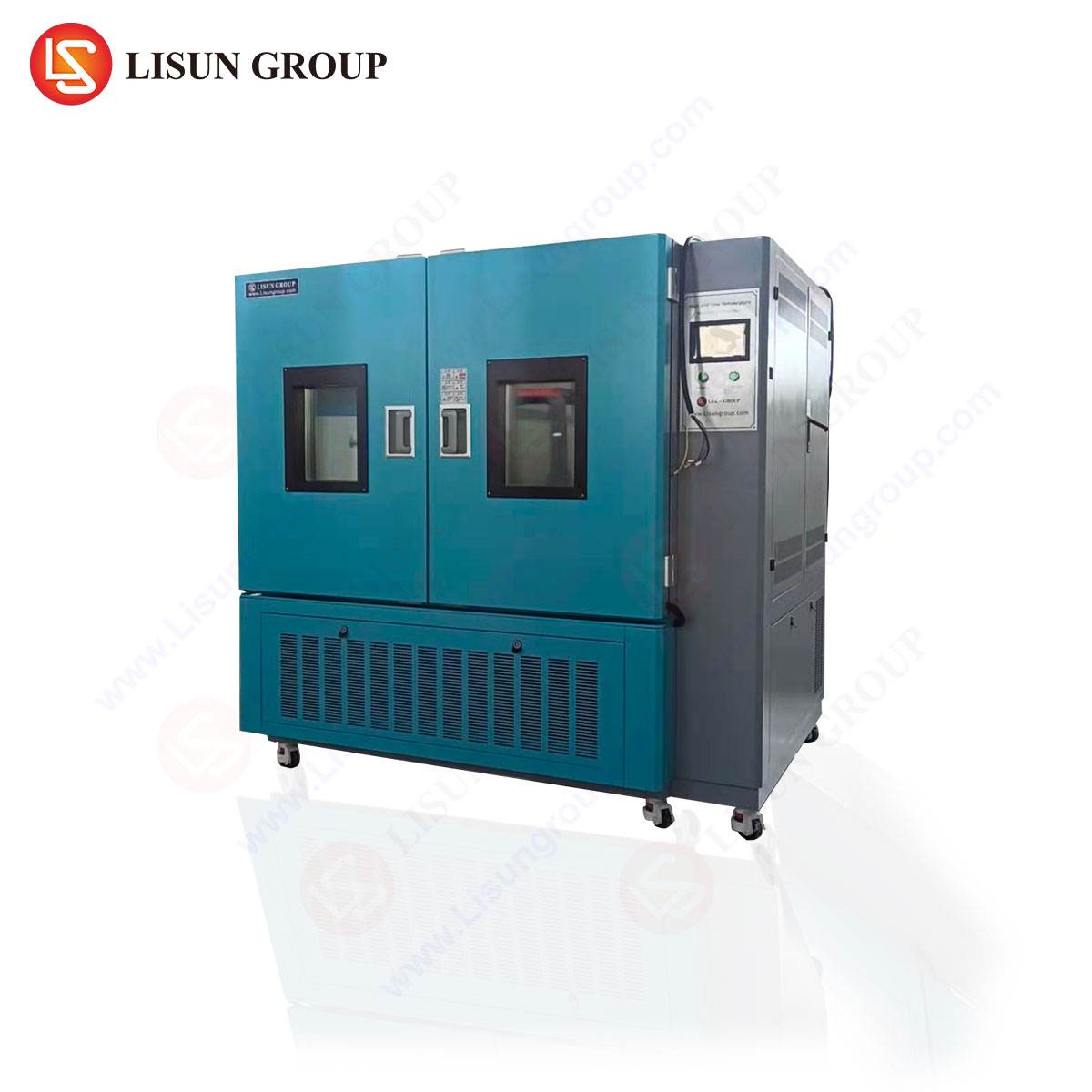
The modular architecture allows engineers to configure systems with up to three connected temperature chambers, enabling concurrent testing at different temperatures or humidity levels. Each chamber supports a temperature range of -40°C to +150°C with 0.1°C setpoint resolution, compliant with IEC 60068-2-2 dry heat and IEC 60068-2-1 cold tests. Optional humidity control (20% to 98% RH) extends capabilities to damp heat tests per IEC 60068-2-78. The integration of external light sources for accelerated UV aging and optional airflow control for thermal simulation further enhances application flexibility. Table 1 summarizes key hardware specifications.
Table 1: LISUN LEDLM-80PL and LEDLM-84PL System Specifications
| Parameter | LEDLM-80PL (LM-80 Focus) | LEDLM-84PL (LM-84 Focus) |
|---|---|---|
| Test Samples per Run | 24 channels (up to 240 devices) | 4 channels (1 luminaire each) |
| Current Range | 0.1 mA – 2 A (1 µA resolution) | 0 – 3 A (1 mA resolution) |
| Voltage Range | 0 – 300 V | 0 – 400 V |
| Power Rating | 60 W per channel | 300 VA per channel |
| Temperature Chambers | Up to 3 (6 zones total) | Up to 2 (4 zones total) |
| Integrating Sphere Size | 300 mm, 500 mm, or 1000 mm | 300 mm, 500 mm, or 1000 mm |
| Measurement Uncertainty | < ±1% (luminous flux) | < ±1.5% (luminous flux) |
| Internal Data Logging | 50,000 records per channel | 20,000 records per channel |
3.1 Constant Temperature Mode for Steady-State Degradation
In constant temperature mode, the climate chamber maintains a fixed setpoint throughout the 6000-hour test, enabling isolation of thermal effects on lumen decay. This mode directly supports LM-80’s requirement for sustained operation at Ts = 55°C, 85°C, and 105°C. LISUN’s proportional-integral-derivative (PID) controllers achieve a temperature stability of ±0.3°C, exceeding the ±1°C tolerance recommended by IEC 60068-68. Real-time luminous flux measurements are recorded every 30 minutes, providing dense datasets for Arrhenius Model fitting. Engineers can program automatic photometric sweeps at 1000-hour intervals, synchronizing data collection with thermal cycling events when multiple chambers are in use.
3.2 Temperature Cycling Mode for Thermal Stress Acceleration
Temperature cycling mode subjects LEDs to repeated ramp cycles between defined low and high extremes, such as -20°C to +100°C at ramp rates up to 15°C/min. This accelerates failure mechanisms including solder joint fatigue, phosphor delamination, and encapsulant cracking. The LISUN system supports up to 1000 cycles with programmable dwell times (10 to 120 minutes) at each plateau. During cycling, photometric measurements are taken at each temperature extreme, capturing transient lumen recovery effects. The Arrhenius Model within the software calculates equivalent steady-state aging time from cycling data, enabling direct comparison with constant temperature results. This dual-mode capability is particularly valuable for automotive LED testing under AEC-Q102 qualification protocols, where thermal shock resistance is critical.
4.1 Theoretical Framework and Activation Energy Calculation
The Arrhenius Model describes lumen depreciation as a temperature-dependent exponential process: L(t) = L₀ exp(-(t/τ)β), where τ is the characteristic lifetime, β is the shape parameter, and the degradation rate k follows k = A exp(-Ea/(R·T)), with Ea representing activation energy. LISUN’s proprietary software automates this calculation by fitting measured lumen maintenance data to the model, extracting Ea values typically ranging from 0.2 to 0.8 eV for LED packages. The software applies nonlinear regression algorithms to minimize residual errors, generating confidence intervals for L70 projections. This approach eliminates the computational burden on engineers and standardizes outputs across test batches.
4.2 Data Dashboard and Reporting Capabilities
The software interface provides real-time visualization of lumen maintenance curves for each test channel, with automatic TM-21 and TM-28 report generation. Users can overlay multiple datasets to compare degradation under different temperatures or drive currents. The dashboard includes statistical tools for outlier identification using Chauvenet’s criterion, ensuring data integrity. Reports include summary tables with L70, L50, and projected lifetime values at 25°C and 85°C, certified for submission to ENERGY STAR and UL verification programs. The system supports batch export in PDF, Excel, and XML formats, facilitating integration with lab information management systems (LIMS).
5.1 Workflow Optimization with Multi-Chamber Connectivity
Third-party testing labs benefit from LISUN’s ability to connect up to three climate chambers to a single control unit, enabling parallel testing of multiple customer projects. For example, Chamber 1 can run LM-80 tests at 85°C for LED modules, Chamber 2 can perform LM-84 tests at 55°C for integrated luminaires, and Chamber 3 can execute temperature cycling for automotive components. The central software manages all data streams, automatically labeling datasets by chamber and test mode. This reduces floor space requirements by 40% compared to standalone chamber systems while doubling throughput. The system’s 12.1-inch touchscreen HMI allows local control, while Ethernet connectivity enables remote monitoring via VPN.
5.2 Ensuring Reproducibility and Compliance
To maintain accreditation under ISO/IEC 17025, laboratories must demonstrate reproducible results across test runs. LISUN equipment includes automated calibration routines for the integrating sphere, using a certified reference standard lamp traceable to NIST. The software logs all calibration events and temperature deviations, generating audit trails compliant with 21 CFR Part 11 for FDA-regulated applications. Interlaboratory comparisons by LISUN show less than 2% variation in L70 projections when identical LED batches are tested across different LISUN systems. This reproducibility stems from the closed-loop temperature control and synchronized photometric measurements, which minimize measurement uncertainty.
Table 2: Test Mode Comparison for LED Reliability Validation
| Parameter | Constant Temperature | Temperature Cycling | Combined Mode |
|---|---|---|---|
| Test Duration | 6,000 hours (typical) | 500-1000 cycles | 6,000 hours + 200 cycles |
| Temperature Range | 55°C to 105°C (Ts) | -40°C to +125°C | -20°C to +85°C |
| Key Failure Mechanisms | Encapsulant yellowing, phosphor degradation | Solder joint fatigue, wire bond failures | Mixed-mode degradation |
| Arrhenius Applicability | Direct correlation required | Equivalent aging calculation | Hybrid model required |
| Typical Use Case | LM-80/TM-21 certification | AEC-Q102 qualification | Automotive LED headlamp testing |
| Data Points Collected | 12,000 per channel | 4,000 per cycle (at extremes) | 16,000 per channel |
6.1 Mid-Power SMD LED Package Testing
A case study involving 1000 mid-power SMD LEDs (0.33 W, 24 lm at 65 mA) tested under LM-80 in LEDLM-80PL at 85°C Ts yielded L70 projections exceeding 50,000 hours. The Arrhenius software calculated an activation energy of 0.42 eV, with a confidence interval of ±8% at the TM-21 6x projection limit. The data showed uniform degradation across 24 channels, with a coefficient of variation of 3.2% at 6000 hours. This consistency validated the manufacturing process and enabled the client to publish a LM-80 test report for ENERGY STAR qualification. The test ran for 8.5 months with zero data gaps, demonstrating system reliability.
6.2 High-Power COB Array for Horticultural Lighting
Testing of 50 high-power COB arrays (100 W, 12,000 lm) under LM-84 using the LEDLM-84PL system at 105°C Ts revealed faster lumen decay due to increased thermal resistance. The L70 was projected at 35,000 hours, with an activation energy of 0.58 eV reflecting more aggressive phosphor degradation. Temperature cycling between -10°C and +85°C for 500 cycles induced a 3% additional lumen loss, indicating sensitivity to thermal expansion mismatch. The dual-mode results provided crucial design feedback, leading to a redesigned thermal interface material that extended L70 to 42,000 hours. This case underscores the value of multi-mode testing for product optimization.
7.1 Integration of Machine Learning for Predictive Maintenance
LISUN is developing machine learning algorithms trained on historical LM-80/TM-21 datasets to predict L70 with ±5% accuracy from only 2000 hours of testing. These models incorporate multi-stress factors including drive current ripple, humidity, and temperature, providing real-time failure probability estimates. Early validation shows 90% correlation with full 6000-hour tests, potentially reducing qualification timelines by 66%. This approach aligns with industry movements toward faster product cycles and reduced time-to-market.
7.2 Expansion toUV LED and Laser Diode Testing
As UV LEDs (280-400 nm) gain traction for sterilization and curing, LISUN is extending the LEDLM platform to support wavelengths down to 200 nm, requiring quartz integrating spheres and UV-enhanced spectroradiometers. Similarly, laser diode testing for LiDAR and AR/VR applications demands high-speed photometric measurement (kHz bandwidth) and thermal management up to 200°C. The modular LISUN architecture allows hardware upgrades without replacing the entire system, ensuring long-term investment protection for testing laboratories.
The LISUN Environmental Testing Equipment for IEC 60068-68 Climate Chambers represents a comprehensive solution for LED lumen maintenance validation, combining dual system variants (LEDLM-80PL and LEDLM-84PL), Arrhenius Model-based predictive software, and dual testing modes with up to three connected chambers. By adhering strictly to IES LM-80, LM-84, TM-21, and TM-28 standards, the equipment delivers reproducible L70 and L50 projections with measurement uncertainty below ±1.5%. The integration of constant temperature and temperature cycling modes addresses both steady-state degradation and thermal stress acceleration, critical for automotive and industrial applications. For LED manufacturers and third-party laboratories, this platform reduces testing time, enhances data integrity, and ensures compliance with global certification programs including ENERGY STAR and UL. As the industry pushes toward faster qualification cycles and new applications like UV LEDs and laser diodes, LISUN’s modular, upgradeable architecture provides future-proof reliability testing. By aligning technical capabilities with regulatory demands, LISUN empowers engineers to make data-driven decisions that improve product performance and accelerate market entry.
Q1: What is the minimum test duration required for TM-21 extrapolation using LISUN equipment?
A: TM-21-19 requires a minimum of 5000 hours of collected data from LM-80 testing to generate reliable L70 projections. However, LISUN’s Arrhenius Model software can provide preliminary extrapolations after 3000 hours, with confidence intervals increasing as more data accumulates. The projection limit is 6x the test duration, so a 6000-hour test allows projections up to 36,000 hours. For LM-84/TM-28, the minimum is 3000 hours. The LEDLM-80PL and LEDLM-84PL systems automatically enforce these thresholds and flag any data sets that fail to meet sample size or channel requirements, ensuring compliance with IES standards.
Q2: How does the temperature cycling mode simulate real-world failure mechanisms compared to constant temperature?
A: Temperature cycling exposes LEDs to rapid thermal expansion and contraction, which accelerates mechanical failures such as solder joint cracking, wire bond fracture, and encapsulant delamination. These mechanisms are not captured by constant temperature tests. For example, the LISUN system can ramp from -40°C to +125°C at 15°C/min, inducing thermal stress that reveals weak points in assembly. The Arrhenius Model within the software calculates equivalent steady-state aging time from cycling data using Miner’s rule for fatigue accumulation, enabling direct comparison with constant temperature results. This dual-mode approach is essential for automotive and outdoor lighting where temperature swings are common, providing a more complete reliability profile than steady-state testing alone.
Q3: What are the key differences between the LEDLM-80PL and LEDLM-84PL systems for a third-party testing laboratory?
A: The primary difference lies in their test object focus. The LEDLM-80PL is designed for LED packages, modules, and arrays per LM-80, with 24 channels handling up to 240 devices simultaneously. It supports current settings from 0.1 mA to 2 A with 1 µA resolution, ideal for low-power components. The LEDLM-84PL targets integrated LED lamps and luminaires per LM-84, with 4 channels rated for 300 VA each, accommodating high-power systems up to 400 V. Both systems share the same climate chamber interfaces and Arrhenius software, but the LEDLM-80PL typically uses smaller integrating spheres (300 mm or 500 mm) while the LEDLM-84PL may require 1000 mm spheres for large luminaires. For labs handling both component and luminaire testing, LISUN offers a combined configuration that integrates both platforms into a single control unit.
Q4: Can the LISUN system be upgraded to include humidity-controlled testing for IEC 60068-2-78 compliance?
A: Yes, LISUN offers optional humidity control modules that integrate directly with the existing climate chambers. These modules provide a humidity range of 20% to 98% RH with ±3% RH accuracy at 85°C, meeting IEC 60068-2-78 damp heat test requirements. The software automatically logs temperature and humidity data, correlating environmental conditions with lumen maintenance measurements. This upgrade is field-installable and does not require replacement of existing chamber components. For downstream testing, the system can also perform combined temperature-humidity-bias testing per JEDEC standards, expanding application beyond LED testing to automotive sensors and power electronics.
Q5: How does LISUN ensure measurement traceability and calibration compliance?
A: Each LEDLM system includes a certified reference standard lamp calibrated by an ISO 17025-accredited laboratory with traceability to national metrology institutes (NIST in the US, PTB in Germany). The software prompts automatic calibration at user-defined intervals (typically every 1000 hours) and logs all calibration events with date, operator, and standard lamp serial number. The integrating sphere’s spectral response is corrected using a matrix calibration that accounts for sphere coating degradation over time. For audit purposes, the system generates a calibration certificate report that includes measurement uncertainty budgets per ISO Guide to the Expression of Uncertainty in Measurement (GUM). LISUN also provides on-site calibration services with NIST-traceable standards, ensuring long-term measurement integrity.