









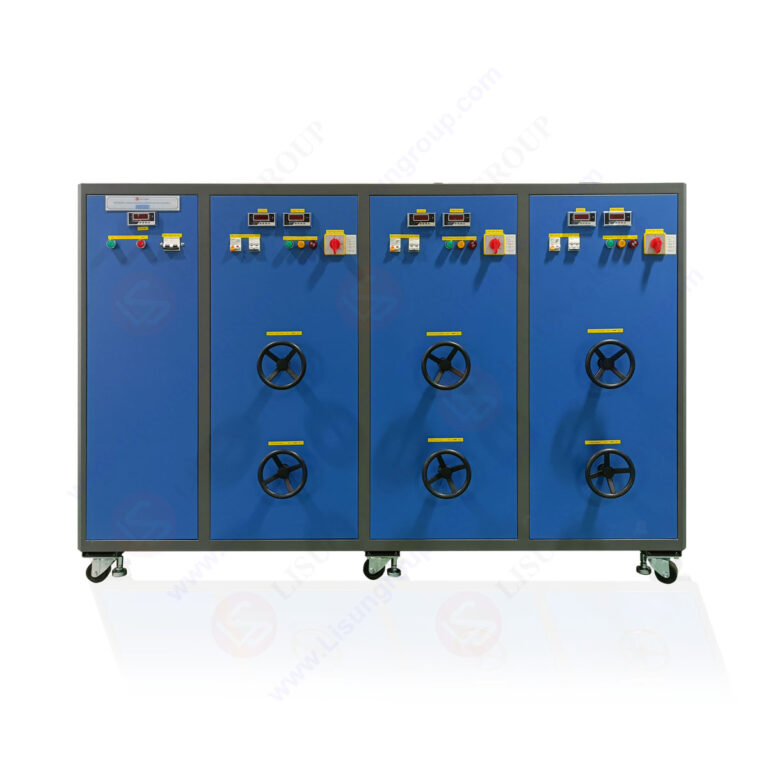
The LISUN DFX series Externally Ballasted Fluorescent Lamp Test Load Cabinet represents a critical advancement in high-power quality control for laboratories conducting electrical accessory compliance testing. Designed for plug switches, socket-outlets, and electrical accessories, the DFX series simulates precise resistive, inductive, and capacitive loads to validate product durability and safety under standardized conditions. This article provides a comprehensive technical examination of the LISUN plug switch load test cabinet, covering its core specifications, compliance with international standards such as IEC 60669-1 and IEC 60884-1, and integration with complementary testing systems. Electrical product manufacturers, third-party testing laboratories, and quality control engineers will gain actionable insights into load simulation technology, model selection, and practical test workflow optimization, ensuring accurate and repeatable results for high-power endurance and cyclic testing applications.
1.1 Fundamental Principles of Load Simulation
Load simulation for electrical accessories requires precise replication of real-world operating conditions. Externally ballasted fluorescent lamps present a complex impedance profile comprising resistive, inductive, and capacitive components. The LISUN DFX series employs established network synthesis techniques to generate these mixed loads. The load cabinet integrates adjustable resistors, inductors, and capacitors arranged in parallel-series configurations, enabling engineers to set power factor values between 0.3 and 0.9 with resolution increments of 0.01. This granular control ensures that testing conditions match the electrical characteristics specified in compliance standards for plug switches, dimmers, and socket-outlets.
1.2 Role in Endurance and Cyclic Testing
Endurance testing requires repeated application of rated loads over thousands of cycles. The DFX series load cabinets maintain thermal and electrical stability throughout extended test durations. For example, the DFX-60 model supports a continuous current output of 60 A at rated voltage, sufficient for testing heavy-duty industrial socket-outlets. The built-in cyclic test counter, integrated with LISUN control systems, counts up to 999,999 operations while logging voltage, current, and power factor data at each cycle. This capability eliminates manual monitoring and reduces operator error, delivering high-precision data for compliance documentation.
1.3 Distinction from Internal Ballast Configurations
Unlike self-ballasted lamp loads, externally ballasted configurations require external capacitors and inductors to stabilize lamp current. The DFX series provides dedicated ballast connection terminals with overload protection and thermal cutoff features. This design prevents harmonic distortion from influencing test results, a common issue with simplified load simulators. Engineers can select between series or parallel ballast topologies depending on the lamp type under simulation, ensuring compatibility with T8, T5, and compact fluorescent lamps.
2.1 Model Comparison and Output Capabilities
The LISUN DFX series comprises five models differentiated by current output, channel count, and input requirements. Each unit is engineered for a specific range of electrical accessory testing, from residential switches to high-current industrial connectors.
| Model | Current Output Range (A) | Number of Test Channels | Input Voltage (V AC) | Maximum Continuous Power (kVA) |
|---|---|---|---|---|
| DFX-20 | 5–20 | 1 | 220–240 | 4.8 |
| DFX-20-3CH | 5–20 (per channel) | 3 | 220–240 | 14.4 (aggregate) |
| DFX-40 | 10–40 | 1 | 220–240 | 9.6 |
| DFX-60 | 15–60 | 1 | 380–415 (three-phase) | 24.0 |
| DFX-80 | 20–80 | 1 | 380–415 (three-phase) | 32.0 |
Table 1: Core specifications of the LISUN DFX series load cabinets.
The DFX-20-3CH model represents a unique multi-channel configuration that enables simultaneous testing of three independent devices. This parallel testing capability reduces total test time by up to 66% for laboratories processing high volumes of samples. The DFX-60 and DFX-80 models require three-phase power input due to their higher current demands, making them ideal for testing industrial-grade equipment such as CEE-form plugs and sockets.
2.2 Load Capacitance and Power Factor Adjustment Range
Each DFX model incorporates selectable load capacitors ranging from 10 µF to 100 µF in 10 µF steps, combined with inductors providing 0.5 mH to 10 mH of series inductance. The resistive load bank covers 0.5 Ω to 500 Ω in 0.1 Ω increments below 10 Ω. This component combination enables precise reproduction of the following load types:
- Pure resistive load: Power factor = 1.0 (unity)
- Inductive lagging load: Power factor = 0.5 to 0.9 (lag)
- Capacitive leading load: Power factor = 0.3 to 0.7 (lead)
- Mixed impedance load: Power factor adjustable from 0.3 to 0.9 in 0.01 steps
The voltage and current measurement accuracy is ±0.5% of reading ±1 digit for both parameters, verified using calibrated reference meters. This accuracy level exceeds the requirements specified in IEC 60669-1 Clause 19.2 for test equipment validation.
3.1 IEC 60669-1 Clause 19.2 – Switch Endurance Testing
IEC 60669-1 specifies endurance testing for switches controlling resistive and inductive loads. Clause 19.2 requires that switches undergo 10,000 cycles at rated voltage and current with a load power factor of 0.6 ± 0.05 for inductive loads. The LISUN DFX series generates this specific power factor within ±0.01 accuracy, ensuring full compliance. Additionally, the load cabinet maintains stable output when cycling at 30 operations per minute, meeting the standard’s recommended cycling rate without voltage sag or current overshoot.
3.2 IEC 60884-1 Clause 20 – Socket-Outlet Testing
IEC 60884-1 Clause 20 mandates endurance testing for plug and socket-outlet combinations under load conditions simulating fluorescent lamp ballasts. The standard requires a power factor of 0.45 to 0.75 for capacitive loads. The DFX series provides dedicated capacitive load circuits that reproduce the leading power factor characteristics of electronic ballasts. The load cabinet’s thermal protection mechanisms prevent overheating during prolonged high-current tests, a critical requirement for socket-outlets rated above 16 A.
3.3 GB 16915.1 and GB 1002 Compliance
For manufacturers targeting the Chinese market, compliance with GB 16915.1 (switches for household appliances) and GB 1002 (plugs and socket-outlets) is mandatory. The DFX series incorporates voltage ratings matching China’s 220 V AC standard and current settings aligning with GB 1002’s 10 A, 16 A, and 25 A socket-outlet classifications. The test cabinet includes a dedicated GB mode that pre-configures load parameters to these national standard requirements, reducing setup time for Chinese testing laboratories.
3.4 Additional Standard References
Other relevant standards addressed by the DFX series include:
- IEC 61058-1: Switches for appliances – Clause 15.2 (endurance with inductive load)
- IEC 60669-2-1: Electronic switches – Clause 20.2 (capacitive load testing)
- UL 498: Attachment plugs and receptacles – Section 79 (overload and endurance)
4.1 CZKS Series Life Testers
The LISUN CZKS series life testers provide automated cyclic operation for switches and plugs. Integration with the DFX load cabinet enables complete end-to-end testing workflows. A typical configuration involves connecting the CZKS-1A life tester to a DFX-20-3CH load cabinet, allowing three switches to undergo synchronized 10,000-cycle endurance tests simultaneously. The life tester controls the switching sequence, while the DFX series supplies the defined electrical load and records voltage/current data at each cycle. This integration eliminates manual intervention for laboratories processing 50–200 samples per week.
4.2 SW-6 Bending Testers
Plug bending tests specified in IEC 60884-1 Clause 23 require the application of a defined mechanical load while measuring electrical continuity. The SW-6 bending tester coordinates with the DFX series to supply test current during the bending motion. When the SW-6 applies a 0.25 N·m torque to the plug neck, the DFX-20 supplies 16 A at 0.6 power factor. Any interruption in current flow exceeding 0.5 ms triggers an automatic test failure recording. This real-time monitoring capability ensures that mechanical bending does not compromise electrical contact integrity.
4.3 Data Acquisition and Reporting Software
Both the DFX series and complementary LISUN equipment connect via USB or RS-485 interfaces to LISUN’s test management software. The software automatically generates compliance reports formatted according to IEC and GB standard templates. Engineers can export test logs containing cycle counts, average current, voltage drop per cycle, and power factor stability metrics. This digital workflow reduces reporting time from manual estimation (2–3 hours per test batch) to automated generation (<10 minutes).
5.1 Current Rating Considerations
Selecting the appropriate DFX model depends on the maximum current rating of the devices under test (DUT). For residential switch testing up to 16 A, the DFX-20 or DFX-20-3CH provides adequate margin. For socket-outlets rated 32 A (common in industrial environments), the DFX-40 is necessary. Three-phase equipment testing requires DFX-60 or DFX-80 due to their higher current capacity and three-phase input compatibility. Over-specifying the load cabinet capacity does not negatively affect performance, as the DFX series maintains accuracy across its full output range.
5.2 Channel Count and Throughput
Laboratories prioritizing throughput benefit from the DFX-20-3CH three-channel configuration. This model allows parallel testing of identical DUTs under identical load conditions. For example, testing three 10 A switches simultaneously reduces total test duration from 8 hours per sample to 8 hours for all three. The trade-off is that all three channels share the same power supply; thus, the aggregate current cannot exceed 60 A (20 A per channel). For heterogeneous device testing requiring different load settings per channel, single-channel models with sequential testing are preferred.
5.3 Environmental and Installation Requirements
The DFX series operates within 0°C to 40°C ambient temperature and 20% to 80% relative humidity (non-condensing). Units with three-phase input (DFX-60, DFX-80) require dedicated circuit breakers rated for 63 A minimum. The load cabinets produce audible noise from cooling fans and contactors; installation in sound-insulated test cells is recommended for laboratories sensitive to ambient noise. Physical dimensions range from 600 mm × 600 mm × 1000 mm (DFX-20) to 800 mm × 800 mm × 1400 mm (DFX-80), requiring adequate benchtop or cart space.
6.1 Load Configuration Procedure
Engineers should follow a standardized protocol when configuring the DFX series for a new test:
- Set the target current using the digital current selector, verifying with the built-in ammeter.
- Select load type (resistive, inductive, capacitive, or mixed) via the front-panel rotary switch.
- Adjust power factor by tuning the capacitor and inductor banks until the power factor meter reads within ±0.01 of the target.
- Connect the DUT using appropriate gauge test leads (minimum 4 mm² for currents above 32 A).
- Verify thermal stability by running the load for 5 minutes before initiating cyclic testing.
Improper load configuration, such as setting current above the DUT’s rated capacity, may trigger the DFX’s internal overcurrent protection, which automatically disconnects the load and logs the event.
6.2 Maintenance and Calibration
The DFX series requires periodic calibration every 500 operating hours or annually, whichever occurs first. Calibration involves verifying voltage and current measurement accuracy against a traceable reference standard (e.g., Fluke 8508A multimeter). The resistive load bank should be inspected for oxidation at contact points every 1000 cycles. Capacitor banks undergo self-discharge verification; replace any capacitor showing more than 10% deviation from its rated capacitance. LISUN provides a detailed maintenance checklist with each unit, including cleaning schedules for cooling fans and replacement intervals for high-wear relay contacts.
6.3 Safety Interlocks and Emergency Shutdown
Each DFX model includes multiple safety features:
- Thermal overheating detection with automatic load disconnection at 65°C internal temperature
- Emergency stop button on the front panel
- Earth leakage current monitoring (30 mA trip threshold)
- Fused input protection for each load channel
Laboratory personnel must receive training on emergency shutdown procedures before operating the equipment. The DFX series complies with IEC 61010-1 for electrical test equipment safety, ensuring operator protection during high-power testing.
7.1 Performance Margin Analysis
Industry standards define minimum test equipment requirements without specifying optimal performance. The following table compares DFX series capabilities against typical minimum requirements derived from IEC 60669-1 and IEC 60884-1:
| Parameter | Minimum Standard Requirement | LISUN DFX Series Capability | Margin |
|---|---|---|---|
| Current accuracy | ±3% of reading | ±0.5% of reading | 6x improvement |
| Power factor accuracy | ±0.05 | ±0.01 | 5x improvement |
| Maximum test cycles (single run) | 10,000 | 999,999 | 100x capacity |
| Load type options | Inductive only | Resistive, inductive, capacitive, mixed | 4x coverage |
| Channel count (standard testing) | 1 | 1–3 (depending on model) | Up to 3x throughput |
Table 2: DFX series performance margin analysis versus minimum standard requirements.
This performance margin ensures that test results are not limited by equipment accuracy. When a DFX-equipped laboratory reports that a switch passed 10,000 cycles at 0.6 power factor, the confidence interval for that measurement is significantly tighter than for equipment operating at the standard’s boundary.
7.2 Repeatability and Reproducibility
The DFX series achieves measurement repeatability (within-laboratory variation) of less than 0.3% for current and 0.1% for power factor across 10 consecutive test runs. Reproducibility between two DFX units (identical calibration) shows variation below 0.5%. These statistics are critical for inter-laboratory comparisons and accreditation audits. Laboratories seeking ISO 17025 accreditation for electrical accessory testing benefit from the DFX series’ documented metrological traceability, with calibration certificates referencing national standards (e.g., NIST, PTB, or NIM).
The LISUN DFX series Externally Ballasted Fluorescent Lamp Test Load Cabinet delivers precision load simulation essential for high-power quality control in electrical accessory testing. With five models offering current outputs from 20 A to 80 A, adjustable power factor from 0.3 to 0.9, and multi-channel configurations including the DFX-20-3CH, the series covers residential through industrial testing applications. Compliance with IEC 60669-1 Clause 19.2, IEC 60884-1 Clause 20, GB 16915.1, and GB 1002 ensures that test results meet international and national certification requirements. The load cabinet’s integration with LISUN CZKS life testers and SW-6 bending testers creates a complete testing ecosystem that automates data collection and report generation, reducing manual labor and improving reproducibility. Engineers gain confidence in their test outcomes through the ±0.5% measurement accuracy and 100x margin above minimum standard cycle capacities. For laboratories committed to precise, repeatable, and compliant electrical accessory testing, the LISUN DFX series represents a technically robust investment that aligns with current quality control demands and future test standard evolutions.
Q1: What is the difference between the DFX-20 and DFX-20-3CH models, and when should I choose the three-channel version?
A: The DFX-20 is a single-channel load cabinet supporting 5–20 A output, designed for testing one device at a time. The DFX-20-3CH provides three independent test channels, each capable of 5–20 A, with a total aggregate current of 60 A. Choose the three-channel version when your laboratory tests multiple identical switches or socket-outlets simultaneously, achieving up to 66% reduction in total test time. The DFX-20-3CH is ideal for high-throughput testing where all DUTs share the same load parameters (e.g., same current rating, same power factor setting). If your test protocol requires different load conditions per channel, single-channel models operated sequentially are more suitable.
Q2: How do I ensure my DFX load cabinet maintains compliance with IEC 60884-1 Clause 20 for capacitive load testing?
A: To comply with IEC 60884-1 Clause 20, set the DFX load cabinet to produce a capacitive leading power factor between 0.45 and 0.75, simulating electronic ballast characteristics. Access the load type selection switch and choose “capacitive” mode, then adjust the capacitor bank (10–100 µF in 10 µF steps) until the power factor meter reads within ±0.02 of your target. The DFX series automatically verifies power factor stability before initiating tests. During testing, monitor the DFX’s real-time display to confirm that the power factor remains within the standard’s acceptable range (0.45–0.75). If fluctuations occur, the DFX’s thermal protection may indicate component overheating—reduce ambient temperature or increase dwell time between cycles.
Q3: Can I connect the DFX-60 to a standard single-phase power supply?
A: No, the DFX-60 and DFX-80 models require a three-phase power supply (380–415 V AC) due to their high current output capabilities (60 A and 80 A respectively). Attempting to operate these models on single-phase power will trigger undervoltage protection and prevent load activation. For laboratories lacking three-phase infrastructure, the DFX-40 (maximum 40 A) operates on standard single-phase 220–240 V AC and is suitable for most industrial socket-outlet testing up to 32 A. If three-phase installation is feasible, ensure a dedicated circuit breaker rated for 63 A (DFX-60) or 80 A (DFX-80) with earth leakage protection is installed by a qualified electrician.
Q4: What maintenance procedures are critical for long-term DFX series accuracy?
A: Prioritize annual calibration of voltage and current measurements against a traceable reference standard; LISUN recommends a Fluke 8508A or equivalent. Perform visual inspection of resistive load bank contact points every 1000 test cycles—clean oxidation with isopropyl alcohol if observed. Verify capacitor bank capacitance values every 6 months; replace any capacitor showing deviation beyond ±10% from its rated value (e.g., a 50 µF capacitor reading below 45 µF or above 55 µF). Check cooling fan operation monthly; blocked fans may cause thermal overload disconnection during extended testing. Finally, test all safety interlocks (emergency stop, overcurrent protection, earth leakage) quarterly to ensure operator protection.
Q5: How does the DFX series integrate with LISUN’s CZKS life tester for automated endurance testing?
A: Integration involves connecting the CZKS life tester’s control output to the DFX series’ load activation input via a standard 15-pin D-sub cable. The CZKS unit sends a relay closure signal to the DFX each time it activates a switch operation. The DFX responds by applying the pre-configured load for a user-defined duration (typically 0.5–2 seconds per cycle). During the test, the DFX records voltage and current for every cycle and transmits data back to the CZKS for real-time logging. Engineers can monitor cycle count, failures (interruptions >0.5 ms), and power factor stability on the CZKS touchscreen. This integration reduces manual setup to under 10 minutes and ensures synchronized cycling across multiple channels when using the DFX-20-3CH.