









The LISUN RFCI61000-6 series RF Conducted Immunity Test System provides a comprehensive solution for performing radiated immunity testing in accordance with IEC 61000-4-3 EMC compliance standards. This article examines the technical architecture, operational capabilities, and compliance validation features of the RFCI61000-6-35W and RFCI61000-6-85W models. The system integrates a signal source, power amplifier, and power meter into a single chassis, enabling precise RF interference injection across the 80 MHz to 3 GHz frequency range. Designed for test laboratories and manufacturing quality assurance departments, the system supports multi-mode modulation, automated test sequencing, and coupling-decoupling networks (CDN) for conducted immunity applications. Technical professionals in LED manufacturing, medical devices, power equipment, industrial control, and new energy sectors will benefit from the system’s ability to generate calibrated electromagnetic fields up to 30 V/m while maintaining low voltage standing wave ratio (VSWR) characteristics across the operational bandwidth.
1.1 Integrated Signal Source and Power Amplifier Module
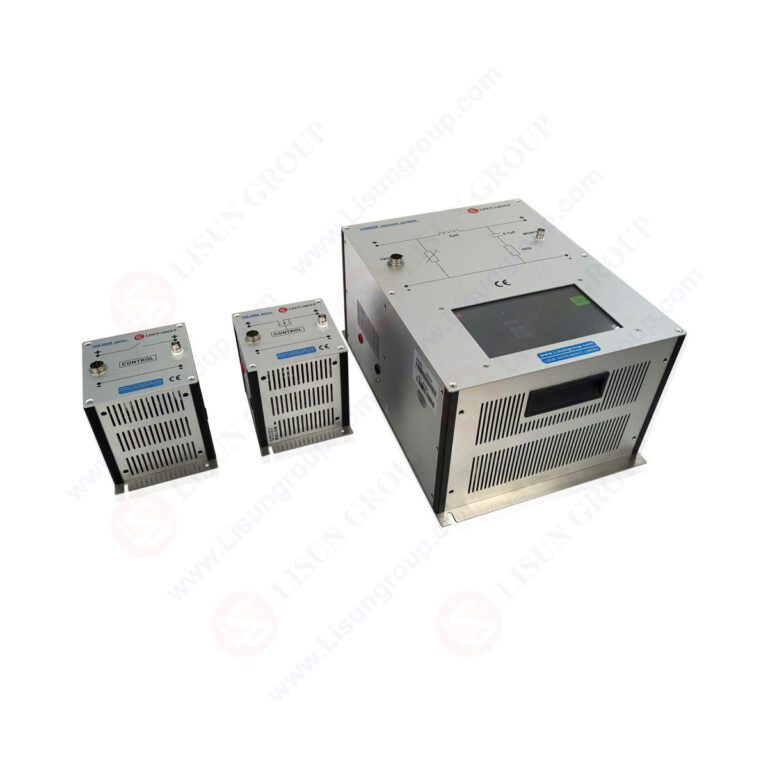
The LISUN RFCI61000-6 series employs a fully integrated RF signal generation and amplification architecture. The internal signal source covers the 80 MHz to 3 GHz frequency range with frequency resolution of 1 kHz, enabling precise carrier frequency selection for radiated immunity testing. The power amplifier module delivers output power levels of 35 watts for the RFCI61000-6-35W model and 85 watts for the RFCI61000-6-85W model, both measured at the amplifier output port with less than 1 dB flatness variation across the operational bandwidth. This integration eliminates the need for external signal generators and separate amplifier units, reducing system complexity and potential impedance mismatch issues that can compromise test repeatability. The combined module architecture ensures that the equipment under test (EUT) receives calibrated electromagnetic fields consistent with IEC 61000-4-3 requirements for field strength levels from 1 V/m to 30 V/m.
1.2 Power Meter and Feedback Control System
The RFCI61000-6 series incorporates an internal power meter with measurement accuracy of ±0.5 dB over the full frequency range. This power meter operates in conjunction with a closed-loop feedback control algorithm that continuously adjusts the amplifier output to maintain target field strengths at the EUT location. The feedback system compensates for cable losses, antenna factor variations, and environmental reflections that can affect field uniformity within the test chamber. Real-time power monitoring enables the system to detect and report significant deviations from setpoint values, providing immediate alerts when field strength tolerance limits are exceeded as specified in IEC 61000-4-3 clause 8.3.2 for uniform field area calibration. The power meter also supports forward and reflected power measurement, allowing operators to calculate voltage standing wave ratio (VSWR) at the antenna input port for system validation purposes.
1.3 Touchscreen User Interface and Test Automation
A 10-inch capacitive touchscreen interface serves as the primary human-machine interface for the RFCI61000-6 series. The graphical user interface provides access to test parameter configuration, including frequency stepping tables, modulation settings, dwell times, and field strength profiles. Operators can define custom test sequences with up to 500 frequency points per sweep, with each point configurable for amplitude modulation depth, pulse modulation duty cycle, or unmodulated continuous wave operation. The interface supports both manual operation for research and development applications and fully automated execution for production compliance testing. Test results are displayed in real-time with graphical frequency-response plots and tabular compliance summaries, and can be exported to standard report formats for documentation purposes.
2.1 IEC 61000-4-3 Radiated Immunity Requirements
The RFCI61000-6 series is designed to meet the testing methodology requirements specified in IEC 61000-4-3 for radiated, radio-frequency, electromagnetic field immunity testing. The system supports the standard test levels defined in Table 1 of IEC 61000-4-3, covering level 1 (1 V/m) through level 4 (30 V/m) for general industrial environments, as well as higher levels required for specific applications such as medical device testing. The system’s frequency coverage from 80 MHz to 3 GHz encompasses the full frequency range mandated by IEC 61000-4-3, including the extended frequency ranges required for equipment operating in residential, commercial, and light-industrial environments. The modulation capabilities include 1 kHz sine wave amplitude modulation at 80% depth, as required by IEC 61000-4-3 clause 8.2.2 for immunity testing, and pulse modulation for specific product family standards that reference alternative modulation formats.
2.2 EN 61000-4-6 and GB/T 17626.6 Conducted Immunity Alignment
While primarily marketed for radiated immunity testing, the RFCI61000-6 series supports conducted immunity testing methods defined in EN 61000-4-6 and GB/T 17626.6. The system’s signal generation capabilities include the frequency range from 150 kHz to 80 MHz, enabling conducted disturbance injection via coupling-decoupling networks (CDN). The system supports the injection methods specified in EN 61000-4-6 clause 7.2, including direct injection via CDN-M1, CDN-M2, and CDN-M3 configurations. The internal power amplifier provides sufficient output to drive CDN devices while maintaining the low output impedance characteristics required for conducted immunity testing. The system’s metrology-grade power measurement and calibration capabilities ensure that injection levels comply with the test severity levels defined in GB/T 17626.6 Table 1, spanning level 1 (120 dBµV) through level 4 (140 dBµV) open-circuit voltage levels.
2.3 Additional Industry Standard Support
The RFCI61000-6 series testing capabilities extend to product-specific standards that reference IEC 61000-4-3 methodology. Medical device manufacturers can perform testing in accordance with IEC 60601-1-2, which specifies field strength requirements for electromagnetic compatibility of medical electrical equipment. The automotive electronics industry can leverage the system for testing per CISPR 25 and ISO 11452-2 radiated immunity requirements for vehicle components. The system’s frequency coverage and modulation flexibility also support testing to IEC 61000-6-1 and IEC 61000-6-2, which define immunity requirements for residential, commercial, and light-industrial environments, as well as industrial environments respectively.
3.1 Output Power and Frequency Characteristics
The following table provides a technical comparison between the two RFCI61000-6 series models across key performance parameters relevant to EMC immunity testing:
| Parameter | RFCI61000-6-35W | RFCI61000-6-85W | Industry Requirement |
|---|---|---|---|
| Maximum Output Power | 35 W | 85 W | ≥ 10 W (IEC 61000-4-3) |
| Frequency Range | 80 MHz – 3 GHz | 80 MHz – 3 GHz | 80 MHz – 1 GHz (Standard) |
| Output Flatness | ±1.0 dB | ±1.0 dB | ±2.0 dB (Typical) |
| VSWR Tolerance | < 2.0:1 | < 2.0:1 | < 2.5:1 (Industry norm) |
| Amplitude Modulation | 0-99% (1 kHz) | 0-99% (1 kHz) | 80% Depth Required |
| Field Strength (1 m distance) | Up to 10 V/m | Up to 30 V/m | 1-30 V/m (Level 1-4) |
| Frequency Resolution | 1 kHz | 1 kHz | ±1% of Carrier |
| Power Measurement Accuracy | ±0.5 dB | ±0.5 dB | ±1.0 dB (Acceptable) |
The 85W variant provides the capability to achieve 30 V/m field strength levels required for IEC 61000-4-3 level 4 testing, while the 35W model is suitable for applications requiring field strengths up to 10 V/m typical for residential and light-industrial environments.
3.2 Modulation Capabilities and Signal Integrity
The RFCI61000-6 series supports multiple modulation formats essential for comprehensive EMC immunity testing. Amplitude modulation at 1 kHz with adjustable depth from 0% to 99% enables testing to IEC 61000-4-3 clause 8.2.2 requirements, where 80% amplitude modulation depth is the standard setting. Pulse modulation capability supports duty cycle adjustments from 1% to 99% with pulse repetition rates from 1 Hz to 100 kHz, allowing testing to product-specific standards that require pulsed RF fields. The system also supports unmodulated continuous wave (CW) testing for worst-case scenario analysis and for applications where amplitude modulation is not required. Signal integrity is maintained through low-phase-noise frequency synthesis, ensuring that spurious emissions and harmonics remain at least 30 dB below the carrier signal across the full frequency and power range.
3.3 System Calibration and Field Uniformity Support
The RFCI61000-6 series includes comprehensive calibration support features aligned with IEC 61000-4-3 clause 8.3 requirements for uniform field area (UFA) validation. The system provides automated field probe data acquisition interfaces compatible with isotropic E-field probes operating from 1 V/m to 1000 V/m. The calibration software module guides operators through the 16-point UFA mapping procedure, recording field strength at each point and calculating the statistical distribution required for UFA validation. The system records forward and reflected power at each frequency point during calibration, enabling correlation between amplifier output power and achieved field strength for subsequent test execution. This calibration data is stored in non-volatile memory and can be recalled for periodic reverification as required by laboratory accreditation standards such as ISO/IEC 17025.
4.1 Coupling-Decoupling Network Integration
The RFCI61000-6 series supports a range of coupling-decoupling networks (CDN) for conducted immunity testing in accordance with IEC 61000-4-6 and EN 61000-4-6. The system provides both direct connection via the main RF output port and auxiliary ports for multi-port testing configurations. CDN types including CDN-M1 for unshielded balanced lines, CDN-M2 for coaxial cables, CDN-M3 for unshielded unbalanced lines, and CDN-AF for AC mains power lines are compatible with the RFCI61000-6 series output characteristics. The system’s output impedance of 50 ohms matches the standard input impedance of commercial CDN devices, ensuring minimal power reflection and maximum power transfer to the EUT. The internal power meter provides pre- and post-CDN power measurements, enabling precise calculation of actual injected disturbance levels at the EUT ports.
4.2 Injection Coupling Methods
The system supports the three primary injection methods defined in IEC 61000-4-6 clause 7.2: direct injection via CDN, injection via bulk current injection (BCI) probes, and electromagnetic clamp injection. For CDN-based injection, the RFCI61000-6 series provides the required 150 kHz to 80 MHz frequency coverage with frequency stepping resolution suitable for conducted immunity test sequences. For BCI applications, the system supports the calibration procedures defined in IEC 61000-4-6 clause 7.3, where the injection probe is calibrated with a 50-ohm load before connection to the EUT cabling. The electromagnetic clamp injection method, specified for testing of unshielded cables, is supported through the system’s ability to maintain constant output power across the full frequency range, compensating for the frequency-dependent transfer impedance of clamp devices.
5.1 LED Lighting and Medical Device Manufacturing
The LED lighting industry requires EMC immunity testing to ensure that driver circuits and control electronics maintain stable operation under electromagnetic field exposure. The RFCI61000-6 series enables compliance testing to IEC 61547 for lighting equipment immunity, covering the 80 MHz to 1 GHz frequency range at field strength levels appropriate for residential and commercial LED installations. Medical device manufacturers benefit from the system’s ability to generate the higher field strength levels required by IEC 60601-1-2, which specifies 3 V/m for life-supporting equipment and up to 10 V/m for equipment intended for use in high-EMI environments such as operating rooms. The system’s automated test sequences allow manufacturers to perform pre-compliance evaluations during product development and formal certification testing with accredited laboratories.
5.2 Power Equipment and Industrial Control Systems
Power equipment manufacturers, including those producing variable frequency drives, uninterruptible power supplies, and power conversion systems, utilize the RFCI61000-6 series for radiated immunity testing per IEC 61000-6-2 for industrial environments. The system’s ability to maintain field strength uniformity across the test frequency range is critical for verifying that power electronic devices do not experience malfunctions such as false triggering, output voltage deviations, or communication errors under electromagnetic interference. Industrial control systems containing programmable logic controllers, human-machine interfaces, and sensor networks require testing to demonstrate immunity to the RF fields commonly present in manufacturing facilities with wireless communication systems and high-frequency industrial heating equipment.
5.3 New Energy Charging Stations and Communications Infrastructure
Electric vehicle charging stations and associated communication systems require EMC immunity testing to ensure reliable operation in the presence of RF fields from broadcasting stations, mobile communication equipment, and other charging infrastructure. The RFCI61000-6 series supports testing of charging station control electronics and power conversion modules to the requirements specified in IEC 61851-21 for conductive charging systems. The communications sector benefits from the system’s comprehensive frequency coverage from 80 MHz to 3 GHz, which encompasses the frequency bands used by 4G LTE, 5G NR, wireless local area networks, and broadcast services. Testing confirms that communications equipment maintains performance characteristics such as bit error rate, signal-to-noise ratio, and data throughput when exposed to the maximum expected field strengths in deployment environments.
6.1 Reduced Test Setup Complexity
The integrated architecture of the RFCI61000-6 series reduces test setup complexity compared to systems requiring separate signal generators, power amplifiers, and power meters. Operators achieve time savings of approximately 40% for initial system configuration and calibration, as the single-chassis design eliminates the need for interconnecting cables and external synchronization signals. The closed-loop feedback system automatically adjusts for cable losses and impedance mismatches, reducing the need for manual power level compensation during frequency sweeps. The system’s automated calibration routines, which include self-test functions for verifying internal power levels and modulation accuracy, enable operators to begin testing with minimal training, reducing the barrier to entry for laboratories establishing new EMC testing capabilities.
6.2 Data Management and Reporting
The RFCI61000-6 series includes comprehensive data management features designed to support laboratory quality management systems and accreditation requirements. Test results are logged with timestamp data, operator identification, EUT details, and configuration parameters to provide complete traceability for audit purposes. The system generates compliance reports formatted according to IEC 61000-4-3 clause 10 requirements for test report documentation, including test set-up descriptions, calibration certificates, measurement uncertainty calculations, and test results tables with pass/fail determinations. Data export in CSV, PDF, and XML formats facilitates integration with laboratory information management systems (LIMS) and electronic quality management platforms. The system’s data storage capacity supports retention of test records for the duration of product lifecycle requirements.
7.1 Antenna Selection and Field Generation
The RFCI61000-6 series is compatible with the full range of antennas specified in IEC 61000-4-3 for radiated immunity testing. For frequency coverage from 80 MHz to 320 MHz, bilog antennas such as the LISUN BL-0503 provide broadband performance with linear polarization and typical gain of 5-8 dBi across this frequency range. For frequencies from 300 MHz to 3 GHz, dual-ridged waveguide horn antennas offer the directivity and bandwidth required for uniform field generation in test chambers with dimensions from 3 meters to 10 meters. The system’s output power levels are specified to achieve target field strengths at the standard test distance of 1 meter from the antenna, consistent with IEC 61000-4-3 clause 8.2 for test set-up geometry. Antenna polarization switching, required during vertical and horizontal polarization testing, is accommodated through the system’s ability to store different calibration files for each polarization orientation.
7.2 Shielded Enclosure Integration
Proper system operation requires integration with a shielded enclosure or anechoic chamber meeting the performance requirements of IEC 61000-4-3 clause 8.1 for electromagnetic shielding effectiveness. The RFCI61000-6 series provides RF feedthrough ports compatible with standard chamber wall panels, enabling antenna placement within the chamber while keeping the main system outside to minimize local RF exposure to operators. The system’s output port incorporates protection circuits that limit reflected power in the event of antenna mismatch or cable failure, preventing damage to the amplifier module. The low VSWR characteristics of the RFCI61000-6 series are advantageous in chambers with imperfect impedance matching, as the system maintains stable output power even when load impedance varies from the ideal 50-ohm standard.
The LISUN RFCI61000-6 series RF Conducted Immunity Test System provides a technically robust solution for EMC compliance testing to IEC 61000-4-3, EN 61000-4-6, and GB/T 17626.6 standards. The integrated signal source, power amplifier, and power meter architecture reduces system complexity while maintaining the precision required for calibration laboratory environments. The dual power variants, spanning 35W and 85W output configurations, accommodate testing requirements from basic residential immunity levels through industrial and medical device compliance standards requiring field strengths up to 30 V/m. The system’s closed-loop feedback control, comprehensive modulation capabilities, and CDN compatibility enable testing across the full spectrum of radiated and conducted immunity applications. For industries including LED manufacturing, medical devices, power equipment, industrial control, new energy charging infrastructure, and communications, the RFCI61000-6 series delivers the technical performance, standards compliance, and operational efficiency required for reliable electromagnetic compatibility validation.
Q1: What frequency range does the LISUN RFCI61000-6 series cover for radiated immunity testing, and does it support extended frequency ranges?
A: The RFCI61000-6 series covers the frequency range from 80 MHz to 3 GHz, which fully satisfies the requirements of IEC 61000-4-3 for radiated immunity testing. This range encompasses the standard frequencies required for most commercial, industrial, and medical equipment compliance testing. The system also supports frequencies down to 150 kHz for conducted immunity applications in accordance with IEC 61000-4-6, enabling a single system to address both radiated and conducted testing requirements. For product-specific standards requiring extended frequency coverage above 3 GHz, the RFCI61000-6 series can be configured with external antenna systems and signal conditioners while maintaining the system’s core measurement and control capabilities.
Q2: How does the RFCI61000-6 series maintain field uniformity during testing, and what calibration procedures are required?
A: The RFCI61000-6 series supports field uniformity calibration in accordance with IEC 61000-4-3 clause 8.3.2, which requires a minimum of 16 measurement points within the uniform field area. During calibration, an isotropic E-field probe placed at each point records the field strength while the system adjusts output power to achieve the target level. The calibration software calculates the statistical distribution, requiring that at least 12 of 16 points fall within the 0 dB to +6 dB tolerance range relative to the target field strength. The system stores calibration data for each test configuration, enabling repeatable field conditions across multiple test sessions. Periodic recalibration every 12 months is recommended, with additional verification after any system relocation or component replacement that could affect field uniformity.
Q3: What is the difference between the RFCI61000-6-35W and RFCI61000-6-85W models, and how do I select the appropriate power level for my testing requirements?
A: The primary difference between the two models is the maximum output power, which directly determines the achievable field strength in a testing environment. The RFCI61000-6-35W delivers 35 watts output, suitable for generating field strengths up to 10 V/m at 1 meter distance using standard broadband antennas. This configuration meets IEC 61000-4-3 level 2 and level 3 requirements for residential, commercial, and light-industrial environments. The RFCI61000-6-85W provides 85 watts output, enabling field strengths up to 30 V/m for level 4 testing in industrial environments, medical device testing per IEC 60601-1-2, and applications requiring higher field margins. Selection depends on the maximum field strength required by applicable product standards, chamber size and antenna efficiency, and safety margins for production testing variability.
Q4: Can the RFCI61000-6 series be used for both pre-compliance testing during product development and full certification testing for final compliance?
A: Yes, the RFCI61000-6 series is suitable for both pre-compliance and full certification testing applications. During product development, the system’s fast sweep capability and automated test sequences enable rapid evaluation of design iterations, identifying potential immunity issues before formal certification testing. The system generates repeatable test conditions that correlate with accredited laboratory results when identical test set-ups and calibration procedures are followed. For certification testing, the RFCI61000-6 series meets the measurement uncertainty requirements of ISO/IEC 17025 laboratory accreditation when properly calibrated and operated in accordance with the manufacturer’s specifications. The system’s comprehensive data logging and report generation features support the documentation requirements for formal compliance declarations and third-party certification submissions.