









Abstract
The LISUN DFX series Externally Ballasted Fluorescent Lamp Test Load Cabinet is a high-precision load simulation system designed for compliance testing of circuit breakers, switches, and electrical accessories under IEC 60898-1:2019 and related standards. This article explores the technical architecture, compliance capabilities, and practical applications of the DFX series for electrical product manufacturers and testing laboratories. As a dedicated circuit breaker tester, the DFX series provides accurate resistive, inductive, and capacitive load simulation with power factors ranging from 0.3 to 1.0, enabling comprehensive verification of thermal and magnetic trip characteristics. The system supports cyclic testing, overload endurance, and short-circuit performance validation. Key models including DFX-20, DFX-20-3CH, DFX-40, DFX-60, and DFX-80 are compared across technical specifications. The article also details integration with complementary LISUN equipment such as the CZKS series life testers and SW-6 bending testers for end-to-end testing workflows. Standard citations from IEC 60898-1, IEC 60669-1, IEC 60884-1, and GB 10963.1 validate compliance relevance. A FAQ section addresses common technical queries about load selection, calibration, and multi-channel operation.
1.1 The Role of Load Simulation in Compliance Testing
Electrical accessory testing under international standards requires precise simulation of real-world electrical loads. Circuit breakers must demonstrate reliable operation under various fault and normal conditions, including overload currents, short-circuit currents, and capacitive load switching. The IEC 60898-1:2019 standard specifically mandates testing with resistive and inductive loads to verify trip curves and breaking capacity. An effective circuit breaker tester must generate stable, repeatable load currents with controlled power factors and harmonic content. The LISUN DFX series addresses these requirements through externally ballasted fluorescent lamp load simulation, which provides a well-defined, reproducible test environment.
1.2 Overview of the LISUN DFX Series
The DFX series comprises five models: DFX-20 (20A single-channel), DFX-20-3CH (20A three-channel), DFX-40 (40A), DFX-60 (60A), and DFX-80 (80A). Each model serves as a dedicated circuit breaker tester for evaluating miniature circuit breakers (MCBs), residual current devices (RCDs), and switches under load. The test cabinet incorporates external ballasts to simulate fluorescent lamp loads, which exhibit specific current waveforms and power factors. This simulation capability is critical for testing devices rated for lighting circuits. The system supports continuous operation for endurance testing and programmable cyclic patterns for life testing.
2.1 Core Performance Parameters
The DFX series delivers current output ranges from 0.5A to 80A depending on the model, with voltage input accepting 100-277V AC at 50/60Hz. Power factor adjustment ranges from 0.3 (inductive) to 1.0 (resistive) with a resolution of 0.01. Load capacitance for fluorescent lamp simulation is configurable between 0.1µF and 10µF per channel. Measurement accuracy for current is within ±1% of reading plus 0.1A, while power factor accuracy is ±0.02. These specifications ensure compliance with test tolerances defined in IEC 60898-1:2019 Clause 9.7.2.
2.2 Technical Comparison Table of DFX Models
| Model | Current Range | Channels | Input Voltage | Power Factor Range | Max Capacitive Load | Dimensions (mm) | Weight (kg) |
|---|---|---|---|---|---|---|---|
| DFX-20 | 0.5A – 20A | 1 | 100-277V AC | 0.3-1.0 | 5µF | 600×500×800 | 45 |
| DFX-20-3CH | 0.5A – 20A per channel | 3 | 100-277V AC | 0.3-1.0 | 5µF per channel | 800×600×1000 | 75 |
| DFX-40 | 1A – 40A | 1 | 100-277V AC | 0.3-1.0 | 10µF | 600×500×800 | 55 |
| DFX-60 | 1A – 60A | 1 | 100-277V AC | 0.3-1.0 | 10µF | 700×600×1000 | 70 |
| DFX-80 | 1A – 80A | 1 | 100-277V AC | 0.3-1.0 | 10µF | 700×600×1000 | 85 |
The DFX-20-3CH model is particularly suitable for simultaneous testing of three-pole circuit breakers or for high-throughput testing in production environments. Each channel operates independently with individual current and power factor settings, enabling parallel testing of multiple device samples.
3.1 IEC 60898-1:2019 Circuit Breaker Testing Requirements
IEC 60898-1:2019 specifies test procedures for miniature circuit breakers rated up to 125A. Clause 9.7 requires thermal and magnetic trip testing with resistive-inductive loads at defined power factors. For example, Clause 9.7.2.2 mandates that test circuits for breaking capacity tests must have a power factor between 0.4 and 0.6 for rated currents up to 100A. The DFX series achieves this through external ballast configurations. Clause 9.12.2 on overload performance requires 50 cycles of operation at 1.45 times rated current with specified time-current characteristics. The DFX series supports cyclic testing with programmable on/off times and current levels.
3.2 Additional Standard Compliance
Beyond IEC 60898-1, the DFX series supports testing under IEC 60669-1 (switches for household and similar fixed electrical installations). Clause 19.2 of IEC 60669-1 requires inductive load testing for switches rated for fluorescent lamp circuits. The DFX series provides the necessary power factor correction and capacitive load simulation. For socket-outlet testing, IEC 60884-1 Clause 20 specifies endurance testing with inductive loads. The DFX series can generate the required 0.6 power factor loads. Additionally, GB 10963.1 (Chinese national standard equivalent to IEC 60898-1) is fully supported, making the system suitable for the Asian market.
4.1 Resistive and Inductive Load Generation
The DFX series employs high-precision power resistors and air-core inductors for load simulation. Resistive loads are generated using wire-wound resistors with tolerance better than ±1% and temperature coefficient below 50 ppm/°C. Inductive loads are produced through external ballasts designed for fluorescent lamp ballast characteristics. The combination allows power factors from 0.3 (highly inductive) to 1.0 (purely resistive) in steps of 0.01. This granularity ensures that test conditions match standard requirements exactly. For circuit breaker tester applications, the system can simulate worst-case inductive loads with high inrush currents typical of lighting circuits.
4.2 Capacitive Load Simulation for Capacitive Switching Tests
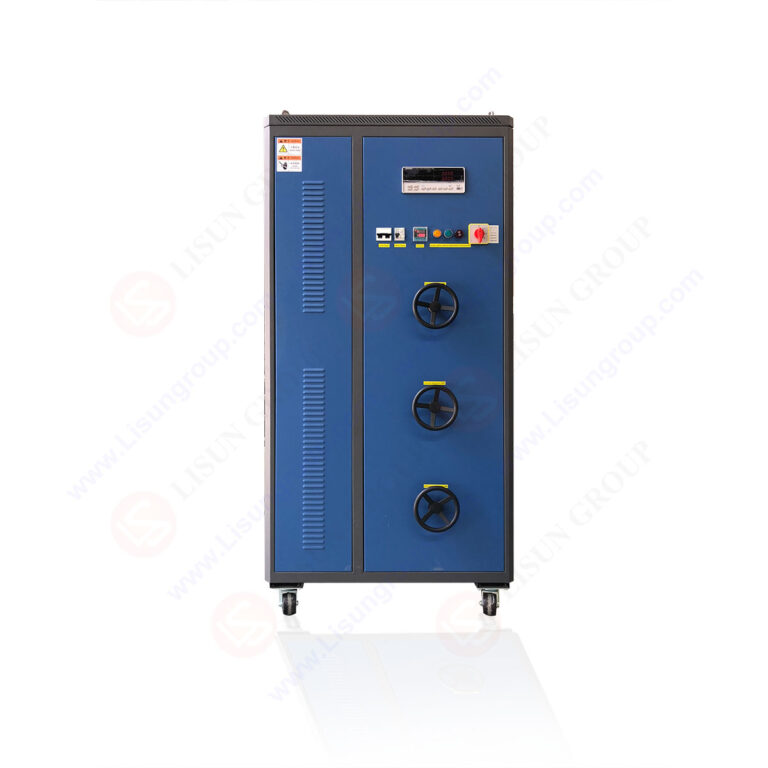
Capacitive load testing is essential for circuit breakers used in capacitor bank or power factor correction applications. The DFX series includes configurable capacitive loads from 0.1µF to 10µF per channel. Capacitors are metalized polypropylene film type with low equivalent series resistance for accurate simulation. IEC 60898-1 Appendix H describes capacitive switching tests for DC circuit breakers. The DFX series supports these tests with controlled capacitive charging current waveforms. The system’s digital control allows precise timing of capacitive load application, ensuring reproducible test results across multiple test runs.
5.1 CZKS Series Life Testers for Endurance Testing
The LISUN CZKS series life testers are designed for long-term endurance testing of switches and circuit breakers. When integrated with the DFX series circuit breaker tester, the combined system provides automated life testing under defined load conditions. The CZKS-1 model supports up to 100,000 test cycles with programmable sequences. The DFX series supplies the load current while the CZKS controls the mechanical operation of the device under test. This integration enables compliance with IEC 60898-1 Clause 9.12 (endurance test) requiring 4,000 cycles of operation at rated current. The LISUN software platform coordinates data logging from both systems, providing comprehensive test reports.
5.2 SW-6 Bending Testers for Mechanical Compatibility
For socket-outlet and switch testing, the SW-6 bending tester evaluates mechanical endurance of cable connections. While the SW-6 focuses on mechanical stress, the DFX series provides the electrical load during testing. Integrated testing ensures that devices pass both mechanical and electrical requirements simultaneously. IEC 60884-1 Clause 21 requires bending tests with electrical continuity monitoring. The DFX series can supply a monitoring current while the SW-6 applies mechanical stress. This combined approach reduces test time and improves correlation between mechanical and electrical performance data. The LISUN ecosystem enables seamless data transfer between the DFX series and SW-6 through a common control interface.
6.1 Digital Control and Programmability
The DFX series features a touchscreen interface with intuitive menu navigation. Operators can set current levels, power factors, test duration, and cyclic patterns through the digital control panel. Up to 100 test sequences can be stored in memory for rapid recall. The system supports remote control via RS-232, USB, or Ethernet interfaces for integration into automated test systems. For circuit breaker tester applications, the digital control ensures precise timing of load application and removal, critical for trip characteristic verification. The system logs current, voltage, power factor, and temperature data for each test run, with export capability to CSV or PDF formats.
6.2 Safety Features and Protection Mechanisms
The DFX series incorporates multiple safety layers to protect both equipment and operators. Overcurrent protection trips the output if current exceeds set limits by 10%. Overvoltage protection monitors input supply and disconnects loads if voltage deviates beyond ±10% of nominal. Thermal protection with temperature sensors on load resistors and inductors prevents overheating during extended testing. Emergency stop buttons are located on the front panel and remote pendant. The system meets IEC 61010-1 safety requirements for electrical test equipment. All load components are enclosed in ventilated cabinets with temperature-controlled fans for reliable long-term operation.
7.1 Calibration Procedures and Traceability
Annual calibration is recommended to maintain accuracy. The DFX series includes self-calibration routines using internal reference resistors and current shunts. External calibration requires a reference current source with accuracy better than ±0.1% and a power factor measurement standard. LISUN provides calibration software that generates certificates traceable to national standards. For circuit breaker tester applications, calibration must verify current accuracy at multiple power factors. The system stores calibration coefficients for each load setting, ensuring consistent performance between calibrations. Users can perform daily verification checks using built-in test points.
7.2 Routine Maintenance and Troubleshooting
Regular maintenance includes cleaning of air filters, inspection of load resistor connections, and verification of ballast inductor integrity. The DFX series provides diagnostic codes for common faults such as open-circuit ballasts, shorted capacitors, or communication errors. Spare ballast modules are available for field replacement. The system logs operating hours and component stress levels to predict maintenance needs. For high-usage testing laboratories, LISUN recommends preventive maintenance every 6 months or 500 operating hours. Replacement load resistors have a lifespan of 10,000 hours at rated current, while ballast inductors typically last 20,000 hours.
The LISUN DFX series Externally Ballasted Fluorescent Lamp Test Load Cabinet represents a comprehensive solution for high-precision circuit breaker testing under IEC 60898-1:2019 and related international standards. With five models covering current ranges from 0.5A to 80A, power factor adjustment from 0.3 to 1.0, and capacitive load simulation up to 10µF, the system provides the technical versatility required for compliance testing of miniature circuit breakers, switches, and socket-outlets. The multi-channel DFX-20-3CH model enables parallel testing, improving laboratory throughput without sacrificing accuracy. Integration with LISUN CZKS series life testers and SW-6 bending testers creates an end-to-end testing workflow that addresses mechanical and electrical compliance simultaneously. The digital control interface, programmability, and data logging capabilities support both R&D and production testing environments. For manufacturers seeking to validate circuit breaker trip characteristics, overload endurance, and capacitive switching performance, the DFX series delivers consistent, traceable results. The system’s adherence to IEC 60898-1 Clauses 9.7 and 9.12, IEC 60669-1 Clause 19.2, IEC 60884-1 Clause 20, and GB 10963.1 ensures that tested products meet global market requirements. The combination of technical precision, operational flexibility, and safety features makes the DFX series a reliable investment for compliance testing laboratories and quality control departments.
Q1: What is the difference between the DFX-20 and DFX-20-3CH models for circuit breaker testing?
A: The DFX-20 is a single-channel system providing 0.5A to 20A output for testing one device at a time. The DFX-20-3CH offers three independent channels, each capable of 0.5A to 20A output. For three-pole circuit breakers, the DFX-20-3CH allows simultaneous testing of all poles under identical or different load conditions. Each channel has independent power factor adjustment from 0.3 to 1.0, enabling testing of unbalanced load conditions as required by IEC 60898-1 Clause 9.7.2. The three-channel configuration also increases throughput in production testing by allowing parallel testing of three single-pole devices. However, the DFX-20-3CH has a larger footprint (800×600×1000 mm) and higher weight (75 kg) compared to the DFX-20 (600×500×800 mm, 45 kg). Both models support remote control and data logging, but the DFX-20-3CH requires more complex wiring for multi-channel operation.
Q2: Can the DFX series be used for testing residual current devices (RCDs) in addition to circuit breakers?
A: Yes, the DFX series circuit breaker tester is fully compatible with RCD testing. However, RCD testing requires additional equipment to simulate earth fault currents. The DFX series provides the load current on the line side, while a separate RCD tester (such as the LISUN LCR-1) injects a differential current to trip the device. The DFX series’ power factor adjustment capability is particularly important for RCD testing because IEC 61008-1 requires testing with resistive and inductive loads at specified power factors. For Type A RCDs, testing with pulsating DC waveforms is required, which the DFX series can simulate through its capacitive load configuration. The system’s ability to maintain stable currents during long-duration tests (up to several hours) makes it suitable for RCD endurance testing per IEC 61008-1 Clause 9.12. Users should note that RCD testing typically requires currents up to 100A for short-circuit tests, so the DFX-80 model is recommended for full RCD compliance testing.
Q3: How does the DFX series handle power factor adjustment for inductive load testing?
A: The DFX series uses external ballast inductors combined with adjustable power resistors to achieve precise power factor control. The system first calculates the required inductive reactance and resistance based on the desired power factor and test current. For example, to achieve a power factor of 0.5 at 20A and 230V, the system configures a load impedance with 60% inductive reactance (11.5Ω) and 40% resistance (7.67Ω). The ballast inductors are designed with low DC resistance (less than 0.5Ω) to minimize heating and maintain stable inductance over temperature. The power factor adjustment resolution of 0.01 allows fine-tuning to meet the exact requirements of IEC 60898-1 Clause 9.7.2.2, which specifies power factor tolerances of ±0.05. The system automatically compensates for ballast heating during extended tests by adjusting the resistive component through a feedback loop that monitors real-time power factor. This closed-loop control ensures that the power factor remains within ±0.02 of the set value throughout the test duration.
Q4: What are the calibration requirements for maintaining testing accuracy?
A: The DFX series circuit breaker tester requires annual calibration to maintain its specified accuracy of ±1% for current and ±0.02 for power factor. Calibration involves verifying current output at multiple setpoints (typically 10%, 50%, and 100% of full scale) using a reference current shunt with accuracy better than ±0.1%. Power factor calibration requires a reference power analyzer with accuracy better than ±0.5% for phase angle measurement. The system’s internal reference resistor (0.1% tolerance) is used for daily verification checks. LISUN provides a calibration kit that includes precision resistors, inductors, and software for generating calibration reports. For laboratories accredited to ISO 17025, the DFX series can be calibrated with measurement uncertainty analysis. The system stores up to 10 calibration sets in non-volatile memory, allowing users to switch between calibration configurations for different test standards. Environmental conditions during calibration must be controlled to 23°C ±2°C and 45% ±10% relative humidity to maintain traceability.
Q5: Can the DFX series perform cyclic testing for circuit breaker endurance evaluations?
A: Yes, the DFX series supports programmable cyclic testing essential for endurance evaluations under IEC 60898-1 Clause 9.12. The system’s digital controller allows users to define up to 100 test sequences with parameters including current level (0.5A to rated maximum), power factor (0.3 to 1.0), on-time (0.1 to 999 seconds), off-time (0.1 to 999 seconds), and number of cycles (1 to 999,999). For a standard endurance test requiring 4,000 cycles at rated current, the DFX series can automatically execute the sequence while logging current, voltage, and temperature data for each cycle. The system can also simulate thermal stress by gradually increasing current during the test, as required for overload endurance tests. The DFX-20-3CH model enables simultaneous cyclic testing of three devices, reducing total test time by 66% compared to single-channel testing. The system includes a cycle counter that tracks completed cycles and estimated remaining time. If a device under test fails during cyclic testing, the DFX series automatically terminates the test and records the failure point for analysis.