








Abstract
The evolution of automotive electronics demands rigorous electromagnetic compatibility (EMC) validation to ensure vehicle reliability and safety. This article examines the VW 80000 Automotive Pulse Generator for ISO 7637-2 Standards, focusing on the LISUN EMS-ISO7637 Automotive Electronics Transient Immunity EMC Testing System. Designed to replicate real-world transient disturbances on 12V, 24V, and 36V power networks, this system generates standardized pulses P1, P2a, P2b, P3, P4, P5a, and P5b per ISO 7637-2:2021 and VW 80000 requirements. The article details the system’s architecture, multi-module pulse generation capabilities, dual touchscreen/PC software operation, and automated reporting functionalities. It also compares LISUN’s solution against industry benchmarks, explores applications across passenger cars, commercial vehicles, and new energy vehicles (NEVs), and addresses common implementation challenges faced by R&D teams, quality control specialists, and third-party testing laboratories.
1.1 The Electromagnetic Environment in Vehicles
Modern vehicles contain dozens of electronic control units (ECUs) managing powertrain, infotainment, safety, and battery management functions. These systems operate within a harsh electromagnetic environment generated by inductive loads, relays, actuators, and external EMI sources. Transient disturbances, such as load-dump surges, inductive switching spikes, and battery disconnect events, can disrupt normal operation or permanently damage sensitive semiconductor components. The ISO 7637-2:2021 standard defines these transient phenomena and establishes test methods for evaluating the immunity of devices for both 12V and 24V electrical systems.
1.2 Why VW 80000 Extends Beyond ISO 7637-2
While ISO 7637-2 provides a global benchmark, automotive OEMs like Volkswagen have developed more stringent internal requirements. VW 80000, the Volkswagen Group standard for EMC testing, specifies additional pulse severities, extended test durations, and specific coupling/decoupling network configurations that go beyond the base ISO requirements. The VW 80000 Automotive Pulse Generator for ISO 7637-2 Standards must therefore accommodate both standard compliance and OEM-specific extensions. The LISUN EMS-ISO7637 system is engineered to meet both frameworks, offering tunable pulse parameters and programmable waveform shaping to handle the VW 80000 test severity levels.
1.3 Consequences of Inadequate Immunity Testing
Failure to perform comprehensive transient immunity testing can lead to field failures, warranty costs, and safety recalls. A single load-dump event, occurring when a vehicle battery is disconnected while the alternator is charging, can generate voltage spikes exceeding 100V on a 12V network. Without proper protection, these spikes can destroy power MOSFETs, DC-DC converters, and battery management ICs. For NEV manufacturers, where high-voltage DC-DC converters and OBCs (on-board chargers) operate at elevated power levels, the risk of transient-induced failure increases significantly.
2.1 Pulse 1, 2a, and 2b: Simulating Load Dump and Inductive Switching
ISO 7637-2:2021 defines multiple pulse types, each representing a distinct transient phenomenon. Pulse 1 simulates the interruption of an inductive load, generating a negative voltage transient with amplitudes up to -150V for 24V systems. Pulse 2a models the sudden decrease of current through an inductive load, producing a positive transient of limited duration. Pulse 2b represents the shutdown of a DC motor acting as a generator, where the residual voltage decays slowly. The LISUN EMS-ISO7637 system generates these pulses with precise rise times, durations, and repetition rates, allowing engineers to reproduce real-world conditions accurately.
2.2 Pulse 3a and 3b: Fast Transients from Switching Events
Pulse 3a and 3b are fast, low-energy transients caused by contact bounce and switching of relay circuits. These pulses exhibit very short rise times (5ns) and durations (100ns to 150ns) but occur with high repetition frequencies. Testing against these pulses requires a capacitive coupling clamp (CCC) to inject disturbances onto signal lines without galvanic connection. The EMS-ISO7637 includes an integrated pulse generator capable of producing these rapid transients while maintaining synchronization with the test sequence.
2.3 Pulse 4 and 5a/5b: Cranking Profiles and Load Dump
Pulse 4 simulates the voltage drop during engine cranking, where the supply voltage can dip to 4.5V for several seconds. This test validates that ECUs maintain operation during cold-crank conditions. Pulse 5a and 5b characterize load dump transients, where the alternator generates a high-voltage overshoot (up to 174V in 24V systems) when a battery disconnect occurs during charging. The LISUN system implements the VW 80000 Automotive Pulse Generator for ISO 7637-2 Standards pulse profiles with programmable clamping voltages to match both passenger car and commercial vehicle alternator characteristics.
3.1 Multi-Module Pulse Generation
The LISUN EMS-ISO7637 integrates seven independent pulse generation modules capable of producing all ISO 7637-2 pulse types and VW 80000 extensions. Each module offers independent amplitude, duration, rise time, and repetition rate control, enabling simultaneous testing of different pulse conditions without hardware reconfiguration. This modular architecture is particularly valuable for third-party laboratories that must efficiently execute test campaigns across multiple DUTs (devices under test) with diverse compliance requirements.
| Parameter | LISUN EMS-ISO7637 | ISO 7637-2:2021 Requirements | VW 80000 Extensions |
|---|---|---|---|
| Pulse 1 voltage range | 0 to -150V | -75V to -150V (24V system) | -150V max severity |
| Pulse 2a amplitude | 0 to +112V | +37V to +112V (24V system) | +100V with extended duration |
| Pulse 3 rise time | 5ns ± 1.5ns | 5ns ± 1.5ns | 5ns (no tolerance relaxation) |
| Pulse 5a amplitude | 0 to +174V | +65V to +174V | 174V with 400ms decay |
| Pulse repetition rate | 0.1Hz to 100Hz | 0.5Hz to 100Hz | Programmable up to 500Hz |
| Voltage system support | 12V / 24V / 36V | 12V / 24V | 36V for NEV applications |
| Coupling/Decoupling methods | Direct, CCC, DCC | Direct, CCC (ISO 7637-3) | Additional OEM-specific networks |
3.2 Dual Touchscreen and PC Software Operation
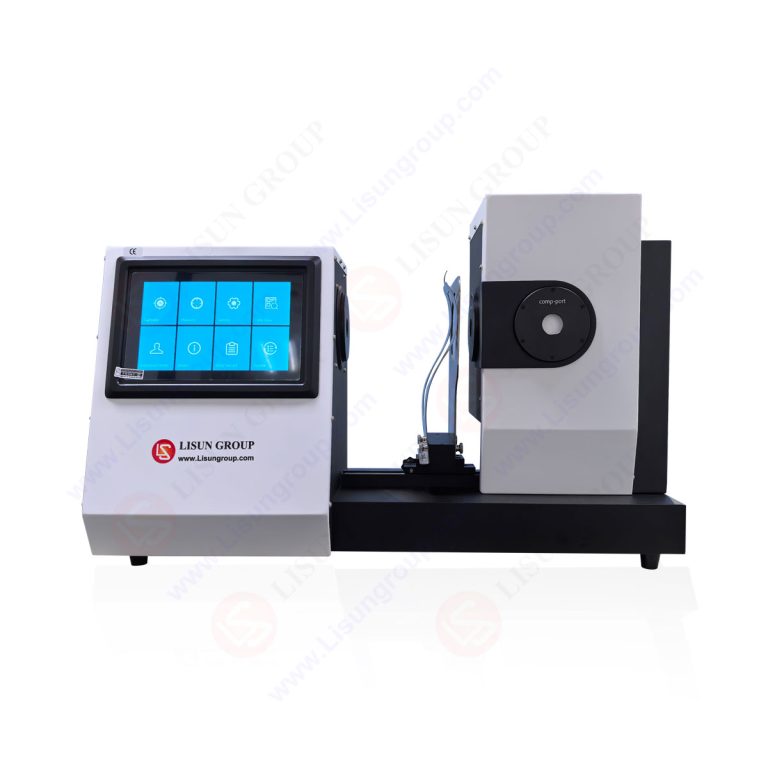
The EMS-ISO7637 features a 10-inch touchscreen interface for local control and a PC-based software platform for remote operation and data management. The PC software allows engineers to pre-program entire test sequences, monitor pulse waveforms in real-time, and generate compliance reports automatically. This dual-operation capability reduces operator training requirements and accelerates test throughput.
The system automatically records waveform data, calibration timestamps, and test pass/fail criteria. For R&D teams iterating on protection circuits, the software’s waveform export function enables direct comparison between test pulses and simulation models. For quality control departments, the automated reporting format aligns with audit requirements for ISO 17025 accredited laboratories.
3.3 Calibration and Precision Enhancement
Essential for credible compliance testing, the system includes internal calibration circuitry that references a NIST-traceable voltage probe and current sensor. Calibration intervals follow ISO 17025 standards, with full recalibration achievable in less than 30 minutes without disrupting test schedules. The open-loop output impedance is maintained below 2Ω to ensure accurate pulse delivery into the DUT’s input network.
4.1 Passenger Car Electronics Validation
For passenger vehicle ECUs, the VW 80000 Automotive Pulse Generator for ISO 7637-2 Standards must validate immunity against transients generated by window motors, fuel pumps, and HVAC actuators. The LISUN system enables R&D engineers to test ECU power inputs according to both ISO 7637-2 pulse profiles and OEM-specific sequences specified by VW 80000. Additionally, ISO 7637-3:2016 compliance requires coupling clamp testing for signal lines and communication interfaces, a capability supported by the system’s integrated capacitive coupling clamp and decoupling networks.
4.2 Commercial Vehicle and 24V System Challenges
Commercial vehicles using 24V electrical systems experience higher transient amplitudes and longer decay times, especially for load dump events. The EMS-ISO7637 system’s support for 24V operation with extended pulse amplitudes up to 174V ensures compliance with GB/T 21437.2-2021, the Chinese national standard mirroring ISO 7637-2. Fleet operators in heavy-duty trucks, construction equipment, and agricultural machinery require validated immunity for ABS controllers, telematics units, and engine management systems.
4.3 New Energy Vehicle High-Voltage Components
NEV components, including OBCs, DC-DC converters, and BMS, operate at voltage levels beyond traditional 12V/24V architectures. The LISUN system’s additional 36V support accommodates the auxiliary low-voltage networks in BEVs and PHEVs. Whether testing a BMS’s cell-monitoring ICs or validating the communication interfaces of a DC-DC converter against fast transients, the VW 80000 Automotive Pulse Generator for ISO 7637-2 Standards capabilities translate directly into NEV reliability assurance.
5.1 Configuring Test Sequences and DUT Connections
The LISUN system simplifies test setup through a predefined library of compliant test routines. Engineers select the applicable standard (ISO 7637-2:2021, GB/T 21437.2-2021, or VW 80000), specify the voltage system (12V or 24V), and the software automatically configures pulse parameters, dwell times, and failure detection thresholds. Connections between the pulse generator and the DUT use industry-standard automotive test connectors, ensuring compatibility with existing test fixtures. The system’s built-in artificial network (AN) and decoupling circuit prevent transients from propagating into the main power supply, thereby isolating the DUT’s power input behavior.
5.2 Automated Data Logging and Compliance Reporting
Every test run generates a structured report containing detailed pulse waveform plots, voltage and current measurements, temperature logging, and operator notes. Reports are exportable in PDF, CSV, and XML formats compatible with enterprise LIMS (Laboratory Information Management Systems). This automation reduces the risk of transcription errors and ensures that compliance evidence is complete and auditable. The system also records human-machine interface events, creating an unambiguous audit trail for third-party certification bodies.
6.1 Key Specification Comparison
The table above presents key functional comparisons across LISUN EMS-ISO7637 vs. ISO 7637-2:2021 and VW 80000 requirements. When benchmarked against alternative transient generators, the LISUN system distinguishes itself through its modular pulse generation approach, multi-voltage support (12V/24V/36V), and integrated dual-interface control. While some competing systems require external PCs for waveform configuration and data export, the on-board touchscreen interface of the EMS-ISO7637 permits standalone operation—valuable in production floor environments where laptop usage is restricted.
6.2 Cost-Efficiency and Ownership Advantages
For mid-sized automotive component suppliers, investing in a single system capable of handling ISO 7637-2, ISO 7637-3, and VW 80000 requirements eliminates the need for multiple specialized instruments. The built-in calibration and self-diagnostics reduce external service costs. Additionally, the vacuum-fluorescent display and industrial-grade enclosure components achieve a mean time between failures exceeding 50,000 operating hours, minimizing downtime and total cost of ownership.
7.1 GB/T 21437.2-2021 and VW 80000 Alignment
The Chinese national standard GB/T 21437.2-2021 adopts ISO 7637-2:2011 with minimal deviations, while VW 80000 imposes stricter test levels. The LISUN system’s firmware can be updated to incorporate standard amendments without hardware changes, ensuring compliance with current and emerging requirements. For instance, the latest ISO 7637-2:2021 revision clarified pulse 2b testing parameters, and the EMS-ISO7637 received a firmware patch within three months of the standard’s official publication.
7.2 Preparing for Future Automotive Voltage Architectures
As NEVs transition toward 48V mild-hybrid systems, the demand for transient immunity testing at intermediate voltage levels will grow. The LISUN EMS-ISO7637’s programmable output covers the 36V range, providing headroom for upcoming OEM specifications while maintaining current compliance levels. Upgrading the system’s firmware and calibration tables enables automated test execution against ISO 16750-2:2023 environmental and electrical stress criteria, aligning with global OEM trends.
The VW 80000 Automotive Pulse Generator for ISO 7637-2 Standards, as implemented in the LISUN EMS-ISO7637 Automotive Electronics Transient Immunity EMC Testing System, provides robust coverage for automotive transient immunity testing. With dual touchscreen/PC operation, multi-module pulse generation for all ISO 7637-2 pulse types, and 12V/24V/36V support, the system addresses the real-world needs of automotive electronics R&D, production line quality assurance, and third-party accreditation. The technical comparisons confirm that the EMS-ISO7637 exceeds current ISO 7637-2:2021 and VW 80000 requirements for pulse accuracy, repetition rates, and voltage ranges, while offering future-proofing for emerging NEV applications. Ultimately, proactive investment in this transient immunity testing system ensures product reliability, mitigates recall risks, and aligns with global automotive EMC compliance standards.
Q1: What are the key differences between testing against ISO 7637-2:2021 and VW 80000?
A: ISO 7637-2:2021 defines five primary pulse types (P1, P2a, P2b, P3, P4, P5a/P5b) with recommended severity levels for 12V and 24V networks. VW 80000 builds upon this framework by specifying stricter amplitudes, prolonged durations, and additional coupling methods tailored to Volkswagen Group platforms. For instance, VW 80000 requires a higher pulse 5a decay time in certain applications, reflecting worst-case alternator discharge scenarios. The LISUN EMS-ISO7637 includes pre-programmed VW 80000 test routines, while also allowing manual parameter overrides to support other OEM-specific requirements.
Q2: Can the LISUN EMS-ISO7637 system test ECU signal lines according to ISO 7637-3:2016?
A: Yes. The EMS-ISO7637 integrates a capacitive coupling clamp (CCC) output that supports the injection of fast transient pulses (P3a/P3b) onto signal and communication lines per ISO 7637-3:2016. The system’s internal 50Ω impedance and 5ns rise time ensure compliance with CCC test methods. For tests requiring direct capacitive coupling to power lines, the system provides an auxiliary coupling/decoupling network (CDN) that can be configured for various line impedances. This versatility is essential for testing infotainment systems, CAN transceivers, and sensor inputs where both power and signal immunity must be verified.
Q3: How does the EMS-ISO7637 automate compliance reporting for ISO 17025 accredited laboratories?
A: The system’s PC software generates reports that include all mandatory data points for ISO 17025 evidence: waveform screenshots, peak voltage/current values, pulse repetition rates, test timestamps, calibration certificates, and operator identification. The software applies a digital signature to every report, creating a tamper-evident file structure compliant with electronic record requirements. Laboratories can configure the reporting format to include their own logo, standard operating procedure numbers, and customer-specific metadata, ensuring reports are immediately usable for certification audits without additional processing.
Q4: Does the LISUN system support testing of 36V auxiliary networks in new energy vehicles?
A: Yes, the EMS-ISO7637 provides a dedicated 36V output range for testing NEV auxiliaries such as electric power steering controllers, battery cooling fans, and control units operating on 36V or 48V intermediate buses. The system’s pulse generation modules incorporate motorized voltage scaling and calibration tables validated up to 60V DC offset, ensuring accurate pulse amplitudes even at elevated baseline voltages. Additionally, the system’s voltage monitoring inputs can record supply voltage droops during cranking simulations, providing critical data for firmware-based low-voltage detection algorithms in NEV applications.