









Here is the comprehensive technical article on the LISUN RFCI61000-6 series, structured and written according to your specifications.
Abstract
For engineers tasked with validating product immunity against conducted RF disturbances, the LISUN RFCI61000-6 series offers a fully integrated solution for Industrial Control System EMC Testing: Reliable Immunity Solutions. This article provides a deep technical analysis of this RF Conducted Immunity Test System, covering its architecture, compliance with IEC 61000-4-6, and practical applications across regulated industries. As the cornerstone of modern EMC immunity testing, the system combines an integrated signal source, power amplifier, and power meter into a single unit, delivering precise, repeatable injection for equipment under test (EUT). The system’s dual power variants, 35W and 85W, address a wide range of test requirements, from sensitive medical devices to high-power industrial controls. This analysis focuses on the technical specifications, operational advantages, and compliance benefits that make this system a critical asset for any EMC laboratory.
1.1 Integrated Signal Source and Power Amplifier
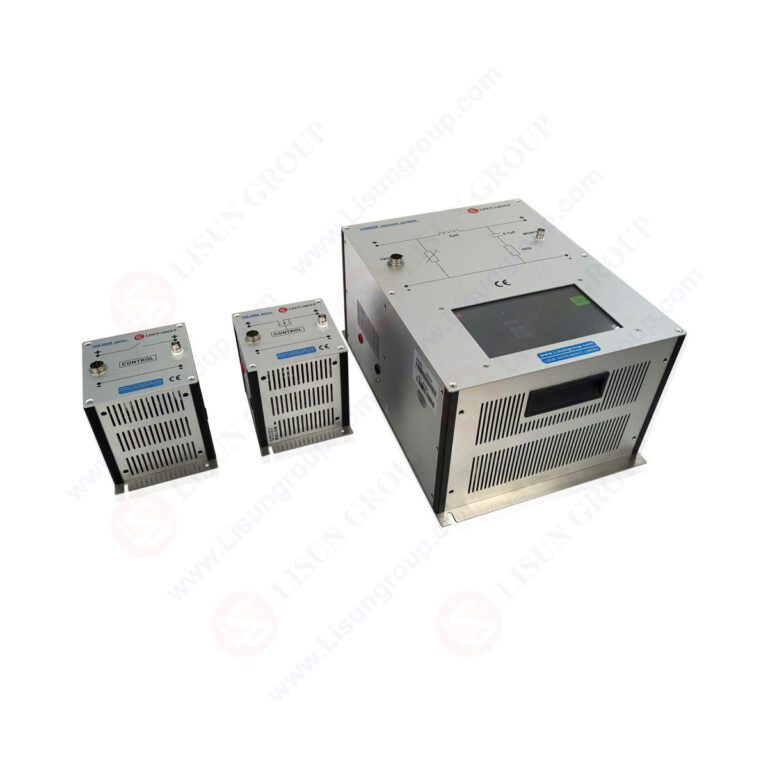
The LISUN RFCI61000-6 series distinguishes itself through a fully integrated design that consolidates the RF signal source, power amplifier, and power meter within a single chassis. This integration eliminates the need for external signal generators and separate amplification units, reducing the potential for impedance mismatches and signal path errors. The signal source provides a frequency range from 150 kHz to 80 MHz, covering the full scope of conducted immunity testing per IEC 61000-4-6. The built-in power amplifier is designed to deliver a low-distortion, high-stability output, ensuring that the applied test voltage is accurate and consistent across the entire frequency sweep.
1.2 Power Meter and Feedback Control Loop
A key technical feature is the integrated dual-path power meter (forward and reflected power), which forms a continuous feedback control loop. This loop automatically adjusts the amplifier output to maintain the required test level at the injection point, compensating for variations in the CDN’s impedance or the EUT’s load characteristics. The system displays both forward and reflected power in real-time, allowing engineers to monitor the voltage standing wave ratio (VSWR) and the efficiency of energy transfer. The automatic level control (ALC) function ensures that the test level remains within ±1.0 dB of the set value, a critical requirement for reproducible compliance testing.
1.3 Touchscreen Interface and Software Control
The system features a high-contrast touchscreen interface that streamlines test setup and execution. Engineers can pre-program test sequences by defining frequency points, modulation types (1 kHz AM 80%, 1 Hz CW, Pulse), and dwell times directly on the device. The interface allows for the creation of user-defined test profiles, which can be stored and recalled for repetitive testing of similar EUTs. For advanced laboratory automation, the system provides a software API and remote control via USB or GPIB, enabling seamless integration into a larger test bench environment.
2.1 Adherence to IEC 61000-4-6 and EN 61000-4-6
The primary standard governing RF conducted immunity is IEC 61000-4-6, which defines the test methods, frequency ranges, and severity levels for equipment subjected to conducted RF disturbances. The LISUN RFCI61000-6 series is designed to fully comply with this standard as well as its European equivalent, EN 61000-4-6. The system supports all required test levels (Level 1: 1 V, Level 2: 3 V, Level 3: 10 V, Level 4: 30 V, and X for custom levels) as detailed in Clause 5 of IEC 61000-4-6. The integrated system manages the complex sweep of 150 kHz to 80 MHz, ensuring no gaps in coverage.
2.2 Alignment with GB/T 17626.6 for Chinese Market
For product compliance in the Chinese market, the system also conforms to GB/T 17626.6, which is the national equivalent of IEC 61000-4-6. This standard is mandatory for CCC (China Compulsory Certificate) certification in numerous product categories, including LED lighting, medical electrical equipment, and industrial controls. The LISUN RFCI61000-6 series supports the injection methods specified in GB/T 17626.6, including direct coupling via CDNs, electromagnetic clamp injection, and bulk current injection (BCI), ensuring that manufacturers can achieve certification without additional test equipment.
2.3 Compatibility with Industry-Specific Standards
Beyond the base EMC standard, the system’s precision and power range make it suitable for testing to industry-specific requirements. For example, automotive electronics often have stricter immunity requirements defined in ISO 11452-4 for BCI, while medical device manufacturers refer to IEC 60601-1-2. The low VSWR characteristics and high output power of the 85W model allow it to effectively drive multiple CDNs simultaneously, a requirement for testing multi-port devices per CISPR 35 or for evaluating the immunity of complex power distribution equipment.
3.1 Model Comparison and Performance Metrics
The LISUN RFCI61000-6 series is offered in two power output variants, allowing laboratories to select the appropriate amplifier headroom for their specific EUT types. The following table provides a direct technical comparison of the key metrics:
| Parameter | LISUN RFCI61000-6-35W | LISUN RFCI61000-6-85W | Application Notes |
|---|---|---|---|
| Output Power (Min.) | 35 Watts | 85 Watts | Higher power required for large input impedance EUTs |
| Output Voltage (Open Circuit) | Up to 140 V (RMS) | Up to 210 V (RMS) | Determines maximum test level into high-impedance loads |
| Voltage Standing Wave Ratio (VSWR) | ≤ 1.5:1 (typical) | ≤ 1.5:1 (typical) | Ensures efficient power transfer to CDN/EUT |
| Amplitude Modulation | 1 kHz, 80% AM | 1 kHz, 80% AM | Standard modulation per IEC 61000-4-6 Clause 6.2 |
| Frequency Resolution | 1% of set frequency | 1% of set frequency | Critical for precise characterization of EUT resonances |
| Sweep Points | Up to 2000 per sweep | Up to 2000 per sweep | Ensures detailed coverage across 150 kHz to 80 MHz |
| CDN Compatibility | All standard T-Series CDNs | All standard T-Series CDNs + Multi-Port | 85W model ideal for driving high-impedance or multi-line CDNs |
3.2 Selecting the Right Power Variant
The choice between the 35W and 85W models typically depends on the test level required and the impedance of the coupling-decoupling network (CDN) and the EUT. The 35W variant is well-suited for testing sensitive electronics, such as small medical devices or communications modules, where the test level is typically 3V or 10V, and the EUT presents a balanced 50-ohm load. The 85W variant is essential when testing high-power industrial controls, large power supplies, or when using electromagnetic (EM) clamps or BCI probes, which have lower coupling efficiency. The 85W model provides the necessary headroom to overcome insertion losses and maintain the required test voltage.
4.1 Direct Coupling via CDNs (T-Series)
The most common method for RF conducted immunity testing is direct injection via Coupling-Decoupling Networks (CDNs). The LISUN RFCI61000-6 series is designed to work seamlessly with standard T-series CDNs, such as the CDN T2, T4, and T8, which are used for unscreended balanced lines. These CDNs are selected based on the port type of the EUT. The system’s low output impedance and flat frequency response ensure that the RF signal is injected with minimal distortion. The built-in power meter measures the forward and reflected power at the CDN input, allowing the system to maintain the correct test voltage (e.g., 3V, 10V) at the CDN’s EUT port, as required by IEC 61000-4-6 Clause 7.2.
4.2 Electromagnetic (EM) Clamp Injection
For ports where direct capacitive coupling is not practical, such as cables with large diameters or multi-conductor bundles, the system supports EM clamp injection. The EM clamp acts as a broadband transformer, coupling the RF signal onto the cable without a direct galvanic connection. This method is ideal for testing the immunity of cables and backplanes in large industrial control systems. The LISUN system’s high power output (particularly the 85W model) is necessary to overcome the typical 10-15 dB insertion loss of an EM clamp, ensuring that the required voltage is induced on the cable.
4.3 Bulk Current Injection (BCI) Applications
The BCI method involves clamping a current injection probe around the cable harness, injecting a common-mode current. This method is widely used in automotive and aerospace testing. The LISUN RFCI61000-6 series, combined with a suitable BCI probe and calibration fixture, can perform injection up to the required current levels (e.g., 100 mA, 300 mA). The system’s built-in power meter is critical here, as it measures the forward power needed to achieve the target current, which is monitored via a separate current probe connected to a spectrum analyzer or power meter. This flexibility allows a single test system to cover multiple standards.
5.1 Low VSWR and Impedance Matching
A critical metric for any RF test system is the Voltage Standing Wave Ratio (VSWR). A high VSWR indicates significant impedance mismatch, leading to power reflections and inaccurate test levels. The LISUN RFCI61000-6 series maintains a typical VSWR of ≤ 1.5:1 across its operating frequency range. This low VSWR ensures that the reflected power is minimal, typically less than 4% of the forward power. This characteristic simplifies test setup, as engineers do not need to manually adjust impedance matching networks for each frequency point, thereby increasing test throughput and reducing measurement uncertainty.
5.2 Multi-Mode Modulation Capabilities
Per the requirements of IEC 61000-4-6 Clause 6.2, the test signal must be modulated with a 1 kHz sine wave at 80% amplitude modulation (AM). The LISUN system generates this modulation intrinsically, ensuring a precise modulation depth of 80% ± 5%. Beyond the standard AM mode, the system also supports pulse modulation (e.g., 1 Hz or 2 Hz) and unmodulated continuous wave (CW) operation. This multi-mode capability is essential for simulating specific interference scenarios, such as pulsed radar interference in military applications or the specific frequency signatures of switching power supplies in industrial environments.
5.3 Automated Sweep and Data Logging
The system’s software allows for fully automated frequency sweeps. An engineer can set the start frequency (150 kHz), the stop frequency (80 MHz), the number of points (e.g., 100, 500, 2000), the dwell time per point (e.g., 1-5 seconds), and the test level. The system will then automatically perform the sweep, monitoring the forward and reflected power at each point. All test parameters and measured data (frequency, forward power, reflected power, calculated test voltage) are logged to an internal memory or external USB drive. This data is crucial for generating a detailed test report, demonstrating compliance with the relevant standard.
6.1 LED Manufacturing and Lighting Control
The LED lighting industry faces strict EMC regulations for both emission and immunity. An LED driver is a power electronic converter that must maintain stable output (no flickering) when subjected to RF fields. Using the LISUN RFCI61000-6 series, test engineers can inject conducted disturbances into the AC mains (via a CDN-M3/mains) or control lines (via a CDN-T8) of the LED driver. The system’s ability to precisely sweep all relevant frequencies ensures that any susceptible resonance points in the driver’s circuit are identified. Compliance with EN/IEC 61547 (lighting equipment immunity) is a critical requirement for CE marking and market access.
6.2 Medical Device and Power Equipment
For medical devices, conducted immunity testing per IEC 60601-1-2 is mandatory. The LISUN system is ideal for testing the power supply inputs of life-supporting equipment, monitoring systems, and diagnostic instruments. The system’s low noise floor and precise amplitude control are vital for testing sensitive analog circuits found in ECG machines or patient monitors. In the power equipment sector, the system is used to test variable frequency drives (VFDs), power inverters, and Uninterruptible Power Supplies (UPSs). The high-power 85W variant is necessary to inject the required voltage into the high-impedance input stages of these devices.
6.3 Industrial Control and New Energy Charging Stations
Industrial control systems (PLCs, sensors, actuators) must function reliably in harsh electrical environments. The LISUN RFCI61000-6 series is used to verify the immunity of control bus communication cables (RS-232, RS-485, Profibus) via CDN-T2/T4 networks. For new energy charging stations (EVSE), conducted immunity testing is crucial for the communication link between the charger and the vehicle, as per GB/T 18487. The test system validates that the charging protocol is not disrupted by RF interference, ensuring safe and reliable charging operations. The integrated power meter allows the engineer to see how the charging circuit’s impedance changes the injection efficiency during the test.
7.1 System Cable and CDN Verification
Before any test, a proper setup and calibration procedure is required. The engineer connects the LISUN RFCI61000-6 to the chosen CDN via a low-loss RF cable. The CDN must be selected based on the EUT’s port type (power port, signal port, or telecommunication port). The system’s built-in power meter can be used to perform a quick verification of the CDN’s insertion loss and impedance. This step is critical to ensure that the test system is providing the correct RF disturbance to the EUT. The system also provides a calibration mode to compensate for cable losses up to the CDN input port.
7.2 Establishing the Test Level
To establish the correct test level defined in IEC 61000-4-6 (e.g., 10 V), the engineer injects the signal into the CDN without the EUT connected. The system’s feedback loop automatically adjusts the output power to achieve the target voltage at the CDN’s EUT port. This open-circuit calibration is performed at key frequencies. The system then saves this calibration map. Once the EUT is connected, the system runs the test, and the feedback loop maintains the required voltage by compensating for the loading effect of the EUT. The continuous display of forward and reflected power provides real-time insight into the test’s validity.
The LISUN RFCI61000-6 series represents a highly integrated, standards-compliant solution for RF conducted immunity testing. By combining a signal source, power amplifier, and power meter in a single unit with a touchscreen interface, the system significantly simplifies test setup and execution. Its dual power variants (35W and 85W) provide the necessary flexibility to test a wide range of equipment, from sensitive medical devices to robust industrial controls. With full compliance to IEC/EN 61000-4-6 and GB/T 17626.6, the system enables engineers to perform accurate, repeatable tests for product certification. The low VSWR, multi-mode modulation, and automated logging capabilities make it a reliable foundation for any laboratory seeking to ensure electromagnetic compatibility in a cost-effective and efficient manner.
Q1: What is the specific advantage of the dual-path power meter in the LISUN RFCI61000-6 series for an EMC test lab?
A: The dual-path power meter measures both forward and reflected power in real-time, which is crucial for two primary reasons. First, it allows the system’s Automatic Level Control (ALC) to actively maintain the correct test voltage at the CDN output. As the impedance of the EUT changes across the frequency sweep, the system automatically adjusts the amplifier output to keep the injection voltage accurate, within ±1.0 dB. Second, it provides engineers with a direct reading of the Reflected Power, which is a direct indicator of the Voltage Standing Wave Ratio (VSWR). A high reflected power reading indicates an impedance mismatch, which can lead to inaccurate test levels and potential damage to the amplifier. This real-time feedback is essential for defending test validity during audits.
Q2: How does the LISUN RFCI61000-6 series ensure compliance with the 80% amplitude modulation requirement of IEC 61000-4-6?
A: The standard requires the RF test signal to be amplitude modulated at 1 kHz with a modulation depth of 80%. The LISUN system generates this modulation internally within its integrated signal source. This internal generation is superior to using an external modulation source because it guarantees the modulation depth is precisely maintained across the entire 150 kHz to 80 MHz frequency range. The system’s firmware checks the modulation depth against the IEC 61000-4-6 specification at every test point. If the modulation depth drifts due to temperature or frequency, the system can correct it. This ensures that the test is not over-stressing or under-stressing the EUT, leading to more reliable and repeatable results for product certification.
Q3: Which injection methods are supported by the system for testing multi-port industrial control equipment?
A: The LISUN RFCI61000-6 series supports all standard injection methods defined in IEC 61000-4-6 Clause 7.2. For multi-port equipment, the primary method is direct coupling via Coupling-Decoupling Networks (CDNs). The system can be connected to multiple CDNs (e.g., a CDN-M3 for the power port and a CDN-T8 for a data port) that are in parallel. The 85W model is particularly useful here because its higher output power ensures that the required voltage is maintained across all parallel CDNs without a significant drop. For shielded cables or complex cable bundles, the system supports EM Clamp injection and Bulk Current Injection (BCI) methods to inject disturbance non-invasively onto the entire cable harness.
Q4: What are the typical frequency sweep points and dwell times recommended for a standard compliance test?
A: The recommended settings depend on the standard and the EUT type, but a common starting point for standard screening per IEC 61000-4-6 is to use 1% frequency steps. For a sweep from 150 kHz to 80 MHz, 1% steps result in approximately 530 frequency points. A dwell time of 1-3 seconds per point is typical, allowing the EUT to respond to the disturbance. For a quick pre-compliance scan, you might use 5% steps and a 1-second dwell. For full compliance, 1% steps and a 3-second dwell are standard. The LISUN system allows you to pre-program all these parameters, including custom point lists that focus on known critical frequencies (e.g., switching frequencies of the EUT).