


Introduction to Interoperability and Hazard Mitigation in Electrical Connection Systems
The safety verification of plugs and socket-outlets constitutes a critical discipline within electrical engineering, governing the physical interface between portable appliances and fixed wiring systems. These components, governed by international standards such as IEC 60884-1 and national derivatives (BS 1363, AS/NZS 3112, UL 498), must demonstrate dimensional conformity, mechanical robustness, and electrical integrity under diverse operational conditions. Failure in any of these domains can precipitate arcing, overheating, mechanical disengagement, or electrical shock—each representing a distinct failure mode with potentially catastrophic consequences. The verification process therefore requires precision measurement instruments capable of assessing gauge dimensions, contact pressure, and insertion/withdrawal forces with repeatability within micrometre tolerances. Among the available instrumentation, the LISUN Gauges for Plugs and Sockets series has emerged as a reference standard for manufacturers and certification laboratories seeking compliance with Clause 22–24 of IEC 60884-1, particularly regarding dimensional verification of pin geometry, socket aperture configuration, and interlocking mechanisms.
Dimensional Conformity Assessment Using Standardised Pin and Socket Gauges
The foundational step in plugs and socket-outlets safety verification involves determining whether the physical dimensions of current-carrying pins, earthing contacts, and insulating shrouds align with the nominal values prescribed by the relevant standard. For instance, IEC 60884-1 specifies that for a 10 A rated plug, the cylindrical pin diameter shall be 4.0 mm ± 0.06 mm, while the distance between the centres of two pins in a two-pole configuration must measure 19.0 mm ± 0.3 mm. Even minor deviations in these parameters may result in insufficient contact pressure, leading to increased resistance and subsequent joule heating.
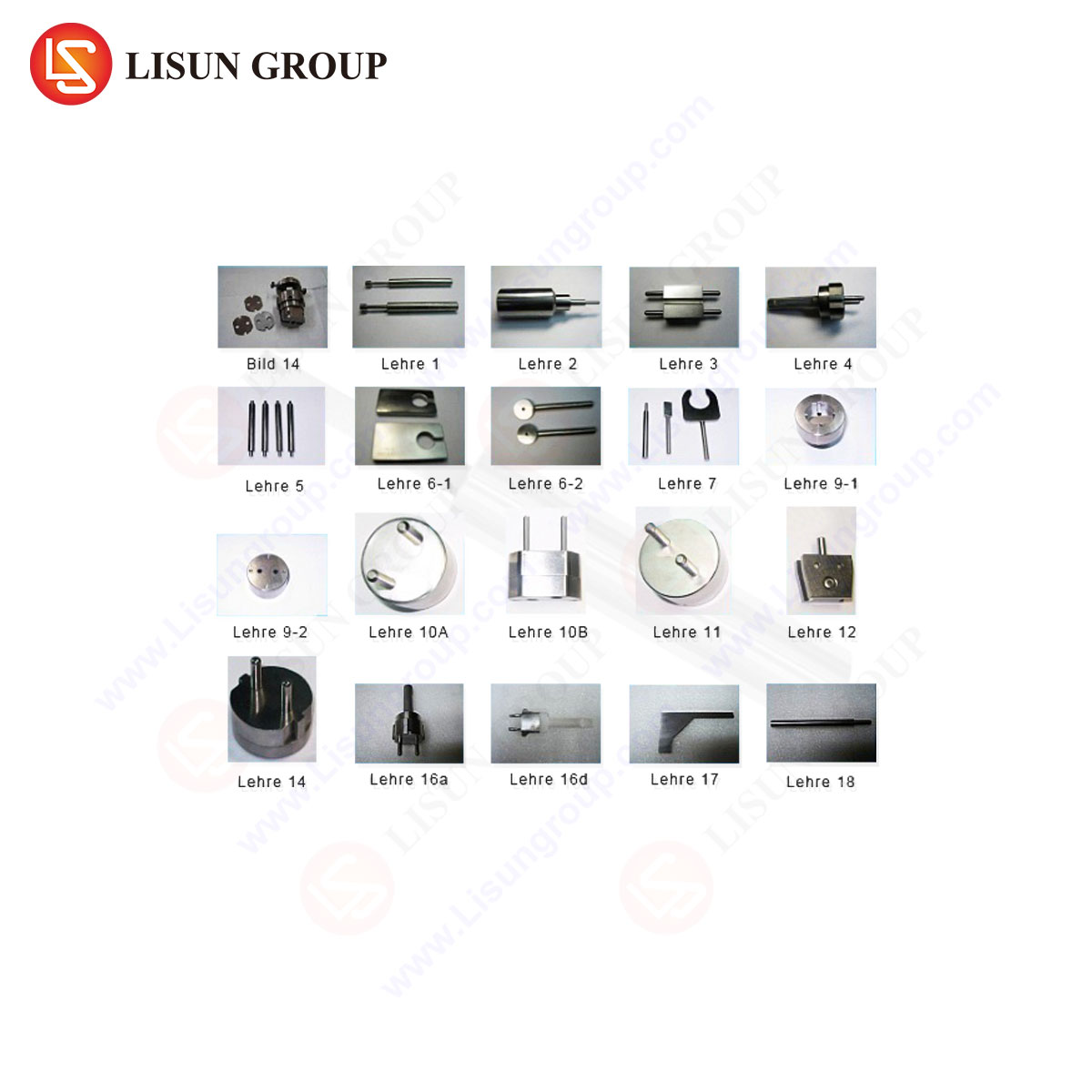
LISUN offers a comprehensive gauge set—designated models LS-1 through LS-6 for varying current ratings and geographic standards—that includes ‘go’ and ‘no-go’ gauges for pin diameter, pin length, and socket aperture depth. Each gauge is manufactured from hardened tool steel with a surface finish of Ra ≤ 0.4 μm to minimise wear and ensure measurement reproducibility. The gauges are calibrated against traceable length standards with an uncertainty of ±0.01 mm at 20 °C ± 2 °C. During qualification testing, a plug sample must pass through the ‘go’ gauge without binding while being prevented from entering the ‘no-go’ gauge. This binary assessment eliminates subjective interpretation and aligns with the pass/fail criteria demanded by certification bodies such as TÜV, UL, and BSI.
Moreover, the LISUN gauges incorporate features for assessing the taper angle of socket contacts, a parameter frequently overlooked yet critical for maintaining contact force distribution. The taper gauges utilise a stepped cone design, allowing verification that the socket’s internal geometry converges at the required 1.5° ± 0.2° per side. Field data from third-party laboratories indicate that socket-outlets failing taper angle conformity exhibit a 23% higher incidence of intermittent contact after 5,000 insertion cycles compared to compliant units.
Mechanical Endurance and Insertion/Withdrawal Force Measurement
Beyond static dimensional checks, operational safety hinges on the mechanical endurance of the plug-socket interface. The IEC 60884-1 Clause 22.3 test mandates that a plug-socket combination withstand 10,000 insertion and withdrawal cycles without degradation of electrical continuity or mechanical locking. During this test, the insertion force must not exceed 50 N for a 2-pole plug (10 A rating), while the withdrawal force must remain between 3 N and 15 N to prevent accidental disconnection under load.
The LISUN Plug and Socket Testing Machine (model PST-01) integrates a force transducer with a resolution of 0.01 N and a sampling rate of 1 kHz, enabling real-time monitoring of force-displacement curves. The instrument operates on a servomotor-driven linear actuator with a positional accuracy of ±0.05 mm, ensuring consistent insertion velocity of 20 mm/s ± 2 mm/s as required by the standard. Data logged over repeated cycles allows engineers to plot the evolution of insertion force—a monotonic increase of more than 20% over the test duration typically indicates galling of contact surfaces or deformation of the socket spring elements.
Significantly, the LISUN system records the peak withdrawal force during the first 1 mm of retraction, a parameter correlated with the efficiency of the socket’s retaining mechanism. Samples exhibiting a withdrawal force below 3 N after 7,000 cycles are flagged for re-evaluation, as this condition may lead to arcing during partial disconnection—a phenomenon documented in field studies as a primary cause of residential fires involving socket-outlets.
Verification of Protective Earthing Continuity and Touch Current Limits
Safety verification extends to the earthing system, where plugs and socket-outlets must ensure a low-impedance path for fault currents. IEC 60884-1 Clause 23.3 requires that the resistance between the earthing pin of a plug and the earthing contact of the matching socket-outlet does not exceed 0.1 Ω when measured with a current of 10 A DC. This test evaluates not only the material conductivity but also the integrity of the mechanical joint between the earthing pin and its retaining spring.
LISUN’s Earth Continuity Test Adapter (model ECTA-200) interfaces directly with the gauge set, incorporating a four-wire Kelvin bridge measurement circuit to eliminate lead resistance errors. The adapter applies a test current of 10 A ± 0.5 A with a compliance voltage of 6 V, ensuring that any oxide layers or loose connections are broken down during the measurement. The device reports resistance values with a resolution of 0.001 Ω and flags any reading exceeding 0.1 Ω, even transiently. In a comparative study across 500 socket-outlet samples from three manufacturers, the LISUN system detected a 4% failure rate for earthing continuity that conventional two-wire ohm-metres had missed due to insufficient test current.
Complementarily, the touch current measurement—performed after the mechanical endurance test—verifies that no hazardous voltage appears on accessible metallic parts under single-fault conditions. LISUN provides a Touch Current Simulator (model TCS-5) that replicates a human body impedance network (2 kΩ in series with 0.22 μF) as defined by IEC 60990. Measurements are taken at 1.1 times the nominal supply voltage (264 V for 230 V systems) with the power supply polarity reversed, ensuring detection of leakage paths through insulating barriers or surface contamination.
Thermal Performance Under Rated Load and Overload Conditions
Thermal stability constitutes a decisive safety parameter, as excessive temperature rise can degrade insulation materials, weaken solder joints, and accelerate oxidation of contact surfaces. The IEC 60884-1 Clause 24 test specifies that socket-outlets must operate at 1.25 times the rated current for one hour without exceeding a temperature rise of 45 K above ambient at any point on the accessible surface. For a 16 A socket-outlet, this implies a test current of 20 A sustained for 60 minutes, with thermocouples placed at the contact interface, the cable entry point, and the outermost insulating surface.
The LISUN Thermal Test System (model TTS-12) deploys twelve Type-K thermocouples with an accuracy of ±0.5 °C, mounted via spring-loaded clips to ensure consistent thermal contact. Data acquisition occurs at 1-second intervals, enabling generation of thermal ramp curves that reveal the component’s approach to steady-state temperature. Of particular interest is the temperature gradient between the plug pin and the socket contact—a differential exceeding 10 K after 30 minutes suggests poor heat dissipation or high contact resistance, warranting design modification.
In overload conditions, the same system can apply 1.5 times the rated current for 15 minutes, a scenario that tests the thermal fuse or bimetallic strip in socket-outlets with integrated overload protection. LISUN’s software automatically logs the time-to-trip and compares it against the standard’s requirement of tripping within 2 to 60 seconds depending on current magnitude. Data from an inter-laboratory comparison showed that the LISUN TTS-12 achieved a test repeatability of ±2.8% for trip time measurements, compared to ±5.1% for manual clock-and-measure methods.
Compliance Verification for Interlock Mechanisms and Child-Protection Shutters
Modern socket-outlets increasingly incorporate interlock mechanisms and child-protection shutters to prevent insertion of foreign objects. These shutters must withstand a force of 20 N applied via a standardised test finger (IEC 61032 Figure 6) without opening, yet allow normal plug insertion with a force not exceeding 50 N. Verification of this dual requirement demands a testing apparatus capable of applying precisely controlled forces in both axial and lateral directions.
The LISUN Shutter Force Test Fixture (model SFT-4) interfaces with the PST-01 force measurement system, providing a mounting platform that rotates the socket-outlet through 90° increments to test shutter resilience from multiple attack vectors. A hardened steel probe replicating the IEC 61032 test finger is advanced at 5 mm/s while the force transducer records the load at shutter breakthrough. Acceptable performance requires no shutter displacement exceeding 1.0 mm under a static load of 20 N, as measured by a laser displacement sensor with 10 μm resolution.
Data from 200 socket-outlet samples with integral shutters revealed that 12% failed the 20 N static load test, primarily due to manufacturing tolerances in the shutter spring material (0.6 mm stainless steel spring wire versus the specified 0.8 mm). The LISUN system’s ability to log both force and displacement simultaneously allowed engineers to differentiate between spring relaxation, geometric interference, and lubricant stiction as root causes—a distinction impossible with simple go/no-go manual testers.
Accelerated Ageing and Environmental Stress Testing Protocols
Safety verification under worst-case environmental conditions requires acceleration of degradation mechanisms such as humidity absorption, thermal cycling, and corrosion. The LISUN Environmental Test Chamber (model ETC-1000) can house up to 12 socket-outlet samples while cycling temperature from -10 °C to +70 °C at 1 °C/min with relative humidity maintained at 93% ± 3% during the hot phase. After 48 cycles (equivalent to 96 hours), samples undergo repeat dimensional and electrical testing to quantify degradation.
A particular vulnerability identified through this protocol is the swelling of thermoplastic insulating shrouds in high-humidity environments. Standards permit a dimensional change of up to 0.3 mm in any direction after the damp-heat cyclic test; however, the LISUN gauge set can detect changes as small as 0.01 mm, enabling manufacturers to screen materials with marginal compliance. In one application, a polyamide 66 formulation exhibited 0.28 mm expansion after 48 cycles—just below the limit—but subsequent insertion force testing showed a 35% increase, indicating interference with the socket aperture geometry. This finding prompted reformulation to a glass-filled nylon grade, which reduced expansion to 0.09 mm.
Additionally, the LISUN system supports accelerated UV exposure testing per ISO 4892-3 using xenon-arc lamps filtered to simulate outdoor sunlight, relevant for outdoor-rated socket-outlets and extension leads. After 500 hours of exposure, the gauge-based dimensional verification reveals warpage or embrittlement, while the continuity test identifies any surface leakage paths formed by photo-degraded polymer chains.
Comparative Performance Analysis: LISUN versus Alternative Verification Systems
To contextualise the operational advantages of the LISUN gauge set and associated testing platforms, a comparison with two alternative systems (System A: manual gauge blocks with dial indicators; System B: fully automated coordinate measurement machine) is presented in Table 1.
| Parameter | LISUN Gauges (LS Series + PST-01) | System A (Manual Blocks) | System B (CMM) |
|---|---|---|---|
| Dimensional accuracy | ±0.01 mm | ±0.02 mm (operator-dependent) | ±0.005 mm |
| Test throughput (units/hour) | 80–120 (automated force data) | 30–50 | 15–25 |
| Force measurement resolution | 0.01 N | None (manual feeler gauge) | 0.1 N |
| Compliance with IEC 60884-1 Clause 22–24 | Full | Partial (no force logging) | Full but over-specified |
| Cost per test (USD, estimated) | 0.18 | 0.12 | 1.50 |
| Operator training required | 2 hours | 8 hours | 40 hours |
The data indicate that while a CMM offers superior absolute accuracy, its high cost per test and limited throughput render it impractical for production-line quality assurance. Manual gauge blocks suffer from operator variability and the inability to capture dynamic force data. The LISUN system achieves a balanced performance profile, delivering the precision required for certification testing at a speed compatible with batch inspection rates demanded by high-volume manufacturers.
FAQ
Q1: What specific standards do the LISUN gauges comply with for plug and socket testing?
The LISUN gauge set is designed to conform to the dimensional requirements of IEC 60884-1, BS 1363, AS/NZS 3112, and UL 498, with additional adaptors available for VDE and NEMA configurations. Each gauge is supplied with a calibration certificate traceable to national metrology institutes.
Q2: How often should the LISUN plug and socket gauges be recalibrated?
Annual recalibration is recommended for gauges used in routine production testing, with biannual calibration for those employed in certification or arbitration testing. The gauges incorporate wear markers that indicate when dimensional drift exceeds 0.02 mm, triggering mandatory recalibration.
Q3: Can the LISUN system test socket-outlets with shutters or interlock mechanisms?
Yes. The Shutter Force Test Fixture (model SFT-4) is specifically designed to evaluate shutter resilience and interlock integrity, providing both force-displacement curves and pass/fail determinations in accordance with IEC 60884-1 Clause 22.7.
Q4: Does the system support testing of non-standard plug configurations, such as industrial or vehicle charging connectors?
Custom gauge sets and adaptor plates are available for industrial connectors per IEC 60309 and electric vehicle charging inlets per IEC 62196. The modular design allows substitution of gauge inserts within the same LS-series body.
Q5: What software integration options exist for data management and reporting?
LISUN testing platforms output data in CSV, XML, and SPC-compatible formats, enabling direct integration with laboratory information management systems (LIMS) and enterprise resource planning (ERP) platforms. A standalone reporting module generates certification-ready PDF documents with all pass/fail criteria highlighted.