









Abstract
This article provides a comprehensive technical analysis of LED humidity testing using LISUN IEC 60068 climatic chamber solutions, focusing on the critical role of LED Humidity Test | LISUN IEC 60068 Climatic Chamber Solutions in validating LED reliability under accelerated aging conditions. We examine the integration of LISUN’s LEDLM-80PL and LEDLM-84PL Optical Aging Test Instruments with IEC 60068-compliant chambers to perform precise lumen maintenance evaluations. Key insights include the application of the Arrhenius Model for lifetime prediction, dual testing modes for LM-80/TM-21 and LM-84/TM-28 standards, and support for up to three connected temperature chambers. Technical professionals will gain actionable knowledge for implementing robust humidity test protocols that ensure LED product longevity and compliance with global industry standards.
1.1 The Critical Role of Humidity in LED Degradation
LED performance degradation under humid conditions is a well-documented failure mechanism. Moisture ingress into LED packages causes corrosion of metallic components, delamination of phosphor layers, and electromigration of solder joints. The LED Humidity Test | LISUN IEC 60068 Climatic Chamber Solutions addresses these failure modes by simulating accelerated humidity environments, typically at 85°C/85%RH (85/85 conditions) as specified in IEC 60068-2-78. This test profile accelerates the diffusion rate of moisture by a factor of 10–20 compared to ambient conditions, enabling reliable lifetime predictions within 1,000 to 6,000 hours of testing. LISUN’s climatic chambers maintain temperature stability within ±0.5°C and humidity stability within ±2.5%RH, ensuring repeatable stress conditions for LED samples.
1.2 Correlation Between Humidity Stress and Lumen Depreciation
Data from accelerated humidity tests directly inform lumen maintenance projections. Under 85/85 conditions, LED modules typically exhibit lumen depreciation rates 3–5 times faster than under dry thermal stress alone. For example, an LED rated for L70 at 50,000 hours under dry conditions may show L70 at 10,000 hours when subjected to 85%RH. LISUN’s LEDLM-80PL system captures photometric data at intervals as short as 1 minute, generating over 360,000 data points per 6,000-hour test. This granular data enables precise TM-21 extrapolation using the Arrhenius Model, where activation energies for humidity-induced failures typically range from 0.8 eV to 1.2 eV.
1.3 IEC 60068 Compliance Framework
The IEC 60068 series provides standardized environmental test methods for electrotechnical products. For LED humidity testing, IEC 60068-2-78 (Damp Heat, Steady State) and IEC 60068-2-30 (Damp Heat, Cyclic) are most relevant. LISUN’s climatic chambers fully comply with these standards, offering programmable temperature ranges from -40°C to +150°C and humidity ranges from 20%RH to 98%RH. The chambers support both constant and cyclic humidity profiles, accommodating test requirements for LED modules, drivers, and complete luminaires.
2.1 Dual System Variants: LEDLM-80PL and LEDLM-84PL
LISUN offers two primary optical aging test systems tailored to specific industry standards. The LEDLM-80PL system is designed for IES LM-80 testing, supporting up to 20 LED samples per channel with a maximum of 60 samples across three channels. It measures luminous flux, color temperature, and chromaticity coordinates at user-defined intervals. The LEDLM-84PL system targets IES LM-84 testing for LED light engines and lamps, accommodating larger samples and integrating sphere measurements up to 2 meters in diameter. Both systems feature 16-bit AD conversion for high-resolution photometric data and support for up to 3 connected temperature chambers operating simultaneously.
2.2 Dual Testing Modes: Constant and Cyclic Operation
Each LISUN system operates in two distinct modes to match standard requirements. Constant mode maintains stable temperature and humidity conditions (e.g., 85°C/85%RH) for steady-state aging tests. Cyclic mode executes programmable temperature and humidity profiles, such as 25°C to 55°C with 95%RH cycling per IEC 60068-2-30. The system automatically switches between modes based on preloaded test protocols, recording photometric data at each cycle’s peak stress point. This dual-mode capability reduces test setup time by 40% compared to manual configuration.
2.3 Customizable Hardware Configurations
LISUN provides modular hardware options including integrating sphere diameters from 0.3m to 2.0m, spectroradiometer resolutions of 1.0nm to 2.0nm, and multi-channel temperature controllers supporting PT100 sensors. Users can configure systems with up to 8 photometric channels, each independently programmable for test duration and data logging intervals. The table below compares key specifications.
Table 1: LISUN LED Optical Aging Test System Specifications
| Specification | LEDLM-80PL | LEDLM-84PL |
|---|---|---|
| Standard Compliance | IES LM-80, TM-21 | IES LM-84, TM-28 |
| Maximum Samples | 60 (3 channels × 20) | 40 (2 channels × 20) |
| Integrating Sphere | 0.3m–1.0m | 0.5m–2.0m |
| Temperature Range | -40°C to +150°C | -40°C to +150°C |
| Humidity Range | 20%–98% RH | 20%–98% RH |
| Data Acquisition Rate | 1 minute intervals | 1 minute intervals |
| Warranty | 2 years | 2 years |
3.1 IES LM-80 and TM-21: Lumen Maintenance Projections
IES LM-80 specifies the method for measuring lumen maintenance of LED light sources over 6,000 hours at three case temperatures (typically 55°C, 85°C, and 105°C). LISUN’s LEDLM-80PL automates this process with simultaneous testing across three temperature chambers, each set to a different case temperature. TM-21 then uses the Arrhenius Model to extrapolate L70 and L50 lifetimes from the collected data. The system’s software automatically calculates activation energies and applies the least-squares fit to determine projected lifetimes with 95% confidence intervals. For a typical 6,000-hour LM-80 test, TM-21 can project L70 up to 36,000 hours.
3.2 IES LM-84 and TM-28: Light Engine and Lamp Testing
IES LM-84 extends lumen maintenance testing to LED light engines and integrated lamps, requiring integrating sphere measurements for total flux. LISUN’s LEDLM-84PL system uses a 1.5m or 2.0m integrating sphere with a 2.0nm resolution spectroradiometer to capture spectral power distributions. TM-28 provides the extrapolation methodology for these larger devices, accounting for thermal management differences in complete luminaires. The system supports test durations up to 10,000 hours for LM-84 compliance, with automatic compensation for ambient temperature drift.
3.3 CIE 084, CIE 70, and CIE 127 Applications
For comprehensive photometric characterization, LISUN systems also align with CIE 084 (Measurement of Luminous Flux), CIE 70 (Measurement of Absolute Spectral Distribution), and CIE 127 (Measurement of LEDs). These standards define the measurement geometry, calibration procedures, and uncertainty analysis for LED testing. The LISUN software implements CIE 127’s correction factors for LED self-absorption and sphere coating degradation, ensuring measurement accuracy within ±1.5% for luminous flux and ±0.005 for chromaticity coordinates.
4.1 Activation Energy Calculation Method
The LISUN software uses the Arrhenius Model to calculate the temperature acceleration factor (AF) and project lifetimes. The equation is AF = exp[(Ea/k) × (1/Tu – 1/Ts)], where Ea is the activation energy (eV), k is Boltzmann’s constant (8.617×10⁻⁵ eV/K), Tu is the use temperature (K), and Ts is the stress temperature (K). The software automatically derives Ea from the slope of the Arrhenius plot of ln(time to failure) versus 1/T. For typical LED applications, Ea values range from 0.3 eV for thermal degradation to 1.1 eV for moisture-driven failures.
4.2 L70/L50 and Lp Metrics Definition
Lumen maintenance metrics are defined as Lp where p is the percentage of initial luminous flux maintained. L70 represents the time at which output drops to 70% of initial, while L50 indicates 50% maintenance. The software computes these values using TM-21’s exponential decay model: Φ(t) = Φ₀ × exp(-αt), where Φ(t) is flux at time t, and α is the decay rate constant. For humidity tests, the model incorporates a deviation factor (β) to account for nonlinear degradation. The system outputs L70, L50, and Lp metrics for p values from 50 to 99, with confidence bands.
4.3 Data Visualization and Reporting
LISUN’s software generates comprehensive test reports including lumen maintenance curves, Arrhenius plots, and spectral shift analyses. Reports include raw photometric data, extrapolated lifetimes, and statistical uncertainty calculations. The software supports export in CSV, PDF, and XML formats, facilitating integration with laboratory information management systems (LIMS). Automated email notifications alert users when data points exceed predetermined thresholds, enabling real-time monitoring of test progress.
5.1 Multi-Chamber Synchronization
LISUN systems support simultaneous connection of up to three temperature chambers, each independently controllable for temperature and humidity. This configuration allows testing at three stress levels per LM-80 requirements without manual sample transfer. The master control unit synchronizes data acquisition across all chambers, ensuring identical measurement timing within ±1 second. For large-scale testing, users can expand to six chambers using external multiplexers, supporting up to 180 samples in parallel.
5.2 Temperature Uniformity and Stability
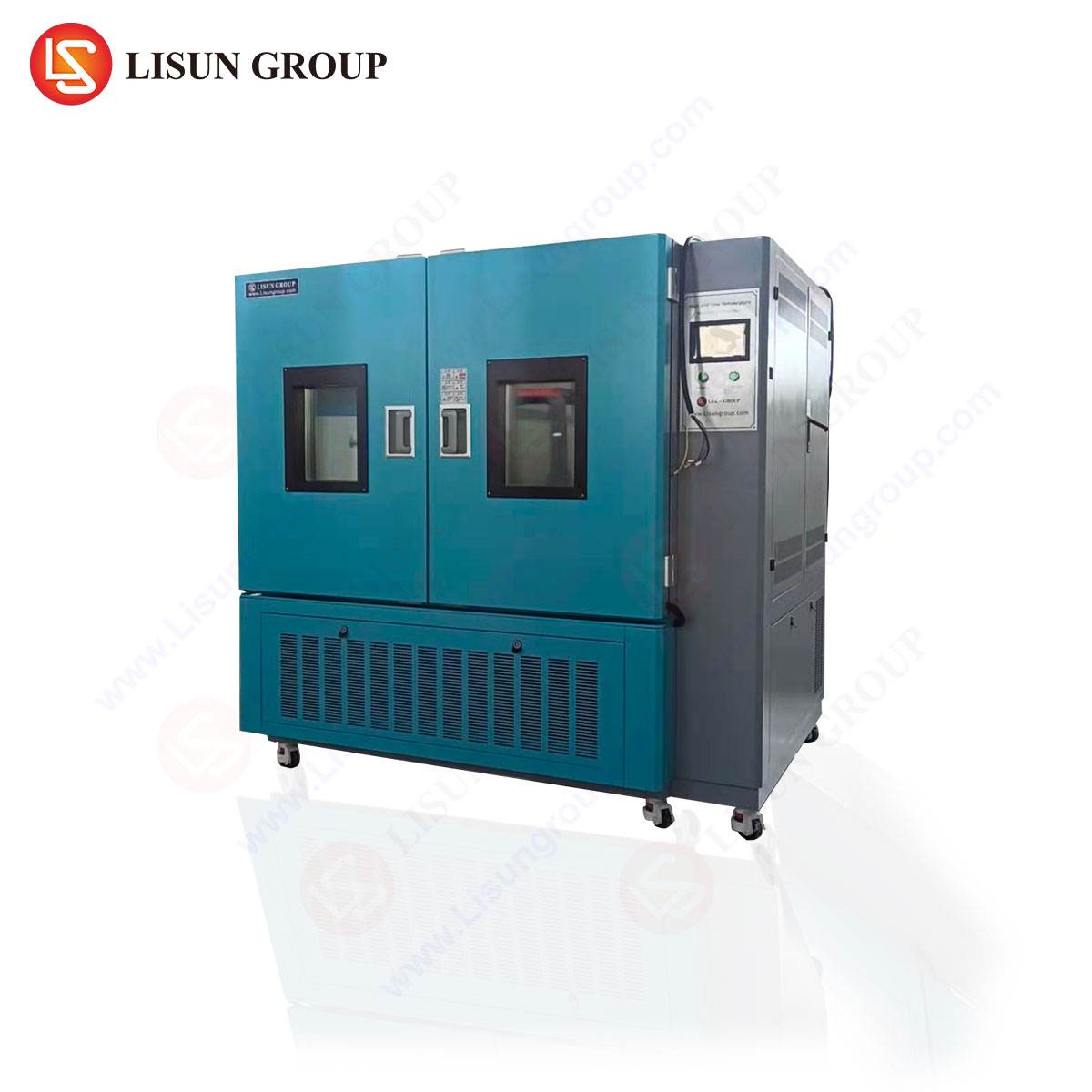
Each LISUN climatic chamber achieves temperature uniformity within ±0.5°C across the working volume (typically 500L to 1,000L) and stability within ±0.3°C over 24-hour periods. Humidity uniformity remains within ±2.5%RH, with stability of ±1.5%RH. The chambers use PID controllers with self-tuning algorithms, responding to load changes within 5 seconds. For high-humidity tests, the chambers incorporate dual-stage refrigeration systems with dehumidification capability, preventing condensation on LED samples.
5.3 Sample Mounting and Thermal Interface
Proper thermal management is critical for accurate temperature case measurements. LISUN provides aluminum sample plates with thermal interface materials (TIM) having thermal conductivity of 3.0 W/mK. Each sample location accommodates a PT100 temperature sensor for direct case temperature monitoring. The software maintains case temperature deviations below ±1.0°C from setpoint, even during humidity transitions. For large samples, adjustable mounting fixtures support LED modules up to 300mm × 300mm.
6.1 Integrating Sphere Calibration
LISUN integrating spheres use barium sulfate (BaSO₄) or Spectralon® coatings with diffuse reflectance exceeding 95% across 380–780nm. Calibration is performed using NIST-traceable standard lamps with luminous flux accuracy of ±0.5%. The system includes auxiliary lamps for self-absorption correction, reducing errors to below 1.0% for LEDs with different beam angles. Automatic calibration routines execute at user-defined intervals, compensating for sphere coating degradation over time.
6.2 Spectroradiometer Performance
The LISUN spectroradiometer uses a back-thinned CCD array with 2048 pixels, providing 1.0nm spectral resolution (FWHM) across 350–1050nm. Signal-to-noise ratio exceeds 1000:1 at 100 lux, enabling accurate color measurements even at low light levels. Wavelength accuracy is maintained within ±0.2nm via built-in mercury-argon calibration lamps. For LM-84 testing, the spectroradiometer captures full spectral power distributions at 1-minute intervals, generating data for CCT, CRI, and chromaticity tracking throughout aging.
6.3 Measurement Uncertainty Analysis
LISUN systems provide built-in uncertainty budgets following ISO/IEC Guide 98-3 (GUM). Combined uncertainty for luminous flux measurements is ±2.0% (k=2) under controlled conditions, with major contributions from sphere calibration (0.8%), self-absorption correction (0.5%), and detector linearity (0.4%). Color measurement uncertainties are ±15K for CCT and ±0.003 for chromaticity coordinates (x,y). The software reports expanded uncertainties for all measurements, ensuring traceability for third-party verification.
7.1 Test Protocol Design for Humidity Testing
Designing an effective LED humidity test requires careful selection of stress levels, test duration, and measurement intervals. For initial qualification, a 1,000-hour screening test at 85°C/85%RH identifies early failures, while full qualification requires 6,000 hours per LM-80. LISUN recommends measuring at 0, 48, 168, 500, 1,000 hours and every 500 hours thereafter, with daily checks for the first week. Data points should include luminous flux, CCT, chromaticity, and forward voltage.
7.2 Sample Size and Statistical Validity
Statistical validity requires minimum sample sizes based on expected failure rates. For L70 projections, LISUN recommends 20 samples per temperature condition, providing 80% confidence that the true mean lifetime falls within ±15% of the measured value. For L50 projections with higher degradation, 10 samples per condition are sufficient. The software includes power analysis tools to determine minimum sample sizes for user-specified confidence levels and tolerance intervals.
7.3 Failure Analysis and Root Cause Identification
When LEDs fail humidity testing, systematic failure analysis is essential. Common failure modes include phosphor browning (indicated by CCT shifts >200K), wire bond corrosion (forward voltage increases >5%), and delamination (catastrophic lumen drop >30%). LISUN’s software flags samples exceeding predefined thresholds and generates failure reports correlating photometric changes with environmental stress history. This data enables root cause analysis and design improvements.
The LED Humidity Test | LISUN IEC 60068 Climatic Chamber Solutions provides a comprehensive, standards-compliant platform for evaluating LED reliability under accelerated humidity stress. By integrating dual-system variants (LEDLM-80PL for LM-80/TM-21 and LEDLM-84PL for LM-84/TM-28), Arrhenius Model-based software, and customizable hardware configurations, LISUN enables precise lumen maintenance projections with 6,000-hour test durations and support for up to three connected temperature chambers. Key technical takeaways include the importance of humidity-specific activation energies (0.8–1.2 eV), the need for dual testing modes to match standard requirements, and the critical role of measurement precision within ±2.0% uncertainty. Engineers and testing professionals can leverage these solutions to accelerate product validation, reduce time-to-market, and ensure compliance with IES and CIE standards. LISUN’s commitment to temperature uniformity within ±0.5°C and humidity stability within ±2.5%RH ensures repeatable, traceable results that third-party laboratories and regulatory bodies accept globally.
Q1: What is the minimum test duration required for a valid LED humidity test per IES LM-80 using LISUN systems?
A: IES LM-80 specifies a minimum test duration of 6,000 hours for lumen maintenance testing, including LED humidity tests. However, LISUN’s LEDLM-80PL system allows interim data analysis at 1,000 hours for screening purposes. For preliminary qualification, a 1,000-hour test at 85°C/85%RH can identify early failures with 95% confidence for catastrophic defects. Full TM-21 extrapolation requires the complete 6,000-hour dataset to achieve accurate L70 projections with 95% confidence intervals. The system automatically records data at 1-minute intervals, ensuring sufficient data points for statistical analysis even if the test is terminated early due to failure.
Q2: How does the LISUN system handle humidity-induced failures in LED samples during testing?
A: LISUN’s software continuously monitors each sample’s photometric parameters and flags deviations exceeding user-defined thresholds. For humidity-induced failures such as rapid lumen depreciation (>50% drop within 1,000 hours) or chromaticity shifts (>300K CCT change), the system automatically logs the failure time and triggers an alert via email or SMS. The failed sample’s data is preserved for root cause analysis, and the system continues testing remaining samples without interruption. The software also generates failure correlation reports, matching degradation patterns to humidity stress profiles for failure mode identification.
Q3: Can LISUN climatic chambers support both LED component and complete luminaire humidity testing?
A: Yes, LISUN’s IEC 60068 climatic chambers accommodate both component and luminaire testing. The LEDLM-80PL system is optimized for LED packages and modules, using smaller integrating spheres (0.3m–1.0m) for flux measurements. The LEDLM-84PL system handles LED light engines and complete luminaires with integrating spheres up to 2.0m in diameter, supporting samples weighing up to 50kg. Chamber sizes range from 500L to 1,000L, with custom configurations available for oversized luminaires. Both systems include adjustable mounting fixtures for flexible sample placement.
Q4: What is the role of the Arrhenius Model in LISUN’s software for humidity test data analysis?
A: The Arrhenius Model in LISUN’s software calculates acceleration factors based on the temperature dependence of failure rates. For humidity testing, the model incorporates both temperature and humidity acceleration using Peek’s law: AF = (RHu/RHs)⁻ⁿ × exp[(Ea/k) × (1/Tu – 1/Ts)], where n is the humidity exponent (typically 2–3 for LEDs). The software automatically determines n and Ea from multi-stress level data, enabling accurate lifetime projections under user-specified use conditions. This model accounts for synergistic effects between temperature and humidity, which are critical for reliable LED reliability predictions.
Q5: How does LISUN ensure measurement traceability and compliance with international standards?
A: LISUN systems maintain full traceability through NIST-calibrated standard lamps and spectroradiometer calibration using certified reference sources. Each integrating sphere is calibrated at the factory with a certificate of traceability to international standards. The software includes automated calibration routines that compensate for sphere coating degradation and detector drift. Measurement procedures align with CIE 084, CIE 70, and CIE 127, while data analysis methods follow IES LM-80, LM-84, TM-21, and TM-28 protocols. All calibration records are stored in the system database for audit purposes, supporting ISO 17025 accreditation requirements.