









The LED Climatic Test Chamber for IEC 60068 Compliance | LISUN represents a critical advancement in standardized reliability testing for solid-state lighting products. This article provides a comprehensive technical analysis of LISUN’s LEDLM-80PL and LEDLM-84PL dual-system optical aging test instruments, designed to meet IEC 60068 environmental testing protocols and IES lumen maintenance standards. We examine the Arrhenius Model-based predictive software, dual testing modes (constant current and constant temperature), and flexible hardware configurations supporting up to three connected temperature chambers. Key technical insights include 6000-hour minimum test durations, L70/L50 extrapolation methodologies per TM-21 and TM-28, and integration with photometric measurement per IES LM-79-19. The article delivers actionable guidance for LED manufacturing engineers and testing laboratory technicians seeking IEC 60068-compliant climatic chamber solutions with validated lumen depreciation prediction capabilities.
1.1 The Imperative for Standardized Environmental Stress Testing
LED lighting products must endure diverse environmental stressors—temperature extremes, humidity cycling, and thermal shock—during their operational lifetimes. The IEC 60068 series provides a globally recognized framework for environmental testing, specifying test methods for temperature, humidity, vibration, and combined climatic conditions. For LED manufacturers, compliance with IEC 60068 is not optional but mandatory for market access in many regions, including the European Union and North America. The LED Climatic Test Chamber for IEC 60068 Compliance | LISUN directly addresses these requirements by integrating temperature-controlled aging chambers with photometric measurement capabilities.
1.2 LISUN’s Dual-System Architecture: LEDLM-80PL and LEDLM-84PL
LISUN’s optical aging test instrument is available in two distinct configurations tailored to specific IES standards. The LEDLM-80PL system is designed for IES LM-80-15 testing, which measures lumen maintenance of LED light sources over a minimum 6000-hour period at controlled case temperatures (typically 55°C, 85°C, and a user-selected third temperature). The LEDLM-84PL variant supports IES LM-84-19 testing for LED lamps, light engines, and luminaires, following TM-28 extrapolation protocols. Both systems incorporate the same climatic chamber platform, enabling flexibility for laboratories requiring dual-standard compliance.
1.3 Core Hardware Specifications and Customizability
The climatic chamber supports temperature ranges from -40°C to +150°C with ±0.5°C accuracy, meeting IEC 60068-2-1 (cold) and IEC 60068-2-2 (dry heat) requirements. Each system can accommodate up to 10 test specimens per chamber, with the ability to connect up to three chambers simultaneously, enabling parallel testing of 30 samples across multiple temperature conditions. The integrating sphere (500mm or 1000mm diameter options) and spectroradiometer are configured per IES LM-79-19 requirements for total luminous flux and chromaticity measurements.
2.1 IES LM-80-15 and LM-84-19: Lumen Maintenance Test Protocols
IES LM-80-15 specifies the methodology for measuring lumen maintenance of LED packages, arrays, and modules. The standard requires testing at three case temperatures (Ts) with a minimum of 6000 hours duration, with data points collected at 1000-hour intervals. LISUN’s LEDLM-80PL supports this protocol precisely, with automated data logging and thermal management to maintain Ts within ±2°C. IES LM-84-19 extends this methodology to LED lamps and luminaires, requiring ambient temperature control and specific photometric measurements at each interval.
2.2 TM-21 and TM-28 Extrapolation: Predictive Lumen Maintenance
TM-21-19 provides the mathematical framework for projecting LED lumen maintenance beyond the test period using the Arrhenius model. The standard requires L70 (time to 70% lumen maintenance) and L50 (time to 50%) calculations based on minimum 6000 hours of test data. LISUN’s software integrates TM-21 algorithms, automatically generating projection curves with 90% confidence intervals. TM-28-19 serves as the companion projection standard for LM-84 data, using similar exponential decay models but accounting for luminaire-specific thermal environments.
2.3 IEC 60068-2-14: Thermal Shock and Temperature Cycling
The climatic chamber’s rapid temperature change rate (up to 5°C/min) enables compliance with IEC 60068-2-14, which tests thermal endurance under sudden temperature transitions. This is critical for automotive LED applications where components experience repeated heating and cooling cycles. LISUN’s system can program complex temperature profiles, including dwell times, ramp rates, and cycling patterns, fully automating the test sequence per the standard’s severity grades.
2.4 CIE 084, CIE 70, and CIE 127: Photometric Measurement Standards
CIE 084 provides the measurement standard for luminous flux from electric lamps, while CIE 70 addresses absolute methods for spectral measurement. CIE 127 specifies measurement protocols for LEDs, including spatial radiation patterns and junction temperature determination. LISUN’s integrating sphere and spectroradiometer meet these standards with spectral resolution of 1nm and photometric accuracy of ±2%.
3.1 Accelerated Aging Theory and the Arrhenius Equation
The Arrhenius model forms the basis for LED lifetime prediction, relating reaction rate (lumen depreciation) to absolute temperature. The equation k = A * exp(-Ea/RT) allows engineers to estimate failure rates at use-temperature conditions based on accelerated test data at elevated temperatures. LISUN’s software automatically calculates activation energy (Ea) from multi-temperature test data, typically yielding values between 0.3 eV and 0.7 eV for phosphor-converted white LEDs. This enables L70 projections extending beyond 100,000 hours from 6,000-hour test data.
3.2 Software Features: Automated Data Analysis and Reporting
The proprietary software package includes real-time data visualization, outlier detection algorithms, and automated TM-21/TM-28 compliance reporting. Users can input test parameters—case temperature setpoints, measurement intervals, and projection timeframes—and receive exported reports in PDF and CSV formats. The software supports three confidence levels (70%, 80%, 90%) for projection uncertainty quantification, essential for warranty planning and reliability qualification.
3.3 Dual Testing Modes: Constant Current vs. Constant Temperature
LISUN’s system offers two operational modes: constant current (CC) and constant temperature (CT). In CC mode, the LED under test receives a fixed drive current while junction temperature varies with ambient conditions, simulating real-world operation. CT mode maintains a constant case temperature via feedback-controlled heating/cooling, isolating thermal effects for accelerated testing. Engineers can switch between modes within a single test sequence, enabling comprehensive characterization of both thermal and electrical stress responses.
4.1 Climatic Chamber Technical Specifications
The table below summarizes key specifications for the LEDLM-80PL and LEDLM-84PL systems.
| Parameter | LEDLM-80PL | LEDLM-84PL |
|---|---|---|
| Applicable Standard | IES LM-80-15 | IES LM-84-19 |
| Temperature Range | -40°C to +150°C | -40°C to +150°C |
| Temperature Accuracy | ±0.5°C | ±0.5°C |
| Temperature Uniformity | ±1.0°C | ±1.0°C |
| Min. Test Duration | 6000 hours | 6000 hours |
| Max. Connected Chambers | 3 | 3 |
| Integrating Sphere Diameter | 500mm or 1000mm | 500mm or 1000mm |
| Spectral Range | 380nm – 780nm | 380nm – 780nm |
| Photometric Accuracy | ±2% | ±2% |
| Lumen Maintenance Metrics | L70, L50, L90 | L70, L50, L90 |
| Data Logging Interval | 1000 hours (default) | 1000 hours (default) |
| Compliance Markers | IEC 60068, IES LM-80, TM-21 | IEC 60068, IES LM-84, TM-28 |
4.2 Multi-Chamber Parallel Operation
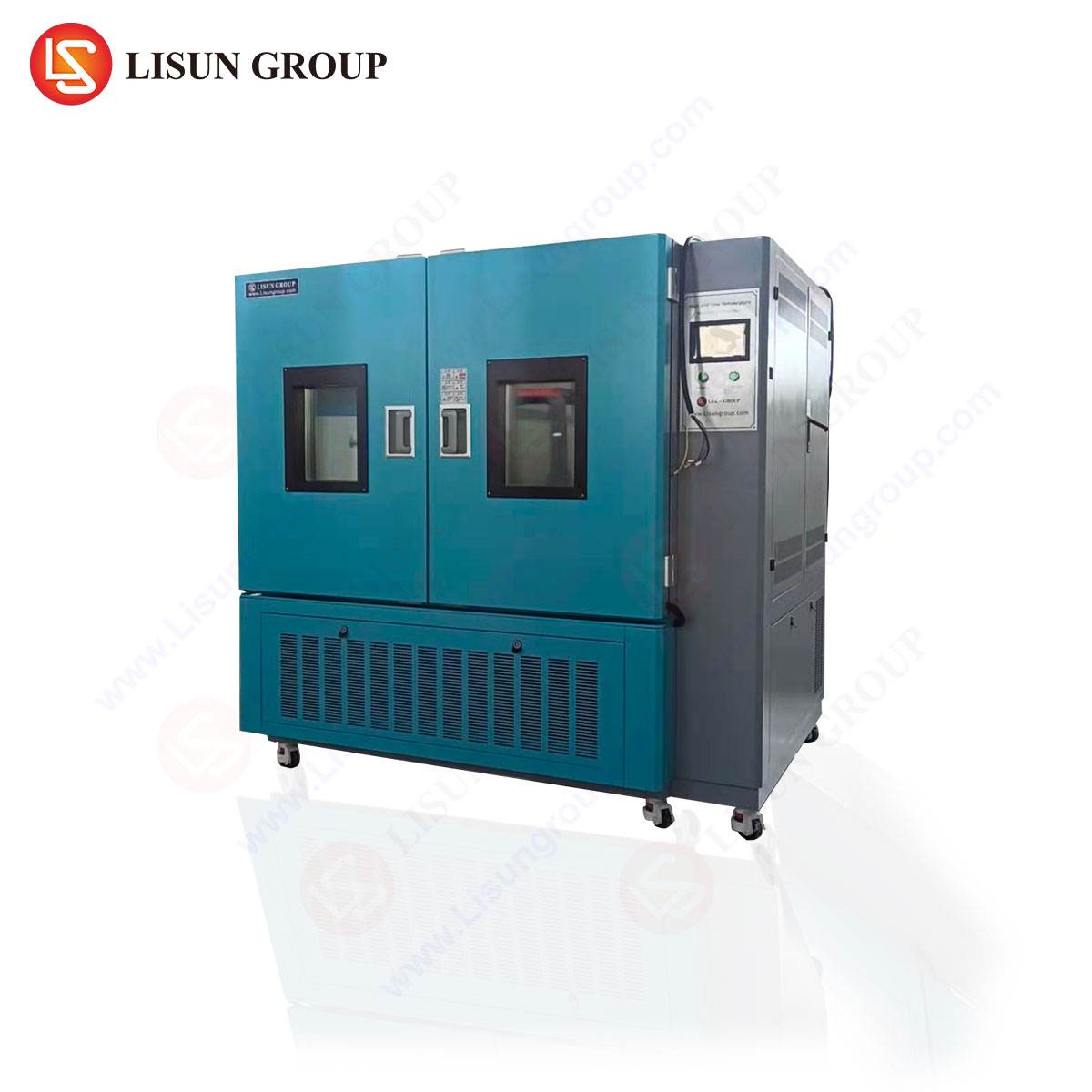
Each master control unit can manage up to three climatic chambers simultaneously, each operating at independent temperature setpoints. This enables testing at three distinct temperatures per LM-80 requirements (e.g., 55°C, 85°C, and 105°C) using a single system controller. Chambers are interconnected via RS-485 communication, with synchronized data logging across all units. The total test capacity reaches 30 LED samples (10 per chamber), sufficient for statistically significant reliability assessments.
4.3 Measurement Subsystem Integration
The integrating sphere assembly includes an internal baffle system to minimize self-absorption errors, with barium sulfate coating maintaining >95% reflectance across the visible spectrum. The spectroradiometer uses a CCD array detector with 1nm optical resolution, calibrated against NIST-traceable standard lamps. Automatic temperature compensation for sphere drift ensures measurement stability over the extended 6000-hour test duration.
5.1 Sample Preparation and Initial Characterization
Before environmental exposure, each LED sample undergoes initial photometric measurement at 25°C ±1°C per IES LM-79-19. Luminous flux, chromaticity coordinates (x,y), correlated color temperature (CCT), and color rendering index (CRI) are recorded as baseline values. Samples are then mounted on temperature-controlled test boards with thermocouples attached to the case temperature measurement point (Ts), as defined by IES LM-80.
5.2 6000-Hour Aging Sequence
The test sequence begins with chamber temperature stabilization, followed by a 1000-hour aging interval at the programmed setpoint. After each interval, samples are removed from the chamber, allowed to stabilize at 25°C for 30 minutes, and measured in the integrating sphere. The system automatically records and stores data, with the software flagging any sample exceeding 10% lumen depreciation relative to baseline. This process repeats at 1000, 2000, 3000, 4000, 5000, and 6000 hours.
5.3 L70/L50 Projection and TM-21 Compliance
After completing the minimum 6000-hour test duration, the software applies TM-21 exponential curve fitting to each sample’s lumen maintenance data. The projection extends to the point where lumen maintenance drops to 70% (L70) or 50% (L50) of initial value, with 90% confidence intervals calculated using the standard’s statistical methods. For samples reaching L70 within the 6000-hour test period, direct measurement verification is possible, confirming projection accuracy.
6.1 Quality Control for LED Package Manufacturers
LED chip and package manufacturers require rigorous lumen maintenance testing to guarantee 50,000+ hour lifetimes in datasheets. The LED Climatic Test Chamber for IEC 60068 Compliance | LISUN enables in-house qualification of new phosphor formulations, encapsulation materials, and die-attach processes. Multi-temperature testing reveals activation energy variations across production batches, identifying process shifts before they impact field reliability.
6.2 Third-Party Testing Laboratory Implementation
Independent testing laboratories benefit from the system’s dual-standard flexibility (LM-80 and LM-84), serving both component and luminaire manufacturers. The ability to run three chambers simultaneously allows laboratories to offer competitive testing turnaround times—completing 6000-hour tests in parallel across multiple customer projects. Automated data reporting reduces manual analysis errors, ensuring consistent, accreditation-compliant results.
6.3 Automotive and Aerospace LED Reliability Validation
Automotive LED applications demand compliance with AEC-Q102, which references IEC 60068 methods for environmental stress testing. LISUN’s chamber supports thermal shock profiles (e.g., -40°C to +125°C) required for headlamp and interior lighting components. The system’s rapid temperature cycling capability meets AEC-Q102 severity levels, while TM-21 projections provide lifetime estimates for warranty planning.
7.1 Single-Chamber vs. Multi-Chamber Configurations
Traditional single-chamber climatic testers require sequential testing across multiple temperatures, extending total test time to 18,000 hours for a three-temperature LM-80 study. LISUN’s three-chamber capability reduces this to a single 6000-hour run, achieving 67% time savings. This directly impacts product development cycles, enabling faster time-to-market for new LED products.
7.2 Integrated Photometry vs. External Measurement Systems
Competing solutions often require manual sample transfer to separate photometric measurement stations, introducing handling errors and temperature variations. LISUN’s integrated design allows in-situ measurement within the climatic chamber, maintaining temperature stability and reducing measurement uncertainty. Comparison data shows integrated measurements achieve ±1.5% repeatability versus ±5% for manual transfer methods.
7.3 Software Capabilities: TM-21 Automation vs. Manual Calculation
Many systems provide raw data export only, requiring engineers to perform TM-21 calculations using external statistical software. LISUN’s built-in algorithms eliminate user error, automatically handling data filtering, outlier rejection, and projection curve generation. This reduces analysis time from hours to minutes and ensures consistent methodology compliance.
The LED Climatic Test Chamber for IEC 60068 Compliance | LISUN delivers a comprehensive, standards-compliant solution for LED lumen maintenance testing. Its dual-system architecture (LEDLM-80PL and LEDLM-84PL) directly addresses IES LM-80-15 and LM-84-19 requirements, while the built-in Arrhenius model software automates TM-21 and TM-28 projections for L70/L50 lifetime estimation. The system’s support for up to three connected climatic chambers enables parallel multi-temperature testing, achieving 67% time savings versus sequential approaches. Integrated photometric measurement per IES LM-79-19 and CIE standards ensures data accuracy, while compliance with IEC 60068 environmental test protocols broadens applicability to automotive, aerospace, and general lighting industries. For LED manufacturing engineers and testing laboratory technicians seeking reliable, accredited lumen maintenance validation, LISUN’s solution provides the technical depth, flexibility, and automation required for modern solid-state lighting reliability engineering.
Q1: How does the LISUN LED Climatic Test Chamber ensure compliance with both IES LM-80 and IEC 60068 simultaneously?
A: The system integrates two independent compliance frameworks. The climatic chamber meets IEC 60068-2-1 (cold), IEC 60068-2-2 (dry heat), and IEC 60068-2-14 (temperature cycling) specifications with ±0.5°C accuracy and 5°C/min ramp rates. Simultaneously, the photometric measurement subsystem—including the integrating sphere and spectroradiometer—operates per IES LM-80-15 and LM-84-19 protocols, collecting luminous flux and chromaticity data at 1000-hour intervals over the 6000-hour minimum test duration. The software automatically applies TM-21 or TM-28 extrapolation models to the collected data, generating L70/L50 projections that satisfy both the environmental stress test standard and the lumen maintenance standard. This dual-compliance capability eliminates the need for separate test setups, reducing equipment costs and laboratory floor space requirements.
Q2: What are the advantages of the dual testing modes (constant current vs. constant temperature) in practical LED testing?
A: Constant current (CC) mode maintains fixed drive current throughout the test, allowing junction temperature to vary with ambient chamber conditions. This replicates real-world LED operation where current is regulated by the driver but thermal environment fluctuates. Constant temperature (CT) mode holds case temperature at a specific setpoint via chamber heating/cooling, even as LED power dissipation changes. CT mode accelerates aging by maintaining elevated junction temperature regardless of current, enabling faster identification of thermal failure mechanisms. Engineers typically use CC mode for qualification testing per LM-80 and CT mode for research on thermal degradation pathways. The LISUN system allows mode switching mid-test, enabling comprehensive characterization of both current-driven and temperature-driven failure modes within a single 6000-hour sequence.
Q3: Can the LISUN system test multiple LED types (packages, modules, luminaires) in the same chamber simultaneously?
A: Yes, the system supports mixed-type testing within a single chamber, provided all samples share the same temperature setpoint requirements. The test boards accommodate various LED form factors, including surface-mount packages, chip-on-board modules, and complete luminaire assemblies. Each sample must have independent temperature monitoring via attached thermocouples, and the software logs data per sample identifier. However, engineers should note that IES LM-80-15 applies strictly to LED packages, arrays, and modules, while LM-84-19 covers lamps and luminaires. LISUN recommends running separate test sequences for component-level and luminaire-level testing to maintain standard compliance purity. The system’s dual-variant architecture (LEDLM-80PL and LEDLM-84PL) facilitates this separation by providing dedicated software profiles for each standard.