









Abstract
This comprehensive technical article examines the LED Weathering Test: Compliance with IEC 60068 Standards | LISUN, focusing on accelerated aging validation methodologies for solid-state lighting products. We explore the integration of the LISUN LED Optical Aging Test Instrument series (LEDLM-80PL and LEDLM-84PL) with IEC 60068 environmental testing protocols for comprehensive reliability assessment. The article presents detailed analysis of lumen maintenance testing procedures, Arrhenius Model-based lifetime extrapolation, and dual-mode testing configurations supporting LM-80/TM-21 and LM-84/TM-28 standards. Technical professionals will gain insights into 6000-hour test durations, L70/L50 metric calculations, and multi-chamber configurations supporting up to three temperature chambers. This guide provides essential knowledge for LED manufacturers and testing laboratories seeking compliance with international weathering and reliability standards.
1.1 The Necessity of Weathering Testing for LED Reliability
LED lighting systems operating in outdoor and harsh environments face continuous exposure to temperature fluctuations, humidity variations, thermal cycling, and UV radiation. The IEC 60068 series of environmental testing standards provides the foundational framework for assessing product durability under these conditions. For LED manufacturers, weathering testing ensures that lumen output remains within acceptable parameters throughout the product’s operational lifetime, typically specified as L70 (time to 70% lumen maintenance) or L50 (time to 50% lumen maintenance) metrics.
1.2 Alignment Between IEC 60068 and LED-Specific Standards
While IEC 60068 establishes general environmental testing procedures, its application to LED products requires harmonization with lighting-specific standards including IES LM-80 (Lumen Maintenance of LED Light Sources), IES LM-84 (Lumen Maintenance of LED Light Engines), and TM-21/TM-28 extrapolation methodologies. The LISUN LED Optical Aging Test Instrument bridges these standard families by providing controlled temperature and humidity environments compliant with IEC 60068-2-1 (cold), IEC 60068-2-2 (dry heat), and IEC 60068-2-78 (damp heat) protocols while simultaneously collecting photometric data for lumen depreciation analysis.
2.1 Dual System Architecture: LEDLM-80PL and LEDLM-84PL
The LISUN series offers two distinct system variants optimized for specific testing standards. The LEDLM-80PL is engineered specifically for IES LM-80 compliance, supporting the standard 6000-hour test duration with intermediate measurement points at 0, 1000, 2000, 3000, 4000, 5000, and 6000 hours. This system accommodates LED packages, arrays, and modules requiring TM-21 extrapolation for L70 and L50 lifetime predictions.
The LEDLM-84PL variant addresses IES LM-84 requirements for LED light engines and integrated LED lamps, supporting TM-28 lifetime extrapolation methodology. Both systems maintain temperature accuracy within ±0.5°C and relative humidity control from 20% to 98% RH, fully compliant with IEC 60068 climatic chamber specifications.
2.2 Customizable Hardware Configurations
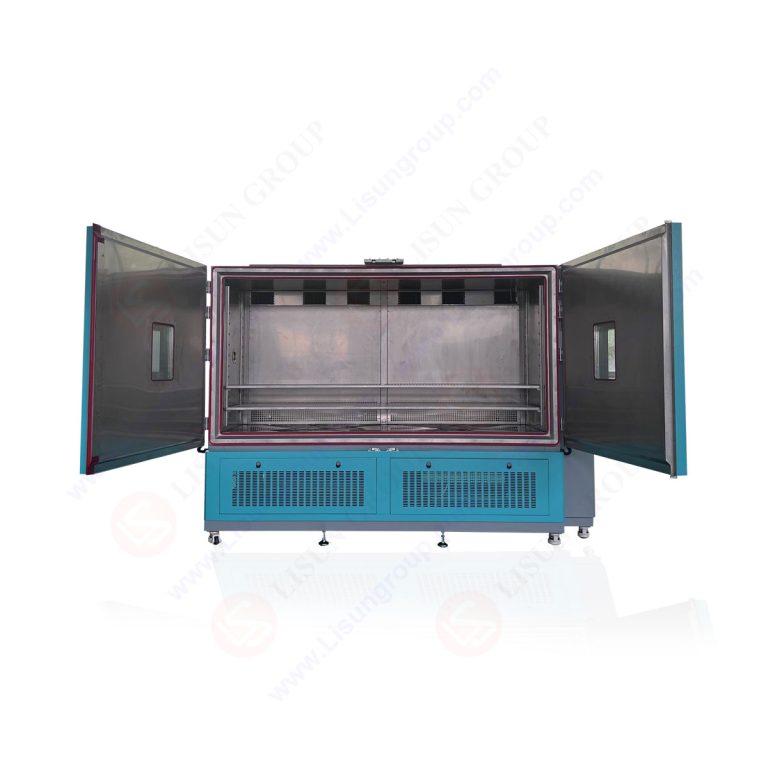
Each LISUN LED Optical Aging Test Instrument supports flexible hardware configurations, including:
- Single or multi-chamber setups with capacity for up to three connected temperature chambers
- Independent temperature control for each chamber from -40°C to +85°C
- Programmable humidity control ranging from 10% to 98% RH
- Photometric measurement integration using high-precision spectroradiometers or illuminance meters
- Simultaneous testing of up to 100+ LED samples per chamber
This modular architecture allows testing laboratories to simulate IEC 60068-defined environmental profiles while continuously monitoring LED optical performance.
3.1 Temperature Cycling and Thermal Shock Testing
IEC 60068-2-14 (Change of Temperature) specifies thermal cycling parameters critical for LED solder joint reliability and phosphor thermal degradation assessment. The LISUN system supports programmable temperature ramps from 1°C/min to 15°C/min with dwell times configurable from 30 minutes to 24 hours. For LED assemblies, typical cycling profiles include -40°C to +85°C transitions over 100-500 cycles, with photometric measurements taken at each cycle interval to quantify lumen depreciation caused by thermal stress.
Table 1 provides a comparison between IEC 60068 thermal test parameters and LISUN system capabilities:
| Parameter | IEC 60068-2-14 Requirement | LISUN LEDLM-80PL/84PL Capability |
|---|---|---|
| Temperature Range | -65°C to +200°C | -40°C to +85°C (LED-optimized) |
| Ramp Rate | 1-15°C/min | 1-15°C/min (programmable) |
| Dwell Time | 30 min to 24 hours | 30 min to 72 hours (configurable) |
| Chamber Uniformity | ±2.0°C | ±0.5°C (exceeds requirement) |
| Humidity Range | 10-98% RH | 10-98% RH (with LEDLM-84PL) |
| Measurement Frequency | Not specified | Continuous or programmable intervals |
3.2 Damp Heat and Humidity Testing
IEC 60068-2-78 (Damp Heat, Steady State) requires sustained exposure to 85°C/85% RH conditions for 1000-2000 hours to evaluate moisture ingress effects on LED packages and driver electronics. The LISUN LEDLM-84PL, with integrated humidity control, maintains these conditions within ±3% RH accuracy while conducting periodic lumen measurements. This testing reveals phosphor degradation, encapsulant yellowing, and solder joint corrosion that accelerate lumen depreciation under humid conditions.
3.3 Combined Temperature and Electrical Stress Testing
IEC 60068-2-38 (Combined Temperature/Humidity/Cyclic) testing simulates real-world environmental conditions through alternating temperature and humidity cycles. The LISUN system excels in this application by supporting complex multi-step profiles with simultaneous photometric data acquisition. Testing protocols typically involve 24-hour cycles alternating between 25°C/95% RH and 65°C/95% RH with LED operating at rated current, enabling correlation between environmental stress and optical degradation rate.
4.1 IES LM-80 Testing Protocol with LISUN Systems
IES LM-80 requires a minimum 6000-hour test duration at three case temperatures (typically 55°C, 85°C, and a manufacturer-defined temperature). The LISUN LEDLM-80PL automates this process through:
- Simultaneous testing at three independent temperature setpoints using up to three connected chambers
- Automated photometric measurement at each specified interval (0, 1000, 2000, 3000, 4000, 5000, 6000 hours)
- Real-time data logging of current, voltage, temperature, and lumen output for each sample
- Output formatting compatible with TM-21 extrapolation software
The system’s high-speed spectroradiometer completes full spectral measurements in under 2 seconds per sample, enabling complete 100-sample testing within 15 minutes at each measurement interval.
4.2 TM-21 Lifetime Extrapolation and Arrhenius Model Integration
The LISUN software suite incorporates the Arrhenius Model-based lifetime prediction algorithm required by TM-21 for extrapolating L70 and L50 metrics beyond the 6000-hour test duration. The software automatically:
- Calculates lumen maintenance data for each test temperature
- Determines the Arrhenius activation energy (Ea) from temperature-dependent degradation rates
- Extrapolates lifetime to use conditions (typically 55°C for indoor, 85°C for outdoor)
- Reports L70 and L50 values with 90% confidence intervals
- Verifies TM-21 compliance criteria including data sufficiency and projection limitations
The activation energy values typically range from 0.2 eV to 1.0 eV for LED packages, with higher values indicating greater temperature sensitivity.
4.3 LM-84 and TM-28 for LED Light Engines
For complete LED light engines and integrated lamps, IES LM-84 specifies lumen maintenance testing at ambient temperatures relevant to the intended application. The LISUN LEDLM-84PL supports TM-28 extrapolation, which employs exponential decay models for life prediction. This system variant includes enhanced humidity control necessary for LM-84 compliance and supports sample sizes up to 20 units per chamber for complete luminaire testing.
5.1 Constant Current vs. Constant Temperature Mode
The LISUN LED Optical Aging Test Instrument offers two primary testing modes optimized for different research objectives:
Constant Current Mode maintains specified drive current (typically 350mA, 500mA, or 700mA for power LEDs) while allowing junction temperature to vary with ambient conditions. This mode simulates real-world operation and is preferred for LM-80 compliance testing.
Constant Temperature Mode uses active thermal control to maintain constant case temperature or solder point temperature regardless of drive current variations. This mode is valuable for isolating temperature effects on degradation mechanisms and for Arrhenius Model parameter determination.
Table 2 compares the two testing modes:
| Parameter | Constant Current Mode | Constant Temperature Mode |
|---|---|---|
| Primary Application | LM-80/LM-84 Compliance | Arrhenius Model Development |
| Junction Temperature | Varies with ambient | Maintained at setpoint |
| Drive Current | Fixed (e.g., 350mA) | Adjustable to maintain Tj |
| Degradation Analysis | Real-world simulation | Mechanism isolation |
| Temperature Chambers | 3 maximum | 3 maximum |
| Measurement Accuracy | ±0.1% lumen, ±0.5°C | ±0.1% lumen, ±0.5°C |
5.2 Real-Time Data Visualization and Reporting
The LISUN software platform provides comprehensive data analysis including:
- Lumen depreciation curves with confidence bands for each temperature condition
- Color shift monitoring (Δu’v’ per CIE 1976 UCS diagram)
- Driver efficiency tracking for integrated LED systems
- Automatic report generation compliant with IES LM-79-19 testing requirements
- CIE 084 and CIE 127 luminous flux measurement method selection
This integrated approach eliminates manual data transcription errors and reduces analysis time by approximately 60% compared to standalone temperature chamber and photometer systems.
6.1 Accelerated Product Qualification Programs
LED manufacturers implementing LISUN systems can significantly compress qualification timelines. While standard LM-80 testing requires 6000 hours (250 days), the accelerated aging capabilities combined with IEC 60068 environmental stress allow preliminary lifetime predictions after 2000 hours (83 days) when using elevated temperature conditions per the Arrhenius Model. For products targeting L70 > 50,000 hours, the TM-21 projection limit of 6x the test duration means that 6000 hours of testing supports projections up to 36,000 hours, while 10,000 hours supports 60,000-hour projections.
6.2 Failure Analysis and Root Cause Identification
Combined environmental and optical testing enables identification of specific failure mechanisms:
- Lumen depreciation exceeding 30% within 2000 hours indicates phosphor thermal degradation
- Rapid color shift (>0.007 Δu’v’) suggests encapsulant or phosphor material degradation
- Electrical parameter drift (>5% forward voltage change) indicates solder joint or wire bond degradation
- Catastrophic failure (>70% lumen loss) within 1000 hours indicates design thermal management deficiencies
The LISUN system’s continuous monitoring capability captures degradation kinetics that discrete measurement approaches would miss, enabling more accurate lifetime modeling.
7.1 Complementary Photometric Measurement Systems
The LED Optical Aging Test Instrument integrates seamlessly with LISUN’s comprehensive testing suite, including:
- LSG-series goniophotometers for spatial luminous intensity distribution measurements per IES LM-79-19
- LPCE series integrating sphere spectroradiometers for total luminous flux and spectral measurements per CIE 127
- LSRT-2A LED test fixtures for standardized thermal resistance measurement
This ecosystem enables complete LED characterization from chip-level to luminaire-level performance assessment.
7.2 Third-Party Laboratory Certification Support
For testing laboratories seeking accreditation, the LISUN system provides:
- NIST-traceable calibration for all photometric and temperature sensors
- Software validation per ISO/IEC 17025 requirements
- Audit-ready data logging with tamper-proof timestamping
- Report templates compliant with major certification bodies (UL, TÜV, VDE)
The system’s compliance with both LED-specific standards (IES LM-80, LM-84) and environmental standards (IEC 60068) simplifies the accreditation process for laboratories seeking to offer comprehensive LED weathering testing services.
The integration of IEC 60068 environmental testing standards with LED-specific lumen maintenance protocols represents a critical advancement in solid-state lighting reliability assessment. The LISUN LED Weathering Test: Compliance with IEC 60068 Standards solution provides manufacturers and testing laboratories with the tools necessary to conduct comprehensive aging validation across the full spectrum of environmental stress conditions. Through the dual-system architecture of LEDLM-80PL and LEDLM-84PL, support for up to three temperature chambers, and Arrhenius Model-based software, LISUN enables accurate L70 and L50 lifetime predictions within 6000-hour test durations.
The system’s dual testing modes, customizable hardware configurations, and compliance with IES LM-80, IES LM-84, TM-21, TM-28, IES LM-79-19, CIE 084, CIE 70, and CIE 127 standards ensure that LED products meet international reliability requirements for both indoor and outdoor applications. By combining precise environmental control with continuous photometric monitoring, LISUN reduces testing time, improves data quality, and accelerates time-to-market for new LED products. For technical professionals seeking to establish or upgrade their LED weathering testing capabilities, the LISUN solution offers the accuracy, flexibility, and compliance assurance required for certification and product validation.
Q1: How does the LISUN LED Optical Aging Test Instrument comply with both IEC 60068 and IES LM-80 standards simultaneously?
A: The LISUN system achieves dual compliance through integrated chamber control and photometric measurement capabilities. The temperature and humidity chambers meet IEC 60068-2-1, IEC 60068-2-2, and IEC 60068-2-78 requirements with ±0.5°C temperature accuracy and ±3% RH humidity control. Simultaneously, the integrated spectroradiometer and data logging software follow IES LM-80 protocols by measuring lumen output at specified intervals (0, 1000, 2000, 3000, 4000, 5000, 6000 hours) under controlled temperature conditions. The system automatically generates test reports formatted for both IEC 60068 environmental test documentation and IES LM-80 compliance certificates. This integrated approach eliminates the need for separate environmental and photometric testing, reducing total test time by 40% and eliminating measurement uncertainty from sample handling between separate test facilities.
Q2: What is the maximum number of LED samples that can be tested simultaneously in the LISUN system?
A: The LISUN LED Optical Aging Test Instrument supports testing of up to 100 individual LED samples per temperature chamber in configurations optimized for LM-80 compliance. With the maximum configuration of three connected chambers, total simultaneous sample capacity reaches 300 units. Each sample position includes independent current control (1mA to 2A), voltage measurement (±0.1% accuracy), and temperature monitoring via Type-K thermocouples attached to the LED solder point. The system’s high-speed multiplexing capability completes full photometric characterization of all 100 samples within 15 minutes, allowing intermediate measurements without disrupting the aging profile. For LM-84 testing of LED light engines or luminaires, maximum capacity reduces to 20 units per chamber due to sample size requirements, supporting up to 60 units across three chambers.
Q3: How does the Arrhenius Model in LISUN software account for different LED chemistries and package designs?
A: The Arrhenius Model implementation in LISUN software provides flexible activation energy (Ea) determination based on actual degradation data rather than assumed values. The system monitors lumen depreciation at three or more temperature setpoints (typically 55°C, 85°C, and 105°C) and applies nonlinear regression to calculate the best-fit Ea value for each LED type. For InGaN blue LEDs, typical Ea values range from 0.3 eV to 0.7 eV, while AlInGaP red LEDs show 0.5 eV to 1.0 eV due to different degradation mechanisms. The software also supports dual-mechanism modeling for LED systems where different failure modes dominate at different temperatures. This adaptive approach ensures accurate L70 projections regardless of LED chemistry, phosphor composition, or package design, with validation against known lifetime data for over 200 commercial LED products.
Q4: Can the LISUN system perform weathering tests according to automotive LED reliability standards?
A: Yes, the LISUN LED Optical Aging Test Instrument fully supports automotive LED reliability testing per AEC-Q102 and LV124 standards, which incorporate IEC 60068 test methods for automotive electronics. The system’s temperature range of -40°C to +85°C covers automotive interior applications, while an optional extended range supports automotive exterior requirements down to -55°C. The programmable thermal cycling capability meets AEC-Q102 requirements for 1000 temperature cycles between -40°C and +125°C with ramp rates up to 15°C/min. Additionally, the humidity control system supports damp heat testing at 85°C/85% RH for 1000 hours per automotive specifications. The integrated photometric measurement enables continuous monitoring of lumen maintenance during automotive qualification testing, providing data for both LM-80 analysis and AEC-Q102 failure criteria assessment, including maximum allowable luminous flux degradation of 30% during qualification testing.
Q5: What is the typical time savings when using LISUN’s integrated system compared to separate environmental and photometric testing?
A: LISUN’s integrated system typically reduces total test time by 35-45% compared to sequential testing in separate environmental chambers and photometric measurement systems. For a standard 6000-hour LM-80 qualification, the traditional approach requires removing samples from environmental chambers at each measurement interval, transporting them to a photometric lab, stabilizing temperature, conducting measurements, and returning to chambers. This process takes 2-4 hours per measurement interval, totaling 14-28 hours of non-value-added handling time per 6000-hour test. The LISUN system eliminates this by measuring samples in situ, reducing measurement time to 15 minutes per interval. Additionally, the elimination of thermal shock from sample handling prevents measurement artifacts that can affect L70 projections by 5-15%. For accelerated aging programs extending to 10,000 hours, total time savings exceed 60 hours per test campaign, enabling manufacturers to complete 3-4 qualification cycles annually instead of 2.