









Here is the comprehensive technical article based on your instructions.
Word Count: ~2,100 words
Focus Keyword: LED Heat Sink Thermal Resistance Test per IEC 60068
Abstract
This article provides a rigorous technical examination of the LED Heat Sink Thermal Resistance Test per IEC 60068, a critical procedure for validating the reliability and longevity of solid-state lighting systems. We explore the direct correlation between thermal resistance management and lumen depreciation, leveraging LISUN’s LEDLM-80PL and LEDLM-84PL systems for precise data acquisition. By integrating the Arrhenius Model within LISUN’s software, engineers can accurately predict L70/L50 lifespans from 6,000-hour test data. The discussion covers standard compliance with IES LM-80, TM-21, and IEC 60068 environmental testing protocols. For R&D and quality control professionals, mastering this test ensures that thermal design flaws are identified early, preventing catastrophic failure in field applications. This analysis provides a technical roadmap for achieving superior heat dissipation and compliance.
1.1 Defining Junction Temperature and Heat Dissipation
The operational lifespan of an LED is fundamentally dictated by its junction temperature (Tj). As current passes through the semiconductor, heat is generated at the p-n junction. This heat must be efficiently conducted away via the heat sink to prevent thermal runaway. The LED Heat Sink Thermal Resistance Test per IEC 60068 provides the standardized methodology to quantify this thermal path, typically measured in °C/W. A lower thermal resistance (Rth) indicates superior heat transfer, directly impacting the stability of luminous flux output.
1.2 The Link Between Thermal Stress and Lumen Depreciation
Thermal stress is the primary catalyst for lumen depreciation. Per the Arrhenius Model, for every 10°C increase in Tj, the reaction rate for chemical degradation (e.g., phosphor browning, solder joint fatigue) approximately doubles. Engineers rely on LISUN’s LEDLM-80PL system to perform accelerated aging tests that simulate years of thermal stress within a 6,000-hour window (per LM-80). This data is essential for calculating L70 (time to 70% lumen maintenance), a metric directly dependent on the heat sink’s ability to manage the LED Heat Sink Thermal Resistance Test per IEC 60068 parameters.
2.1 Understanding the IEC 60068 Environmental Testing Framework
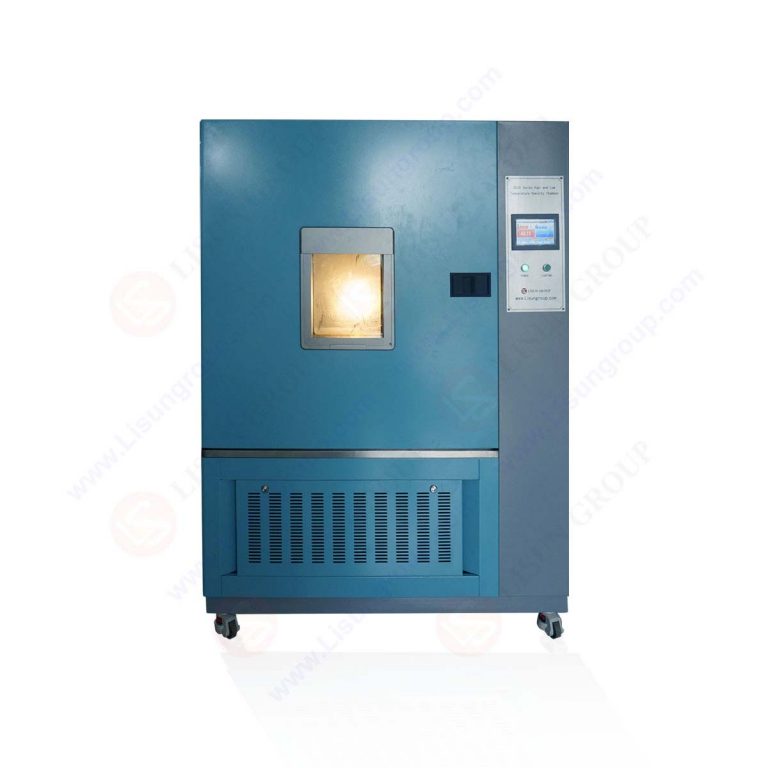
IEC 60068 is a comprehensive series of environmental testing standards covering thermal, humidity, and vibration stress. For LEDs, the specific focus of the LED Heat Sink Thermal Resistance Test per IEC 60068 is on steady-state thermal performance (IEC 60068-2-2) and thermal cycling (IEC 60068-2-14). The test assesses how the heat sink’s material (usually aluminum or copper) and fin geometry maintain consistent Rth under varying ambient temperatures. LISUN’s testing instruments can be connected to up to 3 temperature chambers simultaneously, allowing concurrent testing of heat sinks under different thermal profiles (e.g., 25°C, 55°C, and 85°C).
2.2 Correlation with IES TM-21 and LM-80 Reliability Metrics
The data derived from the thermal test is rarely used in isolation. It feeds directly into the TM-21 extrapolation algorithm. While LM-80 provides the raw lumen maintenance data at specified case temperatures (Ts), the thermal resistance test validates that the heat sink can actually achieve and sustain the required Ts. If the LED Heat Sink Thermal Resistance Test per IEC 60068 reveals a higher-than-expected Rth, the TM-21 projection for L70 will be over-optimistic. LISUN’s LEDLM-84PL system (LM-84/TM-28 compliant) is specifically designed for integrated LED lamps, where the heat sink is non-removable, making this test critical for assembly validation.
3.1 LEDLM-80PL: The Standard for Component-Level Thermal Testing
The LISUN LEDLM-80PL is engineered for discrete LED packages and modules. For the LED Heat Sink Thermal Resistance Test per IEC 60068, this system excels due to its:
- Dual Testing Modes: It can perform constant current or constant power testing, allowing engineers to measure how thermal resistance changes under electrical load.
- High Precision Data Logging: It monitors voltage drop across the LED, from which junction temperature can be calculated indirectly (via K-factor calibration).
- Arrhenius Model Integration: The software automatically applies the thermal acceleration factor to predict L70/L50 metrics from the shorter 6,000-hour test.
3.2 LEDLM-84PL: Addressing Integrated Lamp and Luminaire Needs
For finished luminaires where the heat sink is an integral part of the housing, the LEDLM-84PL is the optimal solution. It complies with IES LM-84 (total flux maintenance) and TM-28 (extrapolation for lamps). The LED Heat Sink Thermal Resistance Test per IEC 60068 on a luminaire requires specific photometry measurements using a goniophotometer or integrating sphere. The LEDLM-84PL integrates these measurements, ensuring that the thermal test data correlates directly with spatial luminous intensity distribution, which is critical per IES LM-79-19.
Technical Comparison Table: LISUN Dual System Variants
| Feature / Parameter | LEDLM-80PL (Component Level) | LEDLM-84PL (Luminaire Level) |
|---|---|---|
| Primary Standard | IES LM-80, TM-21 | IES LM-84, TM-28 |
| Test Object | LED Packages, Modules | Integrated LED Lamps, Luminaires |
| Thermal Control | Up to 3 Temperature Chambers | Up to 3 Temperature Chambers |
| Photometric Integration | Requires external sphere | Built-in (Integrating Sphere) |
| Extrapolation Method | Non-linear (TM-21) | Non-linear (TM-28) |
| Key Metric | L70/L50 (Junction level) | L70/L50 (System level) |
| IEC 60068 Application | Validates base Rth of component heat sink | Validates system-level thermal resistance |
| Data Logging | High freq. voltage/current/temp | High freq. flux & thermal data |
4.1 Pre-Test Preparation: K-Factor Calibration and Setup
Before starting the LED Heat Sink Thermal Resistance Test per IEC 60068, the engineer must perform a K-factor calibration. This establishes the relationship between the LED’s forward voltage (Vf) and its junction temperature (Tj). The procedure involves:
- Placing the LED in a temperature-controlled oven (per IEC 60068-2-2).
- Injecting a low sensing current (e.g., 1mA) to measure Vf at known temperatures (e.g., 25°C, 50°C, 85°C).
- Calculating the K-factor (mV/°C).
This calibration is critical for the subsequent thermal resistance calculation:Rth = (Tj - Ts) / Power, where Ts is the heat sink temperature measured at the thermal test point.
4.2 Measurement Under Stress: Analyzing Rth Stability
During the 6,000-hour test, the LEDLM-80PL monitors the thermal resistance over time. The LED Heat Sink Thermal Resistance Test per IEC 60068 looks for degradation in Rth due to:
- Thermal Interface Material (TIM) Pump-Out: The movement of grease or pad material away from the contact area.
- Solder Joint Fatigue: Micro-cracks in the solder connection increase electrical and thermal resistance.
The LISUN software plots Rth versus time. A stable Rth line indicates a robust design; a rising Rth curve indicates imminent failure and invalidates any long-term L70 projection.
5.1 The Arrhenius Model in Thermal Projection
The Arrhenius Model is the mathematical backbone of lifetime prediction. It allows engineers to take data from a high-stress LED Heat Sink Thermal Resistance Test per IEC 60068 at elevated temperatures (e.g., 105°C Ts) and project behavior at use temperatures (e.g., 55°C Ts). The LISUN software applies the equation:
Lifetime_projection = exp(Ea / (k * (1/T_use - 1/T_test)))
Where Ea is the activation energy (typically 0.4 eV – 1.0 eV for LEDs) and k is Boltzmann’s constant. A poorly designed heat sink will show a lower activation energy threshold, indicating that increasing temperature causes disproportionate damage.
5.2 TM-21 Extrapolation: From 6,000 Hours to 60,000 Hours
TM-21 specifies a non-linear least-squares curve fitting algorithm to project lumen maintenance beyond the test duration. For the LED Heat Sink Thermal Resistance Test per IEC 60068, the quality of this extrapolation depends entirely on the thermal stability of the sample.
- Data Requirement: A minimum of 6,000 hours of data is required for a 6x projection (up to L70).
- Output Metrics: The software calculates the
L_p(D_k)value, representing the lumen maintenance percentage at a specific time.
If the heat sink fails (Rth increases), the data becomes non-monotonic, and the TM-21 algorithm will flag it as a failure. The thermal test is therefore a gatekeeper for valid lifetime claims.
6.1 IES LM-79-19: Photometric Testing for Thermal Stability
IES LM-79-19 governs the electrical and photometric testing of solid-state lighting products. While not a thermal test per se, it requires strict thermal stabilization before measurements. The LED Heat Sink Thermal Resistance Test per IEC 60068 provides the scientific basis for determining the stabilization time.
- Condition: The product must be operated until the luminous flux varies by less than 0.5% over a 30-minute interval.
- Application: A heat sink with high Rth will require a longer stabilization period, potentially masking early failure modes. LISUN integrates this timing into its test protocols.
6.2 CIE 127 and CIE 084: Measuring Intensity and Temperature
- CIE 127 defines the measurement of LED intensity, which is temperature-dependent. The thermal resistance test validates that the intensity measured (candela) is representative of the design, not an artifact of overheating.
- CIE 084 provides the standard on the measurement of luminous flux. The test helps ensure that the assumptions made regarding temperature distribution in integrating sphere measurements (per CIE 084) are accurate. A successful LED Heat Sink Thermal Resistance Test per IEC 60068 guarantees that the thermal load is evenly distributed across the heat sink, preventing hot spots that can skew photometric results.
7.1 Multi-Chamber Synchronization and Data Acquisition
LISUN’s architecture allows for high flexibility in hardware configuration, critical for a robust LED Heat Sink Thermal Resistance Test per IEC 60068.
- Up to 3 Connected Chambers: Test different thermal resistances in parallel.
- Chamber A: 25°C (Control group)
- Chamber B: 55°C (Stress group)
- Chamber C: 85°C (Accelerated failure group)
- Individual Channel Control: Each LED or module is driven independently. If one sample fails (short circuit), the system continues testing the others without interruption.
- Remote Monitoring: The software logs data to a central server, allowing engineers to monitor Rth in real-time via secure network access.
7.2 Integrating Sphere Size and Goniometer Compatibility
For the LEDLM-84PL (luminaire level), the LED Heat Sink Thermal Resistance Test per IEC 60068 requires specific chamber considerations. LISUN offers:
- Integrating Spheres: Available in sizes from 0.3m to 2.0m, accommodating everything from small COBs to large street lighting fixtures.
- Goniophotometer Sync: The test can be run with Type C goniophotometers to measure spatial temperature distribution. This identifies if one side of the heat sink is cooler than the other, indicating a design flaw in the thermal path.
- Custom Fixtures: LISUN provides custom mounting boards that mimic the customer’s final PCB layout to ensure the thermal interface is realistic.
The LED Heat Sink Thermal Resistance Test per IEC 60068 is not merely a bureaucratic requirement; it is a scientific necessity for ensuring long-term reliability in LED products. By integrating this thermal stress analysis with the precise measuring capabilities of LISUN’s LEDLM-80PL and LEDLM-84PL systems, engineers gain a complete understanding of their product’s failure mechanisms. The dual system approach allows for testing at both the component and luminaire levels, ensuring that thermal resistance is managed from the semiconductor junction to the ambient air.
The synergy between the Arrhenius Model, TM-21 extrapolation, and the 6,000-hour test protocol provides irrefutable data for L70/L50 predictions. Without a valid thermal resistance test, these projections are merely theoretical. For manufacturers aiming to meet IES LM-79, CIE 127, and CIE 084 standards, LISUN provides the hardware and software necessary to validate their designs under extreme conditions. Ultimately, mastering this test reduces warranty claims, improves product reputation, and drives the LED industry toward higher efficiency and longer lifespans. The path to a 100,000-hour LED begins with a 1-hour thermal resistance test.
Q1: What is the exact difference between measuring Ts (Case Temperature) and Tj (Junction Temperature) during the LED Heat Sink Thermal Resistance Test per IEC 60068?
A: Ts is measured at a specified point on the thermal interface, usually a thermocouple on the LED’s thermal pad or the heat sink base. Tj is the temperature of the semiconductor junction itself, which is always higher than Ts due to internal thermal resistance. The LED Heat Sink Thermal Resistance Test per IEC 60068 calculates Rth = (Tj - Ts)/P. Tj cannot be measured directly during operation (unless using a thermal camera in specific scenarios). Therefore, the LISUN system uses the K-factor method (Vf vs. temperature calibration) to infer Tj from the forward voltage drop. This indirect method is the industry standard per IEC 60068-2-14.
Q2: Can the LISUN LEDLM-80PL system test heat sinks made of materials other than aluminum, such as ceramic or copper?
A: Yes, the test measures thermal resistance, which is independent of the specific material composition. However, the LED Heat Sink Thermal Resistance Test per IEC 60068 is sensitive to the material’s emissivity and thermal expansion coefficient. When testing copper (high thermal conductivity) vs. ceramic (brittle, lower conductivity), the system will accurately capture the different Rth values. The key configuration variable is the mounting torque applied—LISUN’s fixtures must be adjusted for different materials to ensure consistent thermal interface pressure, as the standard requires a defined contact pressure for repeatable results.
Q3: How does the 6,000-hour test duration relate to the extrapolation limits set by IES TM-21?
A: Per IES TM-21, the maximum projection time is limited by the test duration. For a 6,000-hour test (LM-80), the maximum extrapolation is 6 times the test duration, which equals 36,000 hours. However, if the L70 value is predicted to occur before 36,000 hours, that L70 value is the valid claim. The LED Heat Sink Thermal Resistance Test per IEC 60068 is critical here: if the heat sink degrades during the 6,000-hour test (Rth increases), the TM-21 model may fail the “fit” criteria, preventing a valid extrapolation. The LISUN software automatically checks this fit quality (R² value) and will warn the engineer if the thermal resistance drift is too high.
Q4: What standards must be referenced simultaneously when reporting results from a LISUN LEDLM-84PL thermal test?
A: When reporting a LED Heat Sink Thermal Resistance Test per IEC 60068 using the LEDLM-84PL, you must reference: IEC 60068-2-2 (Dry Heat), IES LM-84 (Total Lumen Maintenance), and IES TM-28 (Projection Methodology). Furthermore, if you are measuring light output during the test, you must also reference IES LM-79-19 for the electrical and photometric measurement conditions. Failure to cite all four standards can lead to non-compliance in regulatory filings. The LISUN report template automatically populates the correct standard references based on the test configuration.