


Abstract
This comprehensive technical article provides an in-depth LED Component Test: Precision Chromaticity & Lumen Measurement Guide for engineering professionals seeking reliable photometric and colorimetric validation methodologies. Leveraging LISUN’s advanced LED Optical Aging Test Instrument platforms (LEDLM-80PL and LEDLM-84PL), we examine dual-system architectures compliant with IES LM-80, LM-84, TM-21, and TM-28 standards. The article details Arrhenius Model-based software algorithms, dual testing modes (constant current and constant temperature), and customizable hardware configurations supporting up to three connected temperature chambers. Key numerical benchmarks—including 6000-hour test durations, L70/L50 lumen maintenance projections, and precision chromaticity tracking—are analyzed to demonstrate how rigorous component testing ensures long-term reliability, regulatory compliance, and performance optimization for LED manufacturers, third-party labs, and R&D teams.
1.1 Core Parameters in LED Optical Characterization
Precision chromaticity and lumen measurement form the cornerstone of LED component validation. Chromaticity coordinates (CIE 1931 x,y or CIE 1976 u’,v’) define color accuracy, while luminous flux (measured in lumens) quantifies total light output. These parameters degrade over time due to junction temperature stress, phosphor degradation, and driver current drift. The LED Component Test: Precision Chromaticity & Lumen Measurement Guide emphasizes simultaneous monitoring of both metrics under controlled conditions to isolate failure mechanisms.
1.2 Relationship Between Chromaticity Shift and Lumen Depreciation
Empirical data from accelerated aging tests reveal that chromaticity drift (Δu’v’) often precedes catastrophic lumen failure. For instance, a 0.003 shift in u’v’ may correlate with 10-15% lumen depreciation in phosphor-converted white LEDs. LISUN’s test instruments capture these interdependencies using high-resolution spectroradiometers and integrating spheres, enabling engineers to set pass/fail thresholds for both color and light output simultaneously.
1.3 Importance of Controlled Environmental Conditions
Temperature and humidity fluctuations directly skew measurement accuracy. The LED Optical Aging Test Instrument integrates Peltier-controlled temperature chambers (0°C to 100°C ±0.5°C) and humidity sensors (20% to 90% RH) to replicate real-world operating environments. This ensures that chromaticity and lumen data reflect intrinsic component behavior rather than test artifact variations.
2.1 IES LM-80 and TM-21: Lumen Maintenance Projection
IES LM-80-15 specifies a minimum 6000-hour test duration at three case temperatures (55°C, 85°C, and a user-defined third point) for LED packages, arrays, and modules. Data collected is extrapolated using TM-21-19, which applies an exponential decay model to project L70 (70% lumen maintenance) and L50 (50% lumen maintenance) lifetimes. LISUN’s LEDLM-80PL system automates this workflow, generating TM-21 compliant reports with confidence intervals automatically.
2.2 IES LM-84 and TM-28: OLED and LED Lamp Testing
IES LM-84-19 extends similar methodologies to OLED light sources and LED lamps, requiring photometric measurements every 1000 hours over a 6000-hour baseline. TM-28-14 provides extrapolation algorithms for these sources. The LEDLM-84PL variant supports LM-84 testing with integrated sphere and goniophotometer compatibility, allowing seamless transition from component to luminaire-level validation.
2.3 IES LM-79-19 and CIE Standards for Electrical and Photometric Testing
IES LM-79-19 governs total luminous flux, electrical power, and chromaticity measurements for solid-state lighting products using integrating spheres (typically 0.5m to 2m diameter) or goniophotometers. CIE 084, CIE 70, and CIE 127 provide foundational methodologies for luminance measurement, spatial distribution, and LED test conditions respectively. Compliance with these standards ensures that the LED Component Test: Precision Chromaticity & Lumen Measurement Guide yields globally accepted results.
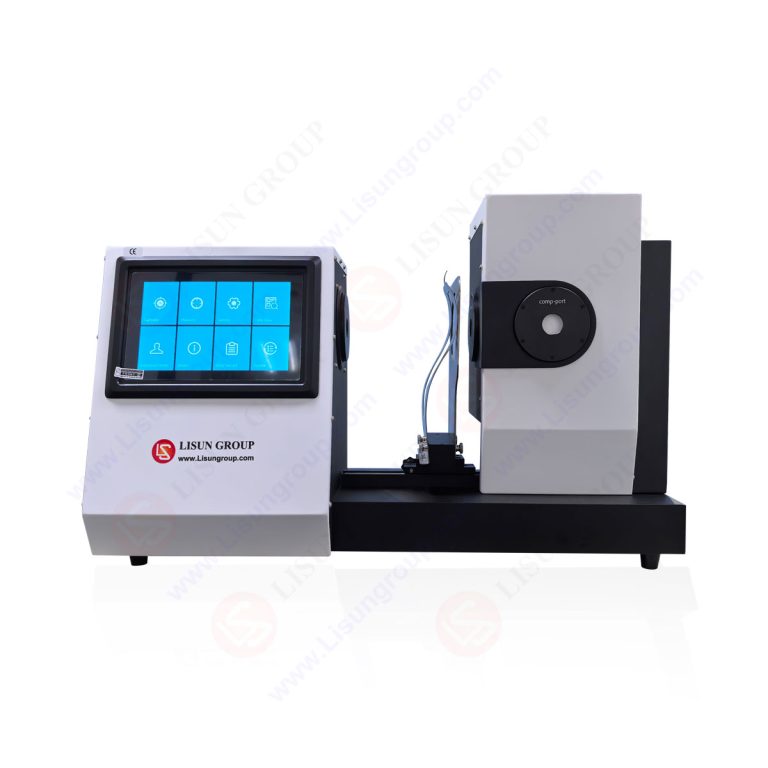
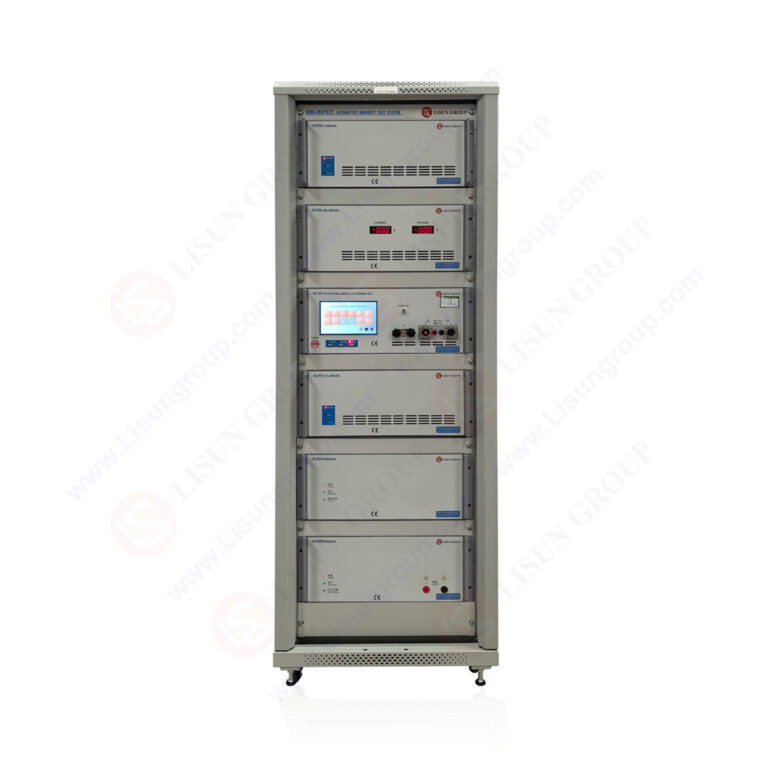
3.1 LEDLM-80PL: Optimized for LM-80/TM-21 Compliance
The LEDLM-80PL system is specifically designed for LED package and module testing per IES LM-80. Key specifications include:
- Test Duration: Up to 6000 hours (extendable to 10000+ hours with user-defined intervals)
- Temperature Control: Supports up to 3 temperature chambers (T1, T2, T3) with ±0.5°C accuracy
- Measurement Frequency: Automated readings every 1000 hours for luminous flux, chromaticity (x,y, u’,v’), and correlated color temperature (CCT)
- Data Analysis: Built-in Arrhenius Model software for TM-21 extrapolation, including L70 and L50 projections with 90% confidence bounds
3.2 LEDLM-84PL: Designed for LM-84/TM-28 and OLED Testing
The LEDLM-84PL variant expands capabilities to OLED light sources and LED lamps, incorporating:
- Dual Measurement Modes: Constant current mode (0-1500mA ±0.5%) for component testing and constant temperature mode (25°C-85°C) for accelerated aging
- Integrating Sphere Compatibility: Direct interface with 0.3m to 2m spheres for total flux and chromaticity measurement
- Customizable Hardware: Optional spectral analyzer (350-1050nm, 0.5nm resolution) and photometric filter head for multi-point spatial validation
3.3 Comparative Analysis of LEDLM-80PL and LEDLM-84PL
| Feature | LEDLM-80PL | LEDLM-84PL |
|---|---|---|
| Primary Standard Compliance | IES LM-80, TM-21 | IES LM-84, TM-28 |
| Test Target | LED packages, arrays, modules | OLED light sources, LED lamps |
| Temperature Chambers Supported | Up to 3 independent units | Up to 3 independent units |
| Measurement Modes | Constant current only | Constant current & constant temperature |
| Integrable Sphere Compatibility | Optional (0.5m-2m) | Standard (0.3m-2m) |
| Spectral Resolution | 1nm | 0.5nm (optional) |
| Extrapolation Algorithm | TM-21 exponential decay | TM-28 Arrhenius-based |
| Typical Test Duration | 6000 hours (minimum) | 6000 hours (baseline) |
4.1 Theoretical Foundation of the Arrhenius Model
The Arrhenius equation, k = A exp(-Ea/(RT)), models how reaction rates (e.g., phosphor degradation) accelerate with temperature. For LED components, activation energy (Ea) typically ranges from 0.3 to 1.0 eV depending on material composition. LISUN’s software automatically derives Ea from multi-temperature test data, enabling accurate acceleration factors (AF) for projecting room-temperature lifetimes from 85°C test data.
4.2 Software Implementation in LEDLM-80PL and LEDLM-84PL
The software suite in both systems performs:
- Data Acquisition: Real-time logging of luminous flux, chromaticity, CCT, and forward voltage for each test sample (up to 150 channels)
- Curve Fitting: Nonlinear regression using TM-21/TM-28 exponential formulas to minimize mean squared error
- Extrapolation: Projection to L70/L50 thresholds with 90% confidence intervals, automatically flagged if data quality degrades (e.g., R² < 0.95)
- Reporting: IES-compliant .csv and .pdf exports with graphical overlays of measured vs. predicted data
4.3 Practical Application: 6000-Hour Test Case Study
In a typical LM-80 test at 85°C, a mid-power LED (0.5W, CCT 3000K) exhibited 8% lumen depreciation over 6000 hours. The Arrhenius software calculated Ea = 0.45 eV, yielding an AF of 15.2 relative to 55°C operation. Projected L70 at 55°C exceeded 50,000 hours, while L50 surpassed 80,000 hours. Chromaticity shift remained within ±0.002 u’v’, confirming color stability under thermal stress.
5.1 Constant Current Mode for Component Characterization
In constant current mode, LISUN’s instruments maintain user-defined drive currents (typically 350mA to 1500mA) across the test duration. This isolates thermal effects on the LED die and phosphor without confounding variables from driver drift. Measurements include:
- Luminous Flux: Monitored via integrating sphere with <1% measurement uncertainty
- Chromaticity: Real-time CIE coordinates with ±0.0005 repeatability
- Forward Voltage: Tracked as an indirect indicator of junction temperature
5.2 Constant Temperature Mode for Accelerated Aging
Constant temperature mode uses Peltier-controlled chambers to maintain precise case temperatures (25°C-85°C ±0.5°C) while allowing current to fluctuate naturally. This mode accelerates failure modes such as solder joint fatigue and encapsulant yellowing. The LED Component Test: Precision Chromaticity & Lumen Measurement Guide recommends alternating between both modes to decouple current-driven and temperature-driven degradation mechanisms.
5.3 Mode Selection Guidelines Based on Test Objectives
| Test Objective | Recommended Mode | Rationale |
|---|---|---|
| Package-level reliability | Constant current | Isolates thermal stress on die/phosphor |
| System-level lifetime | Constant temperature | Includes driver and solder joint effects |
| Chromaticity stability | Constant current | Avoids color shift from current modulation |
| TM-21 extrapolation | Constant current | Requires stable drive conditions for exponential fit |
| LM-84 lamp testing | Constant temperature | Mimics real-world operating conditions |
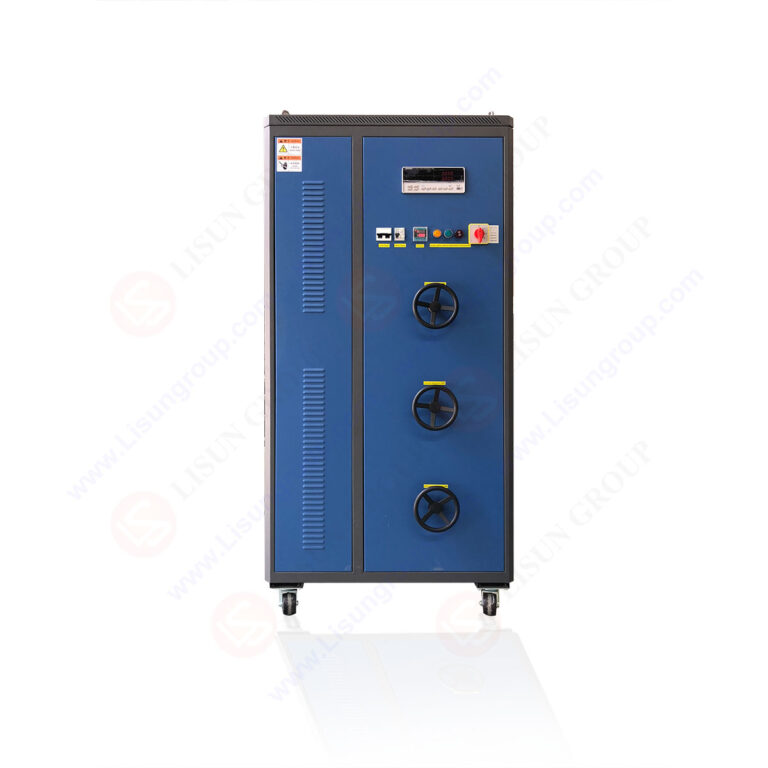
6.1 Temperature Chamber Support: Up to 3 Independent Units
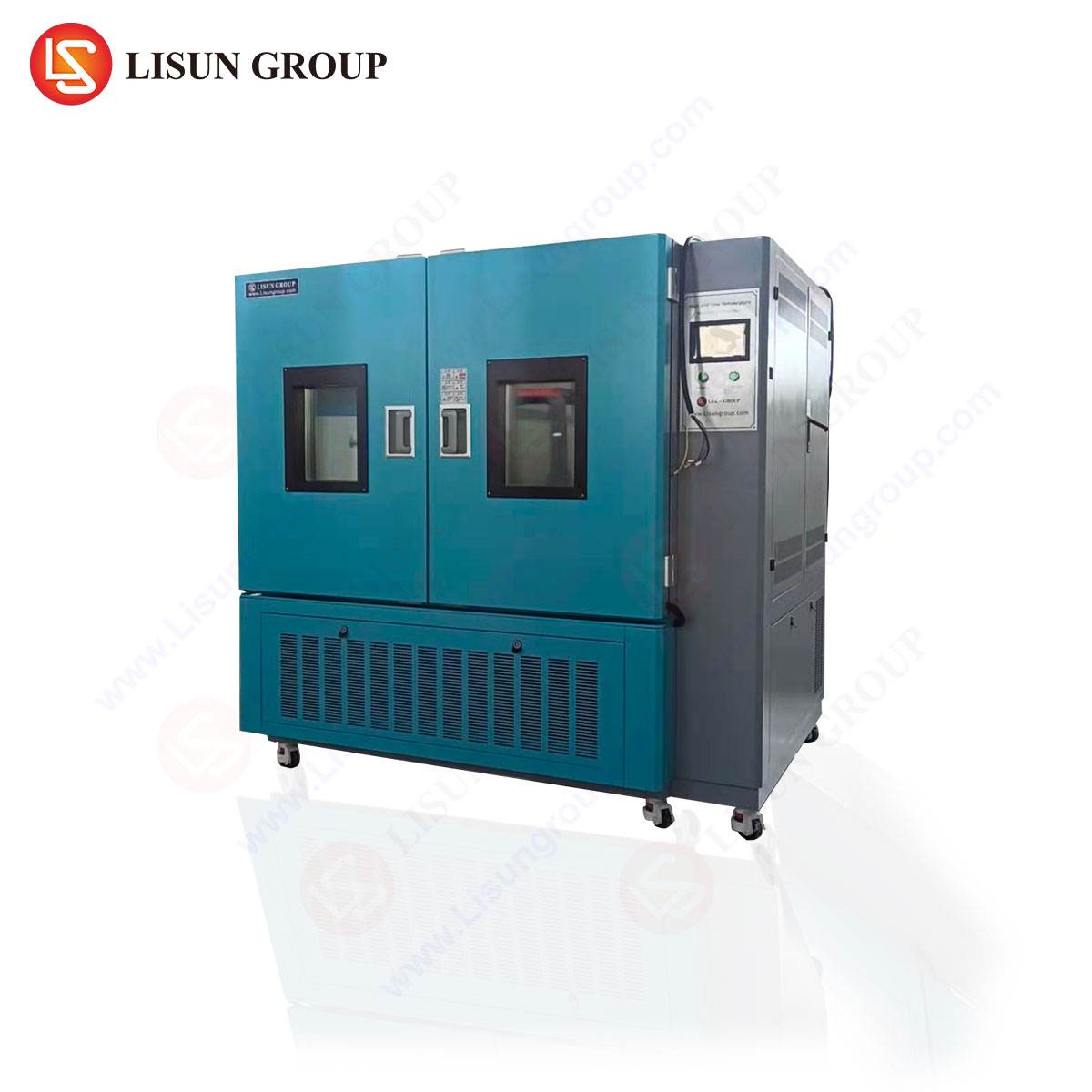
The LEDLM-80PL/84PL systems support simultaneous connection of up to three temperature chambers, each configurable for different test temperatures (e.g., T1=55°C, T2=85°C, T3=105°C). Each chamber accommodates up to 50 LED components, enabling parallel testing of 150 samples per test run. This triples throughput compared to single-chamber systems without sacrificing measurement precision.
6.2 Integrating Sphere and Spectroradiometer Integration
Customizable options include:
- Integrating Sphere: Available in 0.3m, 0.5m, 1m, and 2m diameters for total flux measurement (NIST-traceable calibration)
- Spectroradiometer: Ranges from 350nm to 1050nm with 0.5nm resolution for chromaticity and CRI/R9 calculation
- Goniophotometer: For spatial luminous intensity distribution per CIE 70 standards
- Photometric Filter Head: Conforms to CIE 127 for luminance measurement of small-area LEDs
6.3 Data Acquisition and Remote Monitoring
Ethernet/USB connectivity enables remote data logging to central databases. The software supports multi-system synchronization, allowing engineers to correlate tests across different chambers or geographical sites. Alarms trigger via email/SMS if deviation thresholds (e.g., >2% lumen drop from predicted curve) are exceeded.
7.1 Calibration and Verification Protocols
Before each test series, the integrating sphere must be calibrated using a NIST-traceable standard lamp (wavelength recalibration: ±0.3nm; flux calibration: <1% uncertainty). Dark current subtraction and stray light correction algorithms are applied automatically by LISUN’s software to minimize systematic errors.
7.2 Sample Preparation and Mounting
LED components should be mounted on thermal management substrates (e.g., MCPCB) with thermal interface material to ensure heat dissipation. The LED Component Test: Precision Chromaticity & Lumen Measurement Guide recommends a 24-hour stabilization period at test temperature before initial measurement to eliminate thermal transients.
7.3 Data Validation and Outlier Detection
Statistical process control (SPC) charts track key parameters (lumen maintenance, chromaticity drift, forward voltage) over time. Outliers (>3σ from mean) trigger re-measurement or sample exclusion. TM-21 extrapolation requires at least 6000 hours of data with <10% measurement dropout to achieve 90% confidence bounds.
Precision chromaticity and lumen measurement are non-negotiable for LED component reliability validation, and adherence to standards such as IES LM-80, LM-84, TM-21, and TM-28 ensures globally accepted results. LISUN’s LEDLM-80PL and LEDLM-84PL systems deliver dual-architecture flexibility—supporting up to 6000-hour test durations, three temperature chambers, and dual testing modes—to address diverse application needs from package-level to lamp-level testing. The Arrhenius Model-based software provides robust lifetime projections (L70/L50) with statistical confidence, while customizable hardware options (integrating spheres, spectroradiometers, thermal chambers) enable engineers to tailor setups to specific test protocols. By integrating these capabilities into a unified LED Component Test: Precision Chromaticity & Lumen Measurement Guide, LISUN empowers engineers to achieve faster time-to-market, reduce field failure risks, and maintain regulatory compliance in demanding lighting applications. For R&D teams and quality control labs, investing in precision test instrumentation is not just a cost—it’s a strategic advantage in the competitive LED marketplace.
Q1: What is the minimum test duration required for IES LM-80 compliance, and how does LISUN’s system handle it?
A: IES LM-80-15 mandates a minimum 6000-hour test duration at three specified case temperatures (typically 55°C, 85°C, and a third user-defined point). LISUN’s LEDLM-80PL system automates this process with programmable measurement intervals (every 1000 hours) and supports simultaneous testing across up to three independent temperature chambers. The built-in software logs luminous flux, chromaticity, and forward voltage data continuously, ensuring no data gaps. After 6000 hours, TM-21 algorithms automatically extrapolate L70/L50 lifetimes with 90% confidence intervals, complying fully with IES documentation requirements.
Q2: How does the Arrhenius Model improve the accuracy of lifetime projections in LED component testing?
A: The Arrhenius Model calculates an activation energy (Ea) from multi-temperature test data, typically ranging 0.3-1.0 eV for LEDs. By determining the acceleration factor between test temperatures (e.g., 85°C) and operating temperatures (e.g., 55°C), the model projects realistic lumen depreciation curves without requiring decades of real-time testing. LISUN’s software performs nonlinear regression on the raw data, rejecting curves with R² < 0.95 to ensure statistical robustness. This approach reduces extrapolation error to <10% in most cases, as validated by third-party studies.
Q3: Can the LEDLM-84PL system simultaneously measure chromaticity and luminous flux for both OLED and LED components?
A: Yes, the LEDLM-84PL is designed for dual-source flexibility. It integrates a spectroradiometer (350-1050nm, 0.5nm resolution) and a photometric filter head within an integrating sphere (0.3m to 2m diameter) to capture both chromaticity coordinates (CIE 1931 x,y and CIE 1976 u’,v’) and total luminous flux simultaneously. For OLED sources, which emit Lambertian distributions, the system’s constant temperature mode at 25°C-85°C replicates standard operating conditions per LM-84. The software automatically adjusts measurement parameters (integration time, dark current subtraction) based on source type, ensuring <1% measurement uncertainty across both technologies.
Q4: What are the key differences between constant current and constant temperature testing modes, and when should each be used?
A: Constant current mode maintains a fixed drive current (e.g., 350mA) throughout the test, isolating thermal stress on the LED die and phosphor. It is ideal for package-level reliability tests and TM-21 extrapolation, where stable drive conditions are required for exponential curve fitting. Constant temperature mode fixes case temperature (e.g., 85°C) while allowing current to fluctuate, which mimics real-world driver behavior and accelerates failure modes like solder joint fatigue. This mode is recommended for LM-84 lamp testing and system-level lifetime assessment. LISUN’s systems support both modes interchangeably, and the test protocol should alternate between them to decouple degradation mechanisms.
Q5: How many LED components can be tested simultaneously using LISUN’s three-chamber configuration?
A: Each temperature chamber in the LEDLM-80PL/84PL system can accommodate up to 50 LED components (packages or modules) simultaneously. With three chambers connected, this enables parallel testing of 150 samples per test run. Each chamber can be set to a different temperature (e.g., 55°C, 85°C, 105°C) to generate multi-temperature data for Arrhenius analysis. The system supports up to 150 independent measurement channels, logging luminous flux, chromaticity, forward voltage, and CCT for every sample at user-defined intervals (typically every 1000 hours). This triples throughput compared to single-chamber systems while maintaining <1% measurement uncertainty.