


Here is the comprehensive technical article generated based on your detailed instructions.
Abstract
This article provides a technical analysis of the LISUN Damp Heat Chamber for IEC 60068 Temperature Humidity Testing system, focusing on its dual-platform architecture for LED lumen maintenance validation. We explore the integration of the LEDLM-80PL and LEDLM-84PL with the Arrhenius Model-based software for accelerated aging. The article details how these systems support 6000-hour test durations, L70/L50 metric extrapolation, and compliance with IES LM-80, TM-21, LM-84, and TM-28 standards. By examining hardware configurations, dual testing modes (constant current/constant voltage), and multi-chamber data synchronization for up to 3 chambers, we demonstrate how this solution enables precise reliability modeling for quality control engineers and third-party testing labs.
1.1 The Physical Mechanism of Lumen Depreciation
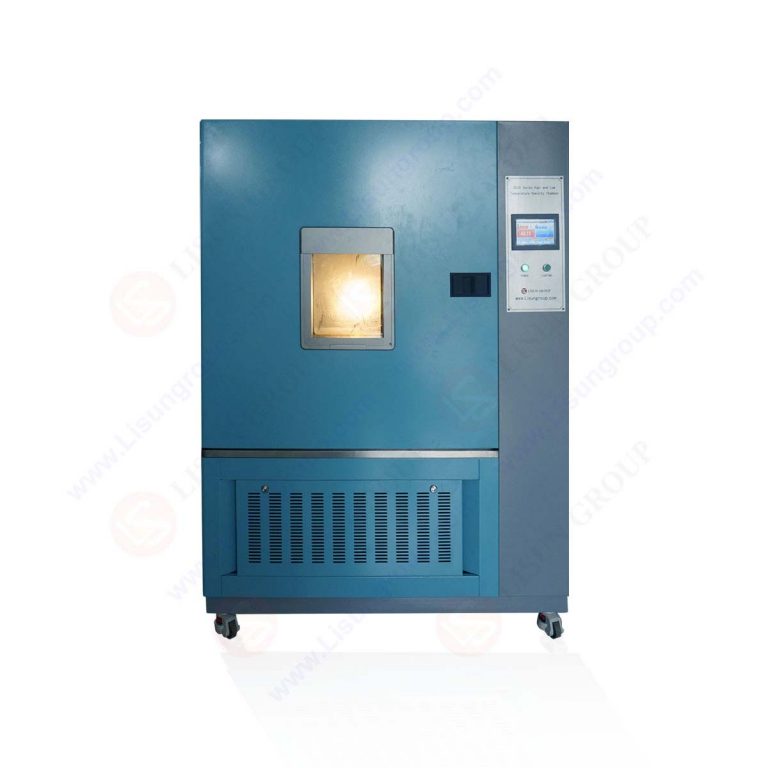
The operational lifespan of an LED is fundamentally governed by the junction temperature and the ambient humidity. Elevated temperatures accelerate chemical degradation within the phosphor and semiconductor layers, while high humidity induces corrosion in metallic interconnects and solder joints. The LISUN Damp Heat Chamber for IEC 60068 Temperature Humidity Testing simulates these stressors to accelerate failure modes, allowing engineers to predict the L70 (time to 70% lumen maintenance) within a commercially viable 6000-hour test window.
1.2 Adherence to IEC 60068 and IESNA Standards
The core testing protocols are derived from IEC 60068-2-78 (Damp heat, steady state) and IEC 60068-2-30 (Damp heat, cyclic). These standards define the temperature ramps (e.g., 25°C to 55°C at 95% RH) and duration requirements. The LISUN system maps these physical stress profiles directly onto the measurement protocols defined by IES LM-80 (for packaged LEDs) and IES LM-84 (for LED lamps and luminaires), ensuring test data is valid for subsequent TM-21 extrapolation.
1.3 The Role of the Arrhenius Model in Accelerated Aging
The Arrhenius Model forms the mathematical backbone of the system’s prediction software. By applying a known activation energy (Ea) typically ranging from 0.4 eV to 0.7 eV for LED packages, the software calculates an acceleration factor (AF). This allows the system to simulate 25,000 hours of real-world operation through a 6,000-hour damp heat test. The software’s regression analysis accurately visualizes the non-linear decay curve.
2.1 LEDLM-80PL: Precision for LM-80/TM-21 Compliance
The LEDLM-80PL variant is specifically configured for testing LED packages, arrays, and modules per IES LM-80-20. It supports up to 3 connected temperature chambers, allowing simultaneous testing at different case temperatures (usually 55°C, 85°C, and a user-defined point). Each channel maintains precise current regulation (typically ±0.5% accuracy) for 350mA, 700mA, or 1000mA drive currents, essential for generating compliant TM-21 reports for Energy Star submissions.
2.2 LEDLM-84PL: Dedicated Validation for Integrated Lamps
The LEDLM-84PL is designed for complete luminaires (retrofit lamps, downlights) per IES LM-84-20. The key hardware differentiator is the inclusion of a customized integrating sphere (typically 1.5m or 2.0m in diameter) that allows in-situ photometric measurement without removing the luminaire from the damp heat chamber. This eliminates handling errors and provides a true, unbroken data chain for total flux maintenance over the 6000-hour span.
2.3 Comparative Technical Specifications
The following table highlights the critical technical distinctions between the two system variants.
| Feature | LEDLM-80PL (LM-80 Focus) | LEDLM-84PL (LM-84 Focus) |
|---|---|---|
| Primary Standard | IES LM-80-20, TM-21-21 | IES LM-84-20, TM-28-20 |
| Sample Type | LED Packages, Arrays, Modules | LED Lamps, Luminaires, Integrated Light Engines |
| Measurement Method | External Spectroradiometer (via fiber optic) | Integrated 2.0m Integrating Sphere (in-situ) |
| Max Connected Chambers | 3 (simultaneous, same or different T-case) | 1 (chamber integrated with sphere) |
| Drive Mode Flexibility | Constant Current (CC) / Constant Voltage (CV) | Constant Voltage (CV) typical for luminaires |
| Key Specs | Temp Range: -40°C ~ +150°C; Humidity: 20% ~ 98% RH | Temp Range: -40°C ~ +150°C; Humidity: 20% ~ 98% RH |
3.1 Constant Current (CC) Mode for Junction Temperature Control
For the LEDLM-80PL, CC mode is critical. It maintains a constant drive current (e.g., 350mA) irrespective of the junction temperature rise caused by the damp heat environment. This mode isolates the thermal acceleration of the phosphor from driver-induced current drift. The system logs forward voltage (Vf) as a secondary metric to monitor junction degradation and electrode electromigration.
3.2 Constant Voltage (CV) Mode for System-Level Validation
The CV mode, primarily used in the LEDLM-84PL for luminaires, subjects the entire driver-LED assembly to a fixed voltage (e.g., 120V or 230V). In this mode, the current will naturally decrease as the driver efficiency degrades under humidity stress. This provides a realistic system-level failure profile, as the L70 metric reflects a combination of LED chip degradation and driver component failure.
3.3 Optical Measurements: From Spectroradiometer to Sphere
The system uses a calibrated spectroradiometer (meeting CIE 127:2007 Class A requirements) for all flux and color measurements. For the LEDLM-80PL, the optical signal is transmitted via a high-OH quartz fiber optic cable from the chamber’s temperature-stabilized socket to the optical bench. For the LEDLM-84PL, a 2.0m integrating sphere equipped with a baffle and auxiliary lamp system captures total luminous flux (Φv) at user-defined intervals (e.g., every 100 hours).
4.1 TM-21 Extrapolation Methodology
The software automatically performs the TM-21 non-linear regression on the collected data points. It calculates the decay rate constant (α) using the Arrhenius equation and allows users to input a chosen activation energy. The system then extrapolates the L70 and L50 (time to 50% lumen maintenance) values, respecting the TM-21 rule that limits extrapolation to 6x the test duration (i.e., max 36,000 hours from a 6,000-hour test).
4.2 Reporting Compliance with IES Standards
The generated reports are formatted to meet the exact specifications of IES LM-79-19 for photometric testing and TM-21 for lifetime projection. This includes mandatory reporting of:
- All raw measurement data (including luminous flux, CCT, and chromaticity coordinates).
- The fitted decay curve with 95% confidence intervals.
- The calculated L70, L50, and the standard error of the extrapolation.
- Ambient chamber conditions (T, RH) for each data logging interval.
5.1 Chamber Scalability and Multi-Zone Control
The LISUN system can support up to three independently controlled temperature chambers for the LEDLM-80PL. This allows engineers to run an accelerated test at 85°C/85%RH, a nominal test at 55°C/60%RH, and a third variable test simultaneously. The software synchronizes all data logs from the three chambers into a single comparative report, which is essential for calculating the sample’s actual activation energy.
5.2 Fixturing and Electrical Connection
Customizable socket boards are available for various LED package types (SMD, COB, High-Power). The system features 4-wire Kelvin connections for precise Vf measurement, eliminating voltage drop errors from low-impedance LED connections. For the LEDLM-84PL, a specialized power feed-through maintains IP54 ingress protection into the integrating sphere while ensuring the luminaire’s electrical safety.
6.1 Pre-Production Validation of Phosphor Stability
R&D engineers use the Damp Heat Chamber to specifically test the color stability (Δu’v’) of phosphor-converted white LEDs. The system’s high-resolution spectrometer (≤0.0025 CIE 1931 x,y accuracy) can detect even minor shifts correlated to phosphor delamination under humidity stress, allowing designers to select more robust material sets.
6.2 TM-28 Compliance for Upstream Module Testing
While TM-28 is the projection standard for LED light engines, the LISUN system’s LM-84 data serves as its direct input. Quality control engineers in the automotive or horticulture sectors use this hardware to run a 6,000-hour damp heat cycle at 85°C/85%RH on their modules. The resulting L70 metric is a gate pass/fail criteria for high-reliability applications where failure in the field is unacceptable.
7.1 Arrhenius Model Implementation in the User Interface
The software interface allows operators to manually input the series resistance (Rs) and thermal resistance (Rth) of the DUT, or allow the software to estimate them from the Vf vs. Temperature curve. The Arrhenius Model then calculates the junction temperature (Tj) for each measurement point, providing a more accurate acceleration factor than relying solely on case temperature (Tc).
7.2 Automatic Datalogging and Data Integrity_**
The system logs data at user-defined intervals (from 1 minute to 24 hours). To ensure data integrity for regulatory audits (e.g., EPA Energy Star), the software creates a write-once, read-many (WORM) log file. This prevents post-hoc data manipulation and maintains a complete audit trail of any chamber interruptions (e.g., door openings, power cycles).
The LISUN Damp Heat Chamber for IEC 60068 Temperature Humidity Testing provides a rigorous, dual-platform solution for LED reliability validation. By integrating the LEDLM-80PL and LEDLM-84PL with the Arrhenius Model-based software, engineers can transition from raw 6000-hour photometric data to compliant L70/L50 projections per IES TM-21 and TM-28. The system’s ability to support three chambers simultaneously, its dual CC/CV testing modes, and its adherence to IES LM-80 and LM-84 standards make it an indispensable tool for quality control and R&D. For lighting engineers and third-party labs, this hardware offers the data fidelity and software intelligence needed to meet stringent regulatory requirements and reduce field failure risk.
Q1: What is the difference between testing LED packages (LM-80) and LED lamps (LM-84) using the LISUN damp heat system?
A: The primary difference lies in the measurement methodology and test setup. For LM-80 testing with the LEDLM-80PL, LED packages are mounted on temperature-controlled test boards and measured via an external spectroradiometer connected by fiber optics. For LM-84 testing with the LEDLM-84PL, the entire lamp or luminaire is placed inside a 1.5m or 2.0m integrating sphere that is integrated directly into the damp heat chamber. This allows for total luminous flux measurement of the complete assembly during humidity stress. The LM-84PL system also typically operates in constant voltage (CV) mode to stress the driver electronics, whereas the LM-80PL uses constant current (CC) mode to isolate the LED chip performance.
Q2: How does the Arrhenius Model software calculate the L70 lifetime from a 6000-hour test?
A: The software utilizes the Arrhenius Model to calculate an acceleration factor (AF) based on the test chamber’s temperature and the user-provided activation energy (Ea). The collected photometric decay data is fitted using the IES TM-21 recommended non-linear regression (usually a single exponential decay model). This fitted curve is then projected forward in time. According to TM-21 guidelines, the maximum extrapolation is 6 times the test duration. Therefore, from a 6000-hour test, the software can reliably project L70 values up to 36,000 hours. The software provides 95% confidence intervals for this projection, allowing engineers to assess the statistical risk of the estimate.
Q3: Can I connect multiple LISUN chambers to one control system for simultaneous testing?
A: Yes, for the LEDLM-80PL variant, the system is designed to support up to three independent temperature and humidity chambers, all controlled and logged by a single central computer and software suite. This is critical for LM-80 testing, which requires data at three different case temperatures (typically 55°C, 85°C, and a third user-defined temperature). The software synchronizes the data acquisition from all three chambers, allowing the engineer to perform a unified analysis (e.g., calculating the sample’s activation energy) using data from all three test conditions simultaneously. The LEDLM-84PL system typically operates with one chamber due to the integrated sphere design.
Q4: What specific humidity conditions can the chamber achieve for IEC 60068 compliance?
A: The LISUN Damp Heat Chamber is capable of a wide humidity range, typically from 20% to 98% Relative Humidity (RH) over a temperature range of -40°C to +150°C. For standard damp heat testing per IEC 60068-2-78 (Steady State), common conditions are 40°C/93%RH or 85°C/85%RH. The system also supports cyclic damp heat testing (IEC 60068-2-30), where temperature and humidity are varied in defined cycles (e.g., 25°C to 55°C with ramps and humidity holds). The control accuracy is ±2.0% RH for humidity and ±0.5°C for temperature, ensuring high repeatability for R&D quality control.