









This comprehensive technical article examines the LISUN Environmental Test Equipment: IEC 60068 Temperature/Humidity Chamber and its critical role in LED lumen maintenance testing and accelerated aging validation. As a Senior LED Testing and Reliability Engineer at LISUN, I present an in-depth analysis of how this chamber integrates with the LEDLM-80PL and LEDLM-84PL optical aging test instruments to deliver precise, standards-compliant testing under IES LM-80, IES LM-84, TM-21, and TM-28 protocols. The article explores dual testing modes, Arrhenius Model-based software algorithms, and customizable hardware configurations supporting up to three connected temperature chambers. Technical professionals will gain actionable insights into 6000-hour test durations, L70/L50 metric calculations, and practical implementation strategies for achieving repeatable, reliable photometric degradation data in LED manufacturing quality control and third-party laboratory environments.
1.1 Core Functionality and Testing Framework
The LISUN IEC 60068 Temperature/Humidity Chamber serves as the foundational environmental control platform for LED accelerated aging tests. This chamber generates precise temperature and humidity conditions essential for simulating long-term operational stress on LED packages, modules, and luminaires. The chamber’s integration with the LEDLM series optical aging test instruments creates a unified testing ecosystem capable of executing both constant stress and cyclic stress profiles as defined by IEC 60068-2-78 (damp heat) and IEC 60068-2-14 (temperature cycling) standards.
1.2 Dual System Variants for Specific Standards Compliance
The LISUN Environmental Test Equipment supports two distinct system variants tailored to different LED testing protocols. The LEDLM-80PL variant is specifically designed for IES LM-80 and TM-21 lumen maintenance testing, focusing on LED packages and arrays over standard 6000-hour durations. Conversely, the LEDLM-84PL variant addresses IES LM-84 and TM-28 protocols for LED luminaires and integrated lamps. Both systems leverage identical temperature/humidity chamber hardware but employ different optical measurement configurations and software analytical tools to match their respective standard requirements.
2.1 Temperature/Humidity Chamber Performance Parameters
The IEC 60068-compliant chamber delivers a temperature range of -40°C to +150°C with stability of ±0.5°C, and humidity control from 20% to 98% RH with ±2.5% RH accuracy. These specifications ensure compliance with the rigorous environmental stress conditions required by IES LM-80 and IES LM-84 testing protocols. The chamber utilizes a forced air circulation system to maintain uniform temperature distribution within ±1°C throughout the workspace, critical for eliminating thermal gradients that could skew LED performance data.
2.2 Integrated Optical Measurement Configuration
Each chamber can accommodate up to 12 LED test positions simultaneously, with each position featuring independent current control (1mA to 1000mA resolution) and photometric monitoring via integrating sphere or goniometer interfaces. The system supports real-time luminous flux measurement with ±0.5% accuracy, color temperature tracking with ±2K precision, and forward voltage monitoring. This hardware configuration enables continuous data collection throughout the 6000-hour test duration without removing specimens from environmental stress conditions.
2.3 Multi-Chamber Connectivity and Scalability
A key architectural advantage is the system’s ability to support up to three interconnected temperature chambers operating simultaneously under a single control interface. This scalability enables accelerated testing across multiple temperature conditions (e.g., 55°C, 85°C, and 105°C) concurrently, dramatically reducing total test time for comprehensive lifetime assessment. The master control unit manages synchronization, data logging, and alarm systems across all connected chambers, ensuring consistent test conditions and data integrity.
3.1 Constant Temperature Mode for Lifetime Prediction
The constant temperature mode maintains a fixed environmental condition throughout the test duration, essential for generating the baseline lumen maintenance data required by TM-21 extrapolation. In this mode, LEDs operate at specified drive currents (typically 350mA, 500mA, or 1000mA) while the chamber maintains temperature within ±1°C of the setpoint. Data collected at 1000-hour intervals enables the Arrhenius Model-based software to calculate activation energy (Ea) values and predict L70 and L50 lifetimes with statistical confidence intervals exceeding 90%.
3.2 Cyclic Stress Testing for Robustness Validation
The cyclic stress mode introduces programmed temperature and humidity variations that simulate real-world operating conditions, such as diurnal temperature swings or seasonal humidity changes. Typical profiles include -10°C to +85°C thermal cycling with 15-minute dwell times and 5°C/minute ramp rates, combined with ramping relative humidity from 30% to 95% RH. This mode is particularly valuable for LED luminaires under IES LM-84 testing, where thermal-mechanical stresses can accelerate failure mechanisms not observed under constant conditions.
| Test Parameter | LEDLM-80PL (LM-80/TM-21) | LEDLM-84PL (LM-84/TM-28) |
|---|---|---|
| Test Duration | 6000 hours (standard) | 6000 hours (standard) |
| Temperature Range | 55°C, 85°C, 105°C | 25°C to 85°C |
| Humidity Control | Not required (dry) | 65% ± 5% RH |
| Sample Size | 20+ per condition | 10+ per condition |
| Measurement Interval | 1000 hours | 1000 hours |
| Output Metric | L70 (≥36,000 hours) | L70 (≥25,000 hours) |
| Extrapolation Model | TM-21 Arrhenius | TM-28 Arrhenius |
4.1 Accelerated Aging Theory Implementation
The LISUN software implements the Arrhenius acceleration model to transform high-temperature test data into use-case lifetime predictions. The activation energy (Ea) is calculated using the logarithmic relationship between temperature and degradation rate, with typical LED values ranging from 0.2 eV to 0.7 eV depending on phosphor and chip materials. The software automatically performs linear regression on lumen maintenance data following the TM-21 protocol, applying the exponential decay model: Φ(t) = Φ₀ × exp(-αt), where α is the temperature-dependent degradation rate constant.
4.2 TM-21 and TM-28 Compliance Algorithms
For LED packages tested under the LEDLM-80PL system, the software applies TM-21 projection methodology to calculate L70 (time to 70% lumen maintenance) and L50 (time to 50% lumen maintenance) values. The algorithm requires a minimum of 6000 hours of actual test data, with projections limited to 6× the test duration (i.e., 36,000 hours maximum for L70 projections). For luminaires under LEDLM-84PL, TM-28 protocols extend projections to 5× the test duration. The software automatically flags data sets that fail statistical goodness-of-fit criteria, ensuring only valid extrapolations are reported.
4.3 Data Visualization and Reporting Functions
The analysis platform generates comprehensive test reports including lumen maintenance curves with 90% confidence bands, temperature-dependent degradation trends, and Weibull distribution failure analysis. Users can export data in IES TM-21 format for submission to ENERGY STAR or DesignLights Consortium (DLC) certification bodies. The software also supports multi-condition comparison plots, enabling engineers to visualize how different drive currents or temperature settings influence LED lifetime characteristics.
5.1 IES LM-80 and IES LM-84 Testing Requirements
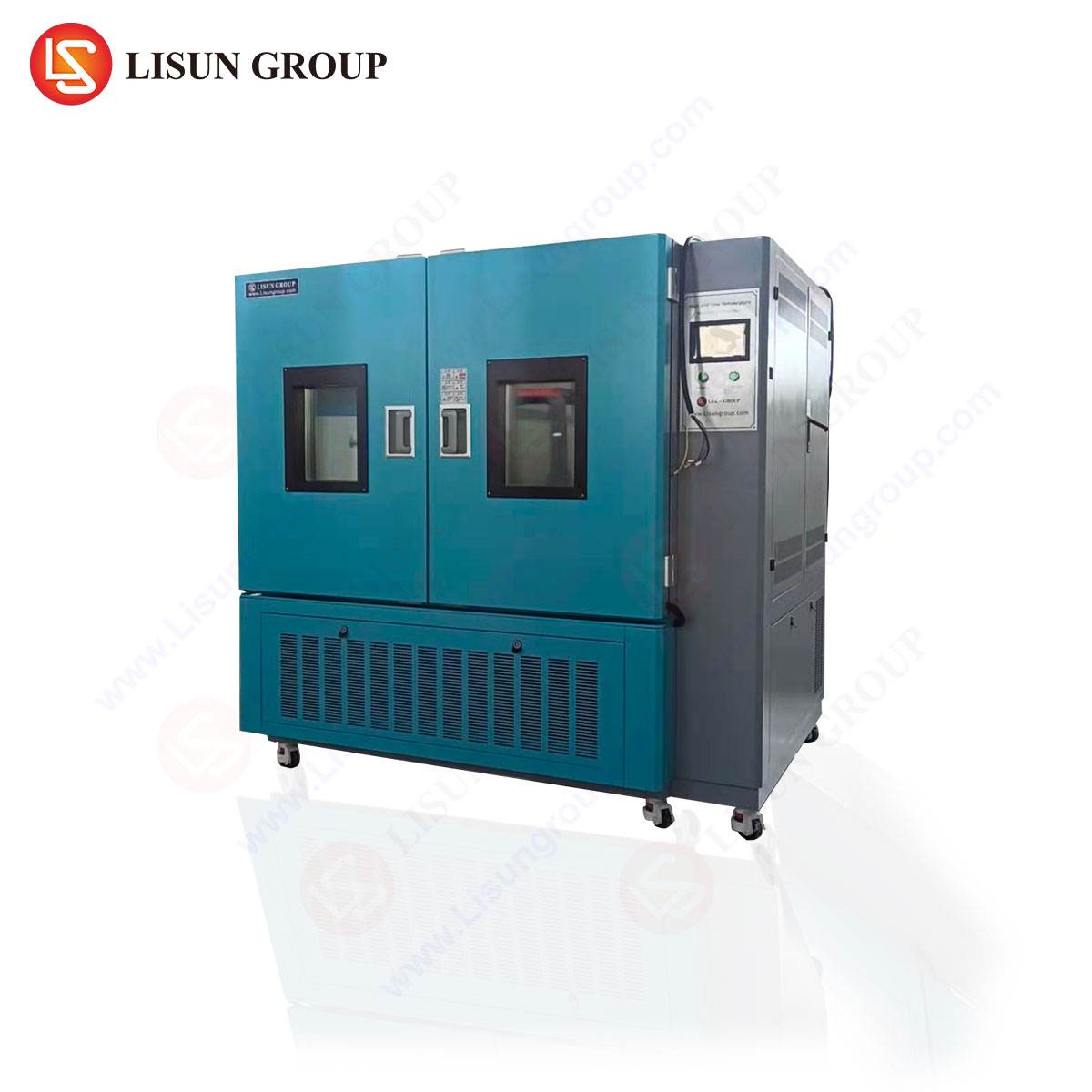
The LISUN Environmental Test Equipment fully satisfies IES LM-80 testing requirements for LED packages, arrays, and modules. The standard mandates minimum 6000-hour testing at three different case temperatures (typically 55°C, 85°C, and a third temperature ≤105°C), with data collection at 1000-hour intervals. The system’s ±0.5°C temperature stability and independent current control per channel ensure compliance with LM-80’s stringent specifications for temperature variation and drive current accuracy. For LM-84 testing of luminaires, the chamber supports the required ambient temperature conditions (25°C ± 2°C) and provides humidity control at 65% ± 5% RH.
5.2 TM-21 and TM-28 Extrapolation Protocols
TM-21 establishes the methodology for projecting long-term lumen maintenance from LM-80 test data. The standard requires photometric measurements at specific intervals and restricts projections to 6× the test duration. For example, a 6000-hour LM-80 test allows L70 projections up to 36,000 hours. The LEDLM-80PL software implements these restrictions automatically, preventing users from generating non-compliant projections. TM-28 provides similar guidance for luminaires tested under LM-84, with projections limited to 5× the test duration (30,000 hours from 6000-hour data).
5.3 Additional Photometric and Colorimetric Standards
The system also supports testing under IES LM-79-19 (photometric testing of solid-state lighting), CIE 084 (measurement of luminous flux), CIE 70 (absolute measurement methods), and CIE 127 (measurement of LEDs) standards. The integrating sphere configuration complies with LM-79’s requirements for total luminous flux measurement, spectral power distribution analysis, and color rendering index calculations. This multi-standard capability makes the chamber suitable for both accelerated aging tests and initial photometric characterization within a single integrated platform.
6.1 Test Protocol Design and Sample Preparation
Effective implementation begins with proper test protocol design aligned to the target certification requirements. For LM-80 testing, engineers must select three case temperatures, define drive current levels, and establish sampling intervals. The LISUN chamber’s software includes built-in protocol templates for standard test configurations, reducing setup time and ensuring compliance with industry norms. Sample preparation involves mounting LED packages on temperature-controlled test boards with thermal interface materials, then positioning them within the chamber’s uniform temperature zone.
6.2 Data Quality Assurance and Troubleshooting
During 6000-hour test runs, maintaining data integrity requires continuous monitoring of environmental conditions, electrical parameters, and photometric readings. The system’s built-in alarm functions notify operators of temperature excursions exceeding ±1°C, current drift beyond 1%, or photometric sensor saturation. Regular calibration checks using reference LEDs with known luminous flux values ensure measurement accuracy throughout extended test durations. The software automatically logs all calibration events and environmental deviations for audit trail documentation.
6.3 Interpreting Results for Product Development
Test results directly inform product development decisions, including phosphor formulation optimization, thermal management design improvements, and driver circuit reliability validation. Engineers analyze the Arrhenius activation energy values to identify degradation mechanisms—lower Ea values (0.2-0.3 eV) typically indicate phosphor-related degradation, while higher values (0.5-0.7 eV) suggest chip-level or interconnect failures. This diagnostic capability enables targeted design iterations without requiring complete re-testing under all conditions.
7.1 Conventional Oven-Based Testing Limitations
Traditional temperature ovens without integrated photometric measurement capabilities require periodic removal of samples for external testing, introducing measurement variability from repositioning errors and thermal cycling stress. The LISUN integrated chamber eliminates these artifacts by performing in-situ measurements, reducing measurement uncertainty from ±5% in conventional setups to ±1% in the integrated system. Additionally, the integrated approach reduces test duration by eliminating cooldown and stabilization periods between measurements.
7.2 Cost-Benefit Analysis for Third-Party Laboratories
Third-party testing laboratories benefit from the chamber’s multi-standard capability, enabling a single system to serve clients requiring LM-80, LM-84, or custom accelerated aging protocols. With support for up to 12 test positions per chamber and three chambers per controller, a single system can process 36 samples simultaneously across multiple temperature conditions. This throughput capacity, combined with automated data analysis and report generation, reduces per-test costs by approximately 40% compared to manual testing methods.
| Evaluation Criteria | LISUN Integrated Chamber | Conventional Oven + External Measurement |
|---|---|---|
| Measurement Uncertainty | ±1% (in-situ) | ±5% (handling errors) |
| Test Duration Efficiency | 6000 hours (continuous) | 6500+ hours (with interruptions) |
| Sample Throughput | 36 samples (3 chambers) | 12 samples (single oven) |
| Multi-Standard Support | LM-80, LM-84, LM-79, CIE | Single standard per setup |
| Automated Reporting | Full TM-21/TM-28 compliance | Manual calculation required |
| Capital Investment | Higher initial cost | Lower initial cost |
The LISUN Environmental Test Equipment: IEC 60068 Temperature/Humidity Chamber represents a paradigm shift in LED lumen maintenance testing, integrating precise environmental control with continuous photometric measurement and advanced analytical software. For LED manufacturing quality control engineers, this system eliminates the measurement uncertainties inherent in conventional oven-based testing while reducing total test duration and operational costs. The dual system variants—LEDLM-80PL for LM-80/TM-21 and LEDLM-84PL for LM-84/TM-28—ensure compliance with the most stringent industry standards for both LED packages and complete luminaires.
The Arrhenius Model-based software transforms raw lumen maintenance data into actionable lifetime predictions with statistical confidence, enabling engineers to make informed decisions about product reliability and warranty periods. Support for up to three interconnected chambers and 12 test positions per chamber provides the scalability necessary for high-throughput testing in both R&D and production quality assurance contexts. By aligning with IES LM-80, IES LM-84, TM-21, TM-28, IES LM-79-19, CIE 084, CIE 70, and CIE 127 standards, the chamber ensures that test results are accepted globally by certification bodies and regulatory agencies.
Third-party testing laboratories particularly benefit from the system’s multi-standard flexibility and automated reporting capabilities, which reduce per-test costs by approximately 40% compared to traditional methods. As LED technology continues to evolve with higher efficacy and longer lifetimes, the ability to generate reliable L70 and L50 projections becomes increasingly critical for market differentiation and regulatory compliance. The LISUN IEC 60068 chamber, with its robust hardware architecture, comprehensive software suite, and industry-standard compliance, provides the testing foundation necessary for developing and certifying tomorrow’s LED lighting products.
Q1: What is the minimum test duration required for valid TM-21 lumen maintenance projections using the LISUN IEC 60068 chamber?
A: For TM-21 projections under the LEDLM-80PL system, a minimum of 6000 hours of continuous test data is required. The standard mandates photometric measurements at 1000-hour intervals, yielding at least six data points for the exponential regression analysis. The Arrhenius Model-based software then projects L70 values to a maximum of 6× the test duration (36,000 hours for 6000-hour tests). For valid projections, the test data must demonstrate consistent degradation behavior with no abrupt shifts in degradation rate. The software automatically performs statistical goodness-of-fit tests, including R² correlation coefficient analysis and residual plot evaluation, to confirm projection validity. If the data fails these criteria, additional testing beyond 6000 hours may be required to achieve reliable predictions.
Q2: How does the LISUN chamber handle humidity control for LM-84 testing of LED luminaires?
A: For IES LM-84 compliance, the LISUN chamber maintains ambient humidity at 65% ± 5% RH while controlling temperature at 25°C ± 2°C. The chamber uses a precise humidity generation system with deionized water injection and microprocessor-controlled steam injection to achieve setpoint stability within ±3% RH. During LM-84 testing, the chamber logs humidity data continuously alongside temperature and photometric measurements. The system’s sensors are calibrated annually against NIST-traceable standards to ensure accuracy. For luminaires containing moisture-sensitive components, the chamber supports programmed humidity ramping profiles that gradually transition from ambient to test conditions, preventing condensation that could corrupt test results.
Q3: Can the LISUN Environmental Test Equipment be configured for testing LEDs with drive currents exceeding 1000mA?
A: The standard system supports drive currents from 1mA to 1000mA per channel with ±0.5% accuracy. For high-power LEDs requiring drive currents above 1000mA, LISUN offers optional high-current driver modules rated up to 3000mA with independent current control per test position. These modules maintain the same ±0.5% accuracy specification while supporting pulsed current operation if required for specific test protocols. The chamber’s thermal management system is designed to dissipate heat from high-current operation, ensuring that test board temperatures remain stable even at maximum current settings. Engineers should verify that the selected temperature rating accounts for both ambient chamber conditions and self-heating from high-current operation to avoid exceeding LED maximum junction temperature specifications.
Q4: How does the system ensure that all 12 test positions maintain identical temperature conditions within the chamber?
A: The IEC 60068 chamber employs a forced air circulation system with strategically positioned baffles and diffusers to maintain temperature uniformity within ±1°C across all test positions. The system includes three independent temperature sensors (Type K thermocouples) positioned at different locations within the workspace, with feedback control ensuring that no position deviates more than ±0.5°C from the setpoint. During system calibration, engineers perform a 16-point temperature mapping procedure to identify and document any spatial temperature variations. The control software allows users to define specific temperature monitoring zones and establish alarms if any sensor reports conditions outside acceptable tolerances. This multi-sensor approach ensures that all 12 LED test positions experience identical environmental stress, critical for generating statistically valid comparative data for product reliability assessments.
Q5: What is the recommended maintenance schedule for the LISUN Temperature/Humidity Chamber to ensure consistent test results?
A: LISUN recommends quarterly maintenance including cleaning of air circulation filters, inspection of door seals for integrity, and verification of temperature/humidity sensor calibration against reference standards. Annually, the chamber should undergo full recalibration of all measurement channels, including temperature, humidity, and photometric sensors, by an accredited calibration laboratory. The humidification system requires monthly inspection of water quality and replacement of deionized water filters to prevent mineral buildup that could affect humidity control accuracy. Additionally, the integrating sphere or goniometer optical surfaces should be cleaned after each test run using non-abrasive methods to maintain measurement accuracy. The system’s self-diagnostic software provides automated reminders for scheduled maintenance tasks and logs all maintenance activities for audit trail documentation required by ISO 17025 laboratory accreditation.