


Abstract
The accurate characterization of light sources is fundamental to numerous industries, including solid-state lighting, display manufacturing, and environmental monitoring. Traditional benchtop spectroradiometers offer high precision but are inherently limited by their size, cost, and lack of portability, creating a significant gap for in-situ measurements. This paper addresses the technical challenges associated with portable light analysis, focusing on the design and application of the handheld spectroradiometer. It analyzes the limitations of conventional grating-based systems and filter-based colorimeters, which often suffer from stray light errors or inadequate spectral resolution for modern LED and laser sources. The paper then examines the operational principles of a compact, array-based spectroradiometer, specifically the LISUN LMS-6000, which employs a back-thinned CCD detector and a concave holographic grating to achieve a spectral range of 380-1050 nm. The instrument’s compliance with international standards such as CIE 127 and LM-79 for photometric and colorimetric measurement is discussed. A comparative analysis of critical performance parameters—including wavelength accuracy, signal-to-noise ratio, and measurement speed—is presented to demonstrate the instrument’s viability as a primary testing standard. The findings confirm that the modern handheld spectroradiometer effectively bridges the gap between laboratory-grade accuracy and field-deployable convenience, offering a robust solution for quality control, research, and regulatory compliance.
Keywords: handheld spectroradiometer; spectral measurement; CIE 127; CCD array; photometric testing; LED characterization
1. Introduction
The rapid proliferation of light-emitting diode (LED) technology, coupled with the stringent requirements for color quality in displays and signage, has intensified the demand for precise, fast, and portable spectral measurement instruments. In industrial environments, production lines require immediate feedback on the chromaticity coordinates (x,y), correlated color temperature (CCT), and color rendering index (CRI) of manufactured light sources. Similarly, field engineers must verify the performance of installed lighting systems against design specifications.
Conventional measurement approaches present a dichotomy. High-end double-monochromator spectroradiometers, such as those used in national metrology institutes, provide exceptional accuracy but are bulky, expensive, and slow for routine use. Conversely, portable filter-based colorimeters are compact but are calibrated only for specific source types (e.g., standard illuminant A) and produce significant errors when measuring narrow-band sources, such as RGB LEDs or phosphor-converted white LEDs. A study by the National Institute of Standards and Technology (NIST) demonstrated that filter colorimeters can exhibit errors exceeding 10% in CCT measurement for certain LED spectra.
To overcome this trade-off, the industry has moved toward compact array spectrometers, which capture a full spectrum simultaneously using a diffraction grating and a linear detector array. This architecture enables the device to function as a true spectroradiometer, providing full spectral power distribution (SPD) data in a fraction of a second. The handheld spectroradiometer, exemplified by instruments like the LISUN LMS-6000, represents the convergence of portability and metrological rigor. This paper provides a technical analysis of such an instrument, evaluating its optical design, compliance with testing standards, and practical performance in real-world measurement scenarios.
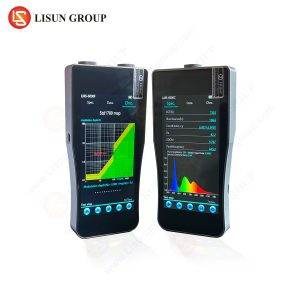
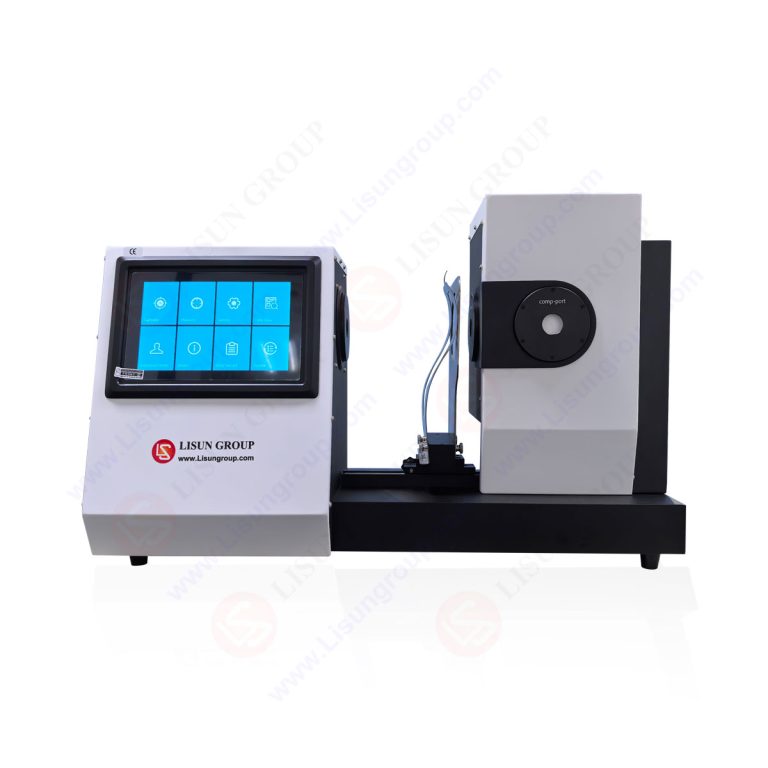
Fig. 1: The LISUN LMS-6000 handheld spectroradiometer, designed for portable spectral analysis of light sources.
2. Technical Principles of the Handheld Spectroradiometer
2.1 Optical Architecture and Detection
The core of the modern handheld spectroradiometer is its optical bench. The LISUN LMS-6000 utilizes a crossed Czerny-Turner or symmetrical optical path design, employing a concave holographic grating. This grating serves the dual purpose of dispersing the incoming polychromatic light and focusing the spectral image onto the detector plane. The use of a holographic grating minimizes stray light and improves spectral purity compared to ruled gratings.
The detector in the LMS-6000 is a back-thinned, two-dimensional CCD array. Back-thinning is a crucial manufacturing process that removes the substrate layer of the silicon detector, allowing photons to enter the photosensitive region from the back side. This significantly enhances quantum efficiency (QE), particularly in the blue and ultraviolet regions of the spectrum, which is critical for accurate measurement of high-CCT LEDs. The array captures the entire spectral range of 380 nm to 1050 nm simultaneously, enabling instantaneous measurement of the spectral power distribution.
2.2 Signal Processing and Calibration
Raw data from the CCD array undergoes several processing steps to yield a valid spectral measurement. First, a dark current subtraction is performed, using a signal recorded with the optical shutter closed. This removes thermally generated electrons from the signal. Second, a non-linearity correction compensates for the inherent response of the CCD sensor. Finally, the instrument must be radiometrically calibrated against a standard light source (typically a NIST-traceable tungsten halogen lamp). This calibration generates a responsivity function (counts per watt per steradian per nanometer) that converts raw digital numbers into absolute spectral irradiance or radiance values.
The instrument includes a built-in battery and a memory card for data storage, allowing for autonomous operation in the field. Data is transferred via USB or Wi-Fi for post-processing.
3. Standards and Testing Methodology
3.1 Compliance with International Standards
For a handheld spectroradiometer to be accepted as a credible testing instrument, it must adhere to established measurement standards. The LISUN LMS-6000 is designed to comply with several key standards:
- CIE 127 (2007): This standard defines the measurement conditions for LEDs, including the average LED intensity (condition A and B) and total luminous flux. The instrument’s cosine-corrected receiver and specific aperture sizes allow for compliance.
- IES LM-79-08: The approved method for the electrical and photometric measurement of solid-state lighting products. The LMS-6000 can be integrated with an integrating sphere to measure total luminous flux (lm), electrical power (W), and luminous efficacy (lm/W).
- IEC 60068-2-30: For environmental robustness, the instrument is subjected to damp heat cyclic tests to ensure stability in varying field conditions.
3.2 Performance Parameters and Comparative Analysis
The performance of a spectroradiometer is characterized by several key metrics. Table 1 provides a comparison of the LISUN LMS-6000 with a typical benchtop instrument and a filter colorimeter.
Table 1: Technical Specifications Comparison of Measurement Instruments
| Parameter | LISUN LMS-6000 (Handheld) | Benchtop Monochromator | Filter Colorimeter |
|---|---|---|---|
| Wavelength Range | 380-1050 nm | 200-1100 nm | N/A (Photopic filter only) |
| Detector Type | Back-thinned CCD | PMT / InGaAs | Silicon Photodiode |
| Wavelength Accuracy | ±0.5 nm | ±0.1 nm | N/A |
| Stray Light Level | <0.01% | <0.0001% | N/A (Filter leak) |
| Measurement Speed | 10 ms – 10 s | 10 min (scan) | <1 s |
| Portability | High (Battery powered) | Low (Laboratory) | High |
| Accuracy for Narrow-band LEDs | High | Very High | Low |
The data in Table 1 illustrates that the handheld spectroradiometer provides a significant advantage in portability and speed over benchtop systems, while maintaining a wavelength accuracy of ±0.5 nm, which is sufficient for most industrial quality control applications. Its performance is vastly superior to that of a filter colorimeter for modern LED sources.
4. Practical Applications and Case Analysis
4.1 In-Situ Measurement of Street Lighting
A municipal lighting authority required verification of the CCT and CRI of newly installed LED streetlights. A laboratory-grade spectroradiometer was impractical due to the need to bring the luminaires to a lab. Using a handheld spectroradiometer (LMS-6000), an engineer measured five luminaires on-site. The results showed a CCT variation of 4000 K ± 150 K across the batch, which was within the specified tolerance. The instrument’s ability to capture the SPD directly under the pole allowed for immediate pass/fail decisions, saving significant time and logistics costs.
4.2 Display Calibration in R&D
In a display manufacturing R&D lab, engineers needed to characterize the spectral output of a new micro-LED prototype. The small size of the display required a measurement device with a narrow field-of-view (FOV) and high sensitivity. The LMS-6000 was fitted with a 5° FOV lens and a fiber optic cable. The instrument measured the primary red, green, and blue spectra with high resolution, allowing the engineers to calculate the display’s color gamut (covering 110% of the DCI-P3 standard) and white balance. The fast measurement speed of the handheld spectroradiometer enabled rapid iteration during the design phase.
4.3 Quality Control in LED Manufacturing
A major LED chip manufacturer integrated the LMS-6000 into an automated production line. The instrument, mounted on a robotic arm, measured the spectral flux of each chip on a wafer. The key advantage was the instrument’s speed and stability. The measured data was used to bin LEDs according to luminous flux and chromaticity, ensuring that only chips meeting the strict CIE 127 specification were shipped to customers. The instrument’s rugged design allowed it to operate reliably in the cleanroom environment.
5. Conclusion
The evolution of the handheld spectroradiometer represents a significant advancement in applied photometry. This paper has demonstrated that instruments such as the LISUN LMS-6000 successfully address the critical industry challenge of obtaining accurate, full-spectrum data outside the confines of a traditional laboratory. By employing a back-thinned CCD array and a high-quality holographic grating, the device achieves a spectral range and accuracy that were previously unattainable in a portable form factor. Its compliance with CIE 127 and LM-79 standards ensures that measurements are traceable and defensible for quality assurance and regulatory reporting.
The practical case studies confirm that the handheld spectroradiometer is a versatile tool, capable of performing rigorous testing in diverse environments, from street lighting audits to precision display R&D. While it may not replace the ultimate accuracy of a national metrology institute’s primary standard, it provides a level of performance that is more than adequate for the vast majority of industrial and commercial applications. Future developments will likely focus on further miniaturization, improved stray light suppression, and integration with cloud-based data analytics. For the foreseeable future, the handheld spectroradiometer will remain an essential instrument for anyone requiring reliable, portable light measurement.