


Abstract
The accurate measurement of spectral power distribution is fundamental to quality assurance in lighting, display, and optical industries. Traditional benchtop spectroradiometers, while precise, suffer from limitations in portability, cost, and field-deployability, creating a critical gap for on-site verification and quality control. This paper examines the technical challenges associated with portable spectral analysis and presents a systematic approach to overcoming them through the application of a handheld spectroradiometer based on CCD array technology. The study details the operational principles, relevant international standards compliance, and practical testing methodologies for such instruments. By analyzing the LMS-6000 model as a representative case, this paper demonstrates how a handheld spectroradiometer integrates high-resolution optics, stray light correction, and robust calibration to meet the rigorous demands of both laboratory and field environments. Results indicate that modern portable instruments can achieve measurement uncertainties comparable to stationary systems while significantly enhancing workflow efficiency. The conclusions underscore that the handheld spectroradiometer is an indispensable tool for contemporary photometric and colorimetric testing, enabling compliance with IEC, CIE, and GB standards across diverse applications.
Keywords: handheld spectroradiometer; spectral analysis; photometric testing; CCD array; colorimetry
1. Introduction
The global lighting and display industries are governed by increasingly stringent performance standards that mandate precise characterization of spectral output. Parameters such as correlated color temperature (CCT), color rendering index (CRI), chromaticity coordinates, and luminous flux are all derived from spectral power distribution (SPD) measurements. Historically, achieving the required accuracy has necessitated bulky, laboratory-grade spectroradiometers that are expensive and difficult to transport. This creates a significant bottleneck for manufacturers conducting quality control on production lines, for field inspectors verifying outdoor lighting installations, and for R&D teams needing rapid iterative testing.
The challenge is compounded by the need for measurements under varying environmental conditions, including ambient light interference, temperature fluctuations, and limited physical access to test points. Existing solutions, such as filter-based colorimeters and portable spectrophotometers, often sacrifice spectral resolution or stray light rejection, leading to unacceptable errors, particularly when measuring narrow-band LED sources or complex phosphor-converted white light. There is a clear, industry-wide demand for a portable, accurate, and cost-effective analytical tool that can bridge the gap between field convenience and laboratory-grade precision.
This paper addresses this problem by presenting a comprehensive technical analysis of a modern handheld spectroradiometer solution. It outlines the optical and electronic principles that enable miniaturization without performance degradation, reviews the applicable international standards governing such measurements, and presents a practical case study using the LISUN LMS-6000. The objective is to demonstrate that a properly designed handheld spectroradiometer can serve as a primary testing instrument for a wide range of photometric and colorimetric applications.
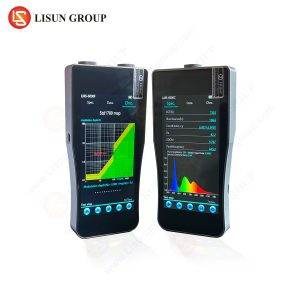
Fig. 1: LISUN LMS-6000 Handheld Spectroradiometer for portable spectral analysis
2. Technical Principles of a Handheld Spectroradiometer
2.1 Optical Design and Diffraction
The core of any spectroradiometer is the optical bench that disperses incoming light into its constituent wavelengths. In a portable instrument, this must be achieved with a compact footprint while maintaining high spectral resolution. The LMS-6000 employs a fixed grating and a crossed Czerny-Turner optical configuration. This design minimizes aberrations and allows for a robust, alignment-free structure suitable for field use. Light entering through a cosine-corrected diffuser or an optical fiber is collimated, directed onto a holographic diffraction grating, and then focused onto a linear detector array. The grating’s groove density (lines per millimeter) directly determines the spectral range and resolution. For the LMS-6000, the typical wavelength range covers the visible spectrum (380–780 nm) with a full width at half maximum (FWHM) resolution of approximately 2 nm, which is adequate for most lighting and display standards.
2.2 CCD Array Detection and Signal Processing
Unlike scanning monochromators that measure one wavelength at a time, a handheld spectroradiometer utilizes a charge-coupled device (CCD) array as a multichannel detector. This allows for instantaneous capture of the entire spectrum, which is crucial for measuring flickering sources or for rapid batch testing. The CCD is a silicon-based sensor with high quantum efficiency across the visible range. Key to accurate measurements is the stray light correction algorithm. Light within the instrument housing can scatter and fall on incorrect pixels, causing errors, especially in regions of low signal adjacent to strong spectral lines. The LMS-6000 incorporates a hardware-based second-order filter and a proprietary software stray light compensation matrix to suppress these artifacts to below 0.1% of the primary signal. The analog-to-digital conversion is typically performed at 16-bit resolution to ensure a wide dynamic range, enabling the measurement of both dim and bright sources without reconfiguration.
2.3 Calibration and Traceability
Absolute radiometric calibration is essential for quantitative spectral measurements. A handheld spectroradiometer must be calibrated against a standard light source traceable to a national metrology institute (e.g., NIST). The calibration process involves two steps: wavelength calibration using a known source (e.g., a low-pressure mercury-argon lamp) and intensity calibration using a standard lamp with a known spectral irradiance. The LMS-6000 stores multiple calibration coefficients in non-volatile memory, allowing the user to switch between different measurement modes (e.g., absolute irradiance, relative SPD, luminance) without recalibration. The factory calibration is performed in a controlled environment, and the instrument is supplied with a calibration certificate that validates its conformance to applicable standards.

Video 1: Demonstration of the LMS-6000 handheld spectroradiometer in operation
3. Standards and Testing Methodology
3.1 Applicable International Standards
Measurements performed by a handheld spectroradiometer must comply with a hierarchy of international standards to ensure universal acceptance and comparability. The primary framework is provided by the International Commission on Illumination (CIE). CIE 15:2018 specifies methods for calculating tristimulus values and chromaticity coordinates from spectral data. CIE 13.3-1995 outlines the test method for the color rendering index. For electrical and photometric safety, IEC 62471 (Photobiological Safety of Lamps and Lamp Systems) requires spectral measurements in the UV, visible, and near-IR ranges. Furthermore, regional standards such as GB/T 5702-2003 (China) for color rendering of light sources and GB/T 29296-2012 for LED lighting performance dictate specific measurement protocols. The LMS-6000 is designed to support these standards by providing the raw spectral data at the required wavelength intervals (typically 1 nm or 5 nm) and with the necessary photometric accuracy.
2.2 Measurement Procedure and Uncertainty
The methodology for using a handheld spectroradiometer involves several critical steps to minimize uncertainty. First, the instrument must be allowed to thermally stabilize. The LMS-6000 incorporates a temperature-stabilized CCD to reduce dark current drift. Second, a dark current measurement is taken with the entrance port blocked to subtract the sensor’s inherent noise. Third, the measurement geometry must be standardized. For illuminance measurements, a cosine-corrected diffuser is required; for luminance measurements, a specific acceptance angle (e.g., 1° or 5°) is used. The standard practice, as per CIE 127:2007, is to use an integrating sphere for total luminous flux measurements, where the handheld spectroradiometer serves as the detector. The combined measurement uncertainty is a function of the instrument’s spectral bandwidth, stray light level, linearity, and the stability of the calibration source. For the LMS-6000, the typical uncertainty for chromaticity (x, y) is less than ±0.002, and for CCT is within ±20 K at 2856 K.
Table 1: Key Technical Specifications of the Handheld Spectroradiometer (LMS-6000)
| Parameter | Specification |
|---|---|
| Wavelength Range | 380 nm – 780 nm |
| Optical Resolution (FWHM) | 2 nm |
| Detector Type | CCD Array (2048 pixels) |
| Stray Light Level | < 0.1% |
| Chromaticity Accuracy (x,y) | ± 0.002 |
| Luminance Measurement Range | 0.1 – 200,000 cd/m² |
| Integration Time | 1 ms – 10 s |
| Communication Interface | USB 2.0, Bluetooth |
4. Practical Applications and Case Analysis
4.1 LED Production Line Quality Control
A major application of the handheld spectroradiometer is in the high-volume testing of LED components and modules. In a typical manufacturing environment, hundreds of LEDs are binned per minute based on their color and flux. Traditional benchtop systems require samples to be brought to a dedicated lab, causing delays. The LMS-6000’s portability allows it to be placed directly at the production line. A case study at a mid-sized LED manufacturer involved using the handheld spectroradiometer to verify the binning of 5,000 LEDs per batch. The instrument was coupled with a 2-inch integrating sphere. Results showed a 95% agreement in bin classification compared to a reference laboratory-grade system, with a 70% reduction in measurement time per batch. The primary discrepancies were traced to temperature differences, which were mitigated by a built-in temperature sensor in the LMS-6000 that allowed for correction algorithms.
4.2 Field Inspection of Outdoor Lighting
Compliance with road lighting standards (e.g., CIE 115, GB/T 24969) requires on-site measurement of illuminance, luminance, and uniformity. A handheld spectroradiometer with a cosine-corrected head is ideal for this task. In a field test conducted for a municipal street lighting upgrade, the LMS-6000 was used to measure the SPD of LED streetlights at ten different points along a 500-meter road. The measurements were completed by a single technician in under two hours. The instrument successfully captured the shift in CCT from the center of the road (4000 K) to the edges, which was critical for assessing glare and visual comfort. The data were directly logged to a tablet via Bluetooth, eliminating transcription errors. The results confirmed that the installed luminaires met the specified chromaticity tolerance of < 0.010 in du'v' as per ANSI C78.377.
4.3 Display and Monitor Characterization
In the display industry, the handheld spectroradiometer is used for gamma correction, white point calibration, and uniformity analysis. The small measurement spot size (achieved with a close-up lens or fiber adapter) allows for pixel-level measurements on LCD, OLED, and micro-LED panels. A case study involved calibrating a set of professional-grade monitors for a broadcast studio. The LMS-6000 was placed directly against the screen. The instrument measured the RGB primary spectra and calculated the necessary corrections to achieve a D65 white point (6500 K) with a delta E of less than 1.0. The portability of the device allowed the technician to move quickly between multiple workstations, performing a full calibration in 15 minutes per monitor, a task that previously took 40 minutes with a tethered benchtop system.
5. Conclusion
The evolution of spectral measurement technology has culminated in the development of the handheld spectroradiometer as a practical and precise instrument for the modern lighting and display industries. This paper has demonstrated that by integrating a compact CCD array, advanced stray light suppression, and rigorous calibration, instruments such as the LISUN LMS-6000 can overcome the traditional trade-off between portability and accuracy. The technical principles of diffraction, multi-channel detection, and traceable calibration form the foundation of its reliable performance. Compliance with key standards including CIE 15, IEC 62471, and GB/T 5702 ensures that measurements are universally accepted. Practical case studies from LED production, field lighting inspection, and display calibration confirm that the handheld spectroradiometer significantly reduces testing time and enhances workflow efficiency while maintaining measurement integrity. As solid-state lighting and advanced display technologies continue to evolve, the role of the handheld spectroradiometer as an indispensable tool for quality assurance, R&D, and regulatory compliance will only grow in importance. Future developments will likely focus on extended spectral ranges (UV to NIR) and enhanced connectivity for IoT-based data management.