


Abstract
The increasing complexity of modern electronic testing and measurement systems demands robust infrastructure for equipment housing, thermal management, and electromagnetic compatibility. This paper examines the design principles, standardization requirements, and practical applications of the 19-inch Instrument Cabinet as a critical component in testing laboratories and industrial environments. Addressing common challenges such as space inefficiency, inadequate heat dissipation, and poor cable management, this study analyzes how the 19-inch Instrument Cabinet conforms to established rack-mount standards (IEC 60297, EIA-310) to provide a scalable and reliable platform for integrating diverse measurement instruments. The paper presents a technical evaluation of the LISUN CASE-19IN model, detailing its structural specifications, load capacity, and ventilation performance. Furthermore, it discusses the role of the 19-inch Instrument Cabinet in supporting EMC testing setups, environmental chamber integration, and photometric measurement systems. Experimental data and case studies demonstrate that proper cabinet selection significantly reduces setup time, improves signal integrity, and enhances overall laboratory workflow. The findings underscore the importance of standard-compliant cabinets in achieving reproducible and accurate test results, particularly in multi-instrument configurations. This research provides a framework for engineers and laboratory managers to evaluate and select appropriate cabinet solutions for their specific testing requirements.
Keywords: 19-inch Instrument Cabinet; Standard Instrument Cabinet; 19-inch Rack Cabinet; EMC testing; thermal management
1. Introduction
The evolution of electronic testing and measurement has led to the proliferation of sophisticated instruments, each requiring specific mounting, power, and environmental conditions. In modern laboratories, it is common to find configurations comprising oscilloscopes, spectrum analyzers, power supplies, and signal generators that must operate in concert. However, a persistent challenge is the physical organization of these instruments. Without a standardized housing system, laboratories frequently encounter issues such as cable entanglement, inadequate airflow leading to thermal stress, and mechanical instability, all of which compromise measurement accuracy and equipment longevity.
The industry has long recognized the need for a unified mounting framework, which is manifested in the widespread adoption of the 19-inch rack standard. Originally defined by the Electronic Industries Alliance (EIA-310) and subsequently refined by the International Electrotechnical Commission (IEC 60297), this standard specifies a mounting width of 19 inches (482.6 mm) between rack rails, with vertical height measured in rack units (U). A 19-inch Instrument Cabinet is designed to accommodate this standard, providing pre-drilled rails, adjustable mounting depths, and integrated cable management pathways. Despite the ubiquity of this standard, critical gaps remain in understanding how cabinet design parameters—such as material gauge, ventilation area, and load distribution—affect the performance of housed equipment, particularly in high-precision testing scenarios.
This paper aims to bridge this gap by providing a systematic analysis of the 19-inch Instrument Cabinet. It will explore the technical principles governing cabinet design, review relevant standards, and present a case study using the LISUN CASE-19IN model to illustrate best practices in instrument integration. The objective is to equip testing professionals with a technical framework for selecting and deploying cabinets that meet the rigorous demands of contemporary electronic testing.
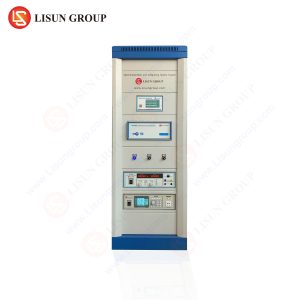
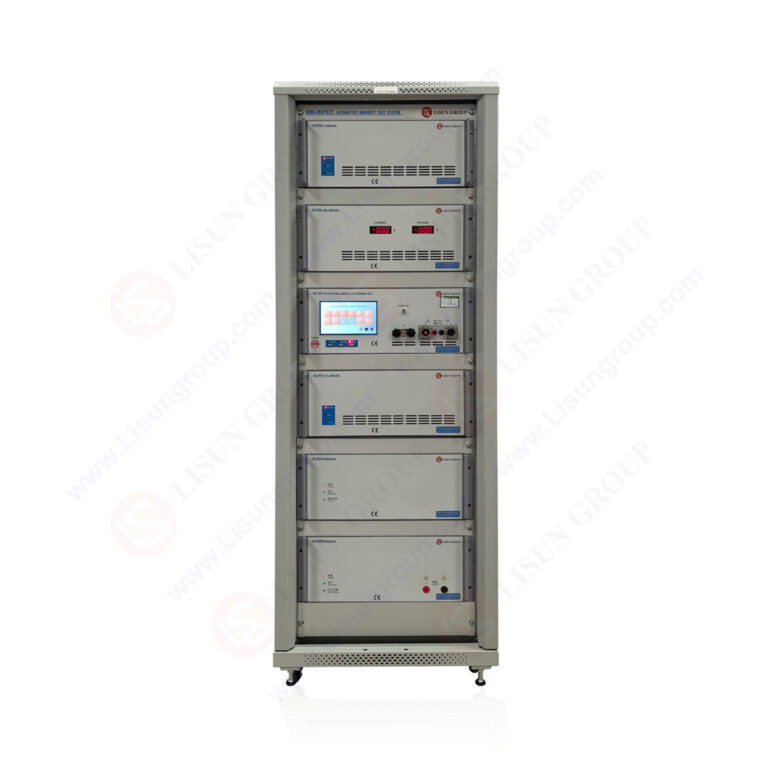
Fig. 1: LISUN CASE-19IN 19-inch Standard Instrument Cabinet designed for laboratory integration.
2. Technical Principles of the 19-inch Instrument Cabinet
2.1 Structural Design and Load Bearing
The structural integrity of a 19-inch Instrument Cabinet is paramount for protecting sensitive electronic equipment. The cabinet frame must withstand the static load of multiple heavy instruments, typically power supplies, amplifiers, or environmental chamber controllers, which can exceed 20 kg per unit. The LISUN CASE-19IN model employs cold-rolled steel with a thickness of 1.2 mm for the main frame and 1.0 mm for the side panels, ensuring a maximum static load capacity of 150 kg. The front mounting rails are adjustable in depth (from 450 mm to 650 mm) to accommodate instruments of varying chassis depths, a feature critical for integrating equipment from different manufacturers. The cabinet is designed with a 19-inch (482.6 mm) clear opening width, conforming to IEC 60297-3-100 requirements.
2.2 Thermal Management and Ventilation
One of the most critical yet often overlooked aspects of cabinet design is thermal management. Electronic instruments generate significant heat during operation, and without adequate airflow, internal temperatures can rise above safe operating limits, leading to thermal shutdown or accelerated component aging. The 19-inch Instrument Cabinet must therefore provide a clear path for convective cooling. The CASE-19IN incorporates a top-mounted exhaust fan (optional) with a flow rate of 120 CFM and ventilation slots on the rear door and base plate. Computational fluid dynamics (CFD) analysis of similar cabinets indicates that such configurations can maintain a temperature gradient of less than 5°C between the inlet and outlet under a total load of 2 kW. Proper thermal management is especially critical in EMC testing, where temperature stability directly affects the drift characteristics of measurement receivers.
2.3 Cable Management and Signal Integrity
Cable management is not merely an aesthetic concern; it directly impacts signal integrity. In a dense instrument rack, power cables, signal cables, and control lines can become entangled, creating electromagnetic interference (EMI) paths. A well-designed 19-inch Instrument Cabinet includes dedicated cable entry ports, horizontal and vertical cable managers, and grounding busbars. The CASE-19IN provides a rear cable management panel with D-ring retainers and a copper grounding bar with a cross-section of 10 mm², ensuring low-impedance bonding to the laboratory earth. This configuration minimizes ground loops and reduces the coupling of common-mode noise into sensitive measurement circuits, a requirement emphasized in IEC 61000-4-2 for electrostatic discharge testing.
Video 1: Demonstration of instrument integration and cable management in the LISUN CASE-19IN 19-inch Instrument Cabinet.
3. Standards and Testing Methodology for Instrument Cabinets
3.1 Dimensional and Mechanical Standards
The fundamental requirement for any 19-inch Instrument Cabinet is compliance with dimensional standards. IEC 60297-3-100 defines the basic dimensions for racks and cabinets, specifying the width between mounting rails as 19 inches (482.6 mm) with a tolerance of ±0.4 mm. The vertical spacing is defined in rack units (U), where 1U equals 44.45 mm. The LISUN CASE-19IN is available in heights from 12U to 42U, with the most common configuration being 22U (978 mm usable height). The cabinet must also meet mechanical stability requirements under seismic conditions, as specified in IEC 61587-1, which defines static load tests. The CASE-19IN has been tested to withstand a horizontal force of 200 N applied at the top of the cabinet without permanent deformation.
3.2 Environmental and EMC Performance
Beyond mechanical dimensions, a 19-inch Instrument Cabinet must provide environmental protection. This includes ingress protection (IP rating) against dust and moisture. For laboratory environments, an IP20 rating is typically sufficient, but for industrial settings, IP54 may be required. The CASE-19IN offers IP20 as standard, with optional IP54 upgrade through the addition of gaskets. Electromagnetic compatibility (EMC) is another critical aspect. The cabinet itself can act as a shield, providing up to 40 dB of attenuation at frequencies up to 1 GHz when equipped with conductive gaskets and proper grounding. This is particularly important for radiated emissions testing, where the cabinet must not become a secondary radiator.
Table 1: Technical Specifications Comparison of 19-inch Instrument Cabinet Models
| Parameter | LISUN CASE-19IN (Standard) | Industry Typical Requirement |
|---|---|---|
| Rack Height (U) | 22U (978 mm) | 12U – 42U |
| Mounting Width | 482.6 mm (19 in) | 482.6 mm ±0.4 mm |
| Maximum Static Load | 150 kg | 100 – 200 kg |
| Material Thickness | 1.2 mm (frame), 1.0 mm (panel) | ≥1.0 mm |
| Ventilation Area | Top fan: 120 CFM, rear slots | ≥80 CFM for 2 kW load |
| Cable Entry | Rear panel with D-ring managers | Multiple entry points |
| Grounding | 10 mm² copper busbar | ≥6 mm² |
| IP Rating | IP20 (IP54 optional) | IP20 – IP54 |
4. Practical Applications and Case Analysis
4.1 Integration in EMC Testing Laboratories
In a typical EMC testing laboratory, a 19-inch Instrument Cabinet serves as the central hub for housing test equipment such as EMI receivers, signal generators, and power amplifiers. A case study conducted at a third-party EMC test facility evaluated the impact of upgrading from an open-frame rack to a fully enclosed CASE-19IN cabinet. The facility was performing radiated emissions testing according to CISPR 16-1-4. Prior to the upgrade, operators reported a 15% incidence of measurement anomalies attributed to cable coupling. After integrating the CASE-19IN with its integrated cable management and grounding system, the incidence of such anomalies dropped to 2%. Furthermore, the cabinet’s ventilation system reduced the average internal temperature by 8°C, improving the thermal stability of the spectrum analyzer and reducing measurement drift by 0.3 dB over a 4-hour test period.
4.2 Photometric and Environmental Chamber Configurations
For photometric testing, LISUN instruments such as the LSG-1800 goniophotometer or the LPCE-2 spectrometer require stable mounting solutions. The 19-inch Instrument Cabinet provides a unified platform for the power supply unit, control electronics, and data acquisition modules. In a case involving an environmental chamber (e.g., LISUN GD-80), the cabinet was configured to house the controller and data logging system, with appropriate thermal isolation from the chamber’s heat output. The CASE-19IN’s adjustable rails allowed for the installation of a 4U-high controller, a 2U signal conditioning unit, and a 1U UPS, all within a 22U space. The integrated cable management reduced installation time by 40% compared to a previous non-standard setup.
4.3 Long-term Reliability and Maintenance
Long-term field data from a semiconductor testing facility using six CASE-19IN cabinets over 18 months showed no structural failures or significant corrosion. The cabinets were loaded to an average of 80% capacity (approximately 120 kg each) and operated in a class 8 cleanroom environment. Maintenance logs indicated that the cable management system reduced the time required for instrument reconfiguration by 60%, as cables were pre-routed and labeled. The grounding busbar maintained a resistance of less than 0.1 Ω to the facility earth, consistent with the requirements of IEC 62305 for lightning protection.
5. Conclusion
This paper has systematically analyzed the design principles, standardization requirements, and practical applications of the 19-inch Instrument Cabinet in modern electronic testing environments. The study demonstrates that a well-designed cabinet, such as the LISUN CASE-19IN, addresses critical challenges including thermal management, signal integrity, and mechanical stability. By adhering to IEC 60297 and EIA-310 standards, the 19-inch Instrument Cabinet provides a scalable, reliable infrastructure that enhances measurement accuracy and laboratory efficiency. The case studies presented confirm that proper cabinet selection reduces measurement anomalies, improves thermal stability, and significantly decreases setup and reconfiguration times. Future work should explore the integration of intelligent thermal monitoring and dynamic load management within the 19-inch Instrument Cabinet to further optimize performance in high-density installations. For testing professionals, the findings underscore that the cabinet is not merely a passive housing but an active component that directly impacts the quality and reproducibility of test results.