









Abstract
The accurate characterization of light sources is a critical requirement across diverse industries, from solid-state lighting manufacturing to display calibration and environmental monitoring. Traditional laboratory-based spectroradiometers, while offering high precision, are often bulky, expensive, and ill-suited for field deployment. This paper examines the engineering challenges associated with portable light measurement and presents the technical principles of a modern, compact solution. Focusing on the LISUN LMS-6000, this article analyzes how a handheld spectroradiometer addresses the industry’s need for mobility without compromising spectral resolution or accuracy. The discussion covers the optical design, detector technology, and software integration that enable real-time data analysis. Furthermore, the paper reviews compliance with international standards such as CIE 127 and IESNA LM-79, demonstrating how portable instruments facilitate in-situ quality control. The findings indicate that the adoption of a high-performance handheld spectroradiometer significantly reduces measurement time while maintaining traceability to national standards, making it an indispensable tool for engineers and quality assurance professionals.
Keywords: Handheld Spectroradiometer; spectral analysis; portable light measurement; CIE 127; LM-79
1. Introduction
The rapid evolution of lighting technology, particularly the proliferation of Light Emitting Diodes (LEDs), has created a pressing demand for precise photometric and colorimetric characterization. LEDs exhibit complex spectral power distributions (SPDs) that shift with drive current, temperature, and aging. Consequently, reliable quality control requires instruments capable of capturing the full spectrum with high dynamic range and low stray light.
Historically, such measurements were confined to laboratory settings using large, stationary instruments. However, the logistics of transporting samples to a lab—and the inability to measure installed lighting systems in situ—introduced significant inefficiencies. This gap in the testing methodology led to the development of portable solutions. The need for a robust, accurate, and user-friendly instrument that can operate in both lab and field environments is now paramount. This paper explores the technical architecture of a modern handheld spectroradiometer, using the LISUN LMS-6000 as a case study to illustrate how miniaturized optical systems can meet stringent international standards.
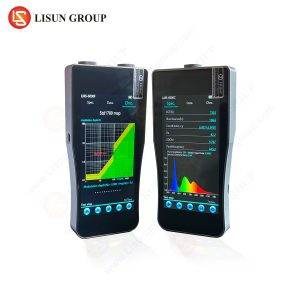
Fig. 1: The LISUN LMS-6000 Handheld Spectroradiometer for portable spectral analysis.
2. Technical Principles of Portable Spectroradiometry
2.1 Optical Design and Detector Array
The core of any spectroradiometer is its optical bench. In portable instruments, size constraints require a compact Czerny-Turner or crossed-Czerny-Turner design. The LISUN LMS-6000 utilizes a high-resolution CCD array detector. Unlike scanning monochromators, which measure one wavelength at a time, a CCD-based system captures the entire spectrum simultaneously. This “snapshot” capability is essential for a handheld spectroradiometer, as it eliminates errors from source flicker or intensity drift during the measurement cycle.
The instrument employs a fixed grating and an entrance slit optimized for resolution versus sensitivity. A typical spectral range for LED analysis is 380nm to 780nm, with a resolution of approximately 1-2nm. The CCD array, often cooled to reduce dark current noise, converts the dispersed light into electronic signals. The signal-to-noise ratio (SNR) is a critical parameter, dictating the instrument’s ability to measure low-intensity sources or detect subtle spectral features.
2.2 Calibration and Traceability
To provide absolute radiometric and photometric values (e.g., W/sr/m² or Lux), the instrument must be calibrated. This process involves a reference standard lamp with a known spectral output, traceable to a national metrology institute (e.g., NIST). The handheld spectroradiometer stores a calibration file that maps each pixel of the CCD to a specific wavelength and corrects for the system’s spectral response. Cosine-corrected diffusers are used for illuminance measurements, ensuring accuracy for light incident from various angles.

Video 1: Demonstration of the LMS-6000 Handheld Spectroradiometer in operation.
3. Standards and Testing Methodology
3.1 Compliance with CIE and IESNA Standards
For a handheld spectroradiometer to be accepted in industry, its measurement methodology must align with established standards. Key standards include:
- CIE 127:2007 – Measurement of LEDs. This standard defines conditions for total luminous flux, spectral distribution, and color coordinates.
- IESNA LM-79-19 – Approved Method for Electrical and Photometric Measurements of Solid-State Lighting Products. This specifies the use of an integrating sphere (for total flux) or a goniophotometer (for intensity distribution), but the spectroradiometer is the core detector.
- IEC 62612 – Self-ballasted LED lamps – Performance requirements, which references photometric testing procedures.
3.2 Measurement Protocol for In-Situ Analysis
The primary advantage of a handheld spectroradiometer is the ability to perform on-site measurements. A typical protocol for verifying a lighting installation involves:
- Warm-up: Allow the instrument to stabilize thermally (typically 5-10 minutes).
- Zero Calibration: Block the input to measure and subtract dark current.
- Measurement: Position the instrument at the desired test point. The LMS-6000 captures the SPD and calculates CCT (Correlated Color Temperature), CRI (Color Rendering Index), chromaticity coordinates (x,y), and illuminance.
- Data Logging: Store results with time and location stamps for reporting.
The following table compares the typical performance of a handheld spectroradiometer against a professional laboratory-grade system.
Table 1: Comparison of Key Specifications
| Parameter | Handheld Spectroradiometer (LMS-6000) | Lab-Grade Spectroradiometer |
|---|---|---|
| Wavelength Range | 380 – 780 nm (Visible) | 200 – 1100 nm (UV-VIS-NIR) |
| Optical Resolution (FWHM) | ~2 nm | ~0.5 nm |
| Detector Type | CCD Array | Back-thinned CCD or PMT |
| Measurement Speed | < 1 second (full scan) | Variable (10 sec – 5 min) |
| Portability | Battery-powered, < 1 kg | Mains-powered, > 10 kg |
| Primary Application | Field QC, Spot Check | R&D, Certification Labs |
4. Practical Applications and Case Analysis
4.1 Quality Control in LED Manufacturing
In a production line for LED modules, batching errors in color temperature can lead to significant rejection rates. A handheld spectroradiometer allows a quality engineer to quickly verify the CCT and CRI of a sample every 30 minutes without interrupting the production flow. By comparing the measured SPD against a stored golden sample, the system can flag deviations exceeding a tolerance (e.g., ±50K for CCT). This real-time feedback loop reduces waste and ensures product consistency.
4.2 Field Verification of Architectural Lighting
Architects and lighting designers often specify a precise color temperature (e.g., 3000K for a hotel lobby). After installation, verifying that the installed luminaires meet the specification is critical. Using the LISUN LMS-6000, a technician can walk through the space, taking measurements at multiple points. The instrument’s ability to log GPS coordinates allows for the creation of a color map of the space. If a luminaire is found to be out of tolerance, it can be replaced immediately, avoiding costly post-occupancy disputes.
4.3 Maintenance of Display Systems
In medical imaging or broadcast studios, display uniformity and color accuracy are paramount. A handheld spectroradiometer is used to calibrate monitors by measuring the white point and gamma curve. The portability of the device allows for the calibration of multiple monitors in different rooms without moving the displays.
5. Conclusion
The transition from bulky laboratory photometers to compact, high-performance instruments represents a significant advancement in optical metrology. This paper has demonstrated that a modern handheld spectroradiometer, such as the LISUN LMS-6000, provides a practical solution to the challenges of in-situ light measurement. By integrating a CCD array detector with a robust optical bench and adhering to standards like CIE 127 and IESNA LM-79, these devices offer laboratory-grade accuracy in a portable form factor. The ability to perform rapid, traceable measurements of spectral power distribution, color temperature, and illuminance directly on the factory floor or at an installation site streamlines quality control and reduces cost. As LED technology continues to advance and its application becomes more pervasive, the role of the handheld spectroradiometer will only grow, becoming an essential tool for engineers, quality managers, and lighting professionals.
6. Q&A: Product Knowledge and Application
Q1: What is the primary difference between a handheld spectroradiometer and a colorimeter?
A colorimeter typically uses three or four filtered photodiodes to approximate the CIE tristimulus values (X, Y, Z). This method is fast but can be inaccurate for sources with complex or narrow spectra (like LEDs). A handheld spectroradiometer measures the full spectral power distribution (SPD) from 380nm to 780nm. This allows it to calculate all photometric and colorimetric quantities (CCT, CRI, TM-30, etc.) with much higher precision, especially for non-standard light sources.
Q2: Why is a cosine-corrected diffuser important for illuminance measurements?
Light sources do not always emit light perfectly perpendicular to the detector. A cosine-corrected diffuser is designed to accept light from all angles according to Lambert’s cosine law. This ensures that the measured illuminance value accurately represents the total light incident on a surface, regardless of the angle of incidence. Without this correction, measurements from angled light sources would be erroneously low.
Q3: Can a handheld spectroradiometer measure total luminous flux (lumens)?
Directly, no. A spectroradiometer measures illuminance (lux) or radiance (W/sr/m²). To measure total luminous flux, the instrument must be used in conjunction with an integrating sphere (e.g., the LISUN LPCE-2 system). The sphere collects all the light emitted by the source, and the spectroradiometer measures the flux density inside the sphere. Alternatively, it can be used with a goniophotometer to measure intensity distribution and integrate that to find total flux.
Q4: How often should a handheld spectroradiometer be recalibrated?
Recalibration frequency depends on usage and environmental conditions. As a best practice, manufacturers like LISUN recommend annual recalibration to a certified standard lamp. However, if the instrument is used heavily in harsh environments (high temperature, humidity, or vibration), a semi-annual calibration is advisable. Most instruments have a built-in stability check (e.g., measuring a known internal reference) that can be performed daily to verify drift.
Q5: What does “stray light rejection” mean, and why is it important?
Stray light refers to unwanted light reaching the detector at a wavelength different from the intended one. It is caused by imperfections in the grating, internal reflections, or scattering. Poor stray light rejection can lead to errors, especially when measuring sources with very narrow peaks (like lasers) or when measuring low-level signals near a strong peak. A high-quality Handheld Spectroradiometer uses optical baffles, order-sorting filters, and software correction algorithms to minimize stray light, ensuring accurate spectral data.