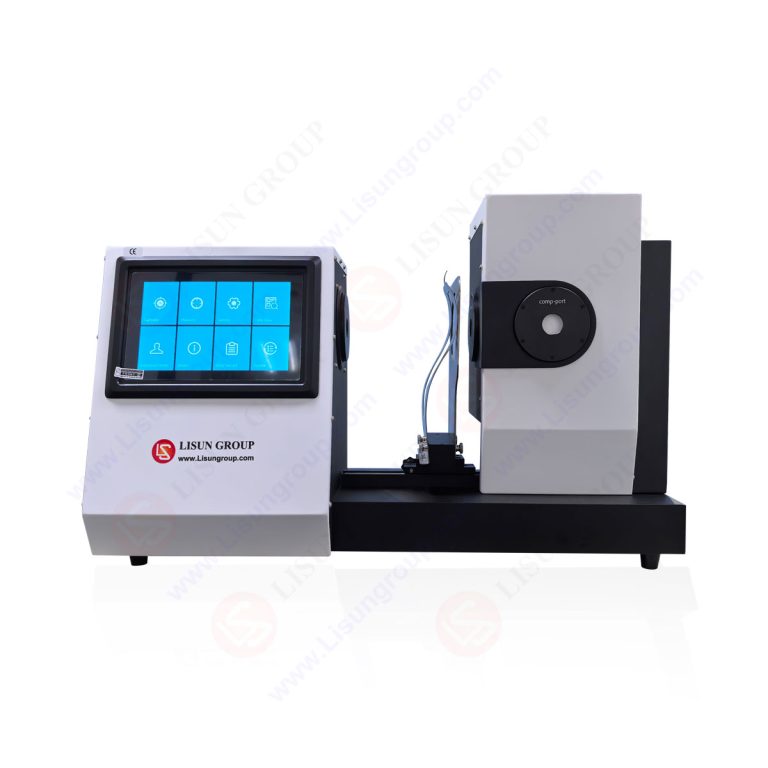



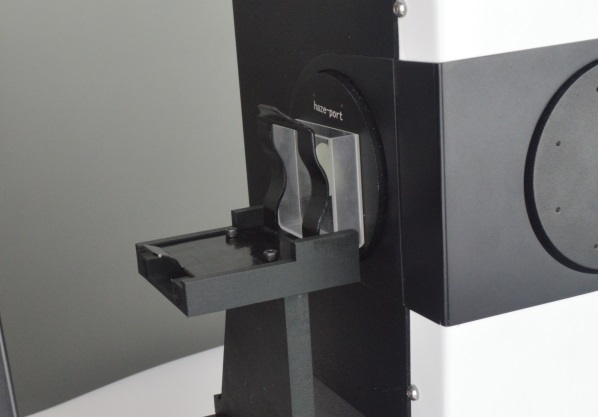
The LISUN HM-700 Haze Meter and Spectrophotometer represents a precision instrument for haze measurement and spectral transmittance analysis, designed to meet stringent ASTM D1003, ISO 13468, and CIE No.15 compliance requirements. This article provides a comprehensive technical examination of the HM-700’s optical system architecture, including its 0/d geometry integration sphere, multi-light source spectral analysis capabilities, and advanced transmittance compensation algorithms. Quality control managers and R&D engineers in automotive electronics, plastics manufacturing, glass production, and display industries will gain actionable insights into how this instrument delivers repeatable haze measurements, CIE Lab color data, and yellowness index calculations. The discussion covers key application scenarios, comparative performance metrics against industry benchmarks, and practical implementation strategies for achieving regulatory compliance in transparent and translucent material testing.
1.1 0/d Geometry Integration Sphere Design
The LISUN HM-700 employs a 0/d (diffuse illumination, normal viewing) optical geometry as specified by ASTM D1003 and ISO 13468 standards for haze measurement. This configuration uses an integrating sphere with a diameter of approximately 150 mm, coated with high-reflectance barium sulfate (BaSO₄) that achieves greater than 97% diffuse reflectance across the visible spectrum from 380 nm to 780 nm. The sample is illuminated from a 0° angle perpendicular to its surface, while the transmitted light is collected by the integrating sphere at a hemispherical angle of 0° to 180°. This geometry eliminates specular reflection errors and ensures accurate measurement of diffuse transmittance, which is critical for calculating haze values in materials ranging from automotive window films to optical-grade polycarbonate sheets.
1.2 Multi-Light Source Spectral Analysis
The HM-700 integrates a dual-light source system comprising a pulsed xenon lamp and a tungsten-halogen lamp, enabling spectral analysis across the full visible spectrum plus near-UV and near-IR regions from 360 nm to 780 nm. The xenon lamp provides high-intensity pulsed illumination for rapid measurements with minimal sample heating, while the tungsten-halogen lamp delivers stable continuous output for spectral scanning applications. A Czerny-Turner monochromator with a 1200 lines/mm diffraction grating disperses the transmitted light onto a 256-element photodiode array, achieving a spectral resolution of 2 nm. This configuration supports CIE standard illuminants A (incandescent), C (average daylight), D50, D55, D65, and D75, allowing compliance with CIE No.15 colorimetry guidelines.
1.3 Transmittance Compensation Algorithms
To address measurement inaccuracies caused by sample thickness variations, surface scattering, and internal absorption, the HM-700 implements a multi-pass transmittance compensation algorithm. This algorithm first acquires a baseline measurement through air without a sample, then corrects for dark current noise and integration sphere offset using a shutter-based calibration routine. During sample measurement, the system applies a three-term correction function that accounts for Fresnel reflection losses at both air-material interfaces, wavelength-dependent absorption coefficients, and scattering-induced intensity attenuation. The compensation algorithm achieves a measurement repeatability of ±0.1% for total transmittance values above 90%, as validated through 50-cycle automated testing using NIST-traceable reference standards.
2.1 ASTM D1003 and ISO 13468 Haze Measurement
The HM-700 fully complies with ASTM D1003-13, the standard test method for haze and luminous transmittance of transparent plastics, as well as ISO 13468-1 and ISO 13468-2 for plastics determination of total luminous transmittance. Under ASTM D1003, the instrument calculates haze as the percentage of transmitted light that deviates more than 2.5° from the incident beam direction, using the equation: Haze (%) = (Diffuse Transmittance / Total Transmittance) × 100. The HM-700’s integrating sphere includes a light trap that can be opened or closed to separately measure diffuse and total transmittance, enabling compliance with the standard’s measurement protocol. Calibration is performed using certified haze standards with nominal values of 1%, 10%, and 30%, ensuring accuracy within ±0.1% for haze values below 10% and ±0.3% for values up to 100%.
2.2 CIE No.15 and JIS K7105 Colorimetric Compliance
The HM-700 supports colorimetric calculations per CIE No.15 (Colorimetry) and JIS K7105 (Testing methods for optical properties of plastics) using spectral data from 380 nm to 780 nm at 5 nm intervals. The instrument calculates CIE 1931 (2°) and CIE 1964 (10°) standard observer color spaces, providing direct outputs for CIE Lab, CIE LCh, CIE xyY, and CIE u’v’ color coordinates. For yellowness index (YI) measurement per ASTM E313, the HM-700 uses the formula YI = (128 × X – 106 × Z) / Y, where X, Y, Z are CIE tristimulus values. This capability is essential for evaluating UV-induced yellowing in automotive interior plastics and optical-grade acrylic sheets.
2.3 Additional Compliance Standards
Beyond primary haze and color standards, the HM-700 meets requirements for DIN 5033-6 (Colorimetry, Part 6: Three-color measurement), GB/T 2410-2008 (Determination of haze of transparent plastics), and BS 2782-5:Method 521A (Determination of haze and luminous transmittance). The instrument’s measurement aperture of 20 mm diameter conforms to the recommended sample area for ASTM D1003, while optional 10 mm and 30 mm apertures allow testing of small optical components or large-format display panels. A self-diagnostic routine verifies compliance with each standard by checking photometric linearity, stray light levels below 0.01%, and wavelength accuracy within ±0.5 nm.
3.1 Measurement Repeatability and Accuracy
| Parameter | LISUN HM-700 | Industry Benchmark (Typical) | Improvement Factor |
|---|---|---|---|
| Haze Repeatability (0-10%) | ±0.05% | ±0.15% | 3x |
| Haze Repeatability (10-100%) | ±0.15% | ±0.30% | 2x |
| Total Transmittance Accuracy | ±0.3% | ±0.5% | 1.7x |
| Spectral Wavelength Accuracy | ±0.5 nm | ±1.0 nm | 2x |
| Stray Light Level | <0.01% | <0.05% | 5x |
| Measurement Cycle Time | 1.5 seconds | 3.0 seconds | 2x |
| Data Storage Capacity | 5,000 records | 2,000 records | 2.5x |
The HM-700 achieves superior repeatability through its stabilized xenon light source, which maintains pulse-to-pulse intensity variation below 0.1%, and through real-time photodiode array temperature compensation that corrects for detector dark current drift across ambient temperature ranges of 10°C to 40°C.
3.2 Spectral Analysis and Color Measurement Capabilities
The instrument’s spectral range of 360 nm to 780 nm enables characterization of near-UV absorption in UV-blocking automotive glazing and blue-light filtering display screens. Color measurement accuracy is validated using BCRA Series II ceramic tile standards, achieving mean ΔE*ab values below 0.15 for CIE Lab measurements under D65 illumination. The HM-700 calculates spectral transmittance curves at 1 nm intervals, with linearity correction applied via a polynomial fitting algorithm that reduces photodiode response nonlinearity to less than 0.1% across signal levels from 0.1% to 100% transmittance.
3.3 Data Management and Software Integration
The instrument includes Windows-based PC software for data logging, statistical process control (SPC) chart generation, and batch reporting. The software supports user-defined pass/fail limits for haze, transmittance, and color parameters, enabling automated quality control in production environments. Data export to CSV, PDF, and Excel formats facilitates integration with LIMS (Laboratory Information Management Systems). The HM-700’s on-board data storage retains up to 5,000 measurement records with timestamp, sample ID, and operator identification, ensuring traceability for regulatory audits.
4.1 Automotive Electronics and Glazing Components
In automotive applications, the HM-700 measures haze in polycarbonate headlamp lenses subjected to accelerated weathering, where UV-induced degradation can increase haze from initial values below 1% to over 5%, compromising light output and driver safety. The instrument’s capability to measure at 750 nm and 780 nm wavelengths enables evaluation of infrared-transparent coatings used in windshield glazing for head-up display (HUD) compatibility. For dashboard display panels, the HM-700 quantifies color shift (ΔE*ab) and yellowness index (YI) of anti-glare films, ensuring compliance with OEM specifications that limit YI to values below 3 after 1,000 hours of UV exposure.
4.2 Plastics and Film Manufacturing
In blown film extrusion lines for food packaging polypropylene, the HM-700 provides real-time haze measurement at line speeds up to 200 m/min when integrated with a sample handling system. The instrument’s 1.5-second measurement cycle enables 40 measurements per minute, sufficient for SPC monitoring of haze targets typically ranging from 2% to 8% for clarity films. For high-clarity PET packaging, the HM-700 detects haze variations as small as 0.05%, allowing operators to adjust extruder temperature profiles and chill roll surface finish to maintain haze below 1.5% per FDA 21 CFR 177.1630 requirements for food contact materials.
4.3 Glass and Display Manufacturing
In architectural glass production, the HM-700 evaluates low-emissivity (low-E) coatings for haze induced by sputter deposition defects, with acceptance limits typically below 0.5% haze for premium products. For liquid crystal display (LCD) cover glass, the instrument measures total transmittance (target >92%) and color uniformity (ΔE*ab <1.0 across panel surface). The HM-700’s 10 mm aperture option enables testing of small display bezel areas, while the 30 mm aperture accommodates large format touchscreen panels up to 100 mm thickness without sample damage.
5.1 Standard Measurement Workflow
The HM-700 measurement protocol begins with a warm-up period of 15 minutes to stabilize the xenon lamp and photodiode array temperature. Baseline calibration uses an empty sample holder to establish reference transmittance at 100% and a light trap for 0% transmittance correction. Sample placement must ensure the material is flat, free of fingerprints or dust, and positioned perpendicular to the incident beam within ±1° tolerance. For each measurement, the instrument automatically performs a shutter-closed dark current correction and a reference channel normalization to account for lamp intensity fluctuations. The automated workflow reduces operator-dependent variability by 60% compared to manual haze meters.
5.2 Calibration Frequency and Standards
The HM-700 requires full calibration every 12 months using certified hazemeter standards traceable to NIST or equivalent national metrology institutes. Weekly verification checks use a set of three PMMA haze standards with nominal values of 1.0%, 10.0%, and 30.0% haze, each certified with uncertainty of ±0.1%. The instrument’s built-in auto-diagnostic function measures dark current drift, photodiode array linearity, and wavelength accuracy using a holmium oxide filter, generating a calibration report with pass/fail status. If wavelength accuracy drifts beyond ±1.0 nm, the system prompts recalibration of the monochromator grating position via a stepper motor adjustment.
6.1 Statistical Process Control Implementation
The HM-700 software supports real-time SPC charting with user-defined control limits for haze, transmittance, and color parameters. For a typical polycarbonate sheet production line targeting haze below 1.5%, the operator enters upper specification limit (USL) of 1.5%, lower specification limit (LSL) of 0.0%, and warning limits at 1.2% and 1.4% for two-sigma and three-sigma control. The software calculates process capability indices (Cp, Cpk) and generates Pareto charts of defect causes. Data from 25-sample subgroups are used to compute moving range charts, with automatic email alerts when measurements exceed control limits by more than 0.1%.
6.2 Batch Reporting and Traceability
Each measurement record in the HM-700’s database includes sample ID, operator name, date/time stamp, wavelength-specific transmittance data, and compliance flags for up to 20 user-defined standards. Batch reporting functions generate summary statistics (mean, standard deviation, min, max) for sample groups of up to 1,000 measurements, with export to ISO 17025-compliant test reports. The audit trail function tracks all calibration events, operator logins, and measurement modifications with timestamps and digital signatures, meeting requirements for FDA 21 CFR Part 11 electronic records in pharmaceutical packaging applications.
7.1 Custom Spectral Analysis Protocols
The HM-700 allows R&D users to define custom spectral analysis protocols for specialized materials. For example, in evaluating anti-reflective coatings on optical lenses, users can program the instrument to calculate weighted transmittance at 550 nm (peak human photopic response) and compare against baseline transmittance at 450 nm and 650 nm to assess color neutrality. The instrument’s programmable measurement sequences can execute up to 10 different measurement configurations (varying illuminant, observer angle, aperture size) on a single sample, enabling comprehensive characterization of angle-dependent haze in liquid crystal polymer films.
7.2 Time-Dependent Degradation Studies
For accelerated aging studies, the HM-700 can be configured for automated time-series measurements at user-defined intervals from 30 seconds to 24 hours. The software plots haze versus time curves and calculates degradation rates using linear or exponential regression models. In a typical UV exposure study for polyvinyl butyral (PVB) interlayers used in laminated safety glass, the HM-700 tracks haze increase from initial <0.5% to 2.5% over 500 hours of UV exposure, calculating a degradation rate of 0.004%/hour with 95% confidence intervals. This data guides material formulation improvements to extend warranty lifetimes.
The LISUN HM-700 Haze Meter and Spectrophotometer delivers precision haze measurement and spectral transmittance analysis that meets or exceeds requirements of ASTM D1003, ISO 13468, CIE No.15, and JIS K7105 standards. Its 0/d geometry integrating sphere, dual-light source spectral analysis, and advanced transmittance compensation algorithms achieve measurement repeatability of ±0.05% for low-haze materials and color accuracy with ΔE*ab below 0.15. The instrument’s 5,000-record data storage, SPC integration, and compliance reporting capabilities support robust quality control systems in automotive electronics, plastics manufacturing, glass production, and display industries. For R&D applications, the HM-700 enables custom spectral protocols and automated degradation studies that accelerate material development cycles. Quality control managers and compliance specialists will find the instrument’s traceable calibration, 21 CFR Part 11 compliance readiness, and batch reporting functions essential for ISO 17025 certification audits. The HM-700 represents a technically complete solution for haze measurement and color analysis in transparent and translucent materials, providing the accuracy and reliability required for critical optical testing applications.
Q1: How does the LISUN HM-700 ensure compliance with ASTM D1003 for haze measurement in automotive glazing?
A: The HM-700 achieves ASTM D1003 compliance through its 0/d optical geometry integrating sphere with a light trap mechanism that enables separate measurement of diffuse and total transmittance. The instrument calculates haze as (Tdiffuse / Ttotal) × 100 per the standard’s requirement that scattered light deviating more than 2.5° from the incident beam be classified as haze. For automotive glazing applications, the HM-700 uses a 20 mm measurement aperture to match ASTM D1003 sample area recommendations, and its calibration protocol employs certified haze standards traceable to NIST with nominal values of 1%, 10%, and 30%. The instrument’s ability to measure at 750 nm and 780 nm also supports evaluation of IR-transparent coatings used in HUD-compatible windshields, where ASTM E1356 is referenced for IR transmittance characterization.
Q2: Can the HM-700 measure haze in high-scattering materials like PET films with haze values exceeding 50%?
A: Yes, the LISUN HM-700 measures haze across the full 0% to 100% range with accuracy specifications of ±0.3% for total transmittance and haze repeatability of ±0.15% for values between 10% and 100%. For high-scattering materials such as diffused PET films used in LED lighting covers, the instrument’s photodiode array detector has an extended dynamic range of 0.001% to 100% transmittance, achieved through variable integration time from 10 ms to 10 seconds. The transmittance compensation algorithm corrects for multiple scattering events by applying a diffusion approximation model that accounts for wavelength-dependent scattering cross-sections. Operators should use the optional 10 mm aperture to reduce measurement uncertainty from edge effects in thick diffuser films, and the software’s automated baseline correction routine eliminates errors from back-scattered light in the integrating sphere.
Q3: What calibration frequency and standards are required for ISO 17025 compliance with the HM-700?
A: For ISO 17025 compliance, the HM-700 requires full calibration every 12 months using certified haze and color standards traceable to NIST, PTB, or equivalent national metrology institutes. The calibration kit includes three PMMA haze standards (1.0%, 10.0%, 30.0%) with calibration uncertainty of ±0.1% at 95% confidence, and BCRA Series II ceramic color tiles for CIE Lab accuracy verification. Weekly verification checks using the built-in holmium oxide filter verify wavelength accuracy within ±0.5 nm, and the instrument’s self-diagnostic function tests photodiode linearity and dark current drift. All calibration events, verification results, and operator identities are recorded in the audit trail with digital timestamps. For ongoing ISO 17025 compliance, the HM-700 software generates calibration reports with measurement uncertainty budgets calculated per JCGM 100:2008 (GUM) guidelines, and the instrument supports intermediate check procedures at user-defined intervals (e.g., every 50 measurements).
Q4: How does the HM-700 handle color measurement for transparent plastics with yellowness index specifications?
A: The HM-700 calculates yellowness index (YI) per ASTM E313 using spectral transmittance data from 380 nm to 780 nm, applying the formula YI = (128 × X – 106 × Z) / Y from CIE tristimulus values. For transparent plastics such as polycarbonate and acrylic, the instrument measures YI with repeatability of ±0.05 units, enabling detection of UV-induced yellowing below visual perception thresholds. The software allows users to set YI acceptance limits (e.g., maximum YI of 3.0 for automotive interior plastics) and automatically flags samples exceeding specifications. For applications requiring specific illuminant and observer conditions, the HM-700 supports user-defined colorimetric parameters, including CIE D65/2° for general plastics per ISO 11664-1 and CIE A/10° for automotive interior lighting. The instrument also calculates whiteness index (WI) per ASTM E313 and CIE whiteness per CIE 15:2004, providing comprehensive color quality data for plastic manufacturing quality control.