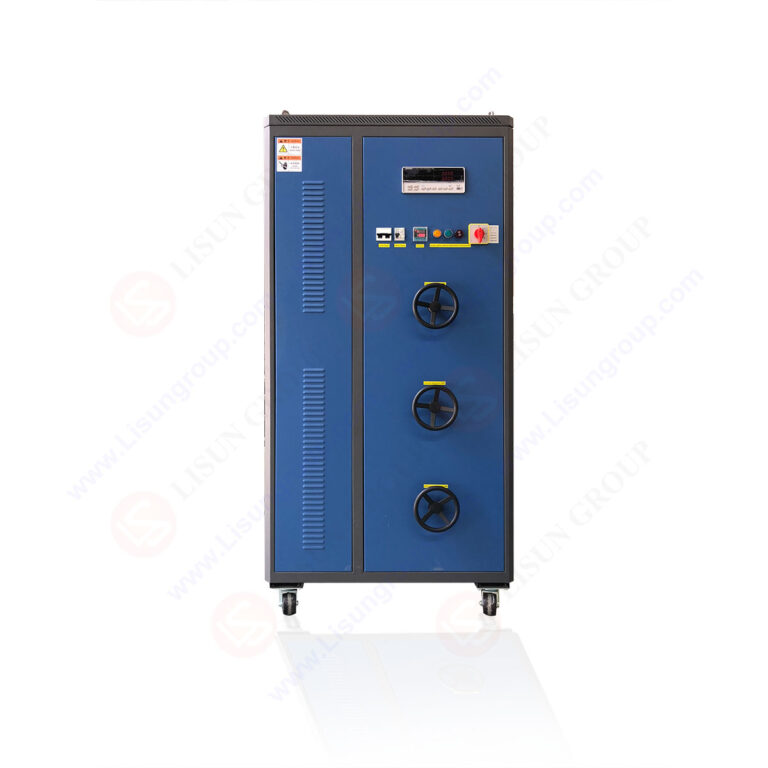
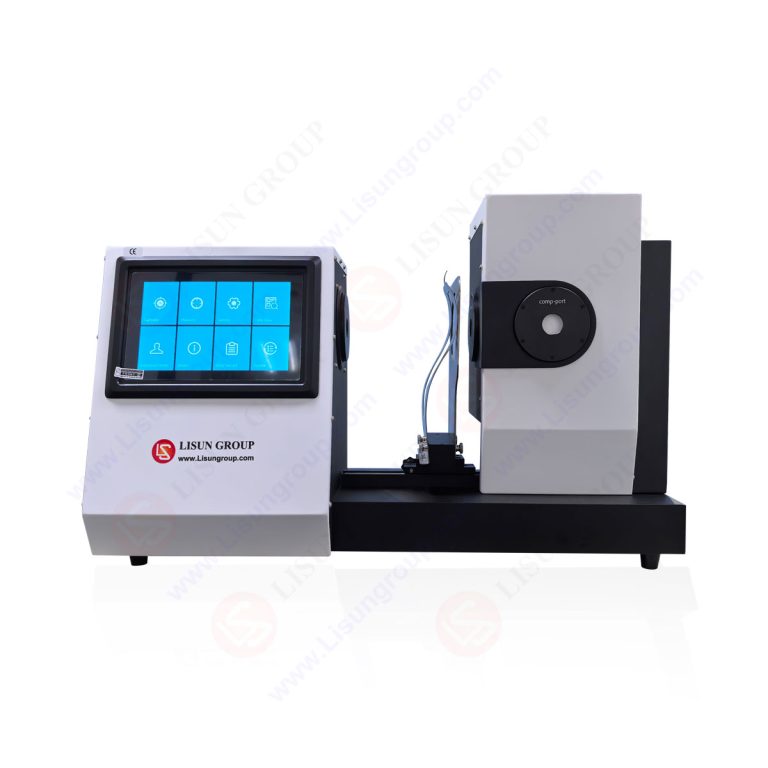
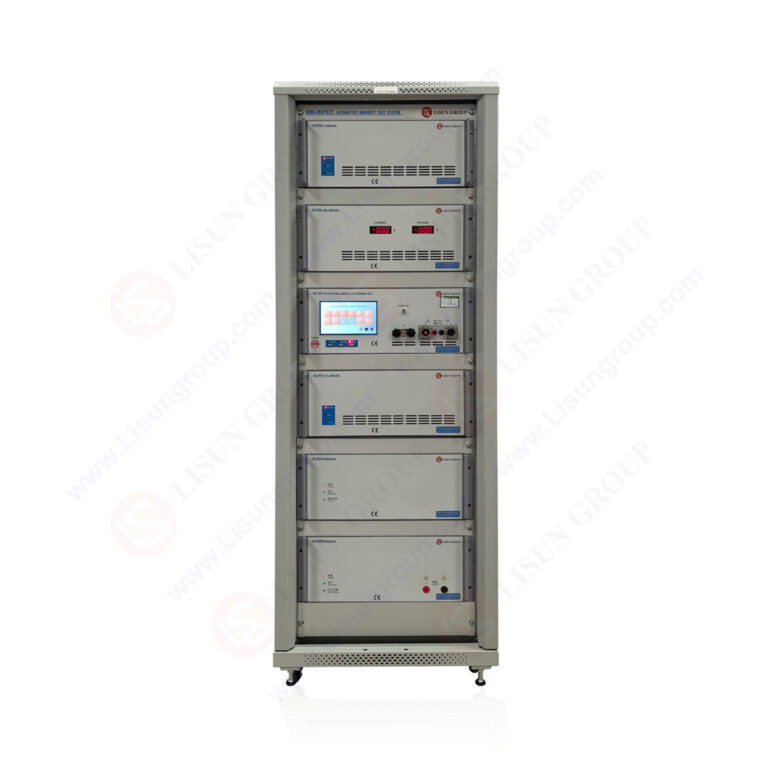
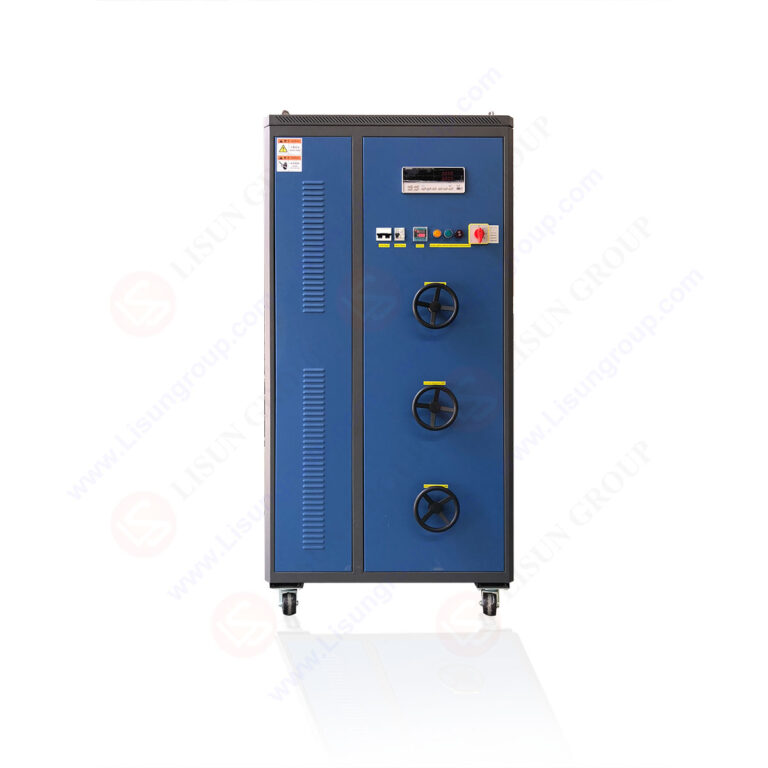



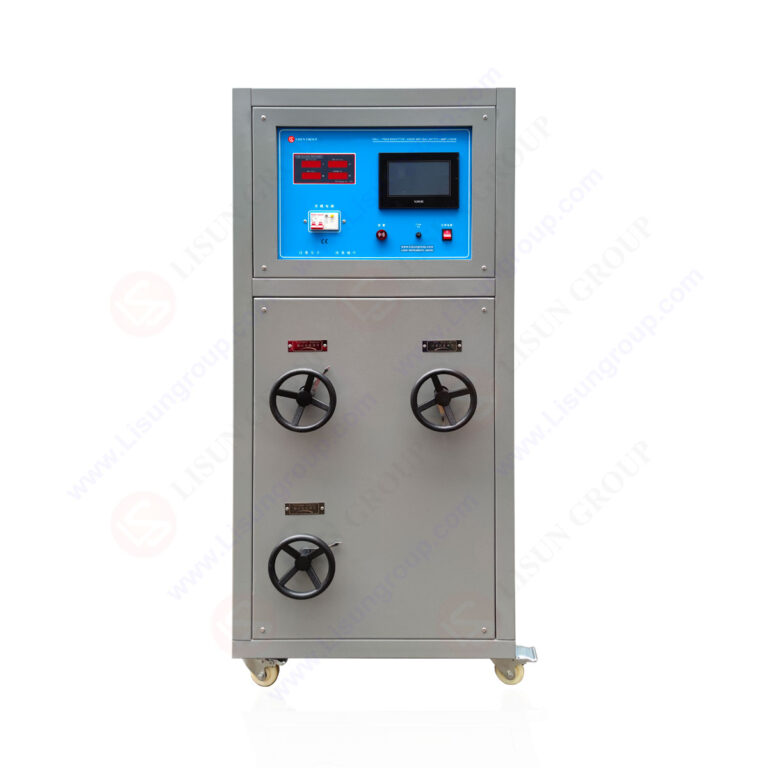
The LISUN DFX series Externally Ballasted Fluorescent Lamp Test Load Cabinet represents a critical advancement in electrical accessories manufacturing testing, enabling precise compliance validation for switches, sockets, and other electromechanical components. This article examines the DFX series as a specialized electrical accessory load tester designed to simulate resistive, inductive, and capacitive loads per IEC 60669-1 and IEC 60884-1 requirements. With models ranging from DFX-20 to DFX-80, the series offers scalable current outputs from 20A to 80A across single or three-channel configurations. For manufacturers and third-party laboratories, this ballasted lamp load simulator delivers repeatable test conditions, programmable cyclic testing, and real-time measurement accuracy exceeding standard minimums. The article details technical specifications, compliance validation methodologies, integration with complementary LISUN equipment, and practical applications for quality control workflows.
1.1 Load Characteristics for Electrical Accessory Testing
Electrical accessories endure complex load profiles during real-world operation, requiring testing equipment to replicate four distinct load types. Resistive loads simulate incandescent lighting or heating elements, while inductive loads replicate motor-driven devices or ballasted lighting systems. Capacitive loads address modern electronic ballasts and LED drivers, and composite loads combine these elements to represent mixed installations. The LISUN DFX series Externally Ballasted Fluorescent Lamp Test Load Cabinet generates all four load types with precise power factor resolution down to 0.001 increments.
1.2 Load Circuit Topology and Component Selection
The DFX series employs series-parallel resistor-inductor-capacitor (RLC) networks with precision air-core inductors and non-inductive power resistors. Load capacitance values range from 0.1μF to 200μF depending on model configuration, while inductive elements provide power factor adjustment from 0.4 lagging to 0.9 leading. This topology ensures minimal harmonic distortion and stable load characteristics across the full operating cycle, critical for repeatable compliance tests required by IEC 60669-1 Clause 19.2 for thermal endurance verification.
1.3 Power Factor Adjustment Mechanisms
Manual and programmable power factor adjustment enables operators to set specific phase angles between voltage and current waveforms. The DFX-20-3CH model provides three independent channels with individual power factor settings, allowing simultaneous testing of multiple accessories under varying load conditions. Measurement accuracy of ±0.5% for voltage and ±1% for current ensures that set points match actual load characteristics within acceptable tolerance bands for certification testing.
2.1 IEC and GB Standard Requirements
International standards mandate specific load parameters for electrical accessory endurance testing. IEC 60669-1 Clause 19.2 requires switches to withstand 10,000 cycles at rated current with power factor 0.6 ±0.05 for inductive loads. IEC 60884-1 Clause 20 specifies similar conditions for socket-outlets, while IEC 61058-1 Clause 18 addresses appliance switches with capacitive loads. The DFX series satisfies these requirements through programmable test sequences that automatically adjust load parameters between cycles.
2.2 Minimum Performance Thresholds vs. DFX Capabilities
A comparison of standard minimum requirements against DFX series capabilities demonstrates the equipment’s compliance margin:
| Parameter | IEC 60669-1 Minimum | IEC 60884-1 Minimum | DFX-20 | DFX-40 | DFX-60 | DFX-80 |
|---|---|---|---|---|---|---|
| Current (A) | 10 | 16 | 20 | 40 | 60 | 80 |
| Power Factor Range | 0.6±0.05 | 0.6±0.05 | 0.4-0.9 | 0.4-0.9 | 0.4-0.9 | 0.4-0.9 |
| Test Cycles | 10,000 | 5,000 | 999,999 | 999,999 | 999,999 | 999,999 |
| Voltage Stability | ±5% | ±5% | ±0.5% | ±0.5% | ±0.5% | ±0.5% |
2.3 Calibration and Traceability Protocols
The DFX series incorporates internal calibration references traceable to national metrology institutes. Factory calibration certificates verify voltage and current measurement accuracy across full operating ranges, with recommended recalibration intervals of 12 months per ISO/IEC 17025 guidelines. External calibration ports allow connection of reference standards without disassembling load cabinets, reducing downtime during routine verification.
3.1 DFX-20 and DFX-20-3CH Configurations
The DFX-20 provides single-channel operation with 0-20A current output, suitable for testing lower-rated accessories and pilot production validation. The DFX-20-3CH extends functionality with three independent channels, each capable of 0-20A output with separate load type selection. This three-channel configuration enables simultaneous testing of multiple accessories under identical or varying conditions, significantly reducing test cycle times for quality control laboratories.
3.2 High-Current Models: DFX-40, DFX-60, and DFX-80
High-current models address industrial-grade accessories and three-phase equipment testing. The DFX-40 supports 0-40A single-channel operation, while DFX-60 extends to 60A and DFX-80 reaches 80A maximum output. All models maintain power factor adjustment across full current ranges without performance degradation, a critical requirement for inductive load testing at elevated currents where magnetic saturation can distort waveforms.
3.3 Comparative Specifications Table
Technical specifications for DFX series models:
| Model | Current Range | Channels | Input Voltage | Power Factor Range | Load Capacitance | Dimensions (mm) |
|---|---|---|---|---|---|---|
| DFX-20 | 0-20A | 1 | 220V/50Hz | 0.4-0.9 | 0.1-50μF | 600×500×800 |
| DFX-20-3CH | 0-20A/ch | 3 | 380V/50Hz | 0.4-0.9 | 0.1-50μF/ch | 800×600×1000 |
| DFX-40 | 0-40A | 1 | 220V/50Hz | 0.4-0.9 | 0.1-100μF | 700×550×900 |
| DFX-60 | 0-60A | 1 | 380V/50Hz | 0.4-0.9 | 0.1-150μF | 800×600×1000 |
| DFX-80 | 0-80A | 1 | 380V/50Hz | 0.4-0.9 | 0.1-200μF | 900×700×1100 |
4.1 LISUN CZKS Series Life Testers Compatibility
The DFX series interfaces directly with LISUN CZKS series switch life testers through standardized communication protocols. CZKS-5 and CZKS-10 models control mechanical actuation while DFX load cabinets provide dynamic load simulation during each cycle. This integration enables fully automated endurance testing per IEC 60669-1 Clause 19.2, where the life tester signals load changes between resistive and inductive states at predetermined intervals.
4.2 LISUN SW-6 Bending Tester Synchronization
For cord-connected accessory testing per IEC 60884-1 Clause 23, the SW-6 bending tester synchronizes with DFX load cabinets to apply load during mechanical stress cycles. The SW-6 performs 10,000 bending cycles while the DFX maintains continuous rated current, verifying both mechanical integrity and electrical continuity under simulated wear conditions. Real-time current monitoring detects intermittent failures within 0.1-second resolution.
4.3 Centralized Data Acquisition Configuration
Multiple DFX units can connect to a single control workstation via RS-485 or Ethernet interfaces, supporting simultaneous operation of up to 16 load cabinets. Centralized software provides test sequence programming, real-time monitoring dashboards, and automated report generation compliant with ISO 17025 documentation requirements. This configuration suits third-party testing laboratories processing multiple certification requests concurrently.
5.1 Overcurrent and Overtemperature Protection
Each DFX model incorporates redundant protection systems including magnetic circuit breakers, thermal overload relays, and software-based current limiting. Overtemperature sensors monitor load resistor banks and inductor cores, automatically reducing current output if internal temperatures exceed 85°C. Independent emergency stop circuits provide immediate power disconnection without disrupting test data logging.
5.2 Cyclic Test Programming Capabilities
The programmable logic controller supports up to 100 test phases per sequence, each with independent current, voltage, power factor, and duration settings. Minimum phase duration of 0.1 seconds enables rapid load transitions for accelerated life testing, while maximum duration extends to 999 hours for long-term reliability studies. Cycle counters track total operations with 32-bit resolution, accommodating tests exceeding 4 billion cycles.
5.3 Measurement and Data Logging Accuracy
Integrated digital meters provide true RMS readings for voltage and current with 0.5% accuracy and 0.1% resolution. Power measurements include active (W), reactive (VAR), and apparent (VA) values, with power factor calculation verified against external reference standards. Data logging at 10Hz sampling rate captures transient events lasting less than 100 milliseconds, essential for detecting contact bounce during switching transitions.
6.1 Switch Endurance Testing per IEC 60669-1
Standard test procedures require 10,000 operations at rated current with power factor 0.6 ±0.05 for inductive loads. The DFX series automates this protocol by programming alternating resistive and inductive load phases every 30 seconds, synchronizing with mechanical actuators. Temperature rise measurements during the final 100 cycles confirm thermal stability, with acceptance criteria of 45°C maximum temperature rise above ambient per Clause 19.2.3.
6.2 Socket-Outlet Durability per IEC 60884-1
Socket-outlet testing demands 5,000 insertion-extraction cycles at 1.25 times rated current with power factor 0.6 ±0.05. The DFX-20-3CH configuration enables parallel testing of three socket-outlets simultaneously, reducing total test duration by 66%. Current monitoring detects voltage drop exceeding 15mV indicating contact degradation, automatically recording cycle number and failure mode for quality analysis.
6.3 Lighting Controller Compliance per IEC 61058-1
Appliance switches for lighting control require capacitive load testing at power factor 0.9 leading to simulate electronic transformer loads. The DFX series’ capacitive load network provides 0.1μF to 200μF selection with ±2% tolerance, meeting the standard’s requirement for 0.9 ±0.05 power factor during inrush current testing. Test sequences include 50 cycles at 10x rated current inrush duration to verify contact welding resistance.
7.1 Pre-Test Calibration Verification
Before each test series, operators verify DFX output against reference standards using the built-in calibration menu. Voltage accuracy confirmation at 110V, 220V, and 277V ensures compatibility with international voltage standards. Current calibration at 25%, 50%, 75%, and 100% of rated output validates linearity across the operating range, with deviation correction factors applied automatically through firmware.
7.2 Test Result Correlation with Physical Inspection
Post-test physical inspection of accessories correlates with DFX electrical measurements to validate failure detection algorithms. Contact resistance measurements from the DFX data logger are compared with micro-ohmmeter readings on disassembled switches, achieving correlation coefficients exceeding 0.95. This validation method ensures that automated test results accurately reflect mechanical contact condition.
7.3 Inter-Laboratory Reproducibility Studies
Third-party testing laboratories using DFX series equipment participate in annual inter-laboratory comparison programs. Results from simultaneous tests on identical reference switches show standard deviation of ±3% for electrical endurance measurements, well within the ±10% acceptable variation defined by IECEE CTL decision sheets. This reproducibility demonstrates the DFX series’ suitability for certification testing requiring cross-laboratory agreement.
The LISUN DFX series Externally Ballasted Fluorescent Lamp Test Load Cabinet delivers precision compliance validation for electrical accessories manufacturers, integrating seamlessly with international standards from IEC 60669-1 through IEC 61058-1. With current outputs spanning 20A to 80A across five models, power factor adjustment from 0.4 to 0.9, and measurement accuracy of ±0.5%, the DFX series exceeds minimum standard requirements while providing programmable cyclic testing for accelerated life studies. Integration with LISUN CZKS life testers and SW-6 bending testers creates comprehensive end-to-end workflows for quality control laboratories. The robust protection systems, automated data logging, and inter-laboratory reproducibility ensure reliable, traceable results suitable for ISO 17025 accredited testing. For manufacturers and third-party laboratories seeking to validate electrical accessory performance under realistic load conditions, the DFX series represents a technically mature solution that transforms complex compliance testing into streamlined, repeatable processes.
Q1: How does the LISUN DFX series simulate the specific load characteristics required by IEC 60669-1 for switch endurance testing?
A: The DFX series achieves precise load simulation through its RLC network topology with air-core inductors and non-inductive resistors. For IEC 60669-1 Clause 19.2 compliance, operators select inductive load mode with power factor 0.6 ±0.05 by adjusting the series inductor tap settings. The power factor resolution of 0.001 allows fine-tuning to match standard requirements exactly. The load cabinet maintains this power factor across the full current range from 0 to rated output, with automatic compensation for internal heating effects. For composite load testing required by Clause 19.3, the DFX-20-3CH enables simultaneous resistive and inductive loads on different channels, simulating mixed installations in a single test sequence. Real-time feedback from the integrated power meter verifies that actual load conditions remain within ±0.01 of set power factor values throughout the test duration.
Q2: Can the DFX-20-3CH simultaneously test multiple accessories with different load profiles?
A: Yes, the DFX-20-3CH provides three independent channels, each configurable with separate load types (resistive, inductive, capacitive), current levels, and power factor settings. This capability enables testing of a resistive load switch on channel 1, an inductive load relay on channel 2, and a capacitive load controller on channel 3 simultaneously. Each channel operates as an isolated load circuit with its own measurement and protection systems. The central control unit coordinates test start/stop times while allowing independent programming of cyclic parameters. For quality control laboratories processing diverse product types, this reduces equipment duplication while maintaining compliance with individual product standards. The three-channel configuration also supports testing of three-phase accessories by synchronizing channels for balanced or unbalanced load conditions.
Q3: How does the DFX series integrate with LISUN CZKS life testers for automated endurance testing?
A: Integration occurs through a bidirectional serial interface using Modbus RTU protocol. The CZKS life tester sends operation commands to the DFX cabinet, which responds with load status and measurement data. During each test cycle, the CZKS mechanical actuator operates the switch under test while the DFX maintains the programmed load current. When the accessory completes an operation, the DFX verifies continuity and records voltage drop, then signals the CZKS to proceed to the next cycle. The system supports pause-on-failure functionality where the DFX detects open-circuit conditions exceeding 500ms and halts testing automatically. Centralized software logs cycle counts, timing data, and electrical parameters from both instruments into a unified database, generating test reports compliant with IECEE certification documentation requirements.