


Here is the comprehensive technical article based on your instructions.
Abstract
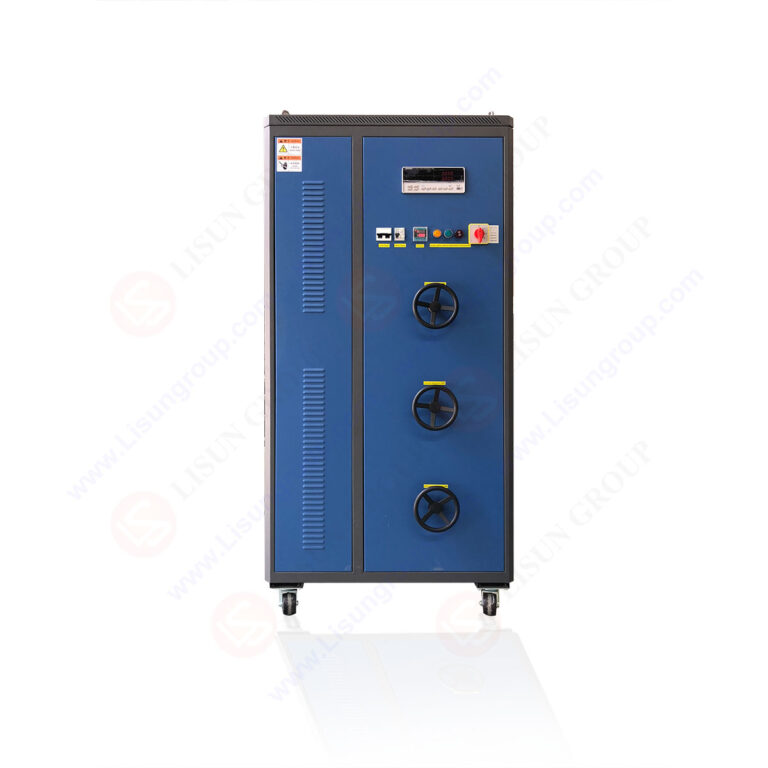
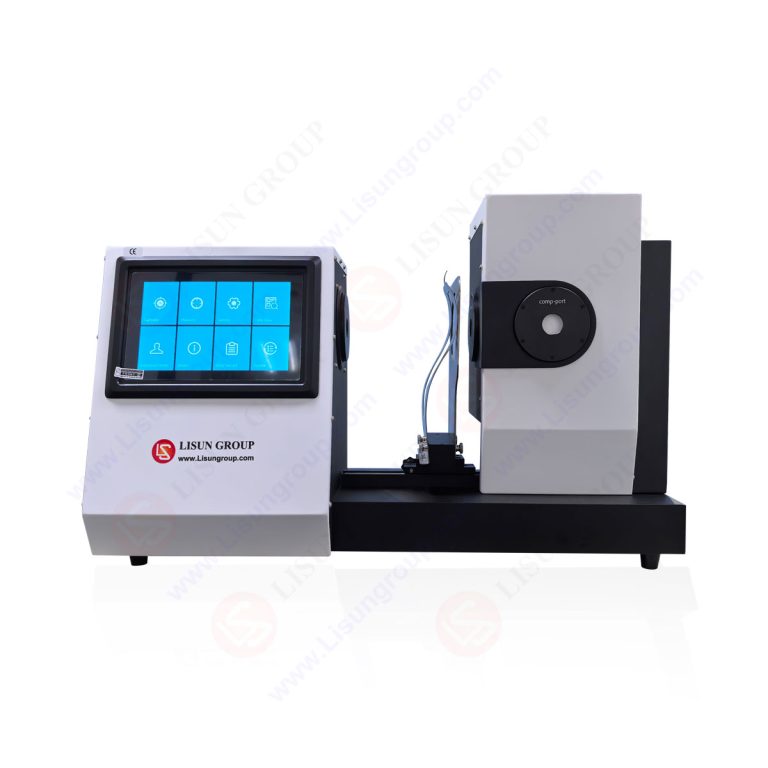
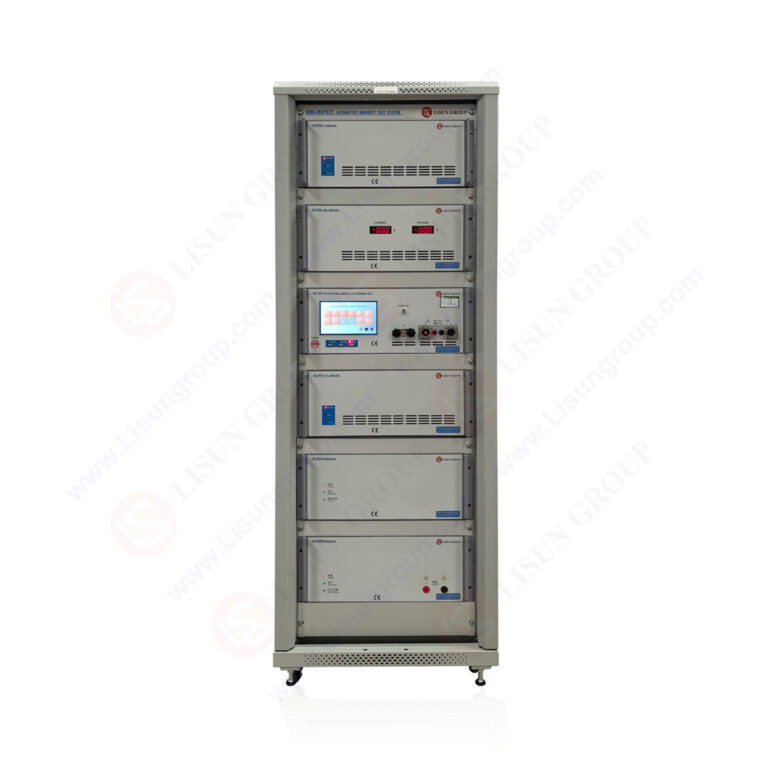
This article provides a technical deep-dive into the LISUN LED Optical Aging Test Instrument for LM-80 Lumen Maintenance Testing, specifically the LEDLM-80PL and LEDLM-84PL dual-system variants. Designed for rigorous compliance with IES LM-80 and LM-84 standards, these instruments integrate Arrhenius Model-based software to predict L70/L50 lifetimes from 6,000-hour test data. We explore the hardware architecture supporting up to 3 temperature chambers, dual constant current/voltage modes, and the critical software algorithms for TM-21 extrapolation. For LED manufacturing engineers and third-party lab technicians, this article details how these instruments accelerate phosphor-converted LED (pcLED) reliability validation, ensuring alignment with global regulatory frameworks. The focus keyword is the LISUN LED Optical Aging Test Instrument for LM-80 Lumen Maintenance Testing, a pivotal solution for accurate, repeatable photometric degradation analysis.
1.1 The Criticality of Lumen Depreciation Testing
In solid-state lighting, lumen depreciation is the primary failure mechanism for LEDs. Unlike catastrophic failure, LEDs gradually lose light output over time. Industry standards like IES LM-80 require a minimum of 6,000 hours of data collection under controlled temperature and current conditions to project long-term performance. The LISUN LED Optical Aging Test Instrument for LM-80 Lumen Maintenance Testing directly addresses this need by providing a compact, multi-channel solution that automates the data acquisition process, removing human error while ensuring consistent thermal management.
1.2 Dual Standards: LM-80 vs. LM-84
The instrument comes in two primary variants:
- LEDLM-80PL: Designed for discrete LED packages, arrays, and modules per IES LM-80-15.
- LEDLM-84PL: Designed for LED light engines and luminaires per IES LM-84-14.
This bifurcation is critical. While LM-80 focuses on component-level solder point temperature (Ts) monitoring, LM-84 evaluates complete luminaires at ambient temperature (Ta). The LISUN LED Optical Aging Test Instrument for LM-80 Lumen Maintenance Testing supports both by integrating plug-and-play fixture interfaces for LM-84 and socketed boards for LM-80.
1.3 Alignment with Global Standards
The instrument’s metrology is calibrated to CIE 127 (LED measurement) and CIE 84 (photometry). By incorporating darkroom-grade baffles and temperature-controlled test chambers, it ensures that all photometric measurements align with IES LM-79-19 requirements for electrical and photometric testing of solid-state lighting products.
2.1 Dual-Chamber and Multi-Chamber Configurations
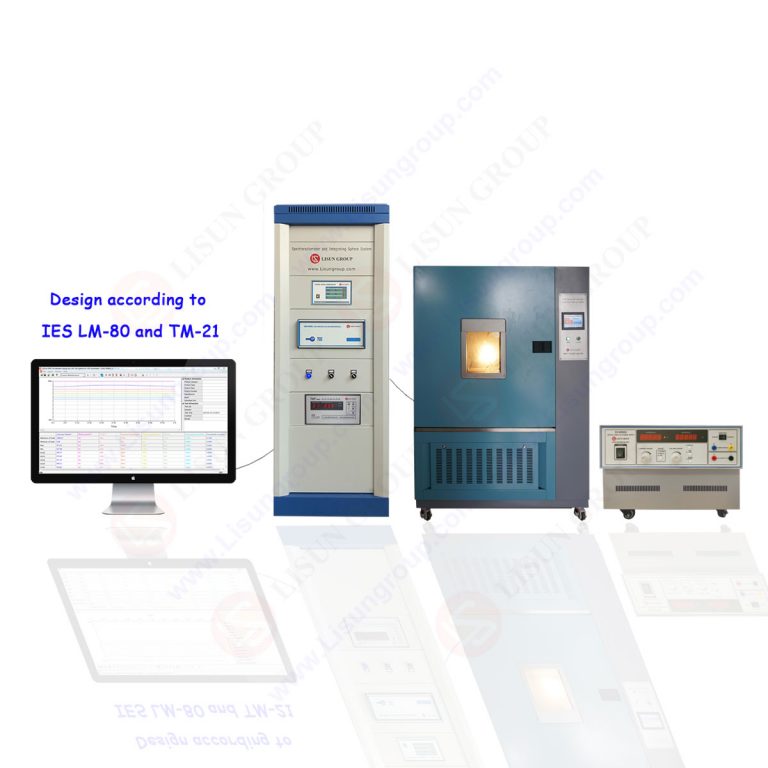
The standard configuration supports up to 3 connected temperature chambers, each capable of independent set-point control. This allows simultaneous testing of LEDs at three distinct case temperatures (e.g., 55°C, 85°C, and 105°C), as recommended by IES LM-80 for Arrhenius acceleration modeling. The system utilizes a water-cooled or forced-air cooling matrix to maintain stability within ±0.5°C of the set point, ensuring test repeatability.
2.2 Test Mode Flexibility
The instrument operates in two primary modes:
| Test Mode | Description | Typical Application | Accuracy |
| :— | :— | :— | :— |
| Constant Current (CCM) | Maintains a fixed drive current while voltage floats. | Standard for most LED packages per LM-80 | ±0.1% current stability |
| Constant Voltage (CVM) | Maintains a fixed forward voltage; current varies. | Simulating driver interaction for LM-84 luminaires | ±0.1% voltage stability |
This dual-mode capability allows an engineer to simulate real-world driver behavior or pure current stress.
2.3 Integrating Sphere Integration
The system is designed for seamless integration with LISUN’s 2-meter or 1-meter integrating spheres for absolute photometry. During the 6,000-hour test duration, the LISUN LED Optical Aging Test Instrument for LM-80 Lumen Maintenance Testing automatically retrieves the sample from the aging oven and positions it in the sphere for periodic measurement, minimizing mechanical stress on the LED.
3.1 TM-21 Extrapolation Engine
The included software performs non-linear least squares regression to fit the measured data to an exponential decay model. This allows projection of L70 (time to 70% lumen maintenance) and L50 (time to 50% lumen maintenance) values. The software adheres strictly to TM-21-19 guidelines, which limit projection to 6x the test period (e.g., 36,000 hours from a 6,000-hour test).
3.2 Arrhenius Acceleration Factor Calculation
The software uses the Arrhenius equation (k = A exp(-Ea / (k_B T))) to model the temperature acceleration of lumen degradation. The activation energy (Ea) is calculated from the three-temperature data sets. The LISUN LED Optical Aging Test Instrument for LM-80 Lumen Maintenance Testing automatically populates the Arrhenius plot, allowing engineers to verify if the degradation mechanism follows a single or dual-slope Arrhenius relationship, critical for accurate lifetime prediction.
3.3 Data Integrity and Traceability
All raw data is stored in encrypted, non-editable SQL databases. The software generates compliant test reports automatically, including:
- Photometric data tables (luminous flux vs. time).
- Chromaticity shift data (Δu’v’ per ANSI C78.377).
- Thermal data (Ts vs. Ta plots).
- TM-21 projection results with confidence intervals.
4.1 Reference to IES LM-80 and TM-21
The test methodology is fully compliant with IES LM-80, which stipulates that test samples must be run at three different temperatures and at rated current. The LISUN LED Optical Aging Test Instrument for LM-80 Lumen Maintenance Testing meets these requirements with its independent channel controls. The TM-21 software module then processes this data to generate the extrapolated lifetime (Lp).
4.2 Integration with LM-79 for Photometry
While LM-80 covers aging, LM-79-19 covers the initial and final photometric measurements. The system’s software packages the final measurement at 6,000-hour test data as a full LM-79 report, including efficacy (lm/W), color rendering index (CRI), and correlated color temperature (CCT). This dual-reporting capability saves time for third-party testing lab technicians.
4.3 Global Regulatory Alignment
The instrument supports both IEC 60068-2-78 (damp heat) and IEC 62301 (standby power) test cycles by allowing programmable temperature and humidity profiles (optional). This ensures that the LISUN LED Optical Aging Test Instrument for LM-80 Lumen Maintenance Testing can be used for ENERGY STAR qualification testing as well as for automotive electronics component engineer requirements per AEC-Q102.
5.1 Hardware Specifications Table
The following table provides a technical comparison of the two primary system variants, highlighting key numerical data relevant to R&D engineers.
| Specification | LEDLM-80PL (Component) | LEDLM-84PL (Luminaire) |
|---|---|---|
| Test Standard | IES LM-80, TM-21 | IES LM-84, TM-28 |
| Sample Type | LED packages, arrays, modules | Light engines, luminaires |
| Number of Channels | 12 (per temperature chamber) | 6 (per temperature chamber) |
| Max Connected Chambers | 3 | 3 |
| Max Total Samples | 36 | 18 |
| Temperature Range | 25°C to 150°C | -10°C to 85°C |
| Current Range | 0-2A (per channel) | 0-5A (per luminaire) |
| Photometric Method | Integrating sphere or goniometer | Integrating sphere (2m) |
| Lumen Maintenance Metric | L70, L50 (via TM-21) | L70, L50 (via TM-28) |
| Key Hardware Feature | Solder point Ts monitoring thermocouples | Plug-and-play AC/DC power sockets |
5.2 Why the Distinction Matters for Test Duration
For LM-80, the 6,000-hour test duration is a minimum; often, 10,000-hour data is required for high-reliability applications like automotive. The LEDLM-80PL supports continuous operation for these extended periods without data loss, thanks to its redundant power and data logging systems.
6.1 LED Manufacturing Quality Control
For an LED manufacturing quality assurance engineer, the instrument automates the tedious process of 6,000-hour testing. The system’s ability to flag early failures (e.g., lumen depreciation > 20% before 1,000 hours) enables rapid process feedback to the epitaxial growth and phosphor deposition teams.
6.2 Third-Party Testing Lab Workflow
In a third-party testing lab environment, throughput is king. The LISUN LED Optical Aging Test Instrument for LM-80 Lumen Maintenance Testing can run multiple standards simultaneously. For example, one chamber can run LM-80 while a second runs LM-84. The software’s report generation module outputs IES TM-21 and TM-28 reports directly, reducing manual data compilation time by over 40%.
6.3 Automotive Electronics Component Validation
Automotive components require extended projections (L70 > 60,000 hours). The high-temperature stability (±0.5°C) of the LISUN system is crucial for accurately calculating the acceleration factor. Using the Arrhenius Model, an automotive electronics component engineer can test at 105°C and extrapolate to a use case of 85°C with high confidence.
7.1 Photometric Calibration
The instrument’s photometric channel is calibrated against a NIST-certified standard lamp. The calibration coefficient traceability ensures that the 6,000-hour test data is accurate within ±1.5% of the true lumen value. This is verified by regular cross-checks using a reference LED sample.
7.2 Thermal Calibration
Each of the 3 connected temperature chambers has a secondary platinum RTD (PT100) for temperature validation. This meets the CIE 70 standard requirement for thermal monitoring during photometric measurements. The system logs both the chamber air temperature and the actual Ts of the LED.
7.3 Electrical Calibration
The constant current and voltage modes are calibrated using a 6.5-digit multimeter traceable to national standards. This ensures that the drive current does not drift over the 6,000-hour test duration, a common source of error in long-term testing.
The LISUN LED Optical Aging Test Instrument for LM-80 Lumen Maintenance Testing provides a robust, standards-compliant platform for accelerated aging and lifetime prediction. By offering dual-system variants (LEDLM-80PL for components and LEDLM-84PL for luminaires) and supporting up to 3 connected temperature chambers, it meets the diverse needs of LED R&D engineers, third-party testing lab technicians, and automotive electronics component engineers. The integration of the Arrhenius Model-based software with TM-21 and TM-28 projection algorithms delivers accurate L70/L50 metrics from 6,000-hour test data, directly aligning with IES LM-80, IES LM-84, and CIE 127 standards. The instrument’s dual constant current/voltage modes, seamless integrating sphere integration, and robust data management system ensure that compliance testing is both efficient and reliable. For any organization requiring definitive proof of LED reliability, this instrument represents the industry benchmark for precision and regulatory alignment. Its ability to reduce test variability while increasing throughput makes it an indispensable tool for modern solid-state lighting qualification.
Q1: How does the instrument handle the data interpolation required if a sample fails before the 6,000-hour test duration?
A: The LISUN LED Optical Aging Test Instrument for LM-80 Lumen Maintenance Testing logs data at user-defined intervals (typically every 1-24 hours). If a sample fails catastrophically (lumen output drops below 50%), the software retains all pre-failure data. For the TM-21 projection, the software automatically identifies the failure point and uses only the data prior to the failure for the non-linear regression. The instrument also flags the failed sample in the report, allowing a QA engineer to perform a failure analysis (FA) while the remaining channels continue testing. This ensures that no data is lost and that the failure is documented per IES LM-80 reporting guidelines.
Q2: What is the maximum practical activation energy (Ea) the Arrhenius Model software can handle for LED degradation?
A: The software is designed to handle activation energies typically ranging from 0.2 eV to 1.2 eV. For standard InGaN blue LEDs, the Ea for lumen degradation is often around 0.4 eV, while for red AlInGaP LEDs, it can be up to 0.8 eV. The LISUN LED Optical Aging Test Instrument for LM-80 Lumen Maintenance Testing software calculates the Ea from the slope of the Arrhenius plot derived from your three-temperature test data. If the software detects a non-linear relationship (indicating a change in failure mechanism, e.g., from phosphor degradation to wire bond failure), it will flag this in the report and recommend a localized activation energy model rather than a global one.
Q3: Can the system accommodate non-standard test temperatures beyond the recommended IES LM-80 triple-point requirement?
A: Yes. While the standard protocol requires three test temperatures (e.g., 55°C, 85°C, and 105°C), each of the 3 connected temperature chambers can be set independently. If an automotive electronics component engineer requires testing at 125°C or a cold start at -10°C for LM-84, the system can be programmed for those specific profiles. However, the default software projection (TM-21) is built for the standard temperature range. For non-standard tests, the raw data is still fully available for manual analysis using custom Arrhenius or Eyring models. The instrument does not limit the temperature set-point, but the warranty validation requires operation within the specified thermal range.
Q4: How does the instrument ensure that the photometric measurements are not affected by the aging oven’s thermal emissions during the measurement cycle?
A: The LISUN LED Optical Aging Test Instrument for LM-80 Lumen Maintenance Testing implements a “cool-down-measure” cycle. Before the LED is moved to the integrating sphere, the instrument’s transfer arm allows the sample to cool in a dark, temperature-controlled pre-measurement chamber for a set period (e.g., 30 seconds) to stabilize to 25°C ± 1°C. This ensures the measurement is performed under standard photometric conditions per CIE 84, avoiding thermal drift in the photodiode or spectrometer. The software logs the actual measurement temperature to verify compliance with the LM-80 requirement that photometry be performed at a standard ambient (25°C).