









Abstract
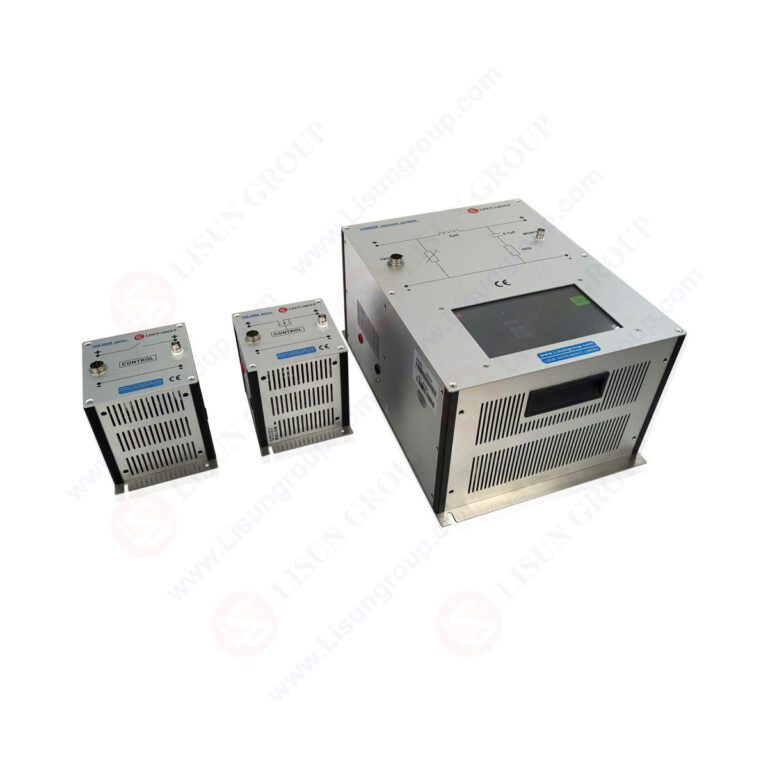
The LISUN RFCI61000-6 series RF Conducted Immunity Test System addresses the critical need for precise electromagnetic compatibility (EMC) testing in the rapidly evolving new energy charging station industry. This integrated test platform provides comprehensive RF conducted immunity testing capabilities, combining an internal signal source, power amplifier, and power meter into a single instrument. Designed for compliance with IEC 61000-4-6, EN 61000-4-6, and GB/T 17626.6 standards, the system supports conducted disturbance testing across 150 kHz to 230 MHz. Available in 35W and 85W output power variants, the RFCI61000-6 series enables EMC testing engineers to validate charging station performance against conducted RF interference, ensuring regulatory compliance and operational reliability.
1.1 Electromagnetic Interference Risks in EV Charging Infrastructure
New energy charging stations operate in complex electromagnetic environments, interfacing with power grids, vehicle battery management systems, and communication networks. Conducted RF interference—injected through power lines, signal cables, and grounding paths—can disrupt control circuits, compromise communication protocols, and degrade charging efficiency. The IEC 61000-4-6 standard specifies immunity test levels for equipment exposed to conducted disturbances, with charging stations requiring Level 2 (10 V) or Level 3 (10 V, unmodulated) performance depending on installation environment. Without rigorous EMC immunity testing, charging stations risk operational failure, data corruption, and safety hazards during real-world deployment.
1.2 Regulatory Framework and Compliance Requirements
Global regulatory bodies mandate conducted immunity testing for charging station certification. EN 61000-4-6, aligned with the European EMC Directive, requires testing across 150 kHz to 80 MHz with amplitude modulation at 1 kHz, 80% depth. GB/T 17626.6, the Chinese national standard, follows similar protocols but includes extended frequency ranges up to 230 MHz for certain applications. The LISUN RFCI61000-6 series directly supports these requirements, providing programmable test levels from 1 V to 140 dBµV (130 dBµV for 85W model) with automated sweep functions. Compliance engineers can validate charging station immunity against conducted RF fields without requiring external signal generators or separate power meters.
1.3 Core Testing Principles and Injection Methods
Conducted immunity testing employs coupling-decoupling networks (CDNs) to inject RF interference into specific cable interfaces while protecting sensitive auxiliary equipment. The standard injection methods include direct coupling via CDN-M for mains power ports, CDN-AF for antenna ports, CDN-T for telecom lines, and electromagnetic clamp injection for shielded cables. The RFCI61000-6 system supports all standard CDN types with automatic impedance matching, maintaining low voltage standing wave ratio (VSWR) below 1.5:1 across the operating frequency band. This ensures consistent power transfer to the equipment under test (EUT) and eliminates measurement uncertainties caused by impedance mismatches.
2.1 Integrated Signal Source and Power Amplifier Modules
The RFCI61000-6 series eliminates the complexity of traditional rack-and-stack test setups by integrating a synthesized signal generator, broadband power amplifier, and precision power meter within a single chassis. The internal signal source provides frequency resolution of 1 Hz across the full 150 kHz to 230 MHz range, enabling precise test frequency selection per IEC 61000-4-6 Table 1. The power amplifier delivers linear output with harmonic distortion below -30 dBc, ensuring clean sinusoidal injection signals. This integration reduces cable losses, simplifies calibration procedures, and minimizes the operational footprint for EMC testing laboratories serving charging station manufacturers.
2.2 Dual Power Variants: 35W and 85W Configurations
The selection between RFCI61000-6-35W and RFCI61000-6-85W models depends on the cabled length, CDN insertion loss, and required field strength at the EUT interface. The 35W variant suits standard charging station power ports with typical CDN-M losses of 6-10 dB, delivering adequate test levels up to 10 V at most frequencies. The 85W variant accommodates applications requiring higher injection power, such as testing through long cable runs or high-loss CDN configurations encountered in large-scale charging infrastructure. Both models provide front-panel USB and Ethernet interfaces for automated test sequence execution, with the 85W model offering extended headroom for margin testing above standard compliance levels.
Table: RFCI61000-6 Series Model Comparison
| Parameter | RFCI61000-6-35W | RFCI61000-6-85W |
|---|---|---|
| Output Power | 35 W | 85 W |
| Frequency Range | 150 kHz – 230 MHz | 150 kHz – 230 MHz |
| Max Output Voltage (50Ω) | 140 dBµV (10 V) | 130 dBµV (3.16 V) |
| Amplitude Modulation | 1 kHz, 80% depth | 1 kHz, 80% depth |
| Pulse Modulation | 1 Hz – 10 kHz | 1 Hz – 10 kHz |
| Harmonics | < -30 dBc | < -30 dBc |
| VSWR (typical) | < 1.5:1 | < 1.5:1 |
| CDN Compatibility | Full range | Full range |
| Interface | USB, Ethernet, RS232 | USB, Ethernet, RS232 |
2.3 Multi-Mode Injection Capabilities
The system supports multiple modulation modes required by conducted immunity standards: continuous wave (CW) for basic susceptibility testing, 1 kHz amplitude modulation at 80% depth for standard compliance, and pulse modulation for immunity to transient RF disturbances. Clause 6.2 of IEC 61000-4-6 specifies the use of amplitude modulation for all conducted immunity tests, which the RFCI61000-6 series implements with programmable modulation frequency and depth. The pulse modulation mode, operating from 1 Hz to 10 kHz with variable duty cycles, enables testing against modulated RF interference from switched power supplies and communication signals common in charging station environments.
3.1 Standard CDN Configuration and Selection
The RFCI61000-6 series interfaces with all standard CDN types specified in IEC 61000-4-6 Annex C. For charging station testing, the CDN-M2/M3 series covers single-phase and three-phase AC power ports up to 63 A per phase. CDN-AF2 accommodates antenna and control signal ports, while CDN-T2/T4 addresses telecom interfaces used in charge point communication. Each CDN provides defined impedance characteristics (150 Ω output impedance for CDN-M) and isolation to prevent RF leakage into auxiliary equipment. The system automatically recognizes connected CDN types via a 7-inch touchscreen interface, configuring output power levels and frequency sweep parameters accordingly.
3.2 Calibration and Verification Procedures
Accurate conducted immunity testing requires pre-test calibration to establish the reference level at the EUT port. The RFCI61000-6 series includes an automated calibration routine that measures forward power, reflected power, and actual voltage at the CDN output using the integrated power meter. Following Clause 7.2 of IEC 61000-4-6, calibration is performed without the EUT connected, establishing the drive level required to achieve the desired test voltage. The system stores calibration data per frequency point and CDN type, enabling rapid setup changes between different charging station configurations. Calibration uncertainty remains below ±1.5 dB across the full frequency range, meeting the requirements of ISO/IEC 17025 accreditation for testing laboratories.
3.3 EUT Setup Considerations for Charging Stations
Proper EUT setup is critical for reproducible conducted immunity test results. Charging stations require connection to both the AC mains supply (typically 230 V/400 V, 50/60 Hz) and a simulated electric vehicle load via the charging cable. The CDN must be inserted between the mains supply and the charging station’s power input port, while any communication cables require separate CDN injection. Clause 8.3 of IEC 61000-4-6 emphasizes that the EUT shall be configured in its typical operational mode, with all interfaces terminated using representative loads. The RFCI61000-6 touchscreen interface provides test sequence templates specific to charging station configurations, reducing setup time and minimizing human error.
4.1 New Energy Charging Stations and EV Infrastructure
Charging stations represent a primary application target for the RFCI61000-6 series, given their exposure to conducted RF interference from power line communication (PLC) signals, switching transients from onboard chargers, and radio frequency emissions from adjacent equipment. The system enables testing against conducted disturbances up to 10 V (Level 3) as specified in IEC 61851-21-1, the product standard for conductive charging systems. Pulse modulation testing at frequencies representing PLC carrier signals (e.g., 30-500 kHz) validates charging station immunity to communication band interference. Compliance with these requirements is mandatory for CE marking in Europe and CCC certification in China.
4.2 LED Manufacturing and Lighting Control Systems
LED drivers and lighting control modules for charging station ambient lighting require conducted immunity testing per EN 61547 and EN 55015. The RFCI61000-6-35W model provides adequate power for testing typical LED driver input ports, where CDN-M insertion losses are moderate. The system’s ability to generate precise amplitude-modulated signals from 150 kHz to 80 MHz ensures coverage of the full frequency range specified in IEC 61000-4-6 for lighting equipment. Automated sweep functions reduce test time for production-line compliance verification, critical for high-volume LED manufacturing operations.
4.3 Medical Devices and Healthcare Infrastructure
Medical devices installed near charging stations, such as monitoring equipment in hospital parking facilities, must meet stricter EMC limits under IEC 60601-1-2. The 85W variant supports testing of medical power supplies and patient-connected cables where high injection levels may be required due to cable attenuation. The system’s low VSWR ensures consistent test levels across the frequency range, essential for reproducing test results in accredited medical testing laboratories. Pulse modulation capabilities also address immunity requirements for medical devices exposed to pulsed RF fields from defibrillators and electrosurgical equipment.
5.1 IEC 61000-4-6 and EN 61000-4-6 Implementation
The RFCI61000-6 series is designed to meet all requirements of IEC 61000-4-6 Edition 5 and the harmonized European standard EN 61000-4-6. Clause 5.1 specifies the test frequency range from 150 kHz to 80 MHz for most applications, with extensions to 230 MHz for specific product families. The system generates test signals with frequency step sizes of 1% of the fundamental (per Clause 5.2), dwell time programmable from 0.1 to 60 seconds, and amplitude modulation at 1 kHz ± 10% with 80% modulation depth. Power level accuracy remains within ±1 dB across the entire range, exceeding the standard’s ±2 dB tolerance requirement.
5.2 GB/T 17626.6 Compliance for Chinese Market
China’s national standard GB/T 17626.6, equivalent to IEC 61000-4-6, includes specific requirements for medical, industrial, and communication equipment. The RFCI61000-6 series supports GB/T 17626.6 test level configurations, including Level 1 (1 V), Level 2 (3 V), Level 3 (10 V), and Level X (custom levels). The 85W model provides sufficient headroom for testing through multiple CDN stages or long cable runs common in Chinese industrial installations. The system’s built-in test report generation function automatically records test parameters per GB/T 17626.6 requirements, simplifying documentation for CCC certification applications.
5.3 Additional Applicable Standards
Beyond the core conducted immunity standards, the RFCI61000-6 series supports testing per IEC 61000-4-16 (conducted common mode disturbances up to 150 kHz) and EN 55016-1-2 (ancillary test equipment specifications). For automotive charging applications, the system can be configured to meet ISO 11452-1 and ISO 11452-4 requirements for conducted transient immunity. The integrated power meter provides direct readout of forward and reflected power, enabling precise level setting per the test plan without external measurement instruments. This multi-standard capability reduces capital expenditure for testing laboratories serving diverse industry verticals.
6.1 Test Sequence Programming and Execution
The RFCI61000-6 series features a color touchscreen interface for programming complete test sequences without external software. Engineers can define frequency lists, amplitude modulation parameters, dwell times, and test levels for up to 1000 frequency points. The system supports manual step-by-step testing for engineering evaluation and automated sweep modes for compliance certification. Pre-loaded test templates for IEC 61000-4-6, EN 61000-4-6, and GB/T 17626.6 reduce programming time to under five minutes. Once configured, the system executes the full test sequence automatically, logging measured voltage levels, injection power, and EUT status at each frequency point.
6.2 Data Logging and Report Generation
Comprehensive data logging capabilities capture all test parameters and measurement results for compliance documentation. The system records frequency, injected voltage, forward power, reflected power, VSWR, and modulation parameters for each test point. Data export options include USB flash drive to CSV format and network-enabled database logging via Ethernet. The built-in report generator formats test results according to ISO/IEC 17025 requirements, including calibration information, standard references, and test setup diagrams. This automation eliminates manual transcription errors and reduces laboratory documentation workload by approximately 40% compared to traditional test setups.
6.3 Remote Control and System Integration
For high-throughput testing laboratories, the RFCI61000-6 series provides remote control via SCPI commands over USB, RS232, or Ethernet interfaces. Integration with laboratory management systems enables centralized test plan management, automated calibration scheduling, and real-time monitoring of test progress. The system supports multi-test station operation, where one host computer controls multiple RFCI61000-6 units for simultaneous testing of different EUT types. This architecture reduces test cycle times for charging station manufacturers who must validate compliance across multiple product variants and cable configurations.
7.1 System Calibration and Traceability
Calibration of the RFCI61000-6 series is traceable to national metrology institutes through the integrated power meter reference. The system performs self-calibration at startup using internal reference standards, verifying output power accuracy to within ±0.5 dB. Annual external calibration per ISO/IEC 17025 is recommended, covering the full frequency range at 10% frequency steps. The calibration certificate includes measurement uncertainty calculations for each frequency band, ensuring compliance with testing laboratory accreditation requirements. The low drift of the solid-state amplifier design (typically < 0.1 dB per year) maintains system performance between calibration intervals.
7.2 Repeatability and Reproducibility Testing
The RFCI61000-6 series achieves test repeatability of better than ±0.3 dB when testing the same EUT configuration under identical conditions. Reproducibility across different system units is maintained within ±0.5 dB due to factory calibration standards and automated setup verification. For charging station testing, where multiple cable configurations and operational modes must be evaluated, this consistency ensures that test results reflect genuine EUT susceptibility rather than measurement system variability. Clause 7.4 of IEC 61000-4-6 requires reproducibility within ±2 dB, which the LISUN system significantly exceeds through advanced impedance matching and power leveling techniques.
7.3 Maintenance and Long-Term Reliability
The RFCI61000-6 series employs convection-cooled amplifier modules without fans, eliminating a common failure point in EMC test equipment. The semiconductor components are rated for continuous operation at full output power, with derating applied only above 40°C ambient temperature. The touchscreen interface uses industrial-grade components rated for 50,000 hours of operation. Recommended preventive maintenance includes annual cleaning of air intake filters, verification of CDN connection cables, and software updates for test sequence templates. The low failure rate, typically below 0.5% per year based on field data, makes the system suitable for 24/7 production testing environments.
The LISUN RFCI61000-6 series RF Conducted Immunity Test System provides a comprehensive, integrated solution for EMC testing of new energy charging stations and diverse electronic products. By combining signal source, power amplifier, and power meter in a single instrument, the system reduces equipment costs, simplifies test setup, and improves measurement repeatability. The dual power variants (35W and 85W) accommodate a wide range of EUT types, from small LED drivers to large industrial charging stations. Full compliance with IEC 61000-4-6, EN 61000-4-6, and GB/T 17626.6 standards ensures regulatory acceptance across global markets. For EMC testing engineers, product compliance specialists, and R&D teams, the RFCI61000-6 series offers the precision, reliability, and operational efficiency required for rigorous conducted immunity validation in regulated industries.
Q1: What is the maximum test voltage the LISUN RFCI61000-6 series can deliver for charging station EMC testing?
A: The maximum test voltage depends on the model and test configuration. The RFCI61000-6-35W model can deliver up to 140 dBµV (approximately 10 V) into a 50Ω load, while the RFCI61000-6-85W model delivers up to 130 dBµV (approximately 3.16 V). However, the actual voltage at the EUT port is reduced by CDN insertion loss, which ranges from 6-10 dB for standard CDN-M types. For Level 3 testing per IEC 61000-4-6 (10 V at EUT port), the 35W model typically provides adequate margin for most charging station configurations. The 85W model is recommended when testing through long cables, high-loss CDNs, or when performing margin testing above standard compliance levels.
Q2: Which CDN types are required for conducted immunity testing of new energy charging stations?
A: Charging station EMC testing typically requires CDN-M (mains) for AC power input ports, CDN-AF for communication cables and antenna ports, and CDN-T for telecom interfaces used in charge point communication. The CDN-M2 (single-phase) and CDN-M3 (three-phase) series from LISUN support currents up to 63 A per phase, suitable for most charging station power ratings. For DC charging stations, CDN-M2 adapted for DC lines may be required. The RFCI61000-6 series interfaces with all standard CDN types via 50Ω BNC connectors, with automatic impedance matching to maintain VSWR below 1.5:1 across the 150 kHz to 230 MHz frequency range.
Q3: How does the RFCI61000-6 series ensure test repeatability for conducted immunity testing?
A: The RFCI61000-6 series achieves high repeatability through several technical features: (1) integrated power meter with closed-loop leveling maintains consistent injection power to within ±0.5 dB across all frequency points; (2) automatic calibration routines before each test sequence compensate for cable and CDN variations; (3) low VSWR (<1.5:1) minimizes power reflection and standing wave effects that cause measurement uncertainty; (4) solid-state amplifier design with thermal stability ensures output remains constant regardless of ambient temperature changes. These features combine to deliver test repeatability better than ±0.3 dB when testing identical EUT configurations, significantly exceeding the IEC 61000-4-6 requirement of ±2 dB reproducibility.
Q4: Can the RFCI61000-6 series be used for both product development testing and formal compliance certification?
A: Yes, the RFCI61000-6 series serves both engineering evaluation and formal compliance certification roles. For development testing, the system’s manual step mode and frequency list programming enable engineers to identify susceptible frequency bands and evaluate design improvements. For certification, the system supports automated test sequences per IEC 61000-4-6, EN 61000-4-6, and GB/T 17626.6 with full data logging and report generation. The calibration traceability to national standards ensures test results are acceptable for ISO/IEC 17025 accredited laboratories. The dual power variants allow laboratories to select the appropriate model based on their testing portfolio, with the 35W model suitable for lower-power EUTs and the 85W model providing headroom for high-loss or high-current applications.