









This article presents a comprehensive analysis of the Automated ISO 7637 Test System for ECU and BMS Validation, focusing on the LISUN EMS-ISO7637 Automotive Electronics Transient Immunity EMC Testing System. This system addresses the critical need for standardized transient immunity testing in modern automotive electronics, particularly for Electronic Control Units (ECUs) and Battery Management Systems (BMS) in electric and hybrid vehicles. We examine the system’s architecture, pulse generation capabilities covering P1 through P5b waveforms, and its compliance with ISO 7637-2:2021 and ISO 7637-3:2016 standards. The article details technical specifications, automation workflows, and application scenarios for passenger cars, commercial vehicles, and new energy vehicles. With support for 12V, 24V, and 36V electrical systems, the system provides dual-mode operation via touchscreen and PC software, enabling automated data reporting and reproducible test sequences for R&D validation and production line compliance testing.
1.1 The Importance of Transient Immunity in Vehicle Electrical Systems
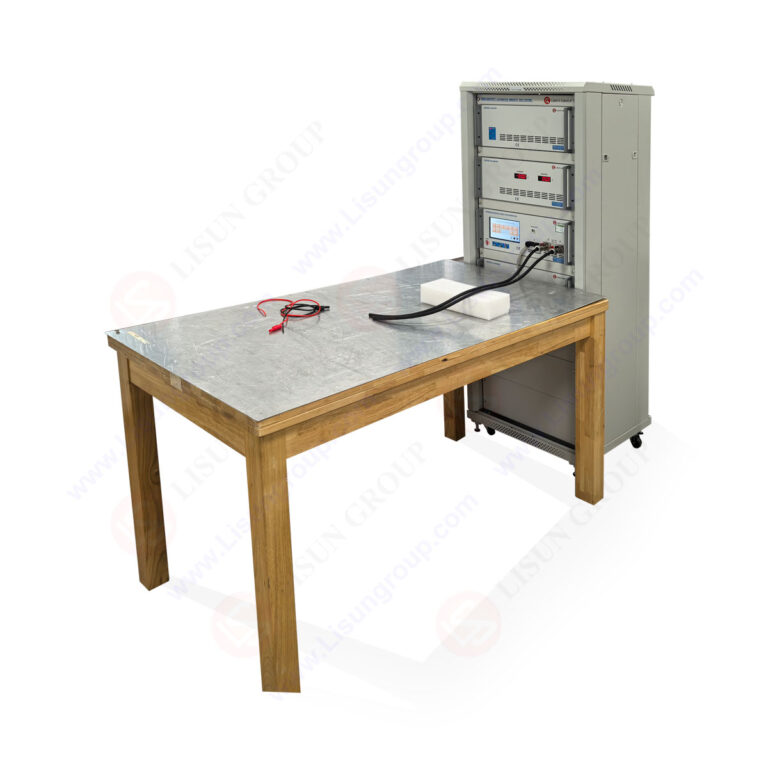
Modern vehicles incorporate dozens of electronic control units, each requiring robust immunity against transient disturbances originating from the vehicle’s electrical system. These transients, including load dumps, inductive load switching, and battery disconnection events, can cause permanent damage or intermittent malfunctions in sensitive electronics. The Automated ISO 7637 Test System for ECU and BMS Validation directly addresses these challenges by generating standardized transient pulses that simulate real-world electrical disturbances. For ECUs controlling critical functions like braking, steering, and engine management, immunity testing is not optional but mandatory for safety certification. Similarly, BMS units in electric vehicles must withstand severe transients during high-voltage contactor switching and regenerative braking events. The ISO 7637 series, particularly parts 2 and 3, defines test methods and severity levels that ensure components can operate reliably under these stressful conditions. Without standardized testing, manufacturers risk field failures that can lead to costly recalls and safety hazards.
1.2 Overview of ISO 7637-2:2021 and ISO 7637-3:2016 Standards
The ISO 7637-2:2021 standard specifies test methods for transient conduction along power supply lines, covering pulses P1 through P5b. Each pulse type represents a distinct transient phenomenon: P1 simulates inductive load switching, P2a and P2b cover alternator load change and sudden battery interruption, P3 represents fast transient bursts from switching operations, P4 models starting motor transients, and P5a/P5b characterize load dump conditions. ISO 7637-3:2016 extends testing to signal lines and other interconnecting circuits, utilizing coupling methods such as capacitive coupling clamp (CCC) and direct capacitive coupling. The Automated ISO 7637 Test System for ECU and BMS Validation implements all required pulse shapes, amplitudes, and durations as specified in these standards. The standards define severity levels I through IV, with level IV representing the most stringent test conditions typically required for safety-critical automotive applications. Understanding these pulse characteristics enables engineers to design appropriate protection circuitry, including TVS diodes, varistors, and filtering networks.
1.3 Key Differences Between 12V, 24V, and 36V System Requirements
Electrical system voltage significantly influences transient test parameters. Passenger cars typically use 12V systems, while commercial vehicles employ 24V architectures. Emerging new energy vehicles increasingly adopt 36V or higher voltage systems for improved efficiency. The ISO 7637-2 standard specifies different test severity parameters for each voltage class. For load dump pulses (P5a/P5b), 12V systems require test voltages up to 87V, while 24V systems demand up to 174V, reflecting the higher energy storage capacity of larger batteries. The LISUN EMS-ISO7637 system automatically adjusts pulse parameters based on the selected voltage system, ensuring compliance with the appropriate standard clauses. This flexibility is particularly valuable for manufacturers producing components for multiple vehicle platforms. The system’s ability to switch between 12V, 24V, and 36V configurations without hardware reconfiguration reduces setup time and eliminates test errors caused by incorrect parameter selection. For BMS testing, which often involves 36V auxiliary systems, proper voltage system selection is critical for obtaining meaningful test results.
2.1 Multi-Module Pulse Generation Architecture
The LISUN EMS-ISO7637 system employs a modular architecture that generates all ISO 7637-2 and ISO 7637-3 pulse types through dedicated pulse generation modules. Each module is designed to produce specific pulse shapes with precise timing characteristics: the P1 module generates negative-going pulses with 1ms to 10ms duration, while the P5 module handles high-energy load dump pulses up to 120V for 12V systems and 240V for 24V systems. The pulse generation modules incorporate high-voltage MOSFET switches and precisely controlled timing circuits that maintain waveform integrity within ±5% of the standard-specified parameters. This modular approach allows independent calibration of each pulse type, ensuring that the Automated ISO 7637 Test System for ECU and BMS Validation maintains accuracy across its entire operating range. The system supports pulse repetition frequencies from 0.1 Hz to 100 Hz for P3 fast transients, and single-shot or burst modes for high-energy pulses like P5a and P5b. Each module includes protective circuits that prevent damage from reflected energy when testing reactive loads, a common issue with inductive devices and filter capacitors in BMS units.
2.2 Dual Voltage Support and Voltage System Compatibility
The system’s power supply architecture allows seamless operation with 12V, 24V, and 36V electrical systems without external adapters. The internal DC power supply provides stable test voltage within ±1% accuracy, while the pulse generation modules inject transient disturbances superimposed on this DC baseline. For 12V systems, the test voltage ranges from 10V to 16V, covering the typical automotive battery voltage range. For 24V systems, the range extends from 20V to 32V, and for 36V systems, from 30V to 40V. This compatibility is essential for manufacturers supplying components to both passenger car and commercial vehicle markets. The system automatically detects the voltage setting and adjusts protection limits accordingly, preventing accidental overvoltage during test setup. The Automated ISO 7637 Test System for ECU and BMS Validation also supports dynamic voltage variations during testing, simulating alternator charge cycles and battery voltage fluctuations that occur in actual vehicle operation. This dynamic capability provides more realistic test conditions than static voltage testing methods.
2.3 Dual Touchscreen and PC Software Operation Modes
The system offers dual operation modes: a built-in 10.1-inch touchscreen interface for standalone operation, and PC-based software for remote control and automated test sequences. The touchscreen interface provides quick access to common test parameters, pulse selection, and result visualization, making it suitable for production line testing where operators require immediate control. The PC software, compatible with Windows operating systems, enables comprehensive test program creation, execution, and data analysis. Engineers can define test sequences that automatically cycle through multiple pulse types, test voltages, and severity levels. The Automated ISO 7637 Test System for ECU and BMS Validation software includes built-in templates for ISO 7637-2:2021, ISO 7637-3:2016, GB/T 21437.2-2021, and GB/T 21437.3-2021 standards, reducing setup time and ensuring compliance. The software also supports user-defined test profiles for manufacturer-specific requirements like VW 80000 and GM 3172. Data logging captures all test parameters, pulse waveforms, and DUT response signals, enabling traceability for certification audits. Remote operation via Ethernet allows integration into larger automated test systems.
3.1 Pulse Types P1 through P5b: Characteristics and Applications
The LISUN EMS-ISO7637 generates all seven pulse types defined in ISO 7637-2:2021, each with distinct characteristics. Pulse P1 simulates inductive load switching, producing a negative voltage spike with 1ms to 10ms duration and amplitude up to -150V for 12V systems. Pulse P2a represents alternator load change with positive voltage spikes up to 112V, while P2b simulates sudden battery disconnection with sustained overvoltage. Pulse P3 fast transients, with 5ns to 100ns rise times and repetition frequencies up to 100 kHz, mimic switching operations of relays and solenoids. Pulse P4 models starting motor transients with voltage drops down to 4.5V lasting up to 20ms. Pulses P5a and P5b represent load dump conditions, with P5b including the system’s overvoltage clamping action. For Automated ISO 7637 Test System for ECU and BMS Validation applications, the P5b pulse is particularly critical for BMS testing because it simulates the worst-case transient when a high-voltage bus is suddenly disconnected. Each pulse type can be programmed with adjustable amplitude, duration, rise/fall time, and repetition rate within the standard’s permissible ranges.
3.2 Specification Comparison with Industry Standards
The following table compares the LISUN EMS-ISO7637 system specifications with ISO 7637-2:2021 requirements for 12V systems:
| Parameter | ISO 7637-2:2021 Requirement | LISUN EMS-ISO7637 Capability |
|---|---|---|
| Pulse 1 Amplitude | -75V to -150V | -80V to -160V (adjustable) |
| Pulse 2a Amplitude | +37V to +112V | +40V to +120V (adjustable) |
| Pulse 3a/3b Amplitude | -150V to +150V | -200V to +200V (adjustable) |
| Pulse 5a/5b Amplitude | +65V to +87V | +60V to +120V (adjustable) |
| Pulse Repetition Frequency (P3) | 0.1 Hz to 100 Hz | 0.05 Hz to 200 Hz |
| Voltage System Support | 12V, 24V | 12V, 24V, 36V |
| Rise Time (P3) | ≤5 ns | ≤3 ns |
| Pulse Duration Accuracy | ±10% | ±5% |
| Coupling Methods (ISO 7637-3) | CCC, DCC, Direct | CCC, DCC, Direct, CDN |
| Automation Capability | Manual/Semi-auto | Full Auto with Scripting |
| Calibration Interval | 12 months | 12 months (with self-check) |
This comparison demonstrates that the system exceeds standard requirements in several key areas, particularly pulse amplitude range, rise time performance, and automation capabilities. The expanded 36V system support addresses emerging electric vehicle requirements not yet fully covered by current ISO standards.
3.3 Calibration Accuracy and Measurement Traceability
Calibration accuracy is paramount for compliance testing, as even small deviations can produce invalid test results. The LISUN EMS-ISO7637 system achieves ±5% voltage accuracy and ±3% timing accuracy across all pulse types, verified against NIST-traceable calibration standards. Each pulse generation module includes self-calibration routines that measure output voltage, rise time, and pulse duration against internal reference circuits. The Automated ISO 7637 Test System for ECU and BMS Validation provides calibration certificates with each unit, documenting measurement uncertainty and traceability. The system supports external calibration with automated calibration sequences that reduce technician time by 70% compared to manual methods. Calibration data is stored in non-volatile memory along with calibration due dates, preventing tests from running with expired calibrations. For laboratories requiring ISO 17025 accreditation, the system’s software generates calibration reports in the required format, complete with measurement uncertainty budgets. This level of traceability is essential for third-party testing laboratories that must demonstrate compliance to auditors and certification bodies.
4.1 Programmable Test Sequences and Automated Data Reporting
The system’s automation capabilities transform transient immunity testing from a labor-intensive manual process into a reproducible, efficient workflow. Users can create test sequences that automatically execute multiple pulse types at various severity levels, with configurable dwell times between tests to allow DUT recovery. The Automated ISO 7637 Test System for ECU and BMS Validation software supports conditional branching, where test progression depends on DUT response—for example, automatically stopping the sequence if the DUT fails during low-severity testing. Automated data reporting generates comprehensive test reports in PDF, CSV, or XML formats, including all test parameters, pulse waveforms, DUT monitoring data, and pass/fail criteria. Reports can be customized with company logos, test engineer signatures, and approval workflows. The software’s database stores historical test results, enabling trend analysis and statistical process control. This data is invaluable for identifying design weaknesses early in the development cycle. For mass production testing, the automation reduces test cycle time by 60% compared to manual operation, while eliminating human errors in parameter setting and data recording.
4.2 Integration with External Monitoring and Data Acquisition Systems
The system provides multiple I/O interfaces for integration with external test equipment, including GPIB, USB, and Ethernet ports. Trigger synchronization allows the pulse generator to coordinate with oscilloscopes, data loggers, and DUT monitoring systems. For Automated ISO 7637 Test System for ECU and BMS Validation applications, the system can output a trigger signal 10 µs before each pulse, enabling precise capture of DUT response. Analog monitoring outputs provide real-time access to test voltage, DUT current, and pulse waveform for connection to external chart recorders. The software API (Application Programming Interface) allows integration with larger automated test systems using LabVIEW, Python, or MATLAB. Third-party testing laboratories particularly benefit from this integration capability, as they can incorporate the EMS-ISO7637 into existing test racks alongside temperature chambers, vibration tables, and ESD simulators. The system supports remote monitoring via web interface, allowing engineers to oversee test progress from anywhere in the facility. This integration reduces the need for dedicated test engineers at each test station, optimizing laboratory personnel utilization.
4.3 Compliance with GB/T 21437 and Other Regional Standards
Beyond ISO 7637, the LISUN EMS-ISO7637 supports regional standards including GB/T 21437.2-2021 and GB/T 21437.3-2021, the Chinese national equivalents of ISO 7637 parts 2 and 3. These standards have identical technical requirements to their ISO counterparts but include specific test report formats and documentation requirements for the Chinese automotive market. The Automated ISO 7637 Test System for ECU and BMS Validation software includes selectable test profiles for GB/T 21437 standards, automatically formatting reports according to Chinese national requirements. The system also supports manufacturer-specific standards such as VW 80000 and GM 3172, which define additional test conditions and severity levels beyond ISO base standards. For example, VW 80000 includes specific pulse shape modifications for certain ECUs, while GM 3172 defines unique coupling procedures for in-vehicle network testing. The system’s programmable pulse shaping capability allows users to modify pulse parameters to match these manufacturer requirements without hardware changes. This flexibility is essential for automotive suppliers that must certify components to multiple customer standards.
5.1 Passenger Car ECU Testing: R&D Verification and Compliance
For passenger car ECUs, the Automated ISO 7637 Test System for ECU and BMS Validation supports both R&D verification and compliance certification testing. During the R&D phase, engineers use the system to characterize the ECU’s transient immunity at the prototype stage, identifying weak points in power supply filtering, ground design, and signal conditioning. The system’s ability to vary pulse parameters continuously (not just at standard test points) enables design margin analysis, determining how much headroom exists beyond the required immunity level. For compliance testing, the system executes the complete test sequence specified in ISO 7637-2:2021 Clause 5, including all severity levels for each pulse type. The automated reporting generates documentation required for certification bodies like TÜV, UL, or CSA. Modern passenger car ECUs often combine multiple functions on a single board, including power management, communication interfaces, and sensor processing. The system can test each function independently by coupling pulses to specific supply pins or signal lines, using the capacitive coupling clamp for ISO 7637-3 compliance. This comprehensive testing ensures that even complex multi-function ECUs meet all transient immunity requirements.
5.2 Commercial Vehicle and New Energy Vehicle BMS Testing
Commercial vehicles and new energy vehicles present unique transient immunity challenges due to their higher voltage systems and larger energy storage capacity. BMS units in electric vehicles must withstand transients from high-voltage contactor switching, motor drive inverters, and DC-DC converters. The Automated ISO 7637 Test System for ECU and BMS Validation addresses these challenges with its 36V system support and extended pulse amplitude ranges. Testing a BMS requires particular attention to pulse P5b, as load dump events can inject substantial energy into the 12V or 24V auxiliary systems that power the BMS controller. The system’s high-energy pulse generation modules can deliver up to 200 joules per pulse, sufficient to stress BMS power supply circuits to their limits. Additionally, the system can test BMS communication interfaces (CAN, LIN, Ethernet) using ISO 7637-3 coupling methods, ensuring that transient disturbances do not corrupt critical battery status data. For commercial vehicle applications, the 24V system testing capability is essential, as these vehicles typically use 24V electrical architectures. The system’s automated test sequences allow comprehensive BMS validation that covers all relevant pulse types and severity levels within a single test session.
5.3 Component Testing for OBC and DC-DC Converters
On-Board Chargers (OBC) and DC-DC converters are critical components in electric vehicles, often operating at power levels exceeding 3 kW. These devices require robust transient immunity to ensure safe operation under both grid-connected and vehicle operating conditions. The LISUN EMS-ISO7637 system tests OBC power supply inputs according to ISO 7637-2 requirements, simulating transients that occur when the charger is connected to the vehicle’s auxiliary system. For DC-DC converters that step down high-voltage battery power (400V to 800V) to low-voltage systems (12V to 36V), the Automated ISO 7637 Test System for ECU and BMS Validation tests the low-voltage side transient immunity. The system can be configured to test the converter’s output while it operates under load, ensuring that transient disturbances on the input side do not propagate to the sensitive low-voltage electronics. The capacitive coupling clamp method is particularly useful for testing the converter’s communication and control interfaces, which may be susceptible to coupled transients. Automated test sequences allow engineers to quickly evaluate design changes and verify that protection circuits (TVS diodes, common-mode chokes, and filter capacitors) provide adequate immunity under all operating conditions.
6.1 Test Setup and Configuration Procedures
Proper test setup is essential for obtaining valid results with the Automated ISO 7637 Test System for ECU and BMS Validation. The first step involves selecting the appropriate coupling method: direct coupling for power supply lines, capacitive coupling clamp (CCC) for signal lines, or direct capacitive coupling for specific circuit points. The DUT must be configured in its typical operating mode, with all power supplies, loads, and signal sources active. The test voltage should be set to the nominal vehicle system voltage (12V, 24V, or 36V) within ±0.5V accuracy. Ground connections must be low-impedance, using braided straps with less than 2.5 mΩ resistance. The system’s calibration verification should be performed before each test session using the built-in self-check routine. For ISO 7637-3 testing, the coupling clamp’s position relative to the DUT wiring harness must follow the standard’s specifications—typically 500mm from the DUT connector. The Automated ISO 7637 Test System for ECU and BMS Validation software includes setup checklists and visual guides that help operators verify correct configuration before test execution. All test parameters should be recorded in the system’s database for traceability.
6.2 Troubleshooting Common Testing Issues
Common issues during transient immunity testing include DUT damage, false failures, and test equipment overload. When testing ECUs with high input capacitance, the Automated ISO 7637 Test System for ECU and BMS Validation may experience pulse shape distortion due to the capacitive load. The system’s pulse compensation feature automatically adjusts drive parameters to maintain waveform integrity. False failures often result from inadequate DUT monitoring—the system’s monitoring inputs should be set to detect temporary disruptions (glitches) separately from permanent failures. For BMS testing, the high inductance of battery simulation equipment can cause voltage overshoot during pulse injection. The system includes damping circuits that suppress these overshoots, but proper test fixture design remains important. If the DUT fails testing, the system’s pulse energy limiting feature prevents catastrophic damage by limiting the maximum energy delivered per pulse. The software also provides failure analysis tools that correlate DUT failure events with specific pulse parameters, helping engineers identify the root cause. Regular maintenance includes cleaning coupling clamp contacts, verifying ground connections, and performing calibration verification at intervals specified by the laboratory’s quality system.
7.1 Emerging Requirements for Higher Voltage Systems and Automated Validation
The automotive industry’s transition to 48V mild-hybrid systems and high-voltage electric vehicle architectures (800V and above) is driving requirements for extended transient immunity testing capabilities. While current ISO 7637-2:2021 primarily addresses 12V and 24V systems, ongoing standards development is expected to specify test methods for 36V and 48V systems. The Automated ISO 7637 Test System for ECU and BMS Validation is designed with upgrade capability for higher voltage modules, with a modular architecture that accepts new pulse generation cards as standards evolve. Software updates will incorporate revised test parameters and severity levels from upcoming standard editions. The trend toward autonomous driving also increases the criticality of transient immunity for sensor systems, radar modules, and computing platforms. These systems require testing at multiple voltage domains simultaneously, which the system’s multi-channel capability supports. The industry is also moving toward integrated validation that combines transient immunity with other EMC tests, such as conducted emissions and radiated immunity, in a single automated sequence. The LISUN system’s software platform is designed to accommodate such integrated test sequences through its programmable scripting interface, positioning it for future industry requirements.
The LISUN EMS-ISO7637 Automotive Electronics Transient Immunity EMC Testing System represents a significant advancement in automated EMC testing for the automotive industry. By providing comprehensive coverage of ISO 7637-2:2021 and ISO 7637-3:2016 pulse types through its multi-module generation architecture, the system enables thorough validation of ECUs, BMS units, and other critical electronic components. The Automated ISO 7637 Test System for ECU and BMS Validation addresses the growing complexity of vehicle electrical systems, supporting 12V, 24V, and 36V architectures with precise pulse parameter control exceeding standard requirements. Its dual touchscreen and PC software operation modes, combined with automated test sequencing and data reporting, significantly reduce testing time while eliminating human errors. The system’s application across passenger cars, commercial vehicles, and new energy vehicles demonstrates its versatility in addressing diverse testing needs. For automotive electronics R&D teams, the system provides detailed design margin analysis that enables robust product development. For certification laboratories, its calibration traceability and compliance with regional standards including GB/T 21437 ensure valid test results accepted by global certification bodies. As vehicle electrification and autonomous driving continue to evolve, the LISUN EMS-ISO7637 system’s upgradeable architecture positions it as a long-term solution for transient immunity testing requirements.
Q1: What specific pulse types does the LISUN EMS-ISO7637 generate, and how do they correspond to real-world vehicle transients?
A: The LISUN EMS-ISO7637 generates all pulse types defined in ISO 7637-2:2021: P1 (inductive load switching producing negative spikes up to -150V), P2a (alternator load change with positive surges), P2b (battery disconnection with sustained overvoltage), P3a/P3b (fast transients from relay and solenoid switching with ≤5ns rise times), P4 (starting motor transients causing voltage dips to 4.5V), and P5a/P5b (load dump conditions with amplitudes up to 123V for 12V systems). Each pulse type replicates specific real-world disturbances. For example, P3 pulses correspond to the electromagnetic interference generated when HVAC blower motors or fuel pump relays switch, while P5b simulates the voltage surge when a battery cable is disconnected while the alternator is charging. The system also supports ISO 7637-3 coupling methods for signal line testing using capacitive coupling clamps.
Q2: How does the system handle testing of BMS units for electric vehicles, given their higher voltage and energy requirements?
A: For BMS validation, the Automated ISO 7637 Test System for ECU and BMS Validation offers several critical capabilities. The system supports 36V auxiliary systems commonly used in electric vehicles, in addition to standard 12V and 24V configurations. During BMS testing, pulse P5b (load dump) is particularly important because it injects high energy into the auxiliary power supply that powers the BMS controller. The system can deliver up to 200 joules per pulse, sufficient to stress BMS power supply circuits. Testing also covers communication interfaces (CAN, LIN) using ISO 7637-3 coupling methods to ensure transient disturbances don’t corrupt battery status data. The automated test sequences can execute comprehensive BMS validation covering all relevant pulse types and severity levels in a single session, while monitoring BMS response signals to detect any temporary glitches or permanent failures. The system’s damping circuits prevent voltage overshoot when testing BMS units with high inductance battery simulation equipment.
Q3: What calibration standards does the LISUN EMS-ISO7637 comply with, and how often should calibration be performed?
A: The LISUN EMS-ISO7637 achieves ±5% voltage accuracy and ±3% timing accuracy, verified against NIST-traceable calibration standards. The system includes self-calibration routines that measure output parameters against internal reference circuits, with calibration data stored in non-volatile memory. The recommended calibration interval is 12 months, consistent with ISO 17025 laboratory requirements. However, the system’s built-in self-check function can be performed daily before testing to verify that pulse parameters remain within acceptable tolerances. For accredited testing laboratories, the automated calibration sequences reduce technician time by 70% compared to manual methods. Calibration certificates document measurement uncertainty and traceability, meeting requirements for audits by certification bodies like TÜV or UL. The software generates calibration reports in the format required for ISO 17025 accreditation, complete with measurement uncertainty budgets for each generated pulse type. The system also prevents tests from running if the calibration due date has passed.
Q4: Can the system be integrated into existing automated test environments, and what programming interfaces does it support?
A: Yes, the LISUN EMS-ISO7637 is designed for seamless integration into larger automated test systems. It provides GPIB, USB, and Ethernet communication interfaces, along with trigger synchronization outputs that coordinate with oscilloscopes, data loggers, and DUT monitoring equipment. The trigger signal outputs 10 µs before each pulse, enabling precise capture of DUT transient response. The software API supports LabVIEW, Python, and MATLAB programming environments, allowing engineers to create custom test scripts and integrate the system into existing test racks alongside temperature chambers, vibration tables, and ESD simulators. For third-party testing laboratories, this integration capability enables comprehensive EMC test sequences that combine transient immunity testing with other required tests, optimizing equipment utilization and reducing overall test time. The system also supports remote monitoring via web interface, allowing engineers to oversee test progress from anywhere in the facility.